The 4 Most Amazing Peaks around Mambrillas De Lara
Best mountain peaks around Mambrillas De Lara are situated within the Sierra de la Demanda, a mountain sub-range in the northern Iberian Peninsula. This area features a diverse landscape of peaks, forests, and glacial formations. The region provides access to significant mountains and offers various hiking opportunities for different skill levels. It is characterized by a blend of deciduous and pine forests, along with unique relict woodlands.
Best mountain peaks around Mambrillas De Lara
- The most popular mountain peaks is…
Last updated: July 15, 2026
Sad Hill Cemetery
Highlight • Historical Site
Translated by Google •
Tip by

Castillejo
Highlight • Summit
Translated by Google •
Tip by
Sign up now to discover places like this
Get recommendations on the best single tracks, peaks, & plenty of other exciting outdoor places.
Sign up for free
Cerro San Cristóbal
Highlight • Summit
Translated by Google •
Tip by

La Muela
Highlight • Summit
Translated by Google •
Tip by
Start today with a free account
Your next adventure awaits.
Login or Signup


Tips from the Community

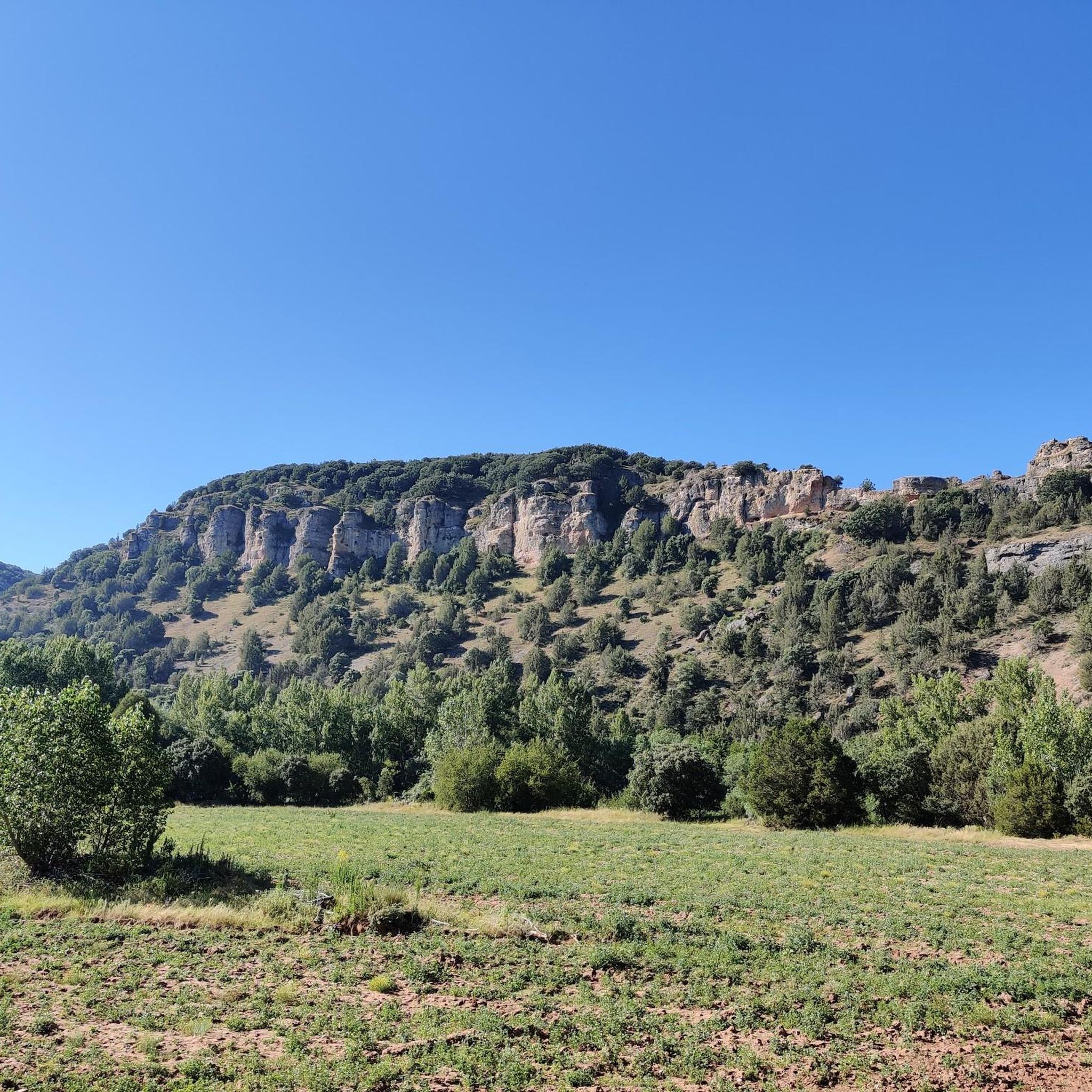
El Castillejo (1,347 m) is a twin peak located in the Sierra de las Mamblas, 5 km north of the town of Covarrubias (Burgos). It owes its name to its natural defensive rock formations. On its summit, an artificial cavity is preserved that served as a strategic watchtower. The mountain offers a spectacular panoramic view of the Arlanza valley and the Sierra de la Demanda. At its foothills lies the Hermitage of Our Lady of Mamblas (Ermita de Nuestra Señora de Mamblas). The terrain features rocky barriers that served as a defensive settlement in antiquity.
0
0


The fictional cemetery “Sad Hill Cemetery” was artificially created for the filming of “Two Glorious Scoundrels”. The scene of the big showdown is iconic, in which the three opponents face each other between the graves of an old cemetery in a haunting finale. The cemetery was exposed to increasing decay. A group of courageous residents polished up the cemetery in 2016 in time for the 50th anniversary of the cult western.
0
0

In this natural setting the duel of the mythical movie The Good, the Bad and the Ugly was filmed. But apart from that, as soon as you get there, the cemetery is only part of the natural beauty that that valley has.
1
0

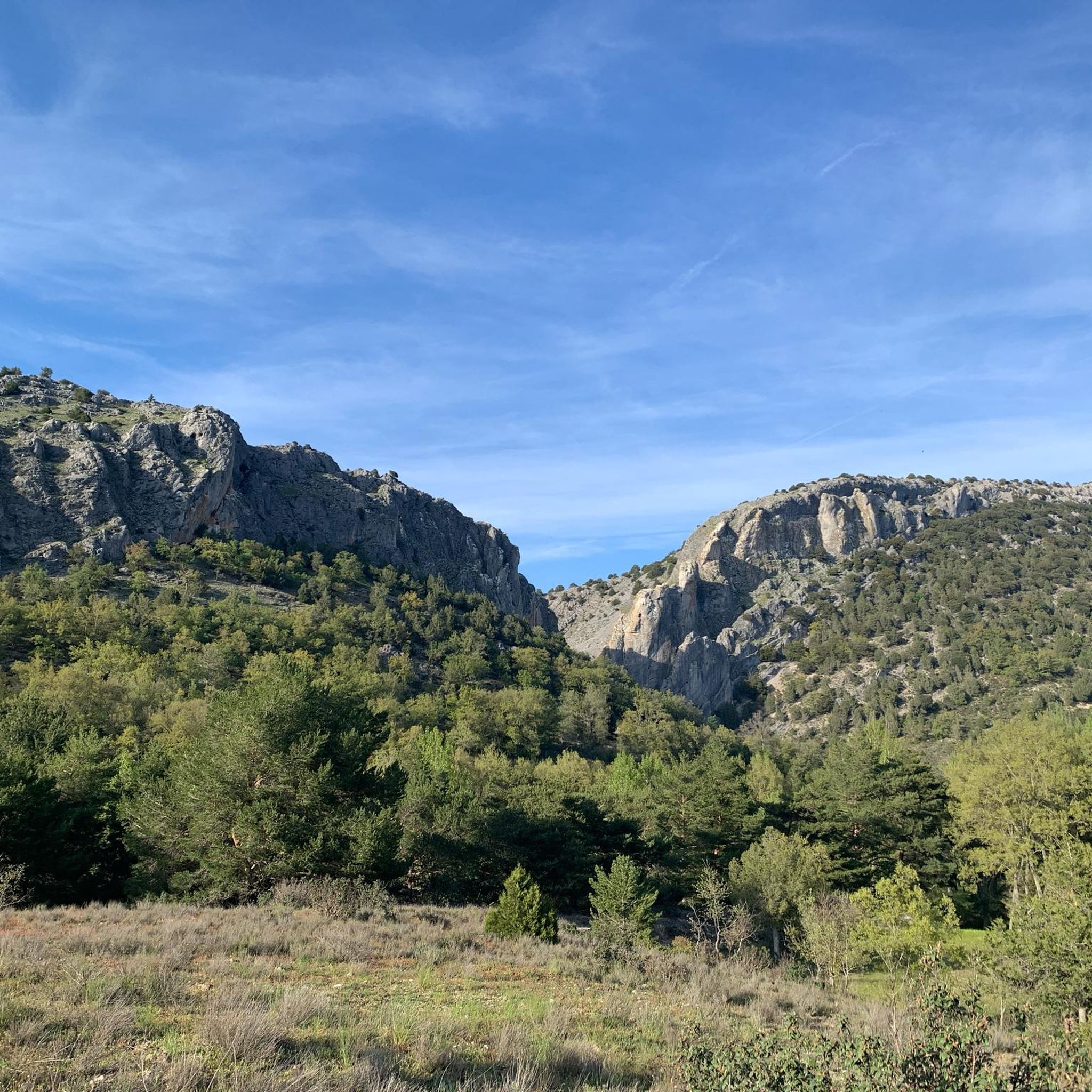
The climb can be a bit complicated, since there is no marked path, but you can always guide yourself by looking at the top. The views from the top are spectacular. To the east, the Sierra de Gayúbar, the Peña de Carazo and the Fort San Carlos; a little further, the Sierra de la Demanda and the Campiña as the most prominent peak. To the north, the Sierra del Mencilla, the Pico Trigaza, and the Sierra de Peñalara.
1
0
The peak bears this name thanks to its tower shape. The views are spectacular, highlighting the Sierra del Mencilla to the North, the Sierra de Cervera to the South, and that of its partner, the Muela de las Mamblas to the East.
2
0

Sad Hill Cemetery is an iconic location built specifically for the movie "The Good, the Bad and the Ugly." Located in the Sierra de la Demanda, the cemetery was built in 1966 for the filming of the final scene of the film, where the three protagonists have their last confrontation.
1
0

The highest mountain in the Sierra de Covarrubias and which in the winter months is covered with snow due to its height and continentality.
0
0
Frequently Asked Questions
What are some of the most notable mountain peaks and elevated points around Mambrillas de Lara?
The region around Mambrillas de Lara, nestled in the Sierra de la Demanda, offers several significant peaks and viewpoints. While some are more challenging, others are easily accessible. Notable peaks include Castillejo, known for its tower shape and spectacular views, and Cerro San Cristóbal, the highest point in the Sierra de Covarrubias. For a more challenging ascent, Pico San Millán (2,131 meters) is the highest point in Burgos province, offering impressive panoramic views. Monte San Lorenzo (2,270 meters) is the highest peak of the Sierra de la Demanda massif itself.
Are there any historical or cultural sites among the peaks near Mambrillas de Lara?
Yes, the area uniquely blends natural beauty with historical significance. One prominent example is Sad Hill Cemetery. This iconic location was built for the filming of the final scene of "The Good, the Bad and the Ugly" in 1966 and has since been recovered by volunteers, offering a unique cinematic history within a natural setting.
What kind of natural features and ecosystems can I expect to see in the mountains around Mambrillas de Lara?
The Sierra de la Demanda, which surrounds Mambrillas de Lara, is characterized by diverse ecosystems. You'll find a blend of deciduous forests, including ancient juniper, beech, and oak groves, alongside Scots pine forests. The region also bears the marks of ancient glaciation, featuring glacial cirques, valleys, and lakes, particularly in areas like the Neila Lagoons. This variety provides stunning scenery throughout the seasons.
What wildlife might I encounter while exploring the mountain region?
The natural spaces around Mambrillas de Lara are rich in biodiversity. Keep an eye out for various wildlife, including deer, roe deer, wildcats, badgers, and otters. The area is also significant for birdwatching, with many raptor species such as golden eagles, goshawks, and short-toed eagles soaring above the peaks.
Are there hiking trails for different skill levels near Mambrillas de Lara?
Absolutely. The region offers numerous hiking routes catering to various difficulty levels. For experienced hikers, the ascent to Pico San Millán is considered a classic mountaineering route requiring good physical condition. For more accessible, shorter hikes, local elevated points like "Peñalara" and "Picón" near Mambrillas de Lara offer picturesque views. You can find a range of options, from moderate to difficult, on the Hiking around Mambrillas De Lara guide.
What are some popular hiking routes in the area?
Popular hiking routes include the Sierra de las Mamblas circular route from Covarrubias, which is a moderate 14 km trek. Another moderate option is the Quintanilla de las Viñas, Peñalara, and Cubillejo Dolmen Loop, covering about 17 km. For a more challenging experience, consider the Mirador de las Penas del Tuero por Retuerta circular route. These and more can be found in the Hiking around Mambrillas De Lara guide.
What other outdoor activities are available near Mambrillas de Lara's peaks?
Beyond hiking, the area is excellent for mountain biking and running. You can explore extensive MTB trails, such as the Sad Hill circular route from Covarrubias, or various running trails like the Camino del Cid. For more details on these activities, check out the MTB Trails around Mambrillas De Lara guide and the Running Trails around Mambrillas De Lara guide.
Are there family-friendly mountain walks around Mambrillas de Lara?
Yes, there are options suitable for families. While specific family-friendly routes to major peaks might require careful planning, the local "Peñalara" and "Picón" near Mambrillas de Lara offer shorter, more accessible elevated points that are ideal for a two-hour round trip through an ancient juniper forest. Additionally, some highlights like Sad Hill Cemetery are categorized as family-friendly, offering an interesting destination within a natural setting.
What is the best time to visit the mountain peaks around Mambrillas de Lara?
The Sierra de la Demanda offers beauty throughout the year. Spring brings vibrant greens and blooming flora, while autumn transforms the deciduous forests into rich hues. Winter can see higher peaks like Cerro San Cristóbal covered in snow, offering opportunities for winter sports or snowshoeing for the well-prepared. Summer is ideal for hiking, though higher elevations provide cooler temperatures.
What do visitors enjoy most about the mountain peaks and surrounding areas?
Visitors frequently appreciate the spectacular views from summits like Castillejo, which offers panoramas of the Sierra del Mencilla and Muela de las Mamblas. The unique blend of natural beauty and cinematic history at Sad Hill Cemetery is also a major draw. Many enjoy the challenge of the climbs and the rewarding vistas, as well as the diverse natural settings, from lush forests to glacial landscapes.
Are there any challenging peaks for experienced mountaineers?
For experienced mountaineers, Pico San Millán, at 2,131 meters, presents a significant challenge. It is the highest point in the province of Burgos and features a spectacular northern cirque of glacial origin. Climbing it requires good physical condition due to the elevation gain and route length, but rewards with impressive panoramic views of several surrounding Sierras.
Where can I find information about the highest peaks in the broader Sierra de la Demanda range?
The highest peak of the entire Sierra de la Demanda massif is Monte San Lorenzo, standing at 2,270 meters. While located in La Rioja, its prominence makes it a significant landmark visible from the broader region. You can learn more about its geological and geographical significance on Wikipedia.
Most popular attractions around Mambrillas De Lara

Get inspired with the komoot mobile app


Explore more
See even more amazing summits around Mambrillas De Lara with these guides:
