Top 8 Mountain Passes around Gudo
Mountain passes near Gudo, situated in the Ticino region of Switzerland, offer routes through a mountainous landscape. This area, close to Bellinzona, features several significant passes that connect valleys and provide access to different parts of the Alps. The region's geography includes varied elevations and historical routes. It serves as a point of access for exploring the natural and cultural landmarks near Gudo Bellinzona.
Best mountain passes around Gudo
- The most popular mountain passes is Alpe di Neggia — pass…
Last updated: June 26, 2026
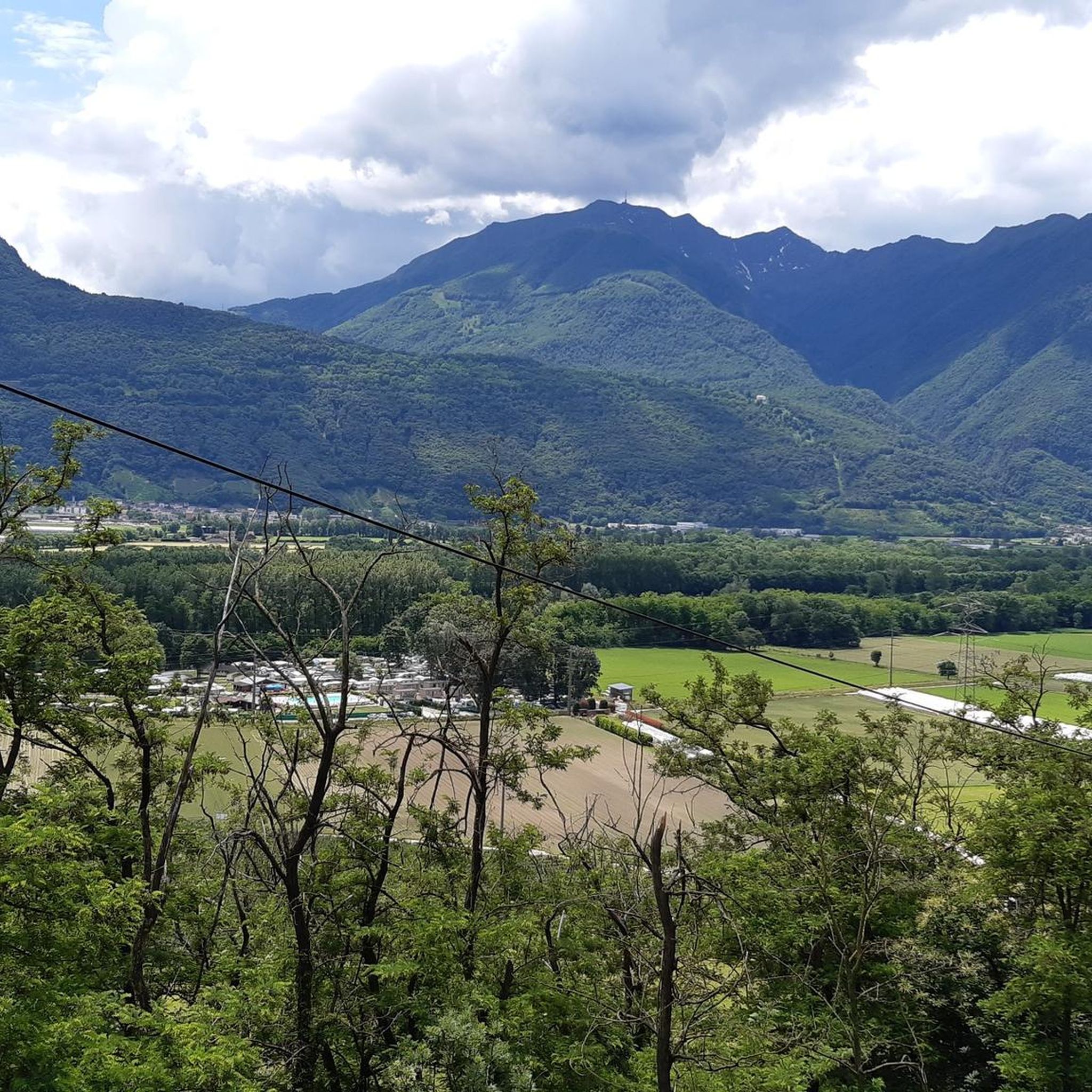
Alpe di Neggia — pass summit and Ritrovo di Neggia restaurant
Highlight • Mountain Pass
Translated by Google •
Tip by

Piazza Ticino and the Monte Ceneri Monument
Highlight • Monument
Translated by Google •
Tip by

Sign up now to discover places like this
Get recommendations on the best single tracks, peaks, & plenty of other exciting outdoor places.
Sign up for free
Alpe di Neggia Ascent from Vira
Highlight (Segment) • Climb
Translated by Google •
Tip by

Motto Rotondo
Highlight • Mountain Pass
Translated by Google •
Tip by

Erbea Pass
Highlight • Mountain Pass
Translated by Google •
Tip by

Sign up for free to discover even more mountain passes around Gudo.
Sign up for free
Already have an account?
Start today with a free account
Your next adventure awaits.
Login or Signup
Tips from the Community

Given it's a north facing be prepared to find patches of loose snow even at the beginning of the summer season. Always double check snow conditions on SLF snow map website (https://whiterisk.ch/en/conditions/snow-maps/snow_depth)
0
0

If the snow line drops, there will be snow on the Moleno Valley side, and it won't melt away quickly (the sun doesn't even shine in October). This makes this route on the steep slope truly challenging without spikes or poles. The descents from both sides, in particular, should be approached with extreme caution.
0
0

A small insight into the passage up to the small pass from the Capanna Tamaro: https://youtu.be/Kafzi0MLdcQ?si=wNXBySglx352A_dY
2
4

Many worthwhile trails in the area!
0
0

Bocchetta d'Erbea is located between the Gaggio valley and the Molena valley. It is a narrow opening in the rock that divides two very different valleys. The Gaggio valley is green, that of Molena is mainly stony.
1
0

The climb that connects Gambarogno to the Neggia alp and subsequently to Maccagno is very demanding. Its almost 13 kilometers, in fact, have an average gradient of 9.5%. The climb passes through a forest, which makes the effort bearable and pleasant. From the summit it is possible to admire Lake Maggiore. The climb from the Italian side is longer but easier.
0
0

One of the most beautiful and hard climbs along the lake Maggiore. Truly unique landscape and shaded in summer.
2
1

Frequently Asked Questions
Which mountain passes are highly recommended around Gudo?
Visitors often enjoy the Alpe di Neggia — pass summit and Ritrovo di Neggia restaurant, which offers stunning views over Lake Maggiore and serves as a popular starting point for tours. The Monte Ceneri Pass is also significant for its historical context and views of the Ticino valley. For a more challenging experience, the Erbea Pass is known for its unique narrow rock opening.
What kind of views can I expect from the mountain passes near Gudo?
Many passes offer breathtaking vistas. From Monte Ceneri Pass, you can enjoy beautiful views of the Ticino valley, especially from its northern approach. The Alpe di Neggia provides magnificent views over Lake Maggiore. Other passes, like San Bernardino Pass, feature picturesque small ponds and glacial streaks, culminating in the stunning Moesola mountain lake.
Are there any historical sites on or near the mountain passes?
Yes, the Monte Ceneri Pass has historical significance. Additionally, the Piazza Ticino and the Monte Ceneri Monument, located on the Monte Ceneri pass, features a totem made of Ticino stone, symbolizing the union of three regions and the completion of the AlpTransit project.
Are there family-friendly mountain passes or activities around Gudo?
The Alpe di Neggia is considered family-friendly, offering a restaurant and serving as a starting point for various tours. The Piazza Ticino and the Monte Ceneri Monument is also noted as family-friendly, providing an accessible historical site.
What are the difficulty levels of the mountain passes around Gudo?
The passes offer a range of challenges. The Alpe di Neggia is generally considered intermediate. The Erbea Pass is known for being challenging, especially when snow is present on the Moleno Valley side, requiring caution. The San Bernardino Pass climb is also intermediate, with a significant vertical drop.
Are there restaurants or cafes available at the mountain passes?
Yes, the Alpe di Neggia features the Ritrovo di Neggia restaurant, which also offers overnight accommodation. Visitors highly recommend their home-baked cakes and gazosa, along with the magnificent lake view.
What outdoor activities can I do near the mountain passes around Gudo?
The region around Gudo offers diverse outdoor activities. You can find various MTB trails, including challenging routes like 'Da San Antonino al monte Ceneri – giro ad anello'. There are also gravel biking routes, such as the 'Tenero–Bellinzona Cycle Path – Magadino Plain loop'. For road cyclists, road cycling routes like the 'Alpe di Neggia Ascent loop' are popular.
Is there parking available at the mountain passes?
Yes, parking facilities are available at some passes. For instance, the Alpe di Neggia is noted to have parking, making it convenient for visitors starting tours from there.
What is the best time to visit the mountain passes around Gudo?
The best time to visit depends on your activity. For hiking and cycling, late spring to early autumn (May to October) generally offers the most favorable weather conditions. Mountain passes in Ticino can experience seasonal closures due to snow, typically from late autumn through spring. Always check local conditions and typical snow closure dates before planning a winter visit.
Can I access the mountain passes around Gudo using public transport?
While specific public transport details for each pass are not provided, Bellinzona, near Gudo, is a central hub for public transport in Ticino. It's advisable to check local bus schedules or regional train connections from Bellinzona to the vicinity of the passes you plan to visit.
What makes the Alpe di Neggia a popular starting point for tours?
The Alpe di Neggia is popular because of its elevation at 1395 m, offering immediate access to higher terrain. It serves as a natural gateway for numerous hiking and cycling tours, with the added convenience of a restaurant and accommodation at the summit, making it an ideal base for exploration.
What should I know about cycling on Monte Ceneri Pass?
The Monte Ceneri Pass has a cycle lane, but cyclists should be aware of significant traffic and fast-moving cars. It is recommended to use a good rear light for safety. While the northern driveway offers beautiful views, some sections can feel less safe due to vehicle speeds.
Most popular routes around Gudo
Most popular attractions around Gudo

Get inspired with the komoot mobile app


Explore more
See even more epic mountain passes by checking out these guides around Gudo:
