The best road cycling routes in Owl Lake Recreation Reserve
119
riders
1
ride
Road cycling routes in Owl Lake Recreation Reserve, located in British Columbia, traverse a landscape characterized by river valleys, glacial lakes, and forested areas. The region offers varied terrain, from gentle riverside paths to more challenging ascents with significant elevation gains. Road cyclists can expect a mix of flat sections and climbs, often providing views of the surrounding natural environment. The area around Pemberton serves as a common starting point for many of these routes.
Best road cycling routes in…
Last updated: May 20, 2026
49
riders
59.7km
03:02
920m
920m
Hard road ride. Very good fitness required. Some segments of this route may be unpaved and difficult to ride.
18
riders
98.0km
04:51
1,320m
1,320m
Hard road ride. Very good fitness required. Some segments of this route may be unpaved and difficult to ride.

Sign up for free
11
riders
18.2km
00:43
50m
50m
Easy road ride. Great for any fitness level. Mostly well-paved surfaces and easy to ride.
41
riders
38.2km
01:28
80m
80m
Easy road ride. Great for any fitness level. Mostly well-paved surfaces and easy to ride.
Our route recommendations are based on thousands of hikes, rides, and runs completed by other people on komoot.
Start today with a free account
Your next adventure awaits.
Login or Signup
Popular around Owl Lake Recreation Reserve
Tips from the Community

There is very little of Nairn Falls to be seen from the roadside. If you want to see the falls, go into the provincial park parking lot and take a hike.
0
0

Parking for Bears 'n Ugliness Trail is just a pull-off on the highway, where you can park right by the "Whistler Welcome Sign", which says "Whistler Host Mountain Resort 2010 Olympic and Paralympic Winter Games Bienvenue".
0
0

On the trail to Nairn Falls from the parking lot on Highway 99, there are many opportunities to catch a glimpse of the rushing Green River. Occasionally, speedboats carrying tourists pass by on their way to the waterfall.
2
0
Alta Lake was formed by glacial retreat and subsequent sediment deposition, creating depressions that filled with meltwater. Alta Lake and other nearby lakes, such as Green Lake, are part of a large watershed whose waters flow north to the Lillooet River and south to the Cheakamus River. Historically, water flowed both north and south from Alta Lake, which lies at the top of the pass. This natural dual drainage system of the lake ended with the arrival of settlers. https://fireandicegeoregion.ca/geosite/whistler-valley-lakes-and-watershed-divide/
2
0
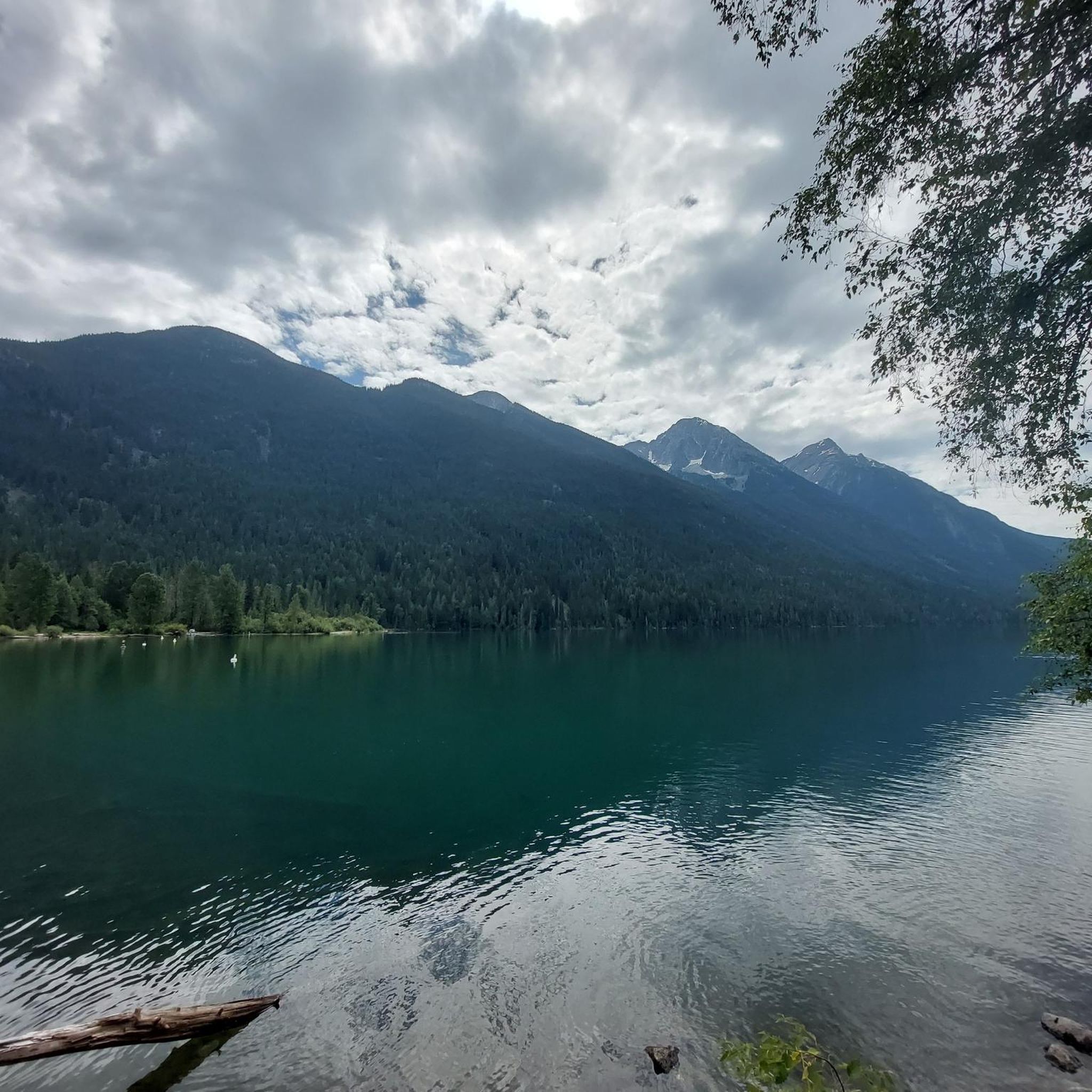
Green Lake is the largest lake in the Whistler region. To the north, it is the source of the Green River, which drains into the Lillooet River. Green Lake was formed during the last Ice Age, when sediment was deposited in the U-shaped valley, forming lake basins. The lake's green color is due to the glacial silt of Fitzsimmons Creek. From the wooden boardwalk on the southwest shore, we have a magnificent view of the lake and the seaplane landing. In the background, we can see the peaks of the Garibaldi Range, from Wedge Mountain to Mount Currie, including Mount Weart with the Armchair Glacier. https://www.piquenewsmagazine.com/local-news/naturespeak-awesome-geology-sites-around-whistlergreen-lake-part-2-7576124
2
0
The Village Stroll is a pedestrian-only area that runs through Whistler Village, connecting shops, restaurants, and attractions, including the cable cars that travel up to Whistler Mountain and Blackcomb Peak. The development planning for Whistler Village dates to the 1970s; the implementation and construction of the village took place in the 1980s. Details of the events at that time can be found on the Whistler Museum website: https://whistlermuseum.org/tag/village-stroll/
2
0

Green Lake was developed in the first half of the 20th century. Originally, it was a mainly agricultural area. Over time, the local community saw the recreational and tourism potential of the area. In the 1950s, the golf course was built and the seaplane airfield established to attract more visitors and improve the connectivity of the region. Since then, Green Lake has evolved to become a popular destination for locals and tourists alike, maintaining a balance between its natural beauty and activities. You can go around it on MTB.
3
0
Green Lake is a moderate-sized lake stretching approximately 1.2 km long and 0.8 km wide, covering an area of around 96 hectares.
3
0
Frequently Asked Questions
What kind of terrain can I expect when road cycling in Owl Lake Recreation Reserve?
Road cycling in Owl Lake Recreation Reserve, located in British Columbia, offers a diverse landscape. You'll encounter river valleys, glacial lakes, and extensive forested areas. The terrain varies from gentle riverside paths to more challenging ascents with significant elevation gains, providing a mix of flat sections and climbs.
Are there road cycling routes suitable for beginners or families in Owl Lake Recreation Reserve?
Yes, there are routes suitable for various skill levels. For an easier ride, consider the Ryan River loop from Pemberton Station, an 11.3-mile (18.2 km) trail that takes about 42 minutes. Another easy option is the Ryan River loop from Pemberton, which is 38.2 km long with minimal elevation gain.
What are some challenging road cycling routes in Owl Lake Recreation Reserve?
For a more demanding experience, the Green Lake docks loop from Pemberton is a difficult 59.5-mile (95.7 km) path. This route features substantial elevation gain, offering a challenging ride through varied terrain around Green Lake.
Can I find circular road cycling routes in Owl Lake Recreation Reserve?
Yes, several routes in the area are designed as loops. A popular moderate option is the Soo River – Green Lake loop from Pemberton, a 34.7-mile (55.9 km) trail. For a more challenging loop, consider the Green Lake docks loop from Pemberton.
What natural features or viewpoints can I see along the road cycling routes?
The routes often provide views of the surrounding natural environment, including river valleys, glacial lakes like Green Lake, and extensive forested landscapes. The Soo River – Green Lake loop from Pemberton, for instance, offers a mix of river views and lake scenery.
What is the best time of year to go road cycling in Owl Lake Recreation Reserve?
While specific seasonal data isn't provided, regions with glacial lakes and forested areas like British Columbia typically offer the best road cycling conditions from late spring through early autumn (May to October), when the weather is milder and roads are clear of snow and ice. Always check local weather conditions before you go.
Is Owl Lake Recreation Reserve suitable for dog-friendly road cycling?
The suitability for dog-friendly road cycling depends on local regulations and the specific route. While the natural environment is appealing, it's essential to check if dogs are permitted on the roads or trails you plan to cycle and if there are any leash requirements. Always ensure your dog is comfortable with the distance and terrain.
Where can I find parking for road cycling routes in Owl Lake Recreation Reserve?
Many routes in Owl Lake Recreation Reserve start from Pemberton, which serves as a common starting point. You can typically find parking facilities within or near Pemberton, or at designated trailheads depending on the specific route you choose. It's advisable to check the route details on komoot for specific parking recommendations.
Are there any cafes or amenities near the road cycling routes?
Since many routes originate from Pemberton, you can expect to find cafes, restaurants, and other amenities in this town before or after your ride. For routes that venture further into the reserve, amenities may be limited, so it's wise to carry sufficient water and snacks.
How long do the road cycling routes typically take to complete?
The duration of routes varies significantly based on distance and difficulty. For example, the Ryan River loop from Pemberton Station can be completed in about 42 minutes, while the longer Soo River – Green Lake loop from Pemberton takes around 2 hours 50 minutes. The most challenging route, the Green Lake docks loop from Pemberton, typically requires over 4 hours.
What makes road cycling in Owl Lake Recreation Reserve unique?
Road cycling in Owl Lake Recreation Reserve is defined by its stunning British Columbia landscape, featuring a blend of river valleys, pristine glacial lakes, and dense forested areas. The region offers a unique combination of varied terrain, from gentle riverside paths to challenging climbs, all set against a backdrop of natural beauty, often starting from the charming town of Pemberton.
What do other road cyclists say about the routes in Owl Lake Recreation Reserve?
More than 100 road cyclists have used komoot to explore Owl Lake Recreation Reserve's varied terrain. While a specific rating score isn't available, the community frequently praises the diverse landscape, including river views and lake scenery, and the options available for different ability levels, from easy loops to difficult climbs.

Get inspired with the komoot mobile app


Explore more
Browse the best Road cycling routes in other regions.
