Top 20 Natural Monuments around Grez-Doiceau
Natural monuments around Grez-Doiceau showcase a diverse landscape of significant natural areas and historical features. This Belgian municipality, nestled in Walloon Brabant, is characterized by ancient forests, rich wetlands, and unique geological formations. The region provides opportunities to explore varied ecosystems and notable natural landmarks, offering green landscapes and biodiversity. Visitors can discover a range of natural attractions, from expansive woodlands to protected river valleys.
Best natural monuments around Grez-Doiceau
- The most popular natural monuments is Meerdaal Forest and Heverlee…
Last updated: June 26, 2026
Chapel of Our Lady of Steenbergen and the Minnebron
Highlight • Religious Site
Translated by Google •
Tip by

Dolmen Stone of Duisburg (Zevenster, Sonian Forest)
Highlight • Natural Monument
Translated by Google •
Tip by
Sign up now to discover places like this
Get recommendations on the best single tracks, peaks, & plenty of other exciting outdoor places.
Sign up for free
De Doode Bemde Nature Reserve
Highlight • Forest
Translated by Google •
Tip by

Tervuren Park
Highlight • Forest
Translated by Google •
Tip by

Meerdaal Forest and Heverlee Forest
Highlight • Forest
Translated by Google •
Tip by
Sign up for free to discover even more natural monuments around Grez-Doiceau.
Sign up for free
Already have an account?
Start today with a free account
Your next adventure awaits.
Login or Signup

Tips from the Community

Nearby is the spring where apparently very healthy water can be tapped.
1
0
Look carefully which path you take. With this roundabout, you can go in any direction.
0
0

The Duisburg Dolmen Stone is a large historical erratic boulder in Duisburg (a district of Tervuren). It is often associated with prehistoric rituals and may have been part of an ancient burial monument (dolmen), although this has not been proven with certainty. The stone is primarily considered a local archaeological and folklore monument, commemorating the very early settlement of the region.
3
0

In 1652, in the middle of the Meerdaalwoud, Lord van Steenbergen had a chapel built on the site where there had previously been a miraculous statue of Mary who cured people suffering from marsh fever.
3
0

Regardless of how many paths, lanes, avenues, and other sunken roads converge here, this place is known as the Zevenster (Seven Star). And in the middle lie those famous stones. They too have a name: together, they form the Duisburg Dolmen Stone. Specifically, it refers to three remaining fragments of this Dolmen Stone, which originally, in their unbroken state, had a diameter of approximately 2.45 meters. The stone (a chunk of quartzite, or compressed sandstone) was unearthed in 1883 in a field near Duisburg. Locals initially thought it was an impacted meteorite, which subsequently earned it the name "dry thunderstone." After considerable debate, it is now believed to be polishing stones. So, no remains of a megalithic monument, although several Stone Age artifacts have been found in the Sonian Forest. The stone was unbroken when it was found. This happened during its transport to the Warande Park or the Warande (Tervuren Park) here, where it was brought by horse and cart in 1897 and was a showpiece at the World's Fair—although the 267 Congolese who were forcibly brought to Belgium to be exhibited as animals in a zoo that same year likely attracted more attention. The Zevenster itself is, of course, a rather special spot with all its avenues and paths converging. You can enjoy it from various benches, including a picnic table and a "wooden throne." Incidentally, the Zevenster isn't that old. In the past, it was entirely laid out in a checkerboard pattern. The redevelopment of the Warande, with a star-shaped instead of checkerboard pattern, took place under Charles of Lorraine in the eighteenth century. Quote: "The Warande itself also received a thorough facelift, and the original checkerboard pattern was changed to a star-shaped layout, with the various avenues converging into the 'Zevenster'." Sources: https://ernstguelcher.blogspot.com/2024/02/dolmen-in-tervuren-en-chaumont-gistoux.html http://www.megalitica.be/megasite/belgie7a.htm https://inventaris.onroerenderfgoed.be/erfgoedobjecten/300554
12
0

There are numerous ponds in the Tervuren Park. The Vossemvijver and the southern Kanaal- and Gertrudisvijver were recently restored and give part of the southern park area back its former glory. Fish and amphibians find it pleasant to stay there thanks to a varied aquatic plant growth and the construction of spawning grounds. (Nature and Forest)
11
0
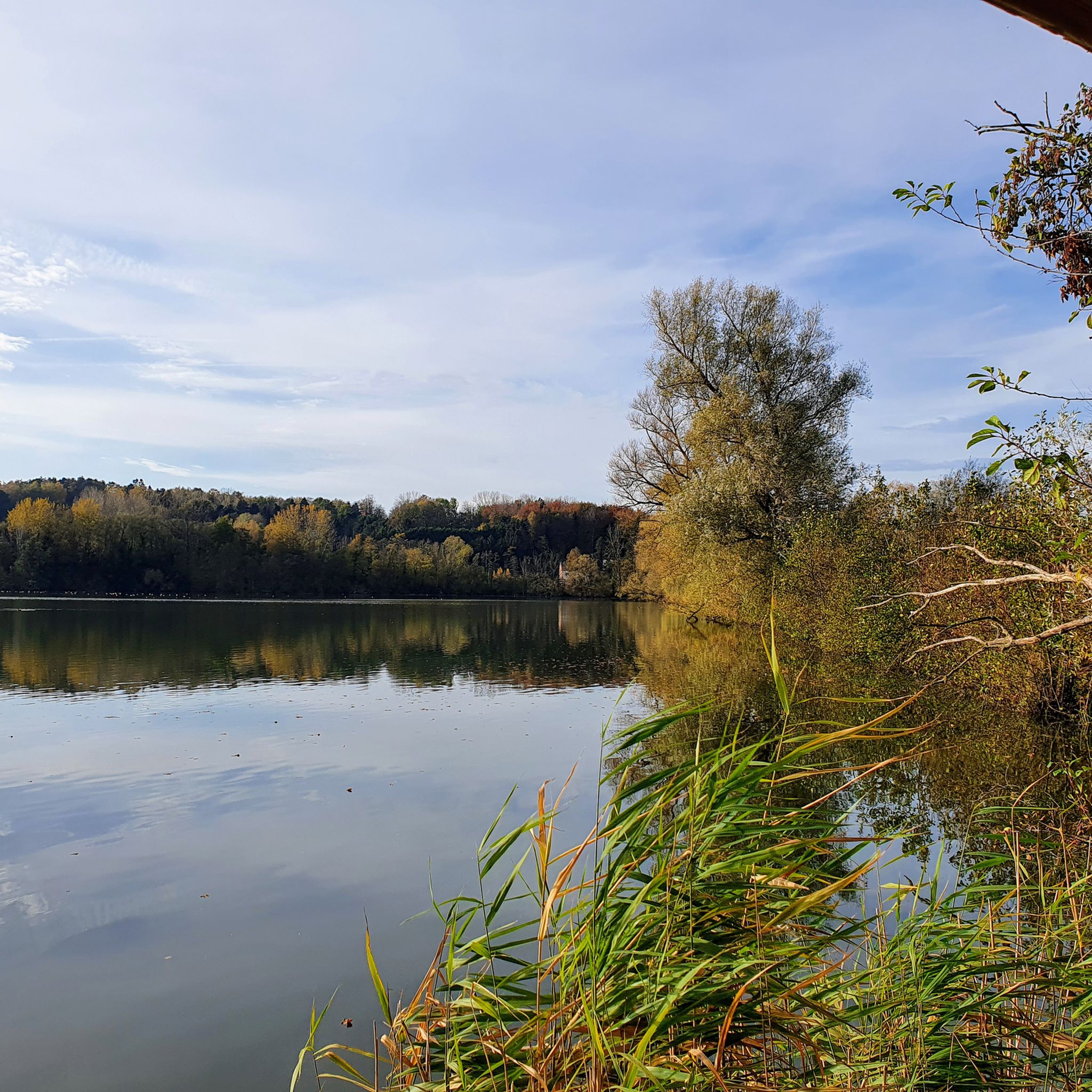
The Doode Bemde is a nature reserve of almost 300 hectares. It is located on both sides of the Dyle on the territory of Oud-Heverlee, Sint-Joris-Weert, Neerijse (Huldenberg) and Korbeek-Dijle (Bertem). The Dyle still has its original meanders here and can regularly overflow its banks. This ensures a wide variety of biotopes. It is the largest private nature reserve in Flemish Brabant. The name of the nature reserve can be easily explained. 'Dead' refers to the unsuitability of the land for farmers. A 'Bemde' is a moist grassland. Info and source: Friends of Heverleebos and Meerdaalwoud https://vhm.be/doode-bemde/
9
0

Contrary to what its name suggests, this humid nature reserve in the Dyle Valley is buzzing with life. Can you find the traces of beavers who shape the area like real landscape architects? Or will you spot a kingfisher, great egret or kestrel from the bird watching huts? Where does that strange name come from? Well, 'Doode' points to the fact that the land cannot be cultivated by farmers. And 'bemde' stands for 'moist grassland'. So we are now putting on our boots for a brisk walk in the 'unusable grasslands' of the Dyle Valley.
5
2
Frequently Asked Questions
What kind of natural monuments can I explore in Grez-Doiceau?
Grez-Doiceau offers a diverse range of natural monuments, from ancient forests and rich wetlands to remarkable individual trees and unique ecological projects. You can discover expansive woodlands like Meerdaal Forest and Heverlee Forest, significant wetland areas such as the Dyle Valley and the De Doode Bemde Nature Reserve, and even a private 'wild garden' dedicated to biodiversity, Le Bois de Fa.
Are there any historical natural monuments in the area?
Yes, Grez-Doiceau features natural monuments with historical significance. For example, the Dolmen Stone of Duisburg (Zevenster, Sonian Forest) is a site with three fragments of a large historical erratic boulder, believed to be polishing stones, located where thirteen trails converge. Additionally, the region is home to numerous 'remarkable trees' within historical estates like Château d'Archennes and Parc de Florival, which are recognized for their age, size, or historical importance.
What are some family-friendly natural monuments to visit?
Several natural monuments around Grez-Doiceau are great for families. Meerdaal Forest and Heverlee Forest offer vast spaces for exploration, and the 'Path of Ad' features mysterious and fairytale tree sculptures. Tervuren Park, with its numerous ponds and elegant gardens, is also very family-friendly. The Dolmen Stone of Duisburg is an interesting historical site that can spark curiosity in children.
Where can I go for birdwatching or to observe wildlife?
The Dyle Valley and the Pond of Pécrot are exceptional for birdwatching and wildlife observation. The Dyle Valley is a Special Protection Area for European Avifauna, and the Pond of Pécrot, a stunning 5-hectare lake, is a crucial refuge and nesting ground for numerous water birds. You might spot kingfishers, black woodpeckers, amphibians, and various aquatic insects. The De Doode Bemde Nature Reserve, also in the Dyle Valley, is buzzing with life, including traces of beavers and various bird species.
Are there specific natural monuments known for unique trees?
Grez-Doiceau is particularly known for its 'remarkable trees.' Parc de Florival hosts a diverse collection including a weeping beech, silver-leafed lime, common catalpa, and rare Siberian elms. The park surrounding Château d'Archennes features a magnificent collection of old and rare trees such as sycamore maple, purple beech, Metasequoia, and bald cypress. These sites offer peaceful strolls and an appreciation of majestic natural beauty.
What outdoor activities can I do near these natural monuments?
The area around Grez-Doiceau offers a variety of outdoor activities. You can find numerous hiking trails, such as the 'Pécrot Pond – Pécrot Railway Station loop' or the 'Forest Trail With Stream Bed – Bonlez Wood loop.' For cyclists, there are routes like 'Ponds in Tervuren Park' or 'Gravel Path Through Farmland.' Runners can explore trails like 'Château de Nethen – Château Deprez loop.' You can find more details on these and other routes in the hiking, cycling, and running guides for Grez-Doiceau.
Is there a natural monument focused on biodiversity and rewilding?
Yes, Le Bois de Fa in Grez-Doiceau is a private 'wild garden' that serves as an exceptional example of biodiversity development. This 6-acre property features an experimental garden with flower meadows, dense woods, orchards, a natural spring, and a pond. It has successfully multiplied observed biodiversity and includes a thriving Miyawaki forest, making it an inspiring site for ecological enthusiasts.
What do visitors enjoy most about the natural monuments in Grez-Doiceau?
Visitors particularly appreciate the diverse landscapes and the sense of tranquility. Many enjoy the humid nature reserves like De Doode Bemde Nature Reserve for its abundant wildlife and the chance to spot beavers or kingfishers. The majestic trees and serene atmosphere of places like Meerdaal Forest and Heverlee Forest are also highly valued for peaceful strolls and connecting with nature.
Are there any religious or spiritual sites among the natural monuments?
Yes, the Chapel of Our Lady of Steenbergen and the Minnebron is a notable site. Located within the Meerdaalwoud, this beautiful Baroque building from the 17th century is a place of pilgrimage. Nearby, the very old Minnebron has provided clear and pure drinking water for centuries, with miraculous healings attributed to its source.
What is the best time to visit the natural monuments in Grez-Doiceau?
The natural monuments in Grez-Doiceau can be enjoyed throughout the year, with each season offering a different experience. Spring and summer are ideal for lush greenery, vibrant flower meadows at Le Bois de Fa, and active wildlife in the Dyle Valley. Autumn brings beautiful foliage to the forests like Meerdaal and Heverlee, while winter offers peaceful, crisp walks through the woodlands.
Are there any viewpoints or scenic spots within the natural monuments?
While specific designated viewpoints are not extensively highlighted, the natural diversity of Grez-Doiceau offers many scenic spots. The Tervuren Park, with its elegant French gardens and ponds, provides picturesque settings. The confluence of paths at the Dolmen Stone of Duisburg (Zevenster) also offers a unique perspective of the surrounding forest avenues.
Most popular routes around Grez-Doiceau
Most popular attractions around Grez-Doiceau

Get inspired with the komoot mobile app


Explore more
Extend your search for the best caves by checking out these guides of the top ones around Grez-Doiceau:
