Attractions and Places To See around Monfurado - Top 12
Best attractions and places to see around Monfurado are concentrated within the Serra de Monfurado mountain range, located in Portugal's Alentejo region. This area is characterized by its extensive cork oak and holm oak forests, forming the unique montado ecosystem, and is part of the Natura 2000 network. The region also features ancient mining sites and significant prehistoric monuments, including megalithic structures. It offers a blend of natural landscapes and historical sites for exploration.
Best attractions and places to see around Monfurado
- The most popular attractions is Cork Oaks on the Way to the Menhir, a forest that allows observation of cork harvesting. This area features a pasture landscape with views of local nature.
- Another must-see spot is Greenway, a cycle way that follows an old railway line from Montemor-o-Novo to Torre de Gadanha. Visitors can expect a scenic route through the montado landscape, with cork trees providing shade.
- Visitors also love Great Cork Oak, a natural monument within the montado ecosystem. This system is a cultural landscape shaped by human activity, featuring cork oaks and holm oaks.
- Monfurado is known for its natural landmarks, historical sites, and outdoor trails. The region offers a variety of attractions, from ancient forests and megalithic monuments to scenic cycling paths.
- The attractions around Monfurado are appreciated by the komoot community, with 16 upvotes and 8 photos shared by visitors.
Last updated: August 25, 2026
Cork Oaks on the Way to the Menhir
Highlight • Forest
Translated by Google •
Tip by

Greenway
Highlight (Segment) • Cycleway
Tip by

Sign up now to discover places like this
Get recommendations on the best single tracks, peaks, & plenty of other exciting outdoor places.
Sign up for free
Great Cork Oak
Highlight • Natural Monument
On the tree level it can be made up of oaks like cork oak (Quercus suber), holm oak (Q. rotundifolia) and less frequently pyrene oak (Q. pyrenaica) and portuguese oak (Q. faginea), in pure or mixed populations with variable densities. The ground cover is occupied by pastures used by cattle or is used for dry land crops on a rotation system. The natural pastures can be occupied by shrubs, in variable proportions.
Humans are an integral and fundamental part of this ecosystem. It was through our clearing action that the montados were created, ever since we started intervening on our natural surroundings. Human management is necessary, in a more or less intensive way, in order to maintain the montado. Without this intervention, the system evolves, naturally to form a dense forest, where people have more difficulty obtaining resources.
The way this process of transformation of the Mediterranean forest developed influenced the structure of the system as it presents today. Some older practices still persist, now without context, making more difficult the adaptation of the system to the new ways of agrarian production. Other ways emerged, some well adapted to the system, other causing more or less serious disturbances.
The montado is a system for using the soil developed on a physical background that involves climate, pedological and geomorphological factors with specific characteristics. It is why this ecosystem is restricted to such a limited area, when compared to other ecosystems in our planet.
Tip by

Almendres Cromlech Interpretive Center
Highlight • Historical Site
We also have an educational park that includes reproductions of Paleolithic shelters and a Neolithic hut (full-scale and built with the original materials and techniques), as well as the corresponding everyday equipment, such as hunting weapons, chipped and polished stone tools, ceramics, votive objects, among many others. We also have a collection of 3D replicas of skulls of the main members of the human evolutionary line.
This space aims to create the most immersive educational experience possible. We decided to do without all modern interpretation equipment and bring our visitors back to the landscape and the material. We believe that, as Aristotle argued, the most effective way to learn is through experimentation and the use of all the senses.
Translated by Google •
Tip by
Patalim
Highlight • Rest Area
This place has a fountain, W.C., and a café-restaurant.
The Fonte de Patalim and the stream
Water is the central element that shaped human survival and settlement in this rural area.
Geography: The region is crossed by the Ribeira de Patalim, a watercourse that has guaranteed the fertility of the fields over the centuries.
Stopping point: The Fonte de Patalim has served for generations as a vital supply and rest point for those traveling through the region.
The Venda do Patalim and the Royal Route
Being located on the connecting axis between Montemor-o-Novo and Évora, the area developed a commercial aspect and support for travelers.
Historical inn: Historical documents reveal the existence of the Venda do Patalim, a place for lodging and trade.
Royal Passage: In May 1619, the entourage of King Philip III of Portugal (Philip IV of Spain) passed precisely by the Venda do Patalim on their way to Montemor-o-Novo.
Showing Translation
Tip by

Sign up for free to discover even more attractions around Monfurado.
Sign up for free
Already have an account?
Start today with a free account
Your next adventure awaits.
Login or Signup


Tips from the Community

Excellent place to rest, located halfway between Montemor-o-Novo and Évora. This place has a fountain, W.C., and a café-restaurant. The Fonte de Patalim and the stream Water is the central element that shaped human survival and settlement in this rural area. Geography: The region is crossed by the Ribeira de Patalim, a watercourse that has guaranteed the fertility of the fields over the centuries. Stopping point: The Fonte de Patalim has served for generations as a vital supply and rest point for those traveling through the region. The Venda do Patalim and the Royal Route Being located on the connecting axis between Montemor-o-Novo and Évora, the area developed a commercial aspect and support for travelers. Historical inn: Historical documents reveal the existence of the Venda do Patalim, a place for lodging and trade. Royal Passage: In May 1619, the entourage of King Philip III of Portugal (Philip IV of Spain) passed precisely by the Venda do Patalim on their way to Montemor-o-Novo.
15
0

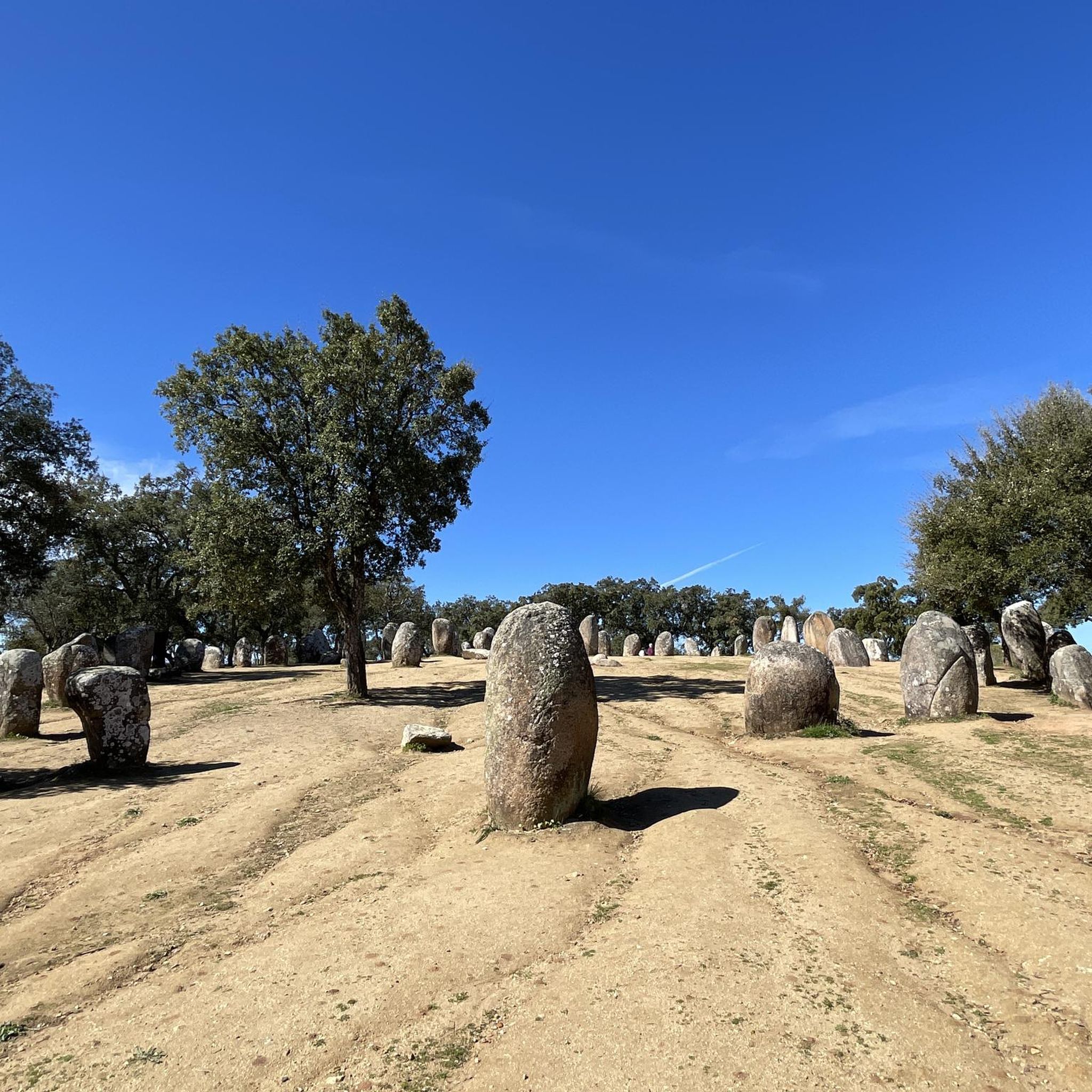
Located in the village of Guadalupe, near the Almendres Cromlech, this is a space we created in partnership with the Évora City Council. Its main objective is to support visits to the Almendres Cromlech with educational services and interpretative content on archaeology and nature. We also have an educational park that includes reproductions of Paleolithic shelters and a Neolithic hut (full-scale and built with the original materials and techniques), as well as the corresponding everyday equipment, such as hunting weapons, chipped and polished stone tools, ceramics, votive objects, among many others. We also have a collection of 3D replicas of skulls of the main members of the human evolutionary line. This space aims to create the most immersive educational experience possible. We decided to do without all modern interpretation equipment and bring our visitors back to the landscape and the material. We believe that, as Aristotle argued, the most effective way to learn is through experimentation and the use of all the senses.
4
0
The Montado is an agrosilvopastoral system explored at several levels – trees, bushes and herbs – according to the potential of each region. On the tree level it can be made up of oaks like cork oak (Quercus suber), holm oak (Q. rotundifolia) and less frequently pyrene oak (Q. pyrenaica) and portuguese oak (Q. faginea), in pure or mixed populations with variable densities. The ground cover is occupied by pastures used by cattle or is used for dry land crops on a rotation system. The natural pastures can be occupied by shrubs, in variable proportions. Humans are an integral and fundamental part of this ecosystem. It was through our clearing action that the montados were created, ever since we started intervening on our natural surroundings. Human management is necessary, in a more or less intensive way, in order to maintain the montado. Without this intervention, the system evolves, naturally to form a dense forest, where people have more difficulty obtaining resources. The way this process of transformation of the Mediterranean forest developed influenced the structure of the system as it presents today. Some older practices still persist, now without context, making more difficult the adaptation of the system to the new ways of agrarian production. Other ways emerged, some well adapted to the system, other causing more or less serious disturbances. The montado is a system for using the soil developed on a physical background that involves climate, pedological and geomorphological factors with specific characteristics. It is why this ecosystem is restricted to such a limited area, when compared to other ecosystems in our planet.
5
0
Typical Alentejo farm. Private property. Not open to visitors...
3
0

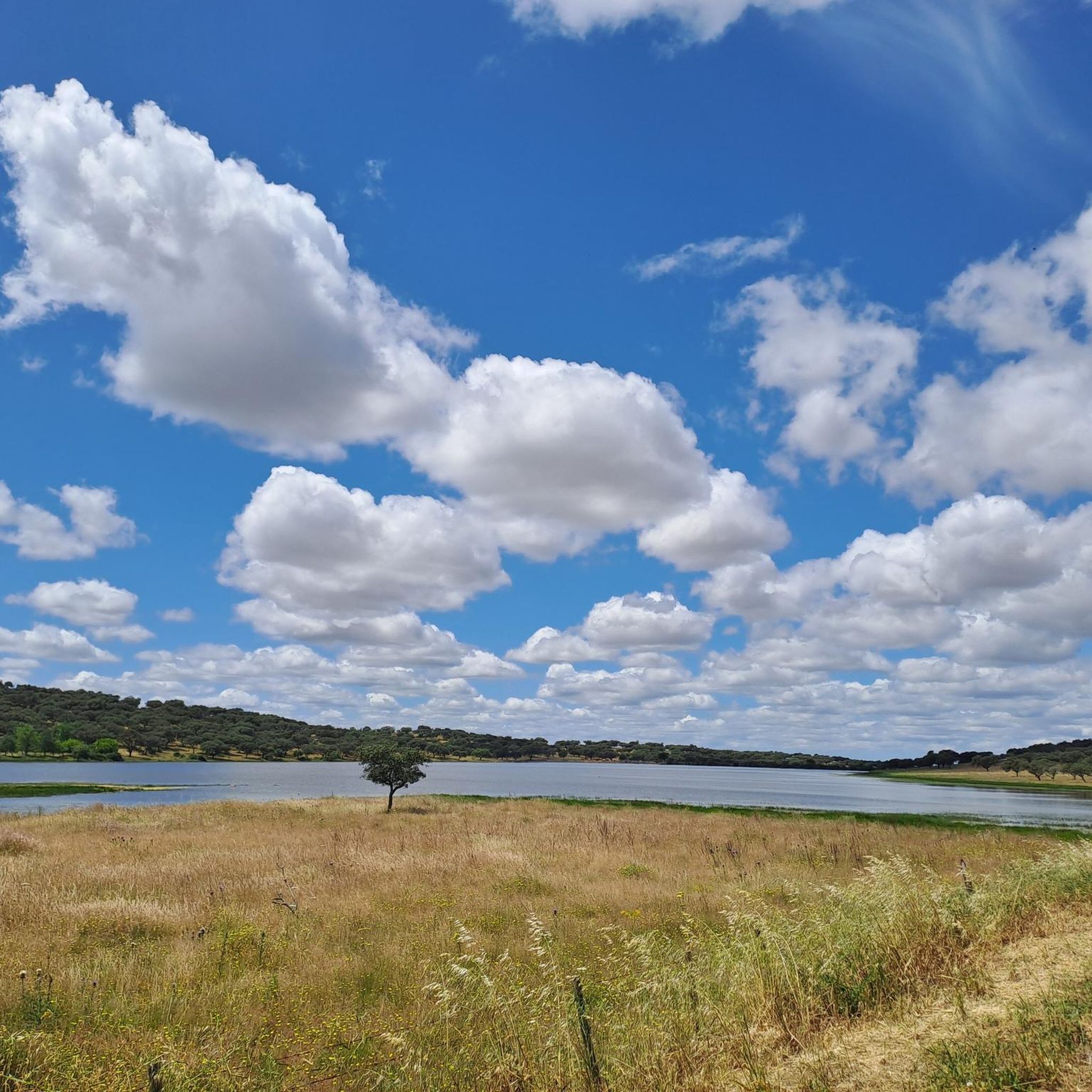
Beautiful path and landscape with a view of the local nature.
2
1

Here you can watch up close how the cork is harvested and slowly grows back.
4
1

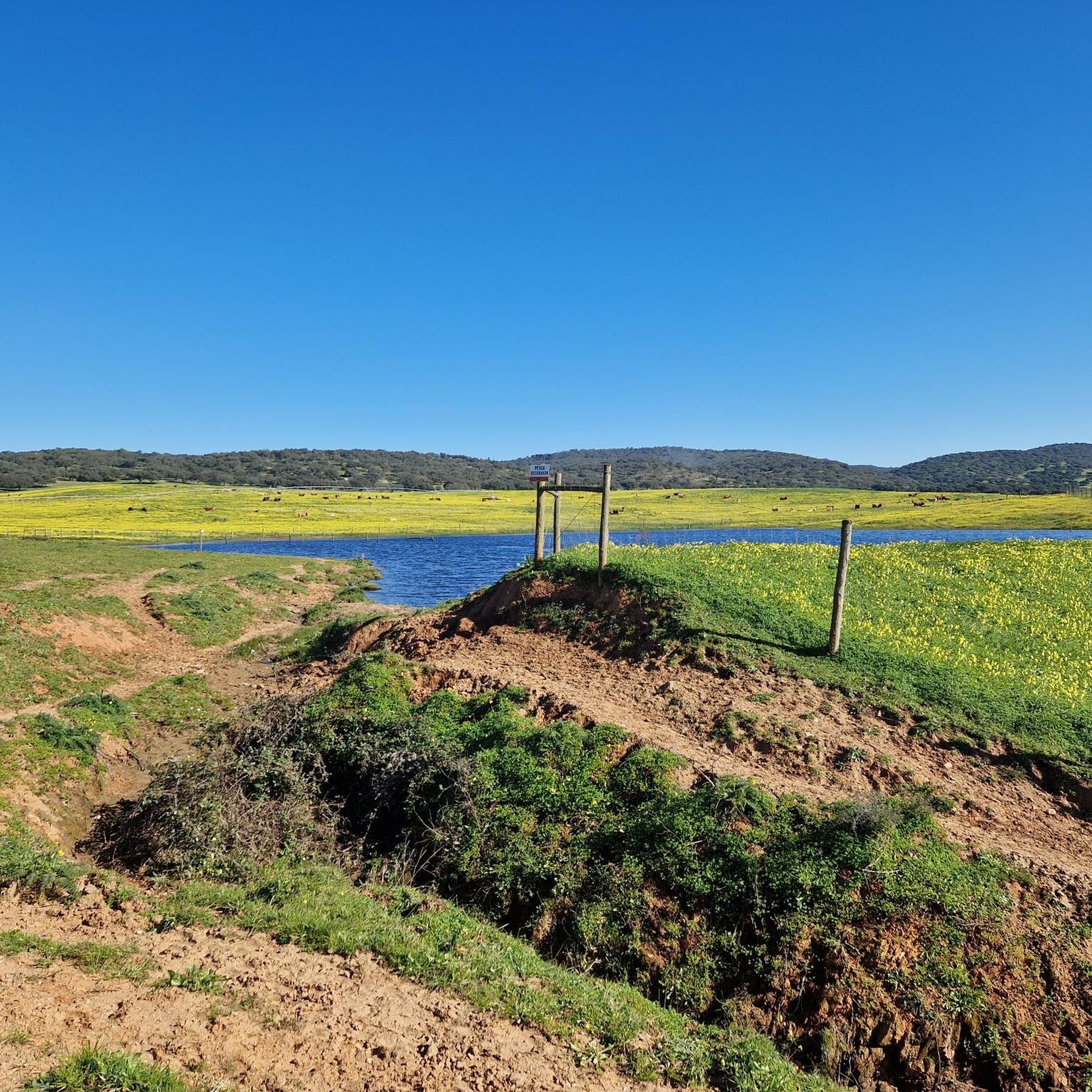
Beautiful pasture landscape that blooms fragrantly in spring.
3
1

This ecopista (old railway turned into cycling path) goes from the city of Montemor-o-novo to Torre de gadanha, which is just a train station where trains don't stop anymore. The track is paved until km4, from where turns to a compact gravel. The landscape is of montado (typical landscape of Alentejo region) with lots of cork trees shadowing the path (which is desirable in this hot region). There is a café next to an old train station of Paião at km8, but the rest of the ecopista is pretty isolated with no water or other services along the way. It is best done on spring when the fields are still green and flowers blossoming. Cattle can also be seen along the way (sheeps, horses and cows).
2
0
Frequently Asked Questions
What natural features can I explore in Monfurado?
Monfurado is dominated by the Serra de Monfurado mountain range, featuring extensive cork oak and holm oak forests, characteristic of the Alentejo's unique 'montado' ecosystem. You can observe cork harvesting up close at places like Cork Oaks on the Way to the Menhir, or visit the Great Cork Oak, a natural monument within this system. The area is also part of the Natura 2000 network, recognized for its biodiversity, including various bat species.
Are there any historical or cultural sites to visit in the Monfurado area?
Yes, Monfurado offers a rich history. You can explore the atmospheric ruins of the Monastery of Nossa Senhora do Castelo das Covas (Convento dos Monges) nestled in the Serra de Monfurado. The region also has a history of mining, with remnants of ancient iron ore mines. Additionally, the surrounding area is famous for its prehistoric monuments, including the Almendres Cromlech, the largest megalithic monument in the Iberian Peninsula, and the Anta Grande do Zambujeiro dolmen. The Almendres Cromlech Interpretive Center provides educational content on the archaeology and nature of these sites.
What kind of outdoor activities can I do around Monfurado?
Monfurado is ideal for outdoor enthusiasts. You can enjoy hiking, cycling, and mountain biking. For hiking, explore easy trails like the 'Almendres Cromlech loop' or 'Almendres Menhir loop'. Cyclists can take advantage of the Greenway, an old railway line converted into a scenic cycling path. For more options, check out the guides for easy hikes, cycling, and MTB trails around Monfurado.
Are there family-friendly attractions in Monfurado?
Yes, several attractions in Monfurado are suitable for families. The Cork Oaks on the Way to the Menhir offers a chance to see cork harvesting and enjoy a beautiful pasture landscape. The Greenway is a pleasant cycling path for all ages, especially in spring. The Almendres Cromlech Interpretive Center provides an immersive educational experience with reproductions of prehistoric shelters and tools, which can be engaging for children.
When is the best time to visit Monfurado?
The best time to visit Monfurado is typically in spring when the fields are green, and flowers are blossoming, making the landscapes particularly fragrant and beautiful. The cork trees along paths like the Greenway also provide welcome shade, which is desirable in the warmer months.
What is the 'montado' ecosystem, and where can I experience it?
The 'montado' is a unique agro-silvo-pastoral system, a cultural landscape shaped by human activity, primarily found in the Alentejo region. It consists of cork oak and holm oak forests, supporting traditional rural life and biodiversity. You can experience this ecosystem throughout the Serra de Monfurado, particularly at sites like Cork Oaks on the Way to the Menhir, the Great Cork Oak, and along the Alentejo Montado, where you can observe its delicate balance and importance.
Are there specific viewpoints in Monfurado offering scenic views?
While specific named viewpoints are not detailed, the Serra de Monfurado itself offers numerous scenic spots, especially from its higher elevations like Pico de São Sebastião. The Cork Oaks on the Way to the Menhir provides beautiful pasture landscapes with views of the local nature. Additionally, the Montemor-o-Novo Castle, located nearby, offers panoramic views of the surrounding countryside, including parts of Monfurado.
What is the significance of the megalithic sites near Monfurado?
The region surrounding Monfurado is home to one of the most important megalithic ensembles in Europe. These prehistoric monuments, such as the Almendres Cromlech and the Almendres Menhir, predate Stonehenge and offer a glimpse into ancient human activity and beliefs. The Anta Grande do Zambujeiro is another significant dolmen. These sites are crucial for understanding the early history and cultural practices of the Iberian Peninsula.
Can I find places to eat or drink near Monfurado's attractions?
While many attractions in Monfurado are in natural or historical settings, there are some options. For example, along the Greenway cycling path, there is a café next to an old train station of Paião at km8. For more extensive options, you would typically find cafes and restaurants in the nearby towns like Montemor-o-Novo or Évora.
Is Monfurado suitable for dog owners?
Monfurado's natural landscapes, particularly the trails through the montado and the Serra de Monfurado, can be suitable for dog owners. However, it's always advisable to keep dogs on a leash, especially in areas with livestock or protected wildlife, and to respect local regulations regarding pets in natural parks or historical sites. Always carry water for your dog, especially during warmer months.
How can I learn more about the ancient history of Monfurado?
To delve deeper into Monfurado's ancient history, visit the Almendres Cromlech Interpretive Center in Guadalupe. This center offers educational services and interpretative content on archaeology and nature, including reproductions of Paleolithic shelters and Neolithic huts, along with tools and artifacts. Additionally, the Gruta do Escoural (Escoural Cave) is a significant archaeological site providing insights into 50,000 years of prehistoric human activity.
Are there any challenging hikes in Monfurado?
While the provided data highlights easy and moderate routes, the varied terrain of the Serra de Monfurado, with its highest point at Pico de São Sebastião (441 meters), suggests opportunities for more challenging hikes. For specific challenging routes, you can explore the MTB Trails around Monfurado guide, which includes difficult routes like the 'View of Montemor-o-Novo – 30 km Multi-Terrain Route loop from Montemor-o-Novo' for those seeking a greater challenge.
Most popular routes around Monfurado
Most popular attractions around Monfurado

Get inspired with the komoot mobile app


Explore more
Still not found the Highlight you’re looking for? See guides of the top attractions in other regions:
