Attractions and Places To See around Mouronho - Top 12
Best attractions and places to see around Mouronho, a village in Tábua, Portugal, offer a blend of natural beauty and cultural heritage. The region features picturesque landscapes of rolling hills and serene valleys, with rivers like the Alva and Cavalos. Visitors can explore historical buildings, ancient chapels, and natural features such as waterfalls and river beaches. This area provides opportunities for outdoor exploration and discovering local history.
Best attractions and places to see around Mouronho
- The most popular attractions is…
Last updated: May 4, 2026
Roman Bridge of Sumes
Highlight • Bridge
Translated by Google •
Tip by

Fraga da Pena Waterfall
Highlight • Waterfall
Translated by Google •
Tip by
Sign up now to discover places like this
Get recommendations on the best single tracks, peaks, & plenty of other exciting outdoor places.
Sign up for free
Colorful Boardwalks of the Trilho dos Gaios
Highlight (Segment) • Trail
Translated by Google •
Tip by
Vale de Gaios River Beach
Highlight • Beach
Translated by Google •
Tip by
Ecopista Extension, Lameiras
Highlight • Cycleway
Tip by

Sign up for free to discover even more attractions around Mouronho.
Sign up for free
Already have an account?
Start today with a free account
Your next adventure awaits.
Login or Signup


Tips from the Community

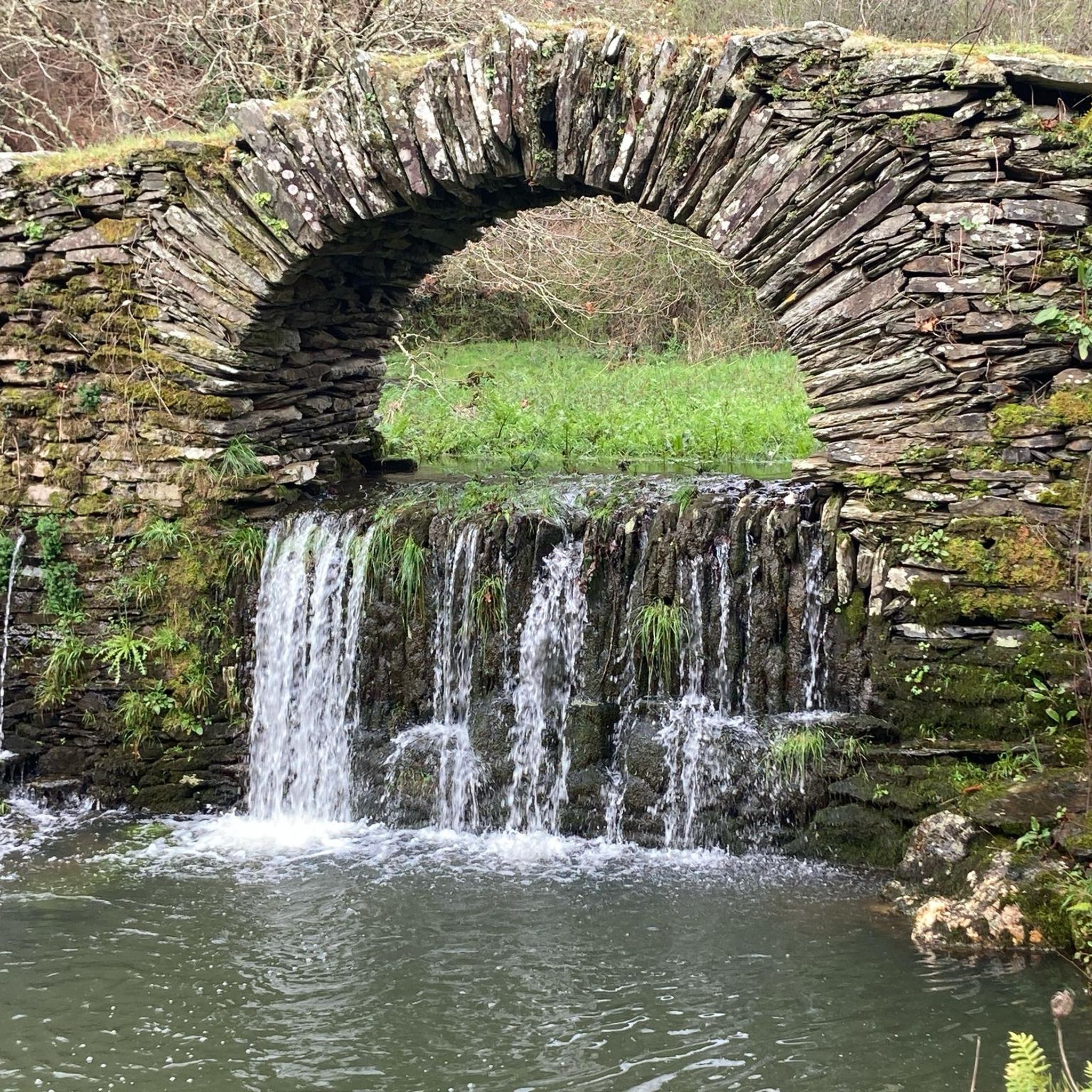
Bridge built over the Cavalos River, with a deck approximately 50 m long and 3 m wide. It probably forms part of the same road link as the Roman road of Pedra da Sé, serving as a connection between the Roman civitas of Bobadela and that of Viseu. It has only one arch with a perfect semicircular span, and the pavement that forms part of the deck is the result of intervention after the time of construction. It has been classified as a Property of Public Interest (IIP) since 1990, by Decree No. 163 of July 17, 1990.
1
0

The Fraga da Pena Waterfall, located in the Serra do Açor Protected Landscape, is a geological feature crossed by the Barroca de Degraínhos, creating a series of successive waterfalls. The waterfall is 19 meters high. Along its banks are some ancient specimens of the Portuguese oak (Quercus robur) and the chestnut tree (Castanea sativa), as well as the strawberry tree (Arbutus unedo), the thorny Daphne gnidium, and the adernos (Phillyrea latifolia and P. angustifolia).
2
0

Small but very pleasant river beach (without sand) on the course of the Rio de Cavalos.
2
0
The Roman Bridge of Sumes, with its round arch, is a stone masonry structure measuring approximately 6.4 metres. It stands over the Cavalos River, in a natural setting, punctuated by enormous granite rocks and crisscrossed by dirt paths. This is where the fantastic Trilho dos Gaios begins (or ends), winding along the Cavalos River between several waterfalls and lush vegetation.
2
0

In the heart of the protected landscape of the Serra do Açor, Fraga da Pena is a natural spectacle sculpted by time. The Barroca de Degraínhos creates a succession of waterfalls, culminating in an impressive 19-metre cascade that descends in crystal clear veils over the rock.
4
0
The Roman Bridge of Sumes stands over the River des Chevaliers, shrouded in mystery. Although its foundations appear to be Roman, the exact date of its construction remains uncertain. An inscription reading "80 AD" found on a nearby wall suggests its origin, but some historians believe it refers to an ancient spring. In the surrounding area, traces of medieval paving can still be seen. Regardless of the bridge's uncertain age, it is classified as a Property of Public Interest, having witnessed centuries of history.
3
0
In summer, the river beach of Vale de Gaios becomes a little paradise for those looking to cool off. Its crystal-clear water, formed by the Cavalos River, a tributary of the Mondego, invites you to take a refreshing dip and spend long moments in the sun. On hot days, there is no better place to enjoy nature and recharge your batteries!
6
0
The colourful walkways of the Trilho dos Gaios start at the river beach of Vale de Gaios and lead you to the ancient Roman Bridge of Sumes. Along the way, you will pass by the winding banks of the Cavalos River, a wild tributary of the Mondego, which hides among the lush vegetation and moss-covered rocks, as if it were something out of a fairy tale. In some parts, it disappears completely under gigantic blocks of granite, with only the gentle murmur of the water revealing its presence.
4
0
Frequently Asked Questions
What natural features can I explore around Mouronho?
Mouronho offers a rich variety of natural landscapes. You can visit the impressive Fraga da Pena Waterfall, a natural spectacle in the Serra do Açor Protected Landscape, featuring a 19-meter cascade. The Vale de Gaios River Beach on the Cavalos River is perfect for cooling off. The region also boasts picturesque rolling hills, serene valleys, and opportunities to discover natural lakes in areas like Venda da Serra.
Are there opportunities for wild swimming or river beaches near Mouronho?
Yes, Mouronho is known for its river beaches. The Vale de Gaios River Beach offers crystal-clear water from the Cavalos River, ideal for a refreshing dip. Additionally, the Praia Fluvial da Ronqueira on the Alva River is a key attraction for its magnificent landscape, and other popular river beaches like Praia Fluvial de Avô and Praia Fluvial de Côja are found in the wider vicinity.
What historical sites can I visit in Mouronho?
Mouronho has a rich history. The Roman Bridge of Sumes, spanning the Cavalos River, is a significant historical landmark with mysterious origins and medieval paving remnants. The Parish Church, dating back to the 18th century, and the Solar dos Tabordas, an 18th-century manor house, are also notable pieces of Mouronho's architectural heritage.
Are there any notable cultural landmarks in Mouronho?
Beyond the historical sites, Mouronho features several cultural landmarks. The Santuário de Santa Eufémia, located in the Serra da Moita, hosts annual festivities on September 8th. Throughout the freguesia (parish) of Mouronho, you can also find ancient chapels and numerous centuries-old fountains that merit a visit.
Are there family-friendly attractions in Mouronho?
Absolutely. The Vale de Gaios River Beach is a family-friendly spot for swimming and relaxing. The Colorful Boardwalks of the Trilho dos Gaios offer an enjoyable walk along the Cavalos River, suitable for families to explore lush vegetation and granite blocks.
What hiking trails are available near Mouronho's attractions?
There are several hiking opportunities. The Colorful Boardwalks of the Trilho dos Gaios start at the Vale de Gaios river beach and lead to the Roman Bridge of Sumes. For more extensive options, you can explore routes like the 'Roman Bridge of Sumes – Vale de Gaios River Beach loop from Candosa' or the 'Picnic Area – Eucalyptus Forest Trail loop from Serra do Açor Protected Landscape'. Find more details on hiking trails around Mouronho.
Are there cycling routes in the Mouronho area?
Yes, the region offers cycling opportunities. The Ecopista Extension, Lameiras provides a dedicated path. For mountain biking, routes like the 'Roman Bridge of Sumes – Vale de Gaios River Beach loop from Tábua' are available. Discover more options on MTB Trails around Mouronho.
What is the best time of year to visit Mouronho for outdoor activities?
Mouronho's pleasant climate makes it suitable for outdoor activities for much of the year. Spring and autumn offer mild temperatures ideal for hiking and exploring. Summer is perfect for enjoying the river beaches and cooling off in the crystal-clear waters.
Are there any accessible trails or attractions in Mouronho?
The Ecopista Extension, Lameiras is noted for being wheelchair accessible, providing an inclusive option for enjoying the outdoors.
What do visitors particularly enjoy about the attractions around Mouronho?
Visitors appreciate the blend of natural beauty and historical charm. The crystal-clear waters of the Cavalos River at Vale de Gaios River Beach are highly praised for cooling off. The Colorful Boardwalks of the Trilho dos Gaios are loved for their picturesque winding paths through lush vegetation, often described as something out of a fairy tale.
How long do walks around Mouronho typically take?
Walks around Mouronho can vary in length. Shorter, family-friendly strolls like parts of the Trilho dos Gaios might take an hour or two. For more challenging hikes, such as the 'Roman Bridge of Sumes – Vale de Gaios River Beach loop from Candosa', you can expect routes around 13 km, which could take several hours depending on your pace and stops.

Get inspired with the komoot mobile app


Explore more
Still not found the Highlight you’re looking for? See guides of the top attractions in other regions:
