Top 4 Castles around Longdon
Best castles around Longdon offer a glimpse into the region's historical landscape, characterized by its rural setting in Worcestershire. The area features a mix of historical sites, including ancient hill forts and stately homes, providing diverse historical exploration opportunities. Visitors can explore various architectural styles and periods within the Longdon area.
Best castles around Longdon
- The most popular castles is Herefordshire Beacon (British Camp), a summit that features an Iron Age hill fort. Climbing to the summit provides extensive…
Last updated: June 28, 2026
Herefordshire Beacon (British Camp)
Highlight • Summit
Tip by

Croome Court
Highlight • Historical Site
Tip by

Sign up now to discover places like this
Get recommendations on the best single tracks, peaks, & plenty of other exciting outdoor places.
Sign up for free
Eastnor Castle
Highlight • Historical Site
Tip by

Dunstall Castle
Highlight • Historical Site
Tip by

View of Eastnor Castle
Highlight • Castle
Tip by

Start today with a free account
Your next adventure awaits.
Login or Signup

Tips from the Community

A worthy addition to the National Trust. Wonderful house, set in Capability Brown's first landscape park.
0
0

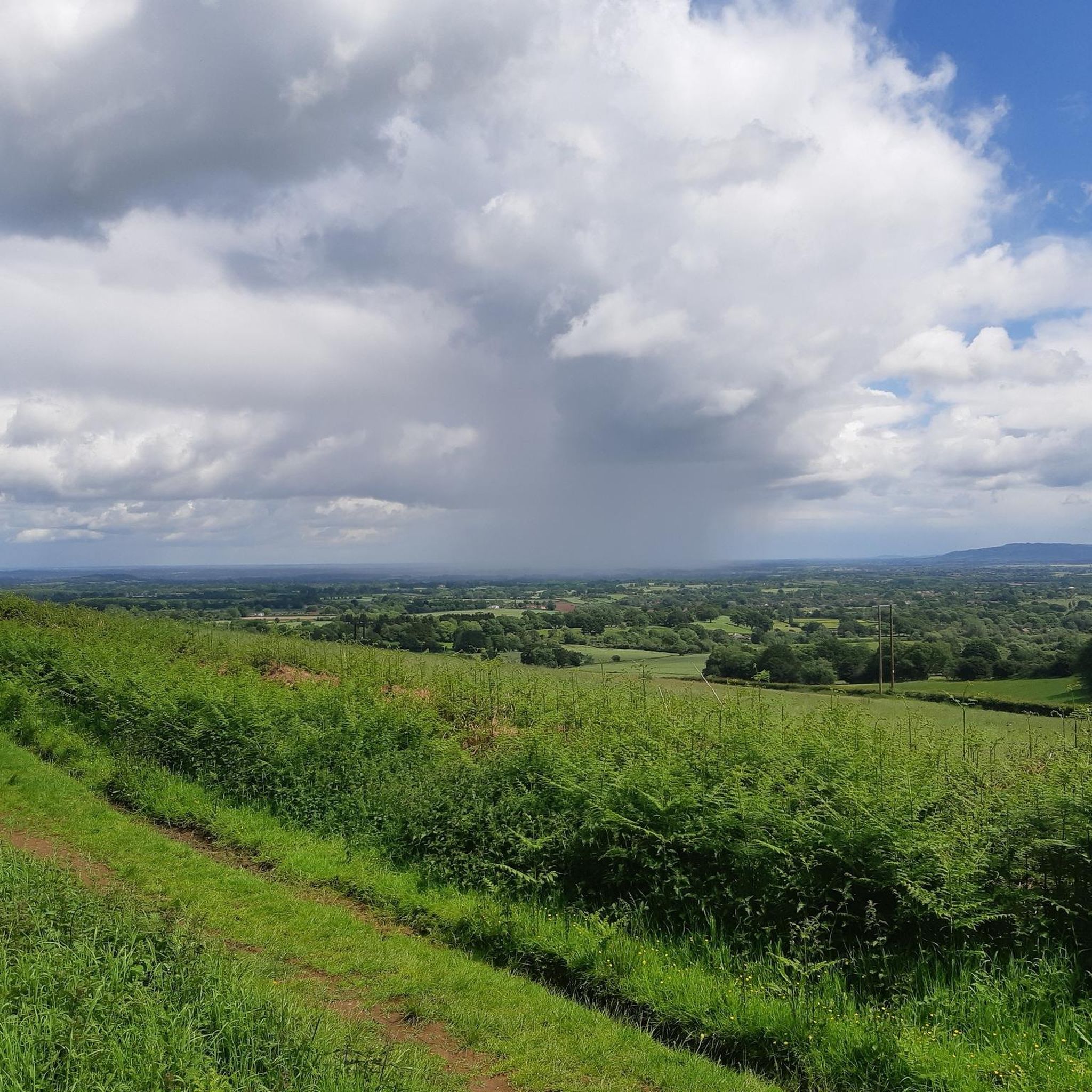
Here, on the trail up Midsummer Hill's southern flank, you're rewarded with an excellent view down onto Eastnor Castle. Built in the early 19th century by Robert Smirk, the architect responsible for the original British Museum, this private residence is an impressive landmark in the Herefordshire countryside.
0
0

Once created as an observation tower for guests of Croome Court to see all the territory of the realm. Nowadays, it is managed by National Trust. Free entry
0
0

The Herefordshire Beacon is one of the highest peaks of the Malvern Hills. It is surrounded by a British Iron Age hill fort earthwork known as British Camp. The fort subsequently had a ringwork and bailey castle built inside its boundary and there is evidence of 120 huts in the area. British Camp has been a scheduled monument since 1923. On the eastern slope of Herefordshire Beacon, there is a disused reservoir, British Camp Reservoir, which holds approximately 213,000 cubic metres (7,500,000 cu ft) of water. Herefordshire Beacon represents one of the Malvern Hills, 1,109 feet (338 m) high, and is the second highest summit in the hills. It is within the county of Herefordshire, but is directly adjacent to the border with Worcestershire to the east. Atop Herefordshire Beacon, there is an Iron Age hill fort, known as British Camp, and would have held a settlement between 4th century BCE and 1st century CE. A ringwork and bailey castle was built within the site of the hill fort, and there is evidence of 120 huts having been built within the boundaries of the fort. The hill fort received scheduled monument status on 10 August 1923. Nearby to British Camp, on the eastern slope of Herefordshire Beacon, there is a reservoir called British Camp Reservoir. It has a capacity of 213,000 cubic metres (7,500,000 cu ft), although it has not been used for many years. In 2017, Severn Trent proposed to dismantle the treatment plant associated with the reservoir and drain it, leaving an 8,000 cubic metres (280,000 cu ft) pond. source: Wikipedia
0
0

go during the week to miss the many people that walk these hills
0
0

A lot less busy than Worcestershire Beacon. and more interesting archaeology than the remains of an old cafe.
0
0

I am glad to be one of several visitors on this great internet site (:, thank you for posting. https://www.crediblebh.life/
0
0

Frequently Asked Questions
What types of historical sites can I explore around Longdon?
The Longdon area offers a diverse range of historical sites. You can visit ancient hill forts like Herefordshire Beacon (British Camp), which is an Iron Age hill fort on a summit with extensive views. There are also stately homes such as Croome Court, a mid-18th-century Neo-Palladian mansion with landscaped parkland, and the 19th-century Eastnor Castle. Additionally, you'll find interesting follies like Dunstall Castle, a ruined castle that was once part of the Croome park estate.
Are there family-friendly historical sites around Longdon?
Yes, several sites are great for families. Croome Court and Eastnor Castle are both listed as family-friendly, offering extensive parklands where children can explore. Dunstall Castle, a ruined folly, also provides an interesting historical spot for families to discover.
What natural features can I enjoy near the castles around Longdon?
The region is rich in natural beauty. Herefordshire Beacon (British Camp) offers a summit climb with splendid views of the surrounding area. Croome Court is set within extensive landscaped parkland designed by Capability Brown, perfect for leisurely strolls. Eastnor Castle also boasts vast parkland to explore.
What outdoor activities can I do near these historical sites?
You can enjoy various outdoor activities. For cycling enthusiasts, there are several road cycling routes, including a moderate 57.6 km loop from Longdon to Croome Court and Upton-upon-Severn. If you prefer hiking, easy trails like the 4.7 km River Severn Weir loop from Tewkesbury are available. Runners can find moderate routes such as the 11 km Cholera Burial Ground loop from Upton-upon-Severn. You can find more details and routes in the Road Cycling Routes around Longdon, Easy hikes around Longdon, and Running Trails around Longdon guides.
Are there hiking trails near the castles around Longdon?
Yes, there are hiking opportunities. For example, you can explore the area around Herefordshire Beacon (British Camp), which involves a steep climb to the summit. For easier walks, the Easy hikes around Longdon guide lists routes like the 4.7 km River Severn Weir loop or the 7.6 km Upton-upon-Severn Town Centre loop from Hanley Castle.
What do visitors enjoy most about the castles and historical sites around Longdon?
Visitors particularly appreciate the rich heritage and the stunning views. The Iron Age hill fort at Herefordshire Beacon (British Camp) offers a glimpse into ancient Britain and rewards climbers with splendid panoramic views. At Croome Court, the extensive landscaped parkland by Capability Brown and the impressive Neo-Palladian architecture are highly valued. Eastnor Castle is admired for its commanding 19th-century architecture and vast parkland.
Is <a href="https://www.komoot.com/highlight/5333898" target="_blank" rel="noopener">Croome Court</a> a traditional castle?
Croome Court is a mid-18th-century Neo-Palladian mansion, not a traditional medieval fortress. It's known for its significant architectural design by Capability Brown and Robert Adam, and its extensive landscaped parkland. It offers a different, yet equally rich, historical experience compared to a fortified castle.
What is the history behind <a href="https://www.komoot.com/highlight/75720" target="_blank" rel="noopener">Herefordshire Beacon (British Camp)</a>?
Herefordshire Beacon (British Camp) is an Iron Age hill fort located on the top of Herefordshire Beacon in the Malvern Hills. It offers a fascinating glimpse into the rich heritage of ancient Britain with well-preserved remnants and archaeological discoveries to explore during your walk to the summit.
Can I visit <a href="https://www.komoot.com/highlight/3155505" target="_blank" rel="noopener">Eastnor Castle</a>?
Eastnor Castle, a striking 19th-century castle, is open to the public during the summer months. While a section is still occupied as a residence, much of it is available for public access, events, and filming. Its extensive parkland makes for a half-day visit.
What is <a href="https://www.komoot.com/highlight/1974043" target="_blank" rel="noopener">Dunstall Castle</a>?
Dunstall Castle is a ruined castle that is actually a folly, once part of the Croome Court estate. It was originally created as an observation tower for guests of Croome Court to view the estate's territory. It is now managed by the National Trust and offers free entry.
Are there any specific tips for visiting <a href="https://www.komoot.com/highlight/5333898" target="_blank" rel="noopener">Croome Court</a>?
When visiting Croome Court, it's advisable to check their website for current booking requirements, as timed entry slots may be necessary. The site is managed by the National Trust, and it's worth visiting for the wonderful house and its surrounding Capability Brown landscape park.
What is the best time to visit the historical sites around Longdon?
The best time to visit depends on your interests. For enjoying the landscaped parklands and outdoor activities like hiking and cycling, spring and summer offer pleasant weather. Eastnor Castle, for instance, is typically open to the public during the summer months. For sites like Herefordshire Beacon (British Camp), clear weather will provide the best views.
Most popular attractions around Longdon

Get inspired with the komoot mobile app


Explore more
Looking for the best castles somewhere else? Discover other guides around Longdon:
