Top 5 Caves in Upper Rock - Gibraltar Nature Reserve
Best caves in Upper Rock - Gibraltar Nature Reserve offers a unique landscape with over 150 known caves, primarily formed from limestone. This area is a significant natural and historical site, featuring a network of caverns with diverse geological formations and evidence of ancient human presence. The Upper Rock Nature Reserve combines natural beauty with cultural importance, making it a notable destination for exploration. Its caves are a major highlight, attracting many visitors annually.
Best caves in Upper Rock -…
Last updated: May 11, 2026
St. Michael's Cave
Highlight • Cave
Translated by Google •
Tip by

World War II Tunnels
Highlight • Historical Site
Translated by Google •
Tip by

Sign up now to discover places like this
Get recommendations on the best single tracks, peaks, & plenty of other exciting outdoor places.
Sign up for free
Bellman's Cave
Highlight • Cave
Translated by Google •
Tip by

The Military Heritage Centre and Tunnels, Gibraltar
Highlight • Historical Site
Translated by Google •
Tip by
The Great Siege Tunnels
Highlight • Historical Site
Translated by Google •
Tip by
Start today with a free account
Your next adventure awaits.
Login or Signup
Popular around Upper Rock - Gibraltar Nature Reserve
Running Trails in Upper Rock - Gibraltar Nature Reserve
Road Cycling Routes in Upper Rock - Gibraltar Nature Reserve
MTB Trails in Upper Rock - Gibraltar Nature Reserve
Hiking in Upper Rock - Gibraltar Nature Reserve
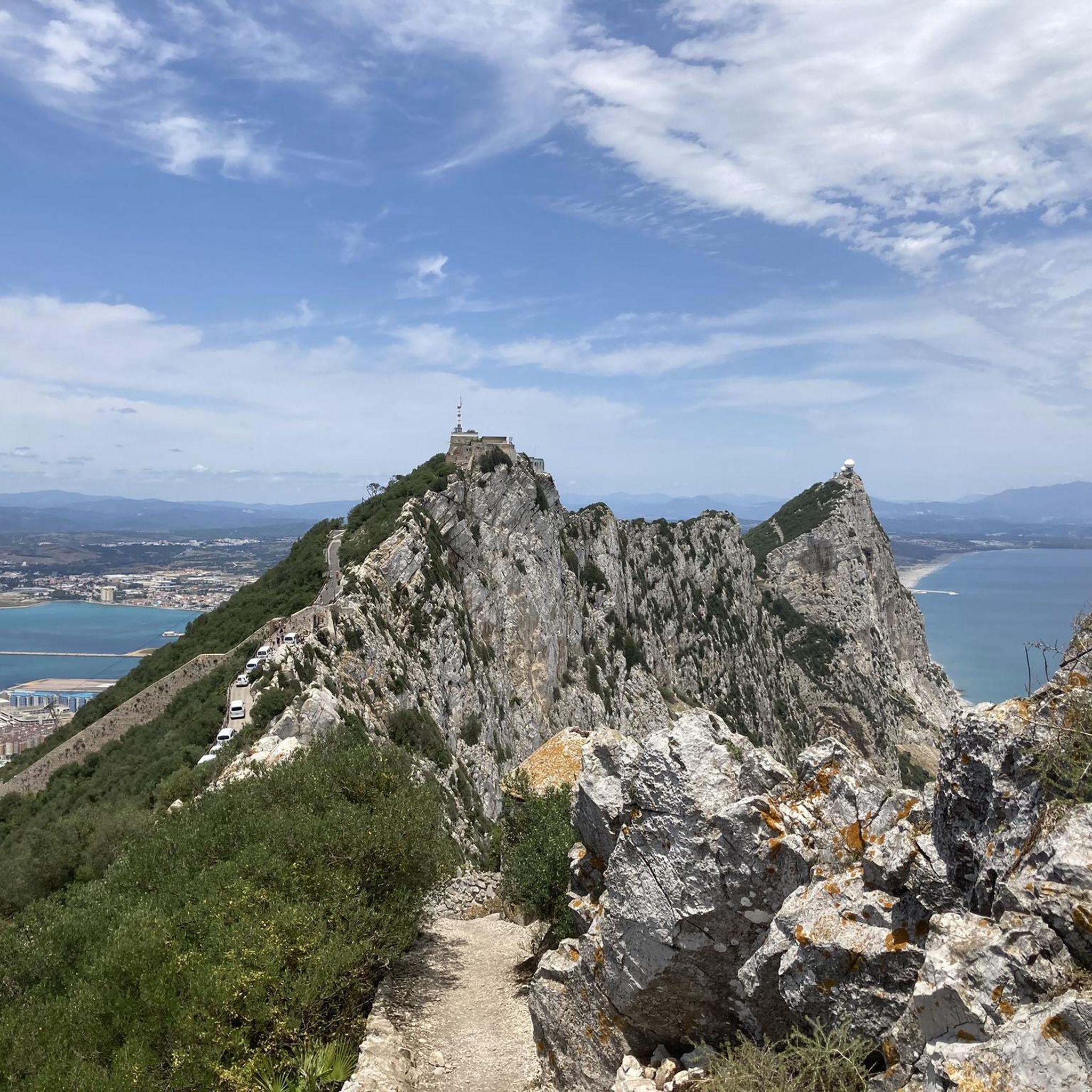
Cycling in Upper Rock - Gibraltar Nature Reserve
Gravel biking in Upper Rock - Gibraltar Nature Reserve
Tips from the Community

Very interesting to see, incredible what they've carved into the mountain.
0
0

impressive and also nice and cool😉
0
0

Gibraltar has always been of the utmost strategic importance, but with the entry of Italy into World War II and a powerful Germany already dominating Europe, that importance grew. These tunnels, created by the Royal Engineers and the Canadian Army, were the answer to the ever-growing problem of storage, space and siege accommodation. The entire 16,000-strong garrison could be housed here, along with enough food to survive for 16 months. The entire tunnel network inside the Rock is about 34 miles, 55 kilometers.
0
0

St Michael’s Cave was long believed to be bottomless. This probably gave birth to the story that the Rock of Gibraltar was linked to Africa by a subterranean passage under the Strait of Gibraltar. The famous macaques were said to have come to Gibraltar through this subterranean passage. Pomponious Mela, one of the earliest geographers who lived about the beginning of the Christian era, spoke about the cave in his writings. It was at one time believed that in 1704 Spanish troops spent a night in the cave after climbing the precipitous east face of the Rock. Another story about the cave recounts how a Colonel Mitchell and another officer were said to have descended into the cave at some unspecified date before 1840 and were never seen again. During WWII the cave was prepared as an emergency hospital, but was never used as such. The cave is open to visitors and makes a unique auditorium for concerts, ballet and drama. It has been in use as a theatre since the early sixties with capacity for 600 persons. At some period during the history of this cave, part of a stalagmite became too heavy on one side and fell, possibly thousands of years ago. It now lies on its side at the far end of the main chamber, cemented through the years by nature to the floor of the cave. In 1972 a slice was cut off from the top end which revealed the interior structure of the stalagmite in a most dramatic fashion. ‘The Awakening' at St Michael’s Cave An immersive light and sound installation expressing layers upon layers of history fused with the Rock. These ancient clocks now lay dormant. The Awakening illuminates these sculptures of time and reawakens their hidden story. As you journey through the cave system you will encounter these giant ancient clocks brought back to life, vast hidden forms and towering flowstones that once again are in full motion. The experience culminates within the main cavern in a 360-degree projection and light spectacle.’ The awakening show takes place every 7 minutes.
4
0


Is a limestone cave with beautiful plays of light. There are a lot of monkeys waiting to be photographed
4
0
Interesting cave
4
0

Duck your head and go down the mountain
1
1
Frequently Asked Questions
What makes St. Michael's Cave a prominent attraction in Upper Rock?
St. Michael's Cave is renowned for its spectacular limestone formations, which are beautifully illuminated with colorful lights. It also features the impressive Cathedral Cave, a natural auditorium that hosts various events. Artifacts found within the cave indicate its historical significance dating back to prehistoric times. You can find more details about this highlight here: St. Michael's Cave.
Are there family-friendly caves to explore in Upper Rock - Gibraltar Nature Reserve?
Yes, both St. Michael's Cave and The Great Siege Tunnels are categorized as family-friendly. St. Michael's Cave offers an accessible and visually stunning experience, while the Great Siege Tunnels provide an engaging historical journey suitable for all ages.
What historical caves or tunnels can I visit in Upper Rock?
Beyond natural caves, Upper Rock features significant historical tunnels. You can explore the World War II Tunnels, an extensive system illustrating Gibraltar's military past, and The Great Siege Tunnels, dug by the British during the 18th-century siege. The Military Heritage Centre and Tunnels also offers insights into the region's military history.
What kind of geological features can I expect to see in the Upper Rock caves?
The caves in Upper Rock are primarily limestone formations, created by rainwater dissolving the rock over thousands of years. Visitors can marvel at numerous stalactites and stalagmites, especially prominent in St. Michael's Cave, which are often enhanced with lighting to showcase their natural beauty.
Are there options for more advanced cave exploration in the Upper Rock Nature Reserve?
While St. Michael's Cave is easily accessible, the Upper Rock Nature Reserve also contains Lower St. Michael's Cave, a deeper and less altered system. Guided tours are available for this part, offering a more adventurous and natural caving experience. Other caves like George's Bottom Cave require crawling in sections.
What outdoor activities can I combine with a visit to the caves?
The Upper Rock Nature Reserve offers various outdoor activities. You can find numerous running trails, including a difficult 7.7 km loop from Mediterranean Steps to St. Michael's Cave. There are also road cycling and mountain biking routes available. For more details on routes, you can check the guides for Running Trails, Road Cycling Routes, and MTB Trails in the area.
Is there an entry fee for the Gibraltar Nature Reserve, which includes access to the caves?
Yes, there is an entry fee to access the Upper Rock Nature Reserve, which includes many of the attractions like St. Michael's Cave. This fee contributes to the upkeep and preservation of the reserve. It's advisable to check the official Gibraltar tourism website for current pricing and ticket options.
What is the best time to visit the caves in Upper Rock - Gibraltar Nature Reserve?
The caves can be visited year-round. However, to enjoy the surrounding Upper Rock Nature Reserve and its views comfortably, spring and autumn offer pleasant temperatures. Summer can be hot, while winter is generally mild. The caves themselves maintain a relatively constant cool temperature, making them a good option even on warmer days.
What should I wear when visiting the caves in Gibraltar?
It's recommended to wear comfortable walking shoes as you'll be navigating uneven surfaces and steps inside the caves. The temperature inside the caves is generally cooler than outside, so a light jacket or sweater might be comfortable, especially during longer visits or on cooler days. Some areas can be damp, so non-slip footwear is a good idea.
Are there any less-known or 'hidden' caves in the Upper Rock Nature Reserve?
While St. Michael's Cave is the most famous, the Upper Rock Nature Reserve is home to over 150 caves. Some less-publicized ones include Levant Cave, George's Bottom Cave, Gibbon's Cave, Goat's Hair Twin Caves, and Spider Cave. Many of these are less accessible or require special permits and guided tours for exploration, offering a different experience from the main tourist attractions.
What do visitors enjoy most about the caves in Upper Rock - Gibraltar Nature Reserve?
Visitors frequently praise the stunning natural beauty of the limestone formations and the vibrant lighting inside St. Michael's Cave. The unique experience of the Cathedral Cave as an auditorium is also a highlight. For the historical sites like the World War II Tunnels, the extensive tunnel systems and the insights into Gibraltar's military past are highly appreciated.
How much time should I allocate to explore the main caves in Upper Rock?
For St. Michael's Cave, most visitors spend between 45 minutes to an hour. If you plan to visit the historical tunnels like the World War II Tunnels or The Great Siege Tunnels, each might take another 30-60 minutes. To fully experience the Upper Rock Nature Reserve, including travel between sites and enjoying viewpoints, a half-day or full-day visit is often recommended.
Most popular routes in Upper Rock - Gibraltar Nature Reserve
Most popular attractions in Upper Rock - Gibraltar Nature Reserve

Get inspired with the komoot mobile app


