Top 6 Caves around Schwäbisch Gmünd
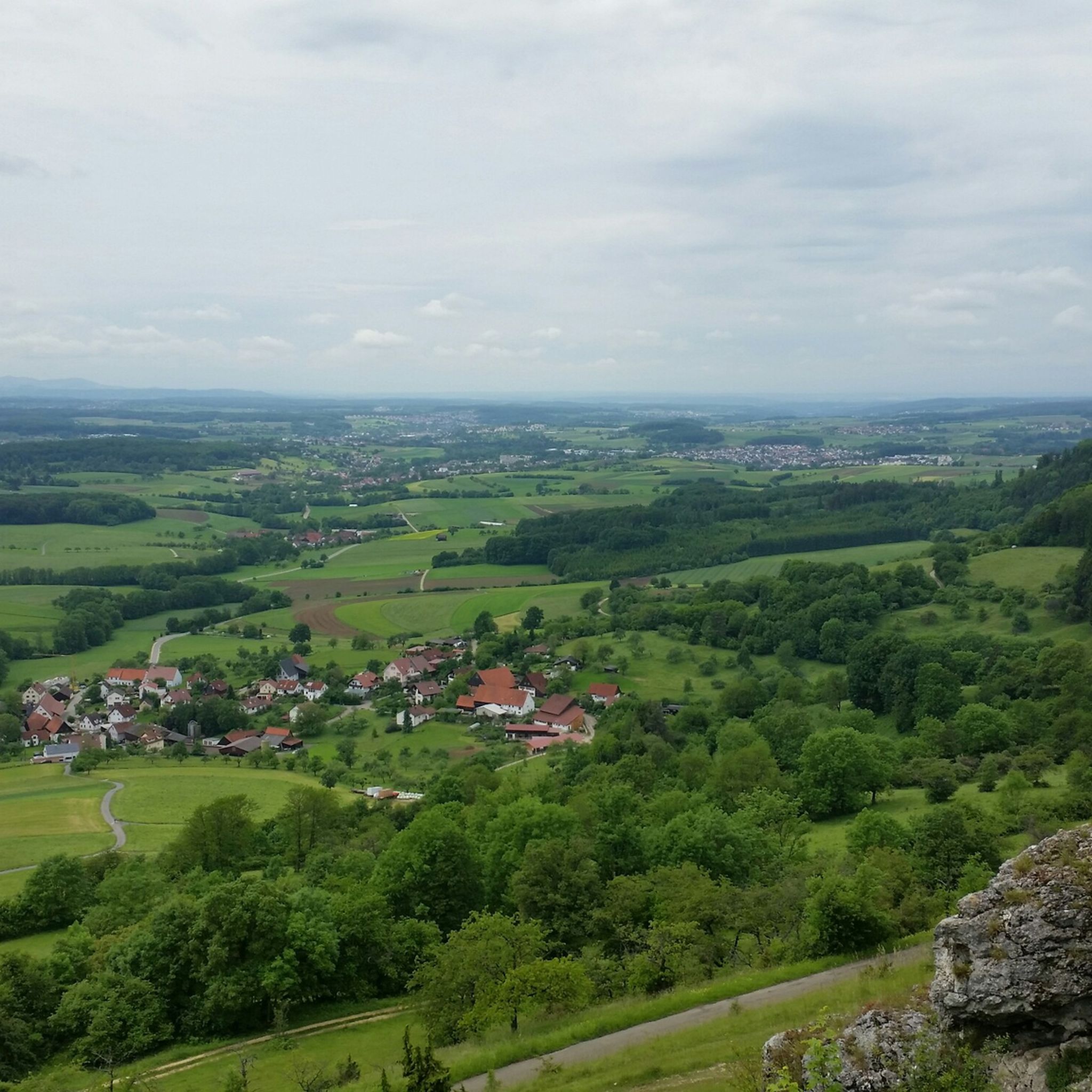
Best caves around Schwäbisch Gmünd are found on the edge of the Swabian Alb, a region known for its rich geology. This area provides access to a variety of caves, showcasing diverse natural formations and historical significance. The landscape around Schwäbisch Gmünd is characterized by its mountainous terrain and natural features, offering numerous opportunities for exploration. These caves are notable destinations for those interested in geology and natural history.
Best caves around Schwäbisch Gmünd
- The most popular caves is Klepperfels…
Last updated: July 9, 2026
Lourdes Grotto
Highlight • Religious Site
Translated by Google •
Tip by

Oberes Rabenloch Cave
Highlight • Cave
Translated by Google •
Tip by

Sign up now to discover places like this
Get recommendations on the best single tracks, peaks, & plenty of other exciting outdoor places.
Sign up for free
Forellenloch Spring
Highlight • Cave
Translated by Google •
Tip by

Klepperfels
Highlight • Natural Monument
Translated by Google •
Tip by
Erika Künzel's Cave
Highlight • Cave
Translated by Google •
Tip by

Start today with a free account
Your next adventure awaits.
Login or Signup
Tips from the Community

Beautifully situated on the Albtrauf
0
0
A striking rock on the Albtrauf without a view
1
0

From the path along the eaves, an inconspicuous, rather adventurous path leads down to the cave. After entering through the cave's very shallow portal, the path descends several meters to the floor of a dome-like hall. The play of colors on the walls is wonderful. Don't forget your flashlight, and of course, don't leave anything behind in the cave.
0
0

The water cave is located a little off the path. A small stream still flows from it today, which once supplied the castle with water.
1
0

The so-called Forellenbach, which was used to supply the castle with water, flows out of the cave. The entrance is blocked by an iron gate.
1
0
The water cave has a length of about 420 meters.
1
0
Easily accessible above the castle
0
1
From the path on the eaves, an inconspicuous path branches steeply and laboriously down to the cave. The flat entrance to the Oberer Rabenloch falls diagonally downwards, then you have to climb down 2m and reach the cauldron-like hall. Dangerous access!
1
0
Frequently Asked Questions
Which caves near Schwäbisch Gmünd are known for their natural beauty and unique features?
The region offers several caves with distinct natural characteristics. The Forellenloch Spring is a natural monument featuring a permanent spring and water-filled passages, making it a protected biotope. The Nebelhöhle (Fog Cave) in the wider Swabian Alb is famous for its spectacular halls and a 'forest of stalactites', and its name comes from the mist that forms at its entrance in winter.
Are there caves with historical or archaeological significance in the Schwäbisch Gmünd area?
Yes, several caves in the region hold significant historical and archaeological value. The Oberes Rabenloch Cave has yielded Bronze Age artifacts. Further afield, the Ofnet Caves near Nördlingen are renowned for Mesolithic mass burial sites, and the Höhle des Löwenmenschen (Lion Man Cave) is a UNESCO World Heritage site where the 40,000-year-old 'Lion Man' figurine was discovered.
What kind of natural formations can I expect to see in the caves around Schwäbisch Gmünd?
You can expect to see a variety of natural formations. Caves like the Bärenhöhle and Karlshöhle are known for impressive dripstone formations such as stalactites and stalagmites. The Forellenloch Spring features a consistent water flow and water-filled passages, characteristic of karst springs.
Are there family-friendly caves to visit near Schwäbisch Gmünd?
While specific 'family-friendly' categories aren't always explicit, many show caves in the wider Swabian Alb, such as the Bärenhöhle and Karlshöhle, are generally accessible and engaging for families due to their well-maintained paths and impressive formations. For a more adventurous, but still accessible, experience, the Oberes Rabenloch Cave offers a descent into a dome-like hall.
What outdoor activities can I do near these caves?
The area around Schwäbisch Gmünd offers numerous outdoor activities. You can find excellent options for mountain hikes, running trails, and gravel biking. Many caves, like the Oberes Rabenloch Cave, are situated in close proximity to hiking trails, allowing you to combine cave exploration with a scenic walk.
What do visitors enjoy most about the caves around Schwäbisch Gmünd?
Visitors appreciate the diverse natural formations and the historical significance of the caves. The Forellenloch Spring is valued for its natural beauty and consistent water flow, while the Oberes Rabenloch Cave is enjoyed for its adventurous descent and 'wonderful play of colors' on the walls. The komoot community has shared over 80 photos and given more than 70 upvotes for the caves in this region.
Are there any caves that offer a more challenging caving experience?
Yes, the Gustav-Jakob-Höhle, located in the wider Swabian Alb, is known as the longest dry cave in the region, extending over 400 meters. It offers a more challenging experience with narrow passages that may require crawling in some sections.
Can I visit caves in the Schwäbisch Gmünd area during winter?
Some caves, particularly those that are natural and less developed, may have seasonal closures. For instance, the Gustav-Jakob-Höhle is typically closed from October to March to protect hibernating bats. It's always advisable to check specific cave opening times before planning a winter visit.
What is the <a href="https://www.komoot.com/highlight/269988" target="_blank" rel="noopener">Klepperfels</a> and what can I expect to see there?
The Klepperfels is a natural monument featuring a cave, located along a singletrack trail between the Kuhfels and Hohenstein viewpoints. While it once offered expansive views, the surrounding trees have grown, making the climb more about the rock formation itself rather than the vista.
Is there a religious grotto near Schwäbisch Gmünd?
Yes, the Lourdes Grotto is a notable religious site near Schwäbisch Gmünd. It's a grotto dedicated to the Mother of God of Lourdes, located on the steep ascent to Wißgoldingen, and is a place of devotion and reflection.
What is the geological context of the caves around Schwäbisch Gmünd?
The caves around Schwäbisch Gmünd are situated on the edge of the Swabian Alb, a region renowned for its rich geology, particularly its karst landscapes. This area is characterized by limestone formations (like the White Jura beta mentioned for the Forellenloch Spring), which are prone to the formation of caves, springs, and other unique geological features due to water erosion over millennia.
Are there any unique or 'hidden gem' caves in the area?
While not strictly 'hidden,' Erika Künzel's Cave offers a unique and personal experience. It's an artificial cave adopted and decorated by Erika Künzel with mythical themes, including a Roman Cavea, a scene between a legionnaire and a Germanin, a life-sized cave bear, and dwarves, making it a distinctive site.
Most popular routes around Schwäbisch Gmünd
Most popular attractions around Schwäbisch Gmünd

Get inspired with the komoot mobile app


Explore more
Extend your search for the best caves by checking out these guides of the top ones around Schwäbisch Gmünd:
