Top 13 Castles around Teufenbach-Katsch
Best castles around Teufenbach-Katsch are situated in Styria, Austria, a region characterized by its mountainous terrain and historical significance. This area features a collection of historical castles and impressive castle ruins, offering insights into its rich past. Many of these structures were strategically important, controlling access routes and valleys. Visitors can explore a variety of medieval architecture set within the natural landscape.
Best castles around Teufenbach-Katsch
- The most popular castles is Steinschloss Castle Ruins, a castle ruin that dates…
Last updated: July 10, 2026
Steinschloss Castle Ruins
Highlight • Castle
Translated by Google •
Tip by

Obermurau Castle
Highlight • Castle
Translated by Google •
Tip by

Sign up now to discover places like this
Get recommendations on the best single tracks, peaks, & plenty of other exciting outdoor places.
Sign up for free
Schloss Forchtenstein
Highlight • Castle
Translated by Google •
Tip by

Frauenburg Castle Ruins
Highlight • Castle
Translated by Google •
Tip by
Hungerturm and the ruins of Grünfels Castle
Highlight • Castle
Translated by Google •
Tip by

Sign up for free to discover even more castles around Teufenbach-Katsch.
Sign up for free
Already have an account?
Start today with a free account
Your next adventure awaits.
Login or Signup
Tips from the Community

The Forchtenstein Castle stands as a medieval castle, architecturally located at the northwestern corner of the market fortification of Neumarkt in Steiermark in a high valley between the Seetal Alps to the east and the Grebenzen to the west. The name of the Forchtenstein Castle in Neumarkt is said to be derived from the Old High German "forhten" (to fear) and Stein. The economic basis of the castle's dominion has since time immemorial been the collection of toll revenues and the utilization of toll rights. In 1956, Forchtenstein Castle was leased by the European Federalist Movement. Since then, the castle has been an international meeting place, an ideas workshop, and an educational center for the cross-party promotion of European federalism and European integration. Under the idea: "May this castle, in the literal and figurative sense of the word, be a fortress of the European idea!", the castle continued to be operated until 2018. In 2018, the castle was transferred by the previous owner, EFB Steiermark, for a symbolic amount to the EYFON Foundation (European Youth Forum Neumarkt). The Forchtenstein Castle consists in its core of a four-story tower house in the northwest. Defensive walls and other buildings are attached to the tower house in an elongated rectangle. In the southeast, there is a building connected to the "city wall".
0
0


Quick question, since we're traveling with a dog, the Steinschloss hike is also described as a hike without cow contact, is that really true? :-)
0
0

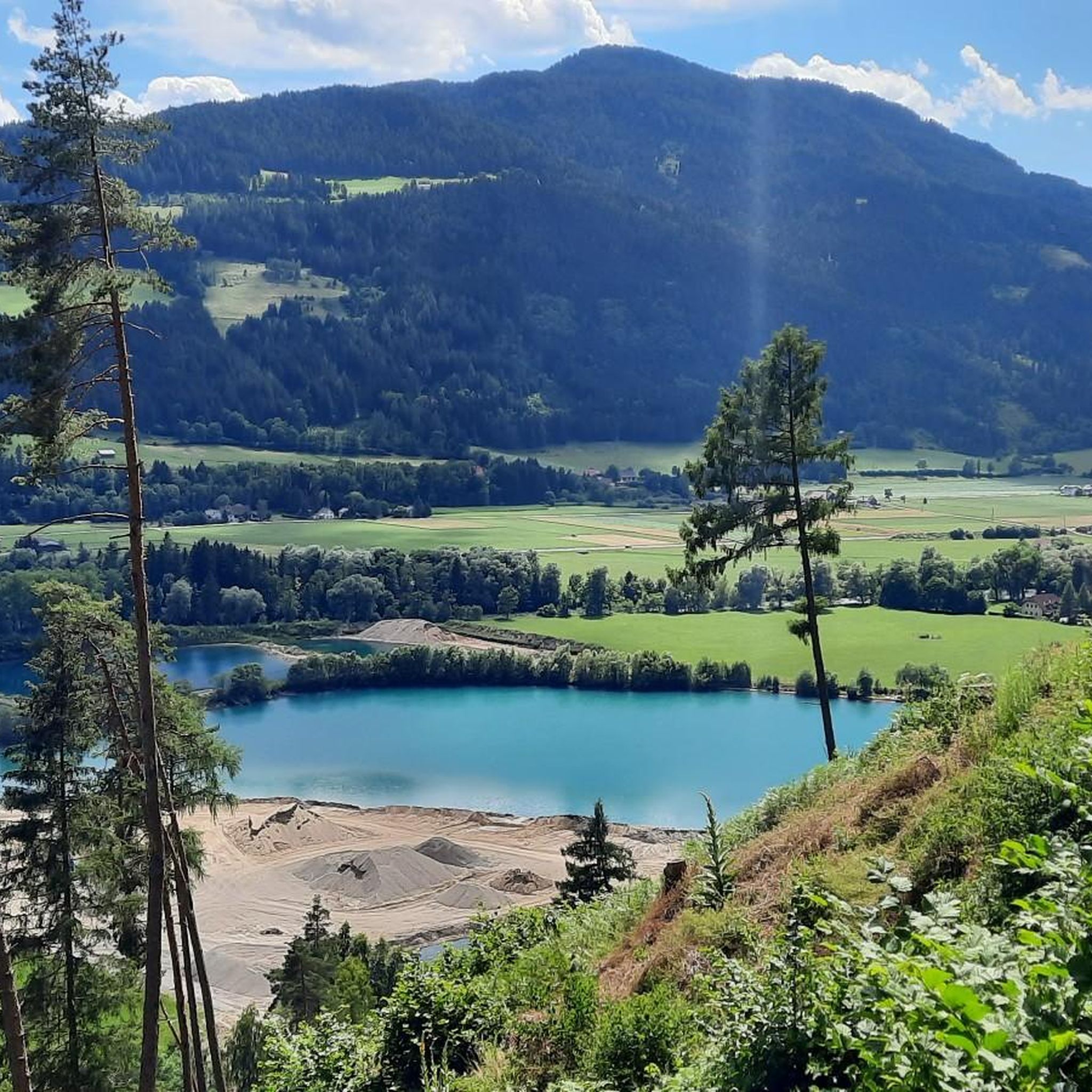
From the castle ruins you can enjoy a beautiful view down into the valley with the town of Unzmarkt. A few meters below the castle there is a church worth seeing. The Frauenburg was built in the 13th century, burned down in 1861 and was not rebuilt after that. Today the complex is a listed building.
1
0

Impressive view of the valley, upstream of the Mur.
1
0

The city's landmark in the middle of the city center
0
0

Remains of Grünfels Castle. Unfortunately, the castle itself cannot be visited. A viewing platform has been set up at the Hunger Tower, from which you have a great view of the city of Murau. The castle was originally called "Lubathein" and was probably built at the same time as Murau under Ulrich I von Liechtenstein. In 1269 it was destroyed by King Ottokar of Bohemia. Otto II of Liechtenstein had it rebuilt in the 14th century. The keep, the residential building, the remains of the fortifications with the hunger tower and the moat have been preserved to this day.
1
0
The castle is the symbol of Murau. Today, the castle itself houses, among other things, the Princely Schwarzenberg forest administration, the castle museum and the Schwarzenberg archive. In the castle museum you get an impression of life in the castle, the history of the family and their rule. The chapel, the dungeon, the old kitchen, the cat hall and the knight's hall are particularly worth seeing. Another highlight is the princely Gobelins collection with artistically embroidered and decorated tapestries.
1
0
Frequently Asked Questions
What types of castles can I explore around Teufenbach-Katsch?
The region offers a diverse range of historical sites, from ancient ruins and continuously inhabited castles to unique cave castles. You can find hilltop fortresses and structures built into cliff faces, each offering a distinct historical experience.
Are there any unique cave castles in the Teufenbach-Katsch area?
Yes, the Puxerloch features two unique medieval cave castles, Luegg and Schallaun, built into an almost vertical cliff face. Luegg Castle is still freely accessible and offers a fascinating blend of natural caves and medieval architecture, along with great views.
Which castle ruins offer the best panoramic views?
The Steinschloss Castle Ruins, located at 1,200 meters above sea level, is the highest castle ruin in Styria and offers breathtaking panoramic views over the Mur valley. Additionally, the Frauenburg Castle Ruins also provide a beautiful view down into the valley with the town of Unzmarkt.
Can I visit a castle that is still inhabited?
Burg Alt-Teufenbach is one of Styria's oldest continuously inhabited castles, with origins tracing back to the 9th century. While privately owned, visitors can explore parts of the restored residential building and the remnants of a historic round tower, offering a direct connection to centuries of local nobility.
Are there any family-friendly castles or historical sites to visit?
While specific family-friendly activities vary by site, the town of Oberwölz, with its well-preserved medieval city wall and fortifications, is listed as family-friendly and offers an engaging historical experience for all ages. Exploring the extensive grounds of ruins like Steinschloss Castle Ruins can also be an adventure for families.
What outdoor activities can I do near these castles?
The region around Teufenbach-Katsch offers various outdoor activities. You can find numerous road cycling routes, such as the 'Mur Cycle Path' or routes around Hanfelden Castle. There are also gravel biking options, including routes near the Steinschloss Castle Ruins, and running trails. For more details, explore the Road Cycling Routes, Gravel Biking, and Running Trails guides for the area.
What is the best time of year to visit the castles in Teufenbach-Katsch?
The period from May to October is generally ideal for visiting, especially for sites like Steinschloss Castle Ruins which offers guided tours on Wednesdays during these months. Good weather allows for comfortable exploration of outdoor ruins and enjoyment of panoramic views.
Are there any castles with significant artistic or religious features?
Yes, Schloss Pux, while a newer construction, is notable for its adjacent Schlosskapelle Pux (Pux Castle Chapel). This chapel dates back to the late Romanesque period and features significant 13th-century frescoes and a 17th-century altar, making it a highlight for those interested in historical art and religious architecture.
How long should I plan for a visit to the castles?
The duration depends on the castle. For extensive ruins like Steinschloss Castle Ruins, it's recommended to take a little more time to explore its spacious grounds and enjoy the views. For guided tours, such as those at Obermurau Castle, plan for a specific time slot, typically around an hour or two.
Can I find historical sites related to medieval knights or legends?
The Puxerloch cave castles are steeped in local legends, including tales of knights and a 'man without a shadow,' adding an element of mystery and folklore to your visit. The region's castles, many dating back to the 9th-12th centuries, all offer a tangible connection to medieval history and the lives of knights and nobility.
What do visitors enjoy most about the castles around Teufenbach-Katsch?
Visitors particularly appreciate the extensive grounds and beautiful views offered by sites like Steinschloss Castle Ruins. The historical significance and the opportunity to explore ancient structures, often with panoramic vistas, are frequently highlighted. The unique nature of the cave castles and the well-preserved medieval town of Oberwölz also receive high praise.
Most popular routes around Teufenbach-Katsch
Most popular attractions around Teufenbach-Katsch

Get inspired with the komoot mobile app


Explore more
Looking for the best castles somewhere else? Discover other guides around Teufenbach-Katsch:
