Top 9 Huts and Cabins around Gerabronn
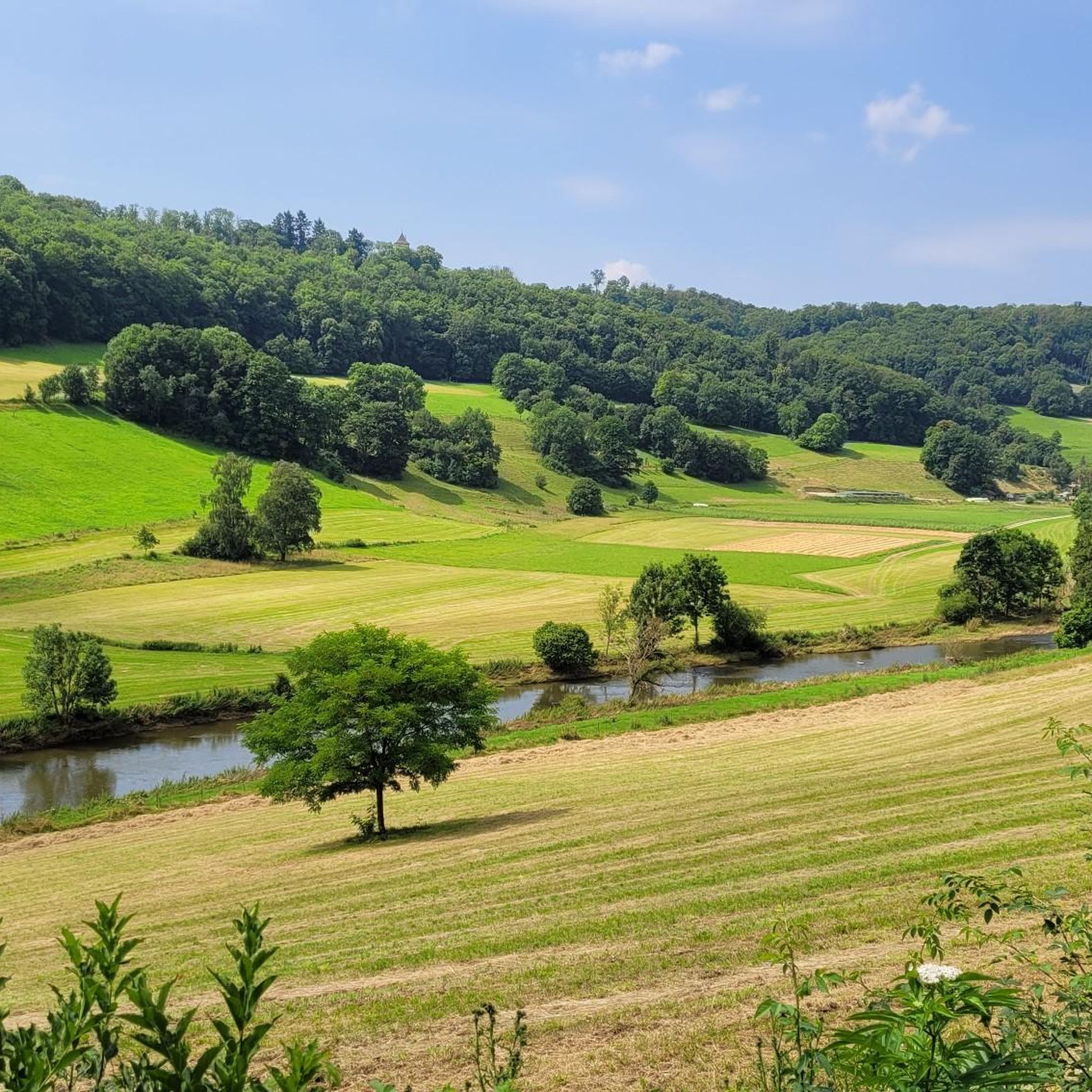
Best huts around Gerabronn are found within the rural landscape of the Hohenlohe region, characterized by its forests and valleys. The area offers opportunities for outdoor activities, including hiking trails that lead to various shelters and forest cabins. While not an alpine region, Gerabronn provides natural attractions and viewpoints for those exploring its terrain. The landscape features a mix of woodlands and open areas, suitable for circular walks and longer excursions.
Best huts around Gerabronn
- The most popular huts is…
Last updated: July 10, 2026
Bauerhütte Großforst – E-Bike Charging & Drinks Stop
Highlight • Mountain Hut
Translated by Google •
Tip by

Giant Sequoias in Braunst
Highlight • Natural Monument
The remaining meadow was the forest garden in which the plants were transplanted into the forest after 4 years …
Translated by Google •
Tip by

Sign up now to discover places like this
Get recommendations on the best single tracks, peaks, & plenty of other exciting outdoor places.
Sign up for free
Nonnenwald Hut
Highlight • Mountain Hut
The main ones are coast redwoods. But also yews, tujas etc.
A few years ago there was also a tulip tree. But it must have dried up.
Translated by Google •
Tip by
Forest Cabin in Nonnenwald
Highlight • Mountain Hut
Translated by Google •
Tip by
Hegenest Forest and Hut
Highlight • Forest
You should have seen the beautiful lake and the Zwerenberg deserted area.
Too bad that the paths are not optimally gravelled.
Translated by Google •
Tip by
Sign up for free to discover even more huts and cabins around Gerabronn.
Sign up for free
Already have an account?
Start today with a free account
Your next adventure awaits.
Login or Signup

Tips from the Community

It's a bit of a strange taste, the horse skeleton for example. The fridge is getting old, but the drinks are all in bottles. In any case, a welcome change.
4
1

First aid, charging the battery and cold drinks are available - be sure to have change with you
5
1

If you want to go to Kirchberg, you have to climb steeply straight ahead. If you want to go to Gerabronn via Liebesdorf, drive over the bridge here.
4
0

Brunst used to mean mountain. I.e. Brunstwald is the mountain forest. Derived from the word "bryn" meaning hill. The word can be found in Welsh dictionaries. I.e. this word may have a Germanic or Celtic origin.
3
2
Historical documents show that the forest is Hegenest Würzburgisch (bishop). Since many farms and villages in the area were sold to the Schäftersheim monastery, it can be assumed that the forest was also worked by the monastery. Between 1802 and 1810 Hohenlohe-Bartenstein had to cede some villages in Lower Alsace to France as a result of the Reichsdeputationsgesetz (see map). As a replacement, Hohenlohe-Bartenstein received, among other things, the Heftenwald (approx. 130ha) near Rinderfeld and the Hegnest (approx. 150ha), as well as approx. 15 villages in Hohenlohe. Attention: Hohenlohe-Jagstberg and Hohenlohe-Bartenstein belonged together around 1800. For financial reasons, Hohenlohe-Bartenstein sold the magazines to the state of Württemberg (1934) and Wald Hegenest (approx. 1980) to the Böblingen municipal works.
7
3
Until 1830, the Braunst forest (formerly Brunst) was a private forest owned by the people of Oberstetten with 105 owners. In 1830 the state of Württemberg bought this forest. In the contract it says: There were many disputes about hunting justice, including poaching with Hohenlohe-Bartenstein, Rosenberg and Hatzfeld-Haltenbergstetten and Schrozberg. Each community law got 1100 fl. The building society made up 3,000 fl, from which each owner of community rights gets 40 trunks a 11.15m for building a house and 30 trunks for a shambles in money. Supposedly, some people from Oberstetten drank away the income from the sale of the forest.
3
2
The forestry hut there belonged to the former state tree nursery. The meadow that still exists was the forestry garden in which the plants were transplanted into the forest after 4 years of cultivation. Not only the sequoias are interesting, but also the two yew trees in between. Caution: everything about the yews is poisonous!
2
2
The giant sequoias were discovered in the USA in 1852. The nature-loving Wilhelm I is said to have been so enthusiastic about reports and travelers that in 1864, shortly before his death, he ordered seeds of the sequoia for US$ 90. The king had ordered a lot (15g) of seeds. The Americans translated the amount as "a lot". This corresponds to 470g. That weight was then seeds for 100,000 trees. About 8000 trees could be produced from the seeds. These were then schooled and distributed to all forestry offices in Württemberg. The trees in Braunst are likely to have come from a subsequent generation.
4
2
Frequently Asked Questions
What types of huts can I expect to find around Gerabronn?
Around Gerabronn, you'll find a variety of huts, including simple forest cabins, shelters, and some equipped stops for hikers and cyclists. These are generally situated within the rural landscape of the Hohenlohe region, often in wooded areas or along hiking trails.
Are there any huts with facilities for visitors, like refreshments or charging stations?
Yes, for example, the Bauerhütte Großforst – E-Bike Charging & Drinks Stop offers a drinks machine and is a convenient rest stop. There's also a nearby milk vending machine with additional refreshments like ice cream.
Which huts offer a unique natural experience?
The Hegenest Forest and Hut is known for its beautiful, seemingly untouched forest. Another great spot is the Nonnenwald Hut, located in a forest where you can see experimentally planted tree species, including coast redwoods.
Can I find huts with historical significance in the Gerabronn area?
Yes, the Nonnenwald Hut is located in an area with historical context, originally known as Flinswald, meaning 'stony forest'. The Hegenest Forest and Hut also has a rich history, with documents showing its past ownership by the Würzburg bishop and later by Hohenlohe-Bartenstein.
Are there family-friendly huts or shelters suitable for outings with children?
Yes, the Bauerhütte Großforst – E-Bike Charging & Drinks Stop is categorized as family-friendly. Additionally, the Visitor Assistance Shelter is also noted as family-friendly, providing a good spot for a break during family excursions.
What outdoor activities can I do near the huts around Gerabronn?
The region around Gerabronn offers various outdoor activities. You can explore numerous hiking trails, including easy options like the 'View of the Brettach Valley' or 'Bridge over the Brettach' loops. For cyclists, there are road cycling routes, such as the 'Henkersbrücke Schwäbisch Hall – Langenburg Castle loop', and gravel biking routes like the 'Kirchberg Castle on the Jagst loop'. You can find more details on these activities in the easy hikes around Gerabronn guide, road cycling routes guide, and gravel biking guide.
What do visitors appreciate most about the huts and surrounding areas in Gerabronn?
Visitors often highlight the beautiful, seemingly untouched forests, the idyllic nature, and the peaceful atmosphere. Specific tips mention the impressive trees in places like the Nonnenwald and the convenience of facilities at huts like the Bauerhütte Großforst.
Are there any hidden or less-known huts worth discovering?
While not widely publicized, the Forest Cabin in Nonnenwald is a beautiful, peaceful spot amidst large conifers, including coast redwoods and giant thujas, offering a serene experience in the middle of the forest.
What is the best time to visit the huts and hike around Gerabronn?
The Hohenlohe region, where Gerabronn is located, is suitable for outdoor activities throughout the warmer months. Spring and autumn offer pleasant temperatures for hiking and exploring the woodlands and open areas. While specific seasonal details for huts are not available, general hiking conditions are best outside of deep winter.
Are the huts around Gerabronn easily accessible?
The huts are generally located along hiking and cycling trails within the rural landscape. While specific accessibility details for each hut vary, many are integrated into routes that are suitable for various levels of difficulty, from easy walks to more challenging excursions.
Can I find viewpoints near the huts in Gerabronn?
The Gerabronn area, characterized by its valleys and woodlands, offers natural attractions and viewpoints for those exploring its terrain. While specific viewpoints directly adjacent to every hut are not detailed, the region's landscape provides opportunities for scenic vistas during your hikes.
What kind of terrain can I expect when hiking to huts in the Hohenlohe region?
The Hohenlohe region around Gerabronn features a diverse landscape with a mix of woodlands and open areas. You can expect trails that traverse forests, follow valleys, and offer circular walks, suitable for various hiking preferences.
Most popular routes around Gerabronn
Most popular attractions around Gerabronn

Get inspired with the komoot mobile app


Explore more
Find more beautiful huts and cabins around Gerabronn by checking out the top ones in these nearby places:
