Top 15 Caves around Großschönau
Best caves around Großschönau are situated in the western Waldviertel region, close to the Zittau Mountains. This area presents a variety of rock formations and cave-like structures, combining natural geological features with historical and legendary significance. The landscape is shaped by ancient granite, providing diverse exploration opportunities for nature enthusiasts.
Best caves around Großschönau
- The most popular caves is Gratzer Rocks, a natural monument that features very interesting rock formations. This natural monument offers impressive rock formations accessible via…
Last updated: July 10, 2026
Schwarzes Loch Show Mine
Highlight • Structure
The rock alleys are impressive.
Translated by Google •
Tip by

Gratzer Rocks
Highlight • Natural Monument
Translated by Google •
Tip by

Sign up now to discover places like this
Get recommendations on the best single tracks, peaks, & plenty of other exciting outdoor places.
Sign up for free
Karasek Cave
Highlight • Natural Monument
Translated by Google •
Tip by

Dutý Kámen (Hohlstein) and the Theodor Körner Memorial
Highlight • Natural Monument
Translated by Google •
Tip by

Hope Ice Cave
Highlight • Cave
Translated by Google •
Tip by

Sign up for free to discover even more caves around Großschönau.
Sign up for free
Already have an account?
Start today with a free account
Your next adventure awaits.
Login or Signup
Popular around Großschönau
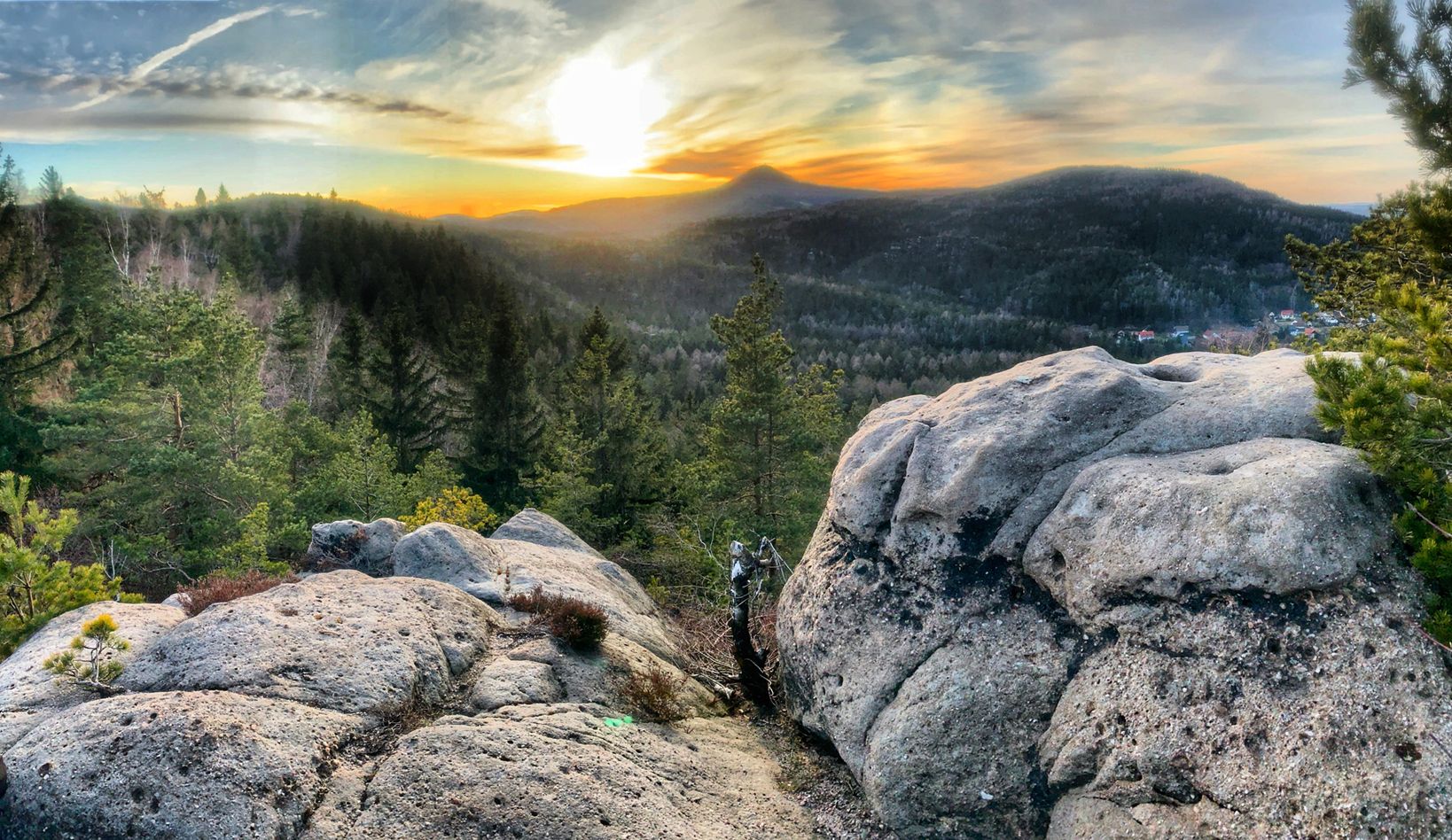
Mountains, heaths & lakes – hiking in Lusatia
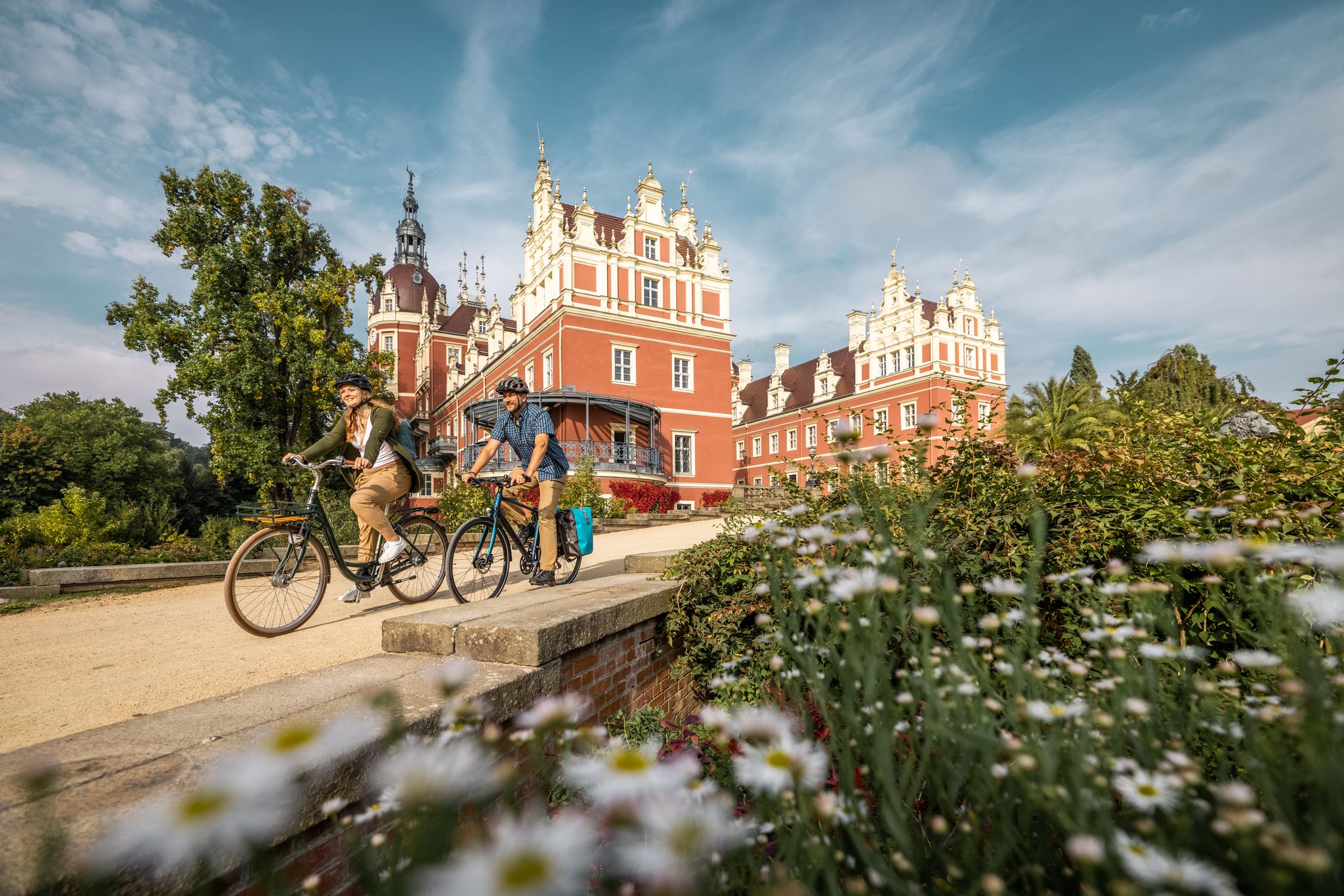
Oberlausitz Cycling Region – 18 superb routes in Upper Lusatia
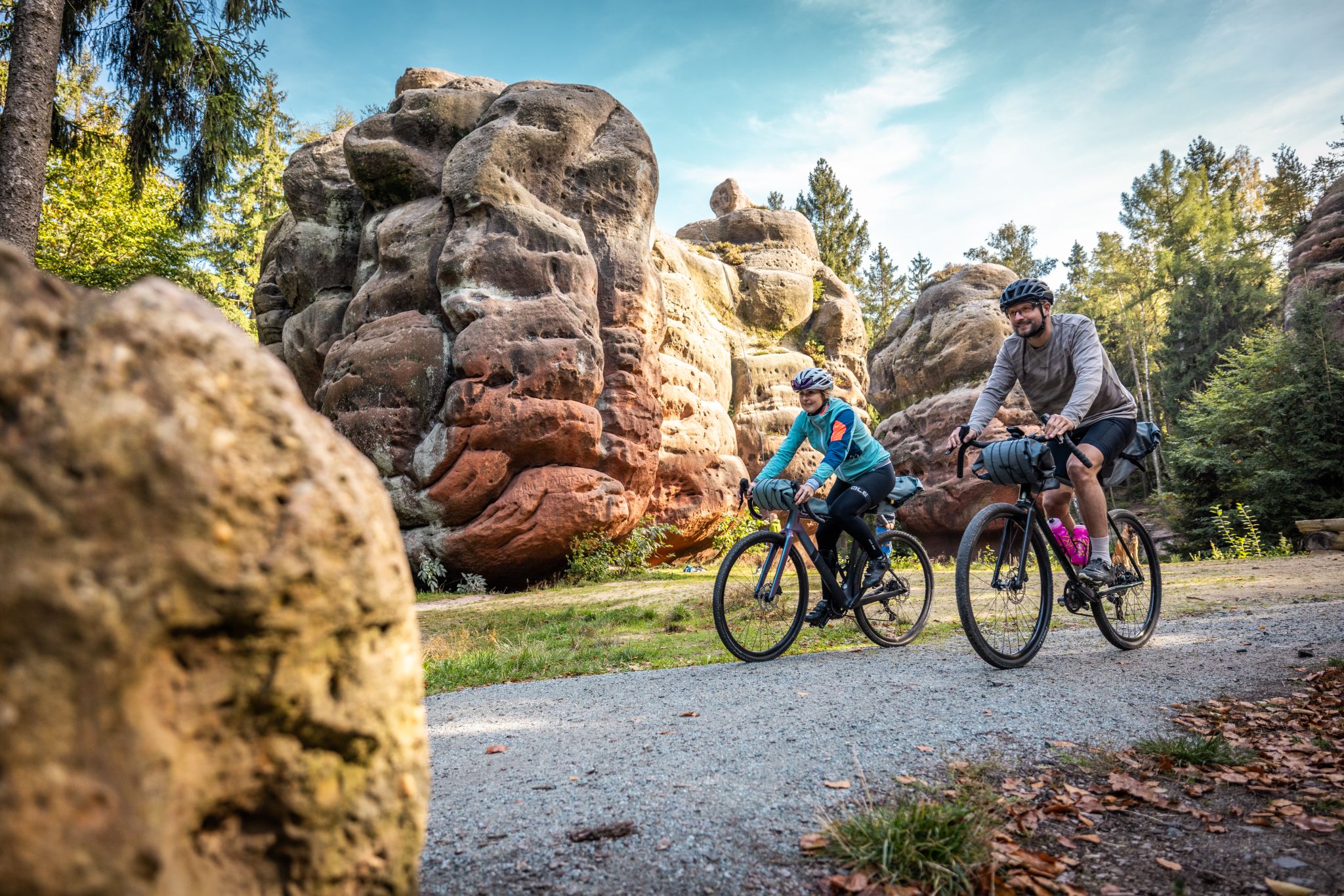
RockHead – Craft Your Gravel Story
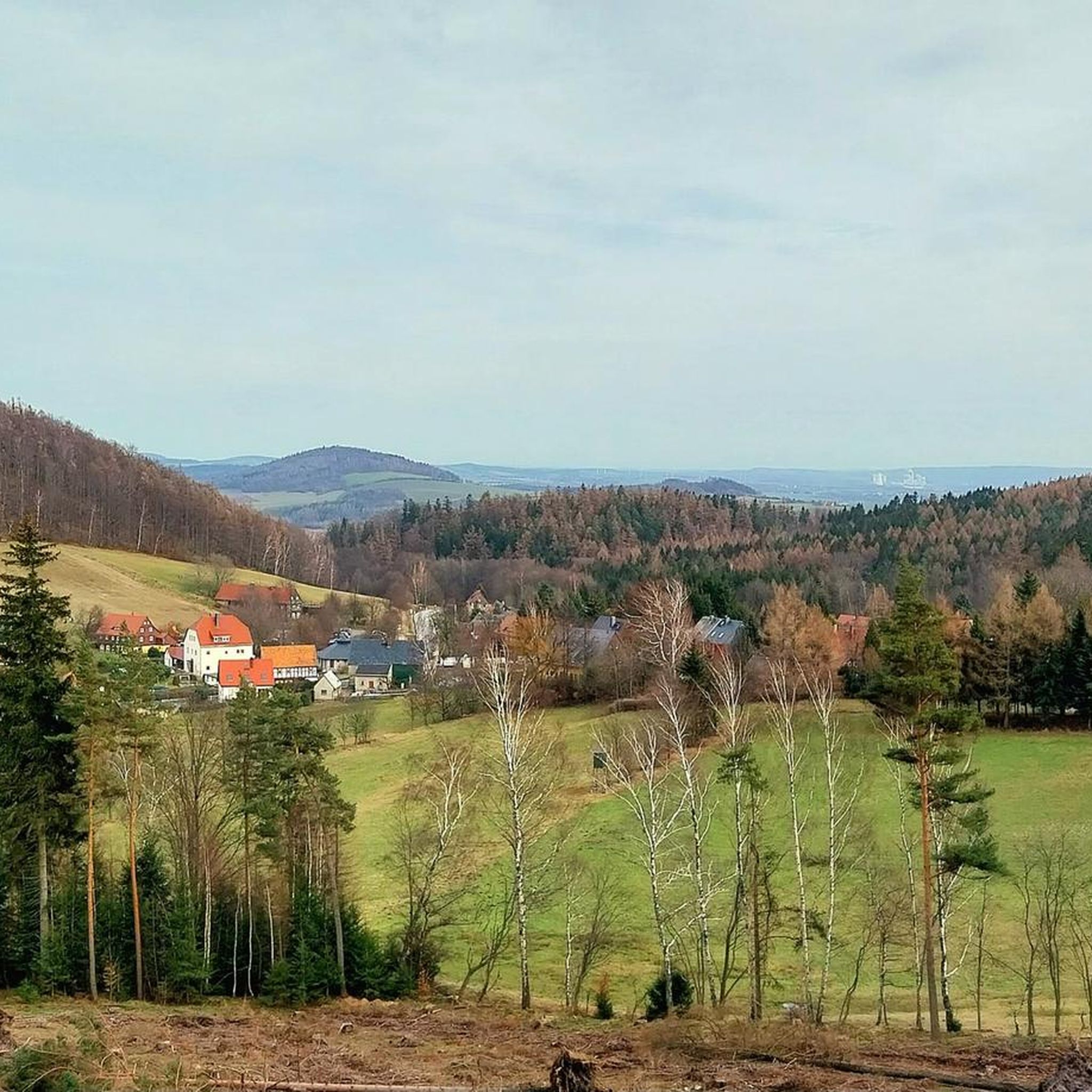
Hiking around Großschönau
Cycling around Großschönau
MTB Trails around Großschönau
Running Trails around Großschönau
Road Cycling Routes around Großschönau

Mountain Hikes around Großschönau
Gravel biking around Großschönau
Other adventures around Großschönau


Tips from the Community

Great rock formation; With due attention, you can climb well and conquer the rocks and surroundings.
0
0

Looking up, we already see the Gratzer rocks, in this section the trees around us have died. We look back, far into the distance. We reach the rock formation, we are now standing between the freestanding sandstone rocks, with boulders in between, as if someone had dropped them here. If we don't deny ourselves a little climb on them, we feel like we are in an adventure land. The rock formation is permeated with small caves everywhere. A fantastic landscape, we walk between the rocks, through the autumnal forest surrounded by moss and ferns, the sandstone now sounds dull, almost hollow under our feet. https://youtu.be/N2GgTh6HEzQ
0
0

The White Stone marks a regional geological feature. Here, a rock formation consisting of a quartz vein emerges, striking for its atypical white color. This formation is also known as the Karasek Cave, named after the robber captain Johannes Karasek. This is said to have been the meeting place of the gang before and after several raids. While the robber captain actually existed, legend has it that his treasure, which has not yet been found, is hidden at this location. The story of the robber captain and information on the geology can be found in the Karasek Museum in Seifhennersdorf. Coming from Großschönau, it's worth taking a detour about 300 meters from the road and then continuing on to the Karasek Museum.
0
0

The White Stone is a rock formation up to six meters high in the Hofebusch forest near Spitzkunnersdorf in Upper Lusatia. Erosion also created the so-called Karasek Cave in this rock.
1
0

point for the hiking pin Oberlausitzer Bergweg
0
0

HOLLOW STONE A unique geological monument consisting of small, fine sandstone columns, the so-called "fans". This geological structure seems rather unusual, because the much more famous Panska-skála (Manor House Rock) near Kamenický Senov (Steinschönau) is made of basalt. In the southern part of the village, narrow steps have been carved out, leading to the highest platform on the summit. On top of this there is a rock bench called Karolinin odpocinek (Karolinenruh), which was carved in 1913-1914 by members of the mining association for the northernmost Czech Republic. On this staircase, a relief of the head of the poet Theodor Körner (1791-1813) was carved into the sandstone by two amateur artists from Zwickau. In his short life, Körner wrote a single collection called Lyra a mec (The Lyre and the Sword), and these are the very motifs that can be seen on the wreath that surrounds the bust of the poet. He was killed in the Napoleonic Wars at the age of 22. In the nearby town of Zittau, you can still find some memorabilia of the romantic. In 1913, the top platform of the natural monument was converted into a viewing platform and decorated with a viewing rosette and a sundial (now destroyed). Near the lookout there is an excavated cave called Sustrova díra (Shoemaker's Hole). The name comes from one of the builders of a nearby and now closed railway line. Thanks to the rock relief, the hollow stone was added to the national list of cultural monuments. It offers a wonderful view of the hills Ortel. (Judgment Hill), Klic (Key) and Zelený vrch (Green Hill) with a renewed view, the so-called "Svýcárna" (Swiss House) above the village of Drnovec.
0
0

The Dutý kámen (Hohlstein, 379 m) is an approximately 600 m long forest-covered ridge that projects about 0.5 km from Drnovec (Kleingrün) on the road from Cvikov (Zwickau i. B.) to Kunratice (Kunnersdorf) in a southerly direction . Very nice views.
0
0
The cave has been known to locals for several centuries as the ice hole. Around 1870, the Zwickau mining association built the first access route to the cave and began marketing it for tourism. The descent to the cave floor, 6 meters below, was initially done via a carved tree trunk; later a ladder was installed. Around 1900 the entrance to the cave was barred, and for a fee you could get the key from a nearby mill. On busy weekends, a kiosk at the entrance sold refreshments. After 1945, the cave was freely accessible and was often damaged by ice formations breaking off and campfires. In 1966 the cave was declared a protected natural monument because of its unusual character, but it was not until 1988 that the cave entrance was closed again and the destruction stopped. Until 1995, access to the cave was permitted after approval by the administration of the Lusatian Mountains landscape protection area; since then, viewing has no longer been permitted due to the risk of collapse.
2
1
Frequently Asked Questions
What types of caves and rock formations can I explore around Großschönau?
The Großschönau area, situated in the western Waldviertel region and near the Zittau Mountains, offers a diverse range of rock formations and cave-like structures. You'll find natural geological features, historical hideouts, and even show mines. The landscape is characterized by ancient granite, providing unique exploration opportunities. Examples include the mystical Rabenloch, the accessible Steinerne Stube, the legendary Karasek Cave, and the impressive Schwarzes Loch Show Mine.
Are there any caves with historical or legendary significance in the region?
Yes, several sites combine natural beauty with rich history and folklore. The Karasek Cave (also known as Weiße Stein) is famously associated with the robber captain Johannes Karasek, who is said to have used it as a meeting place and hidden treasure there. The Rabenloch is also noted for its blend of nature, history, and 'geomantic power,' with artistic installations from 2010. Additionally, the Dutý Kámen (Hohlstein) features a historical memorial alongside its natural rock formations.
What are some family-friendly options for exploring caves and rock formations?
The Steinerne Stube and Kleine Steinerne Stube are excellent choices for families. These accessible spaces, formed by moss-covered granite blocks, are part of a circular trail just under six kilometers long, taking about two hours to complete and suitable for children. The area also features other conspicuous rocks like the Altar Stone, Druid Stone, and Bowl Stone, making it an engaging outdoor experience for all ages.
What is the geological background of the caves and rock formations around Großschönau?
The region's landscape is primarily shaped by 400-million-year-old Weinsberg granite. This ancient geological foundation has led to the formation of unique rock structures and cave-like spaces through natural erosion. The Karasek Cave, for instance, is notable for its striking white quartz vein, distinguishing it from the surrounding dark granite. The varying hardness of the rock has created blocks, rubble, and shaft-like cavities.
Are there guided tours available for any of the caves?
Yes, guided tours are offered at the Schwarzes Loch Show Mine on specific days. This former millstone quarry, now a show mine, features a deep rock cauldron and impressive 'rock alleys.' A guided tour provides valuable insights into its history and geological significance. It's recommended to include this as part of a Jonsdorf tour.
What outdoor activities can I do near the caves around Großschönau?
The area around Großschönau is excellent for various outdoor activities. You can find numerous hiking trails, including the Frauhausweg trail which leads to the Rabenloch, and a circular trail that includes the Steinerne Stube. For more extensive adventures, explore the easy hikes around Großschönau. The region also offers MTB trails and gravel biking routes for cyclists.
Is there an ice cave in the vicinity of Großschönau?
Yes, the Hope Ice Cave, also known locally as the 'ice hole,' is located near Zittau. It was historically known for its ice formations and gained tourist accessibility around 1870. While access has been restricted at various times to protect its unique character, it remains a significant natural monument in the region.
What do visitors enjoy most about the caves and rock formations in Großschönau?
Visitors frequently appreciate the unique blend of natural beauty, geological interest, and local folklore. The impressive rock formations, such as those at Gratzer Rocks, are a highlight. Many enjoy the opportunity to combine hiking with exploring historical sites and natural monuments, often finding the 'rock alleys' and viewpoints particularly striking. The komoot community has shown strong appreciation, with over 650 upvotes and more than 580 photos shared.
Are there any viewpoints or scenic spots associated with the caves?
Many of the rock formations and cave sites offer excellent viewpoints. For example, Dutý Kámen (Hohlstein) is known for providing wonderful views. The Gratzer Rocks also offer impressive formations that are worth a small detour for their scenic appeal. The deep rock cauldron of the Schwarzes Loch Show Mine also presents a unique visual experience.
How accessible are the caves and rock formations for different fitness levels?
The accessibility varies by location. Some sites, like the Steinerne Stube, are part of relatively easy circular trails suitable for children and general visitors. Other areas, such as the Rabenloch, are embedded within hiking trails that might require a moderate fitness level. The Hope Ice Cave, in its historical context, involved a descent of six meters, indicating some challenging elements. Always check specific trail descriptions for difficulty ratings.
Can I find information about the region's rock formations and trails online?
Yes, for additional information about the rock formations and trails in the Großschönau area, you can visit the official tourism website for Lower Austria. They provide details on excursions and natural attractions in the region. You can find more information at lower-austria.info.
Most popular routes around Großschönau
Most popular attractions around Großschönau

Get inspired with the komoot mobile app


Explore more
Extend your search for the best caves by checking out these guides of the top ones around Großschönau:
