Top 10 Castles around Adelsried
Best castles around Adelsried are situated in a region known for its historical sites. The area offers a landscape characterized by forests and river valleys, providing a setting for various historical structures. While Adelsried itself features a local castle, the broader vicinity contains a range of castles and ruins. This makes the area suitable for those interested in exploring historical architecture and regional heritage.
Best castles around Adelsried
- The most popular castles is Hammel Castle, a castle with a…
Last updated: May 14, 2026
Hammel Castle
Highlight • Castle
Translated by Google •
Tip by

Hainhofen Castle
Highlight • Castle
Translated by Google •
Tip by

Sign up now to discover places like this
Get recommendations on the best single tracks, peaks, & plenty of other exciting outdoor places.
Sign up for free
Reflection of Fuggerschloss Gablingen in the Schmutter
Highlight • Castle
Translated by Google •
Tip by
Wolfsberg Castle Ruins
Highlight • Castle
In the Middle Ages, the Wolfsberg castle ruins belonged to the noble family of Fraßen vom Wolfsberg, who also founded the hamlet of Stadel near Dinkelscherben. The …
Translated by Google •
Tip by

Snow castle rampart
Highlight (Segment) • Historical Site
Translated by Google •
Tip by

Sign up for free to discover even more castles around Adelsried.
Sign up for free
Already have an account?
Start today with a free account
Your next adventure awaits.
Login or Signup

Tips from the Community

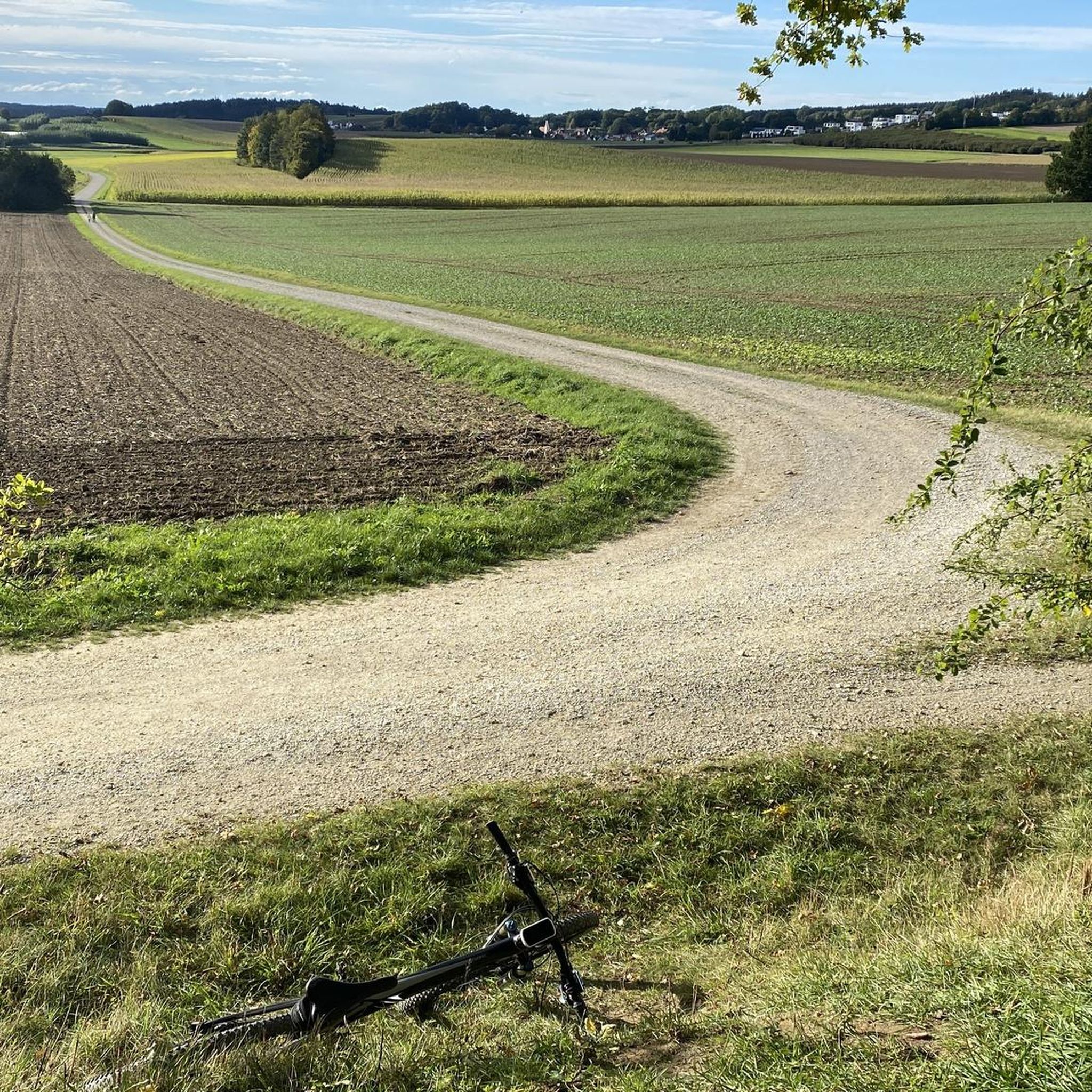
The ringfort of Schneeburg is not the remains of a castle, but rather an archaeological monument that only reveals itself upon closer inspection. There were never any towers or stone walls here – the fortification consisted of earthworks, wooden palisades, and timber structures. Today, primarily ditches, ramparts, and the shape of the site are visible in the landscape. Historians assume that the oldest traces of Schneeburg date back to the Bronze Age. In the Middle Ages, it offered the local population protection from Hungarian invasions.
1
0


Built in 1550, in 1700 the castle came into the possession of the Augsburg patrician family von Stetten through marriage
0
0

Originally a moated castle, a rectangular structure built under Anton Fugger, individual sections of the walls are medieval, the core dates from the end of the 16th century, renovated around 1730, and remodeled in the last quarter of the 18th century.
2
0
Wolfgang von Paler the Elder was granted sheep in 1550. He commissioned the construction of a new palace around 1550/60. The building was presumably destroyed by the Swedes in 1648. The new owner, Raimund Egger, had the palace rebuilt.
2
0

Hainhofen Castle is located in the Hainhofen district of the town of Neusäß in the Augsburg district of Bavaria. The property consists of two main buildings: the baroque high castle, a four-story hipped roof building that was built in 1730, and the classicist long castle, which was built between 1760 and 1780 by the von Rehlingen family. The castle originally served as the seat of various patrician families, including the Fuggers and the von Rehlingens. Today it is privately owned and has been extensively restored. In 2013, the owners received the Swabia District Monument Prize for this exemplary renovation. The castle is picturesquely located on the western edge of the town in the Schmutter lowlands and is a protected architectural monument. Although it is not open to the public, it remains an important testimony to regional history and architectural development in Swabia. Near the castle is the Catholic parish church of St. Stephanus, which was built in 1718/19 by Johann Holzapfel. This church is also worth a visit and complements the historical ensemble of Hainhofen. For hikers and nature lovers, the area around the castle offers attractive routes that include the Schmuttertal and the Lohwald. A highlight is certainly the castle in Hainhofen, which was built in 1582 by Anton Fugger.
1
0
Hammel Castle is located in the Hammel district of the town of Neusäß in the Augsburg district, Bavaria. The castle is owned by the von Stetten family. History: • 1550: Wolfgang von Paler the Elder is granted Hammel and initiates the construction of the new castle around 1550/60. • 1648: The building is probably destroyed by Swedish troops during the Thirty Years' War. • After 1648: The new owner, Raimund Egger, has the castle rebuilt. • 1700: Through marriage, two thirds of the castle becomes the property of the Augsburg patrician family von Stetten; later the family also acquires the remaining share. • Mid-19th century: Extensive renovation work is carried out. • 1891: Under the planning of the Augsburg architect Jean Keller, the east-west wing is extended and the facade structure is renewed and the south gable is decorated with neo-Gothic battlements. Architecture: The castle consists of two three-story wings. The shorter "old building" has a gable roof and a facade structure with neo-Gothic battlements. The surrounding wall is equipped with four defensive towers, including the so-called Malakow Tower on the southeast corner, which was provided with a balustrade and an arbor-like structure made of wood in 1856. Current use: Hammel Castle is still owned by the von Stetten family and is not open to the public. However, the historic complex is an important cultural monument in the region and an example of the architecture and history of Augsburg's patrician families.
3
0
The Fugger Castle Gablingen is a historic castle in the municipality of Gablingen in the district of Augsburg, Bavaria. It was acquired in the 16th century by the influential Fugger merchant family and served as the administrative seat of their rule in the region. The castle is picturesquely situated on a hill above the Schmutter River and is directly connected to the neighboring parish church of St. Martin. This connection symbolizes the close connection between secular and ecclesiastical power at that time. The castle building is characterized by its late Gothic architecture with a steep gable roof and bay windows. A striking staircase tower with an onion dome complements the ensemble. In 2020, the listed castle was restored and renovated according to original plans, taking into account both modern living standards and the historical building fabric. Today the castle is privately owned and is not open to the public. Nevertheless, it remains an important testimony to regional history and architectural development in Swabia.
1
0
Frequently Asked Questions
What types of castles can I explore around Adelsried?
The Adelsried area features a variety of historical structures, including private castles like Hammel Castle and Hainhofen Castle, as well as castle ruins and ancient ramparts. These sites offer insights into the region's past, from medieval fortifications to later architectural styles.
Are there any castle ruins I can visit near Adelsried?
Yes, you can visit Wolfsberg Castle Ruins, a historical site known for its interesting trails. It also hosts a castle festival on the first weekend of August.
What is the 'Snow castle rampart' and can I visit it?
The Snow castle rampart (Schneeburg) near Welden is an archaeological monument, not a traditional stone castle. It consists of earthworks and ditches, believed to date back to the Bronze Age and served as a refuge during Hungarian invasions. You can explore the area and its small trails.
Are there any castles near Adelsried that are open to the public for tours?
Many of the castles directly within or very close to Adelsried, such as Hammel Castle, Hainhofen Castle, and Fuggerschloss Gablingen, are privately owned and not open for public tours. However, you can often view their exteriors and appreciate their historical significance from nearby.
What historical insights do the castles around Adelsried offer?
The castles and historical sites in the region, like the 16th-century core of Hammel Castle or the late Gothic architecture of Fuggerschloss Gablingen, provide a glimpse into the architectural styles and the lives of influential families such as the Fuggers and von Stettens. The Snow castle rampart even offers a connection to the Bronze Age and medieval defense strategies.
What outdoor activities can I do near the castles around Adelsried?
The area around Adelsried offers various outdoor activities. You can find numerous running trails, such as the 'Running loop from Bonstetten' or the 'Maria im Felde Chapel – Weldenbahn Track Remains loop from Adelsried'. For cycling, explore routes like the 'Weldenbahn Cycle Path – Weldenbahn Track Remains loop from Adelsried'. There are also gravel biking opportunities. You can find more details on these routes in the Running Trails around Adelsried, Cycling around Adelsried, and Gravel biking around Adelsried guides.
Are there hiking trails associated with the castles in the Adelsried area?
Yes, Wolfsberg Castle Ruins is known for having interesting trails around it. Additionally, the Snow castle rampart also features many small trails in its vicinity, perfect for exploring the historical landscape.
What do visitors particularly enjoy about the castles and historical sites near Adelsried?
Visitors appreciate the picturesque settings, such as the reflection of Fuggerschloss Gablingen in the Schmutter River. The historical significance and the opportunity to explore trails around sites like Wolfsberg Castle Ruins are also highly valued. The komoot community has shared over 120 photos and given more than 240 upvotes to these highlights.
Are there any castles near Adelsried that are known for events?
Yes, Wolfsberg Castle Ruins is known for hosting a castle festival on the first weekend of August. Further afield, Schloss Kaltenberg (about 17 km from Adelsried) is famous for its medieval festival and Christmas market.
Can I see any castles that are beautifully situated in nature?
Absolutely. Fuggerschloss Gablingen is picturesquely situated above the Schmutter River, offering a beautiful reflection in the water. The historical sites are often nestled within the region's forests and river valleys, providing scenic views.
Is there a castle near Adelsried with a museum?
While not directly in Adelsried, Wittelsbacher Castle in Friedberg, approximately 14.6 km away, houses a museum dedicated to clocks and pottery, offering a unique cultural experience.
What is the best way to experience the castles around Adelsried?
The best way to experience the castles is often by combining visits with outdoor activities. Many sites, like Wolfsberg Castle Ruins and the Snow castle rampart, have trails nearby. Cycling or running routes also pass by some of these historical landmarks, allowing for a blend of history and nature.
Most popular routes around Adelsried
Most popular attractions around Adelsried

Get inspired with the komoot mobile app


Explore more
Looking for the best castles somewhere else? Discover other guides around Adelsried:
