Top 10 Castles around Loitzendorf
Castles around Loitzendorf are located in the district of Straubing-Bogen in Bavaria, Germany, a region characterized by its historical sites and varied terrain. While Loitzendorf is a small municipality, the surrounding Bavarian landscape is rich with historic castles and ruins. These sites offer insights into medieval architecture and regional history. The area provides opportunities to explore historical landmarks within a natural setting.
Best castles around Loitzendorf
- The most popular castles is Falkenfels Castle, a castle that was built around…
Last updated: June 27, 2026
Falkenfels Castle
Highlight • Castle
Around 1100, the Counts of Bogen built the castle on the rock that slopes steeply on three sides. From 1232, the Knights of Hohenfels ruled the castle, and …
Translated by Google •
Tip by

Neuhaus Castle Ruins
Highlight • Castle
Neuhaus was first documented in 1254 as the property of "Otto de novo castro." He likely descended from the Sattelbogen family, whose ancestral castle was located a …
Translated by Google •
Tip by
Sign up now to discover places like this
Get recommendations on the best single tracks, peaks, & plenty of other exciting outdoor places.
Sign up for free
Neurandsberg Castle Ruins
Highlight • Castle
The Ramspergs were originally ministeriales of the Counts of Bogen and were first mentioned in 1190. Their seat was in Altrandsberg, two kilometers north in the Cham …
Translated by Google •
Tip by
Altrandsberg Castle
Highlight • Castle
The Randsberg/Ramsperger family is documented as ministeriales of the Counts of Bogen from 1165, beginning with Albrecht and Erasmus von Randsberg. The family's connections to the Bishopric of …
Translated by Google •
Tip by
Haibach Castle Ruins
Highlight • Castle
Translated by Google •
Tip by

Sign up for free to discover even more castles around Loitzendorf.
Sign up for free
Already have an account?
Start today with a free account
Your next adventure awaits.
Login or Signup
Tips from the Community

Currently unfortunately closed and covered for renovation;
0
0

Neuhaus Castle Ruins Neuhaus was first documented in 1254 as the property of "Otto de novo castro." He likely descended from the Sattelbogen family, whose ancestral castle was located a few kilometers east of the town; today, it is only documented as a castle ruin. The name "Neuhaus" itself indicates the status of a later-founded "branch." Originally, the Sattelbogers were ministeriales of the Counts of Bogen, then of the Bavarian dukes. Especially in the 14th century, the family spread to many surrounding castles, including Lichteneck, Zandt, and Thierlstein. Milot and Jakob "von dem Newnhaus" provide evidence for Friedrich Sattelboger in 1320. Friedrich was an influential ministeriale of the Bavarian dukes and guardian of Cham. By 1351, Konrad Sattelboger was the owner of Neuhaus. In 1373, part of the castle passed to Seitz Buchberger, and in 1481 to the Hohenstaufen von Ehrenfels, who administered the castle as a Bavarian Hofmark. In 1573, the Sattelbogen family died out, and the owners of Neuhaus changed frequently during this time. The castle was destroyed during the Thirty Years' War and never rebuilt. In 1829, it was acquired by the House of Thurn and Taxis, now privately owned. All that remains of the medieval castle are the outer walls of the tower-like palace, parts of the rampart, and the moat walls. The palace windows on the second floor have seating niches, making it likely that they were built in the late Middle Ages. To the north, parts of buildings can still be identified today. Based on Apian's depiction, two main buildings with a courtyard between them can be assumed. The ruins lie on a hill, at the foot of which a second circular wall with semicircular towers and a circular moat were built, something probably unique in Bavaria. The moat could have been flooded by a stream. A half-covered, round tower with a wall thickness of 1.5 m stands outside the main castle at the foot of the hill in the moat wall. It is unclear whether it can be considered a keep or—more likely—a later added wall tower. The many modern additions detract from the overall appearance. Source: Excerpts from www.burgenseite.de
2
0
Altrandsberg Castle The Randsberg/Ramsperger family is documented as ministeriales of the Counts of Bogen from 1165, beginning with Albrecht and Erasmus von Randsberg. The family's connections to the Bishopric of Passau are also documented. After the extinction of the Counts of Bogen in 1242, the family passed into the ministerial sphere of the Wittelsbach dynasty. In 1330, the Neurandsberg line was founded, which led to the gradual naturalization of the name Altrandsberg for the ancestral seat. The family held important offices in ducal service. In the mid-15th century, after disputes with the sovereign, there were several changes of ownership, which ended with the transfer to the Paulsdorf family no later than 1483. It was acquired by Heinrich Nothafft in 1515. Around 1620, Altrandsberg passed to Hans Christoph von Berlichingen, and in 1676, after several interim owners, to Hans Wolf von Leoprechting. Altrandsberg remained in the possession of this family until 1847, then passed into burgher hands and into municipal ownership in 1895. The construction history of the complex, which was significantly altered, especially in the 17th century, is only broadly understood. The oldest remains are the foundations of the square keep, uncovered in 1987, the curtain wall on three sides, and parts of a multi-part residential building on the east side. These likely date back to the second half of the 12th century. The older enclosure wall, which tightly enclosed the main castle on three sides, was probably also built in the 13th century. In the 15th century, in addition to alterations to the residential buildings, the chapel, first mentioned in 1483, was built. The conversion to a palace may have already begun under the Nothafft family. Under Hans Wolf von Leoprechting, the new west wing, which still dominates the complex today, and the arcades on the north wing were built. The 19th century led to numerous extensive changes to the interior. The buildings from the 17th and 18th centuries were largely demolished in the 20th century. Only remnants of the High Medieval structure remain. In the area of the trapezoidal main castle, these include the foundations of the square keep and its round successor, as well as large sections of the curtain wall and the palace, which was later rebuilt many times. The entire complex and the courtyard are largely dominated by the alterations and new buildings of the late 17th and 18th centuries, including arcades behind the former battlements in the north and the then newly built west wing with its restored Baroque façade. Source: Excerpts from www.ebidat.de
2
0
Neurandsberg Castle Ruins The Ramspergs were originally ministeriales of the Counts of Bogen and were first mentioned in 1190. Their seat was in Altrandsberg, two kilometers north in the Cham district. In 1330, Friedrich the Ramsperg probably built the new castle on his own land. Many Ramspergs entered Bavarian service at the end of the 14th century as stewards, for example, in Saulburg and Mitterfels. In the Hussite Wars around 1430, the Ramspergs fought for the Bavarian duke, but soon became involved in military conflicts with him over compensation. This did not do them any good: in 1436, Duke Ernst had Neuramsperg Castle conquered by Haimeran Heuraus. Unlike nearby castles such as Neunussberg, Neurandsberg was never returned to its owners, but instead became a ducal manor. In 1461, Dukes Sigismund and John visited the castle. The dukes gave the castle to Jörg Heuraus, the guardian of Mitterfels, followed by Sattelbogen, Nussberger, and the Nothaft of Wernberg, among others. In 1582, a prison was established at the castle, but in 1615, it was moved to Mitterfels to serve as the district court. In 1633, the Swedes under Colonel Georg Christoph von Taupadell destroyed the castle, and it was never rebuilt. In 1689, guardian of the castle Erttl of Mitterfels asked Elector Max Emmanuel for permission to rebuild the wooden chapel below the castle, which was threatened by rubble. This was approved, and the castle ruins were used as a quarry. Upon entering the complex, the first thing that catches your eye is the well-preserved and elaborate Zwinger (mew). The entire castle is surrounded by it, and the walls are topped with several semicircular towers. The north side, opposite the entrance, is particularly elaborately constructed, with three towers and a wall with a battlement. The original access to the complex is no longer immediately recognizable. Access to the inner castle is, in any case, through a simple gateway in the south of the polygonal circular wall made of rubble stone. The interior of the inner castle is difficult to discern, revealing its structural layout. The buildings were likely leaning against the inner wall, some of which are still well preserved. The site is still being secured. Source: Excerpts from www.burgenseite.de
2
0

Super beautiful with a fantastic view, unfortunately currently cordoned off with a construction fence due to rockfall. Still nice to look at.
0
0

Simply a beautiful spot on earth. Easy to reach, whether through the forest or by road. Beautiful view over Haibach.
0
0
St. Joseph's Castle Chapel Built on medieval castle walls and dedicated to St. George as a castle chapel. In 1693 a new building was built in honor of the Holy Family, especially St. Joseph, with the founding of a St. Joseph's Brotherhood by Baroness Theresia von Weichs. Devastated by fire in 1807, the church was rebuilt with changes. In 1888, the tower and roof structure burned out again due to a lightning strike, and the tower was given a crenellated crown when the new building was built. In 1897, it was expanded to its current size with neo-baroque interior design. In 1967, the church was completely remodeled, with the ceiling and roof structure being renewed and the interior redesigned. From 1991 to 1993, it was renovated again, restoring the original condition and returning the late baroque altar and the figures of saints. The renovated church and the people's altar were consecrated on March 21. Source: information board
2
0
Falkenfels Castle Around 1100, the Counts of Bogen built the castle on the rock that slopes steeply on three sides. From 1232, the Knights of Hohenfels ruled the castle, and from 1400, the Falkensteiners of Falkenfels. In 1331, “Valkenfelss” is mentioned in a copy from the 15th century as a landed estate. In 1425, the castle came into the possession of the Frauenbergers and remained so until their extinction in 1480. The castle was plundered by the Hussites in 1425 and conquered by troops of Duke Albrecht IV in the Böckler War in 1468. The Frauenbergers were followed by the Paulsdorfers. In the Löwler War, the castle was besieged for a week in 1492 and burned down after the capitulation on June 8, 1492, but was then rebuilt by Hans von Paulsdorf. In 1525, the property passed to the Seyboltstorffer family through marriage. From 1607 to 1796, the noble family of Barons von Weichs owned Falkenfels Castle. In the Thirty Years' War, the castle was set on fire by the Swedes in 1641, but was then rebuilt. On April 15, 1796, Josef Maria von Weichs sold Falkenfels and the associated manorial estates to Baron Gabriel von Buchstetten for 320,000 guilders. In 1807, the castle was again burned down, but was rebuilt. After the end of the Falkenfels manorial estate, the castle economy was destroyed in 1820. In 1821, the Lang family acquired the castle and set up a brewery here, which lasted until 1934. In 1925, a fire destroyed large parts of the complex, after which it was only partially rebuilt. From 1919 to 1950, the castle belonged to the Schimmelmann family. On May 8, 1951, the furniture manufacturer Franz Xaver Baier from Straubing bought the castle and converted it into a hotel with a restaurant. The castle was also increasingly used as a conference and congress building. Since 2001, the castle has belonged to the publisher Udo Sieber. Falkenfels Castle was originally surrounded by two terraced ring walls, one above the other. Today, the fortifications are only preserved on the north side. Approximately in the middle of the east side is the keep from the 13th century, the battlements are from a later period. The baroque castle chapel of St. Joseph was built in the 17th century on medieval foundations. It contains gravestones of Falkenfels castle lords. The outer areas of Falkenfels Castle are freely accessible, otherwise it serves as a castle hotel and restaurant. Source: Excerpts from www.wikipedia.de
3
0
Frequently Asked Questions
What types of castles can I expect to find around Loitzendorf?
The region around Loitzendorf offers a mix of historic castle ruins and partially restored castles. You'll find sites like Neuhaus Castle Ruins, where only outer walls and ramparts remain, and Falkenfels Castle, which has been adapted into a castle hotel and restaurant with freely accessible outer areas. Haibach Castle Ruins even hosts a small local history museum.
Are there family-friendly castles to visit near Loitzendorf?
Yes, Haibach Castle Ruins is considered family-friendly. It features a small museum of local history where various rooms, such as a sleeping area, kitchen, workshop, and classroom, can be visited. The railing of the castle ruin is always accessible, and museum visits can be arranged by appointment.
What historical insights do these castles offer?
The castles around Loitzendorf provide a deep dive into medieval architecture and regional history. For example, Falkenfels Castle, built around 1100, has a rich history of ownership changes and reconstructions after fires and sieges. Neuhaus Castle Ruins dates back to 1254 and showcases the remnants of a medieval structure, while Neurandsberg Castle Ruins, destroyed in 1633, still features a well-preserved Zwinger (mew) with semicircular towers.
What outdoor activities can I do near these castles?
The area around Loitzendorf offers various outdoor activities. You can find numerous road cycling routes, mountain biking trails, and gravel biking options. For example, there are challenging MTB trails like the 'View from the Pröller summit – Hansel Hut loop from Konzell' or scenic gravel biking routes such as the 'Falkenfels Castle – View of the Walhalla loop from Rattiszell'. You can explore more options in the Road Cycling Routes around Loitzendorf, MTB Trails around Loitzendorf, and Gravel biking around Loitzendorf guides.
Are there any castles with good viewpoints or natural features?
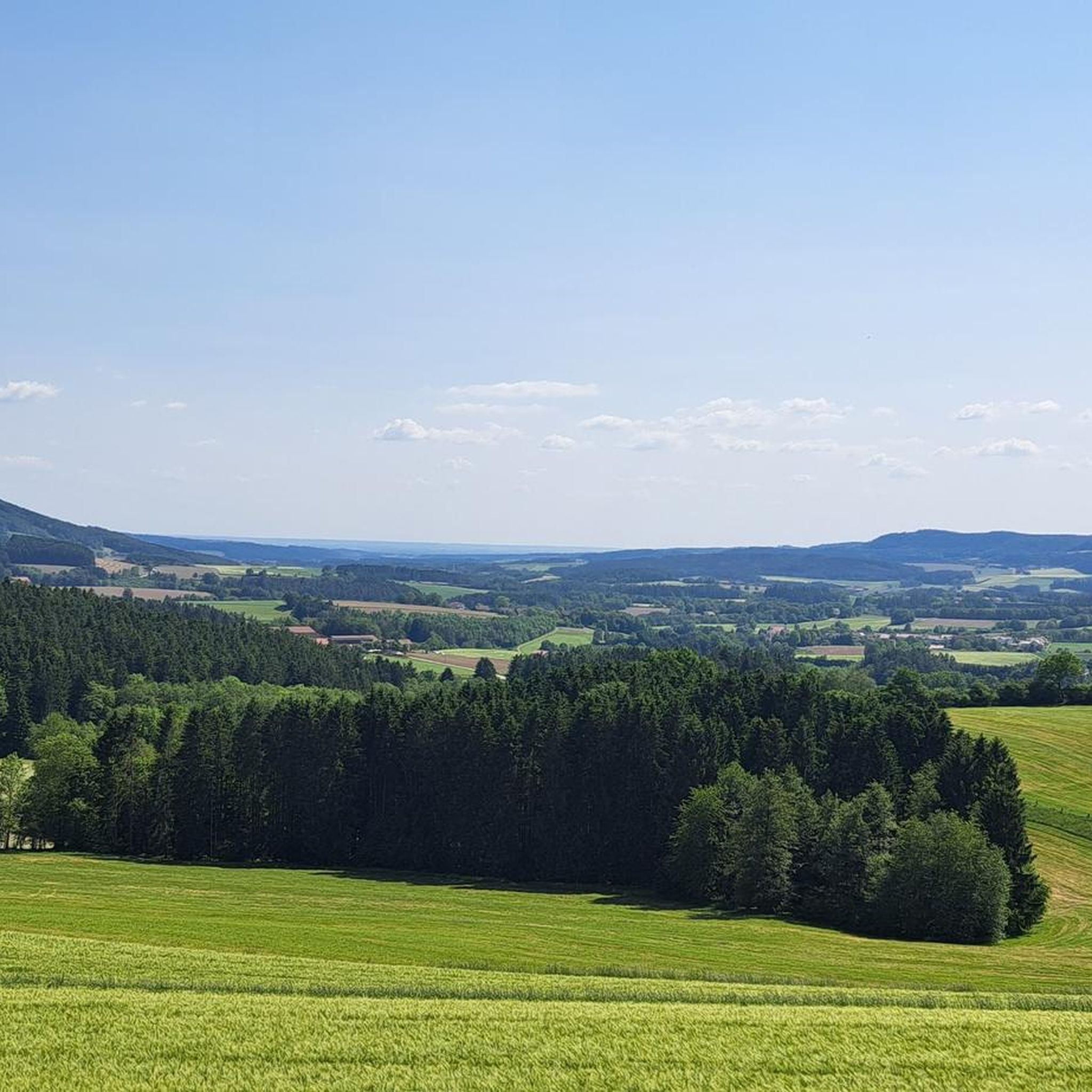
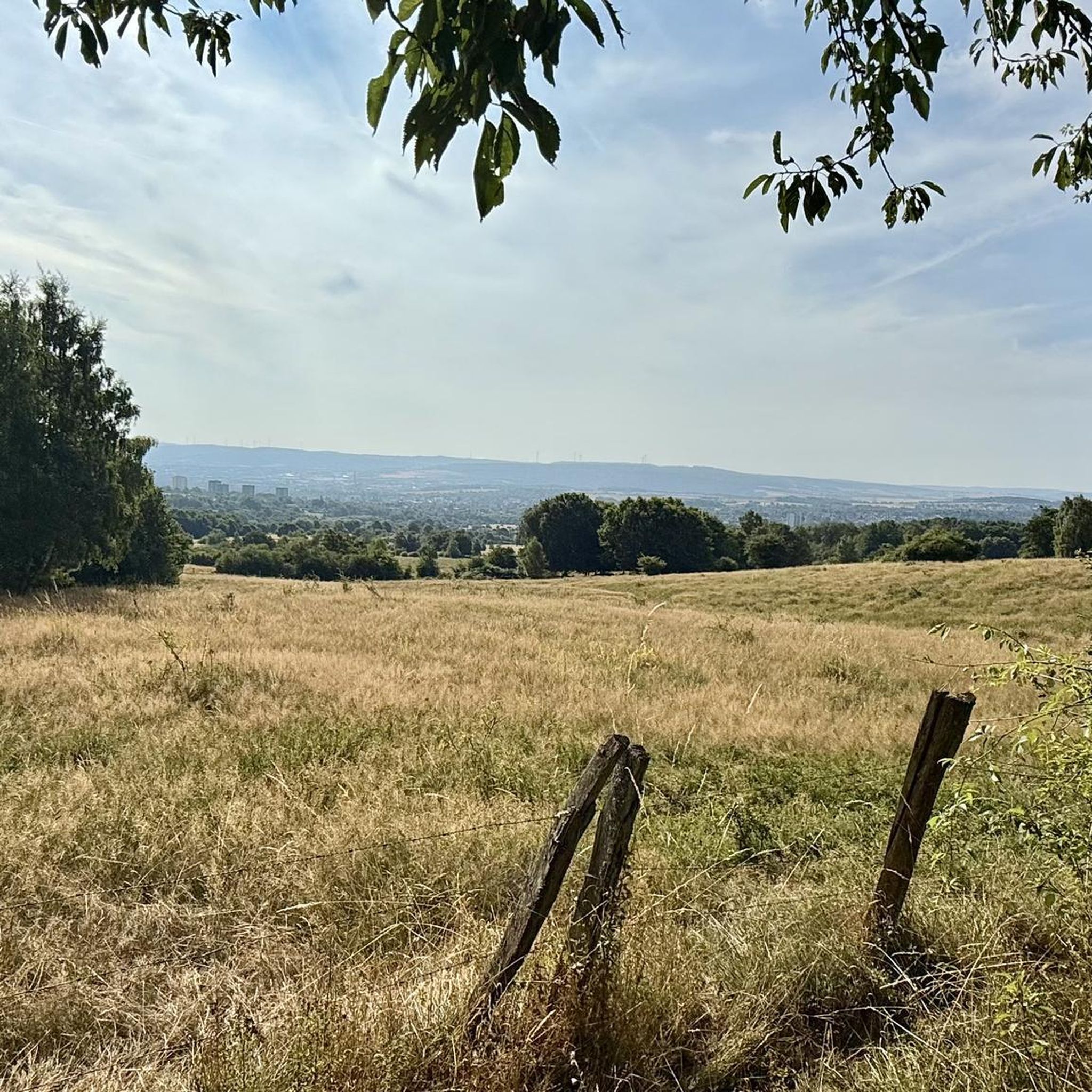
Many castles in the region are situated in scenic locations. Haibach Castle Ruins is noted for its beautiful situation and great views. Neuhaus Castle Ruins lies on a hill, offering a unique perspective of the surrounding landscape. The area provides opportunities to explore historical landmarks within a natural setting.
What is the best time of year to explore castles around Loitzendorf?
While specific recommendations for Loitzendorf are not available, generally, spring and autumn offer pleasant weather for exploring castles and their surrounding natural settings in Bavaria. The mild temperatures are ideal for walking and enjoying the outdoor areas of the castle ruins. Summer can also be good, but may be busier.
Are there any castles that are freely accessible?
Yes, the outer areas of Falkenfels Castle are freely accessible to visitors. This allows you to explore the grounds and admire the exterior of this historic site, which also functions as a castle hotel and restaurant.
What do visitors enjoy most about the castles around Loitzendorf?
Visitors appreciate the historical significance and the natural settings of the castles. The komoot community has shared over 160 photos and given more than 120 upvotes, highlighting the appeal of exploring medieval fortifications and sites that have been adapted for modern uses, such as hotels and museums. The beautiful situation and great views from places like Haibach Castle Ruins are frequently mentioned.
Can I find any hidden gem castles near Loitzendorf?
While the guide focuses on prominent sites, Altrandsberg Castle, though significantly altered over centuries, offers a glimpse into High Medieval structures and is well worth a detour. It features remnants of its original keep and curtain wall, alongside later Baroque additions.
Are there cafes or restaurants near the castles?
Yes, Falkenfels Castle operates as a castle hotel and restaurant, offering coffee and cake. This provides a convenient option for refreshments directly at a historical site.
What should I bring when visiting castles around Loitzendorf?
When visiting the castles, especially the ruins, comfortable walking shoes are recommended as you might encounter uneven terrain. If you plan to explore the surrounding natural areas or nearby routes, consider bringing appropriate gear for hiking or cycling. Water and snacks are always a good idea, and a camera to capture the scenic views and historical architecture.
Most popular routes around Loitzendorf
Most popular attractions around Loitzendorf

Get inspired with the komoot mobile app


Explore more
Looking for the best castles somewhere else? Discover other guides around Loitzendorf:
