Top 8 Caves around Teuschnitz
Best caves around Teuschnitz are primarily found within the broader Franconian Switzerland region, known for its karst caves. Teuschnitz itself features a mix of historical mining tunnels, rock cellars, and grottos, reflecting its industrial past and cultural heritage. The area offers opportunities to explore man-made underground structures and smaller natural rock formations. These sites provide insight into local history and geology, complementing the natural wonders of the wider region.
Best caves around Teuschnitz
- The most popular caves is Vereinigter Nachbar…
Last updated: May 14, 2026
Rentschenbruch Slate Quarry
Highlight • Cave
Translated by Google •
Tip by

Marian Grotto on Roßlacher Berg
Highlight • Religious Site
At the entrance to the Tiefenbachtal there is the Mariengrotte embedded in a rock. In the fifties, the existing niche in …
Translated by Google •
Tip by

Sign up now to discover places like this
Get recommendations on the best single tracks, peaks, & plenty of other exciting outdoor places.
Sign up for free
Bergloch Nordhalben
Highlight • Cave
Translated by Google •
Tip by

Rock cellar near Wolfersdorf
Highlight • Cave
Translated by Google •
Tip by

Lehesten Cave with Pond
Highlight • Cave
Translated by Google •
Tip by

Sign up for free to discover even more caves around Teuschnitz.
Sign up for free
Already have an account?
Start today with a free account
Your next adventure awaits.
Login or Signup


Tips from the Community

After the German armaments factories in Peenemünde on Usedom were severely damaged by the British Operation Hydra, the Nazi government decided to relocate war-critical factories underground. The factories found space primarily in old mines, railway tunnels, or newly constructed galleries. The Rentschen quarry, which had been used for slate mining and closed in 1925, was also designated for the "underground relocation." It was codenamed "Rutte." The Chemnitz-based company Reinecker was supposed to produce armaments on a 3,000-square-meter site. But this never happened. Reinecker found a home in another nearby slate mine. In total, around two dozen underground relocations were occupied or at least planned around Probstzella.
18
0

In the Rentschenbruch near Probstzella, the underground relocation for armaments production was approved under object number 1074, codenamed "Rutte." The Rentschenbruch underground mine had been idle since 1925. A production area of 3,000 square meters was planned for the expansion into an underground armaments factory. A fish name was chosen as the codename, fitting for a mine. The "Rutte" is a critically endangered bony fish from the burbot family and is also called "Trusche" in southern Germany. The Rutte only occurs in freshwater; other names include "Ruppe" or "Aalrutte." But that's just a side note. Originally, the Reinecker company from Chemnitz was supposed to move into the Rentschenbruch slate mine near Probstzella. However, this never happened, so Reinecker was ultimately housed in a bomb-proof slate mine (codenamed Rotfeder) nearby. At times, the Rentschenbruch was also closed for storage purposes by the Wehrmacht. The Geilenberg staff was also interested in the underground cavities of this slate mine. Source: http://www.stollenhausen.de/u-verlagerung-rutte/mobile/
2
0

Mary's Grotto at the entrance to the Tiefenbach Valley. In the 1950s, the existing niche in the slate rock of the Roßlacher Berg was converted into the Mary's Grotto by the Steinberg parish. Every year at the beginning of May, the statue of the Virgin Mary is ceremoniously carried from the parish church into the grotto.
0
0

A small pond with an entrance. Unfortunately, it is mostly under water and I have not yet been able to explore how far it leads into the earth 😱
0
0

On the parish pages on the Internet, it says: At the entrance to the Tiefenbachtal there is the Mariengrotte embedded in a rock. In the fifties, the existing niche in the slate rock of the Roßlacher Berg was expanded by the parish of Steinberg into the Mariengrotte. Every year at the beginning of the month of May, the statue of Our Lady is solemnly carried into the grotto by the parish church. Even today people meet here to worship the rosary. Adjacent neighbors take care of the decoration and maintenance of the grotto. Source: https://st-pankratius-steinberg.de/kirchen/kapellen
0
0

Rock cellars are found quite often in the Franconian sandstone. It was the earlier refrigerators. Today they are often prepared as shelters for bats by nature conservationists.
0
0

The largest of some "mountain holes" that were beaten (probably in the Middle Ages) at Nordhalben. Probably they were looking for degradable rock or ore, but was not successful. It could also have been storage cellars. Or the entrances to the cave system of Schrözlein, the legendary dwarfs who once lived in the Franconian Forest?
2
0
Frequently Asked Questions
What types of caves can I explore around Teuschnitz?
Around Teuschnitz, you'll find a mix of historical mining tunnels, rock cellars, and grottos, reflecting the area's industrial past and cultural heritage. For classic natural caves with impressive geological formations like stalactites and stalagmites, you'll need to venture into the broader Franconian Switzerland region.
What are some popular historical underground sites near Teuschnitz?
One of the most popular historical sites is the Vereinigter Nachbar Auxiliary Adit, a former mining tunnel from 1785 that later served as a beer cellar and is now a small museum. Another significant site is the Rentschenbruch Slate Quarry, a former slate mine with a history tied to World War II.
Are there any natural caves with stalactites and stalagmites in the wider region?
Yes, the broader Franconian Switzerland region is renowned for its natural karst caves. Notable examples include Teufelshöhle (Devil's Cave) near Pottenstein, known for its extensive dripstone formations and large chambers, and Sophienhöhle (Sophie's Cave) near Burg Rabenstein, celebrated for its diverse stalactites.
What is the <a href="https://www.komoot.com/highlight/2884303" target="_blank" rel="noopener">Marian Grotto on Roßlacher Berg</a>?
The Marian Grotto on Roßlacher Berg is a small, cave-like recess nestled in slate rock at the entrance of the Tiefenbachtal valley. It was developed into a Marian shrine in the 1950s and holds cultural and religious significance as a place of devotion, cared for by local residents.
What are the rock cellars near Teuschnitz, like the one near Wolfersdorf?
Rock cellars, such as the Rock cellar near Wolfersdorf, are common in Franconian sandstone. Historically, they served as early refrigerators. Today, many are preserved by nature conservationists as shelters for bats, offering a glimpse into both local history and wildlife protection.
Are there family-friendly caves to visit near Teuschnitz?
While the local sites like the Marian Grotto on Roßlacher Berg are suitable for families, for a classic family-friendly cave experience with tours, consider Binghöhle (Bing Cave) near Streitberg in Franconian Switzerland. It's known for its accessible tours and unique crystal formations.
What outdoor activities can I do near these caves?
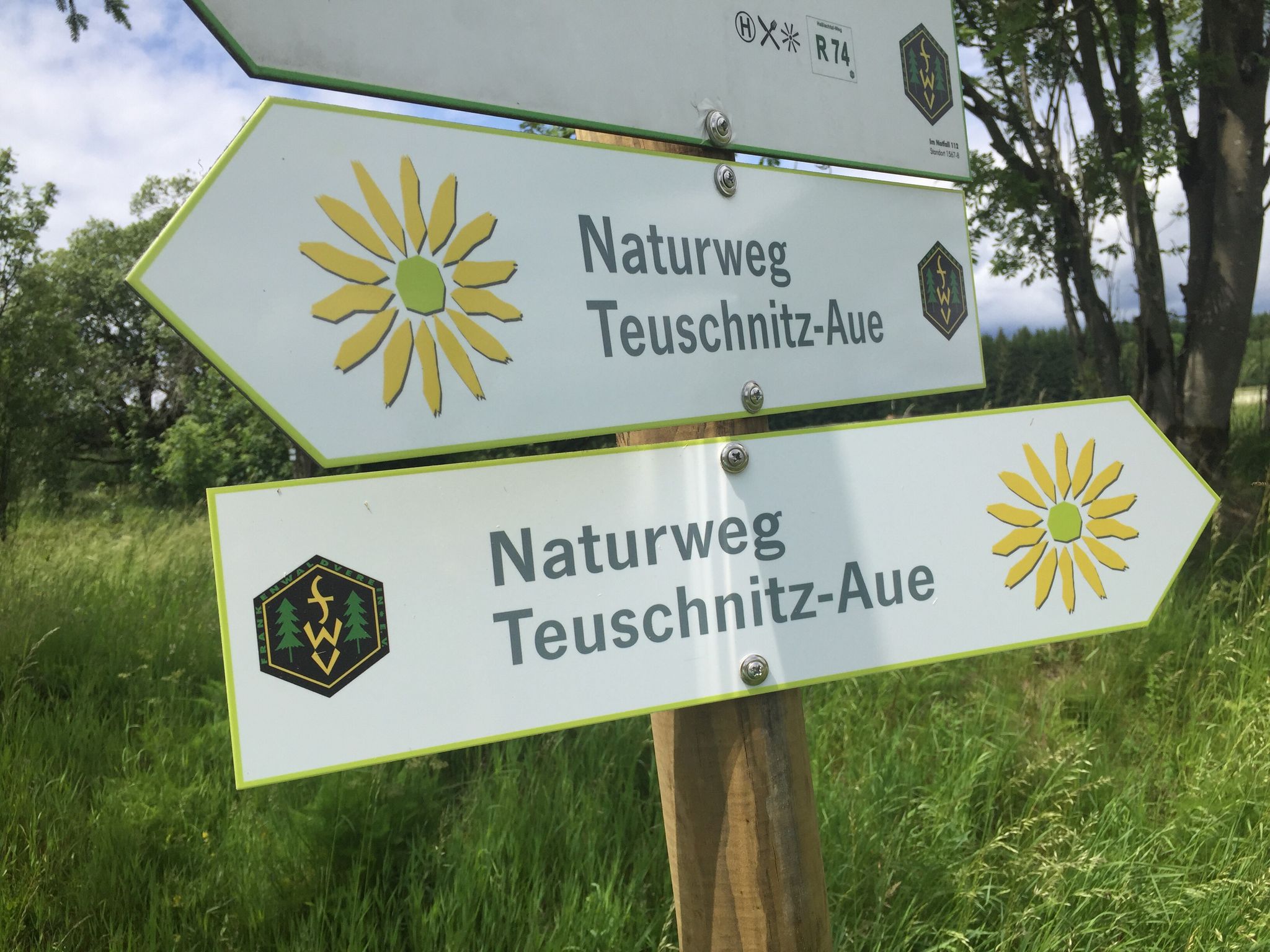
The area around Teuschnitz offers various outdoor activities. You can find numerous routes for hiking, cycling, and gravel biking. Popular hiking trails include the FrankenwaldSteigla Arnica Trail and the Teuschnitz-Aue Nature Trail.
What is the <a href="https://www.komoot.com/highlight/351254" target="_blank" rel="noopener">Bergloch Nordhalben</a>?
The Bergloch Nordhalben is the largest of several 'mountain holes' near Nordhalben, likely created in the Middle Ages. These were possibly dug in search of rock or ore, or perhaps served as storage cellars. It's a site with local historical intrigue.
What do visitors appreciate most about the caves around Teuschnitz?
Visitors appreciate the unique blend of industrial heritage and cultural significance found in the local underground sites. The komoot community has given these sites over 28 upvotes and shared 9 photos, highlighting their appeal for those interested in history and local geology.
Where can I find more information about the broader Franconian Switzerland region and its caves?
For more details on the Franconian Switzerland region, including its renowned natural caves, you can visit the official tourism website: frankentourismus.com.
Are there any caves near Teuschnitz that are particularly well-known for their natural beauty?
While Teuschnitz itself features more historical and cultural underground sites, the wider Franconian Switzerland region is home to caves celebrated for their natural beauty. Teufelshöhle near Pottenstein is one of Germany's most beautiful dripstone caves, and Binghöhle near Streitberg is known for its unique crystal formations.
Most popular routes around Teuschnitz
Most popular attractions around Teuschnitz

Get inspired with the komoot mobile app


Explore more
Extend your search for the best caves by checking out these guides of the top ones around Teuschnitz:
