Top 15 Castles around Ammerthal
Best castles around Ammerthal are found in the Upper Palatinate region of Bavaria, an area rich in historical landscapes and cultural significance. The municipality of Ammerthal itself is home to Schloss Ammerthal, a Renaissance castle constructed in 1590, which replaced an older medieval structure. This region provides a factual glimpse into centuries of architectural development and local history.
Best castles around Ammerthal
- The most popular castles is Ziegeltor, Amberg, a man-made monument that is a Gothic gate system reinforced…
Last updated: November 24, 2026
Kastl Monastery Castle
Highlight • Castle
Translated by Google •
Tip by

Schweppermannsburg castle ruins, Pfaffenhofen
Highlight • Castle
Pfaffenhofen is part of the core area of the powerful Counts of Sulzbach. The castle was part of their alodic property, so it was not taken as a fief …
Translated by Google •
Tip by

Sign up now to discover places like this
Get recommendations on the best single tracks, peaks, & plenty of other exciting outdoor places.
Moos Water Castle
Highlight • Castle
Translated by Google •
Tip by

Scharfenberg Castle Ruins
Highlight • Historical Site
The Burgstall Scharfenberg is the remains of a ruined high medieval spur castle that once stood on a rocky spur on a foothill of the Scharfenberg in the …
Translated by Google •
Tip by
Rammertshof Castle Ruins
Highlight • Castle
Translated by Google •
Tip by

Sign up for free to discover even more castles around Ammerthal.
Already have an account?
Start today with a free account
Your next adventure awaits.
Tips from the Community

Schweppermannsburg Pfaffenhofen – The home of the brave knight In the middle of the small town of Pfaffenhofen near Kastl, the impressive castle complex rises up. It was the historical residence of the famous medieval commander Seyfried Schweppermann (c. 1257–1337), whose loyalty to Emperor Louis the Bavarian remains unforgettable to this day. The legendary egg quote: After the victorious Battle of Mühldorf (1322), there was hardly any food left for the starving troops. The Emperor distributed the meager supplies and spoke the words that have since become famous: “One egg for every man, two for the brave Schweppermann!” Mighty residential tower: The massive residential tower made of natural stone masonry, visible from afar, is the heart of the complex and an imposing testament to medieval architecture. History by the wayside: A fantastic stopover in the Lauterachtal valley that makes real Upper Palatinate history tangible and close up!
1
0
Klosterburg Kastl – Impressive landmark above the Lauterachtal valley Mighty and visible from afar, the historic monastery castle sits enthroned on the Klosterberg above the market town of Kastl. Founded in the 12th century, the Benedictine abbey is one of the most significant medieval monastery complexes in the Upper Palatinate. Architecture & History: The impressive Romanesque monastery church of St. Peter with its characteristic twin towers and the venerable inner courtyard make the long history of the monastery tangible. Historical feature: For many centuries, the mummified Princess Anna, the three-year-old daughter of Emperor Ludwig the Bavarian who died here in 1319, rested in the castle – a unique piece of local history. Panoramic view: From the old walls, there is a fantastic panoramic view over the rooftops of Kastl and the idyllic Lauterachtal valley. Perfect for a stopover on the Jurasteig!
1
0

Moos Castle Moos was the seat of the noble family of Moos. Otto von Moß is mentioned as a witness in documents in 1121, Hermann von Moße in 1126, Otto von Mose in 1166, and Friedrich Mosaer in 1190. The service in which this family served and their coat of arms are unknown. Presumably, there was no stone manor at that time, but rather a motte-and-bailey castle built on a hill. The Moos family appears until the end of the 12th century, after which their trail disappears. In the first half of the 14th century, Moos was already a Hofmark (a type of manor). The Nortweiner family, who were wealthy landowners in the area, are mentioned as its owners. In the mid-15th century, Moos came into the possession of Jörg Kastner; the subsequent ownership history is unclear. The estate moved to the center of Bavarian history when Elector Maximilian had the city of Amberg surrendered to him at Moos Castle on October 8, 1621, after the Battle of White Mountain. Thus, the estate reverted from the Electorate of the Palatinate to Bavaria. Due to heavy debt, the estate passed to the government in Amberg, and various owners followed. In 1904, all the property belonging to the castle was demolished. A year later, Leonhard Bernreuther acquired the castle and renovated it in exemplary fashion. It then passed to the Uwe Herrmann family. The newly renovated castle is a three-story solid building with a hipped roof, dormer windows, and simple stucco detailing. The building dates back to the Late Gothic period; it may have previously been a fortified house. In 1738, it was rebuilt with the exception of the four main walls. Until the reconstruction, it was a defensive structure with one-meter-thick walls on the ground floor and narrow slits instead of windows. Two windows remain on the east side. There, on the first floor, is an exposed Late Gothic window with a straight lintel and dressed stonework, as well as a latrine bay window. A ring wall with numerous keyhole-shaped loopholes hewn from dressed stone and four projecting corner towers from the first construction phase surrounds the castle. It is approximately three meters high and 80 cm thick. The tall spires were added during the last renovation (1982–1984). The former moat can still be seen as a strip of barren land on the south and east sides. Access to the complex is from the north; a bridge once stood here, the inner section of which could be raised. Source: Excerpts from www.wikipedia.de
2
0

An old hilltop castle, long used as a monastery by various religious orders. Today it houses the police academy. It lies on a dolomite spur above the valley. This is also where the "Hochholz Trail" begins, which is not to be missed.
0
0

The Kastl castle complex has towered over the Lauterach Valley since the 10th century. In 1098, it was decided to convert the castle into a monastery. Description: It was founded in 1103, and the choir and St. Egidius Chapel were consecrated in 1129. Construction of the monastery church was completed at the end of the 12th century. Through constant renovations and expansions, the church acquired its present appearance. In 1782, it became the property of the Knights of Malta. The basilica has been used as a parish church since 1808. A late Gothic main portal, a four-bay barrel vault, the alternating support of columns and pillars in the nave, and the Gothic stone tomb in the vestibule, which was once the tomb of the deceased Princess Anna, make the church a true gem. Princess Anna was the daughter of King Ludwig the Bavarian and died in 1319. The mummy of the one-and-a-half-year-old "Kastl Child" was preserved until the end of 2013 and can be viewed again. The antechamber also houses the sarcophagus of General Schweppermann. [ Source: https://www.ostbayern-tourismus.de/attraktionen/klosterburg-kastl-fd22a56fae ]
1
0

Scharfenberg Castle is the remains of a ruined high medieval spur castle that once stood on a rocky spur at a foothill of the Scharfenberg mountain in the municipality of Ursensollen in the Upper Palatinate district of Amberg-Sulzbach in Bavaria. It was the ancestral seat of the Scharfenberg family, who burned down the Kastl monastery in 1217. The complex is listed as an archaeological monument in the Bavaria Atlas as the "medieval castle ruins of Scharfenberg." Source: https://de.wikipedia.org/wiki/Burgstall_Scharfenberg
2
0

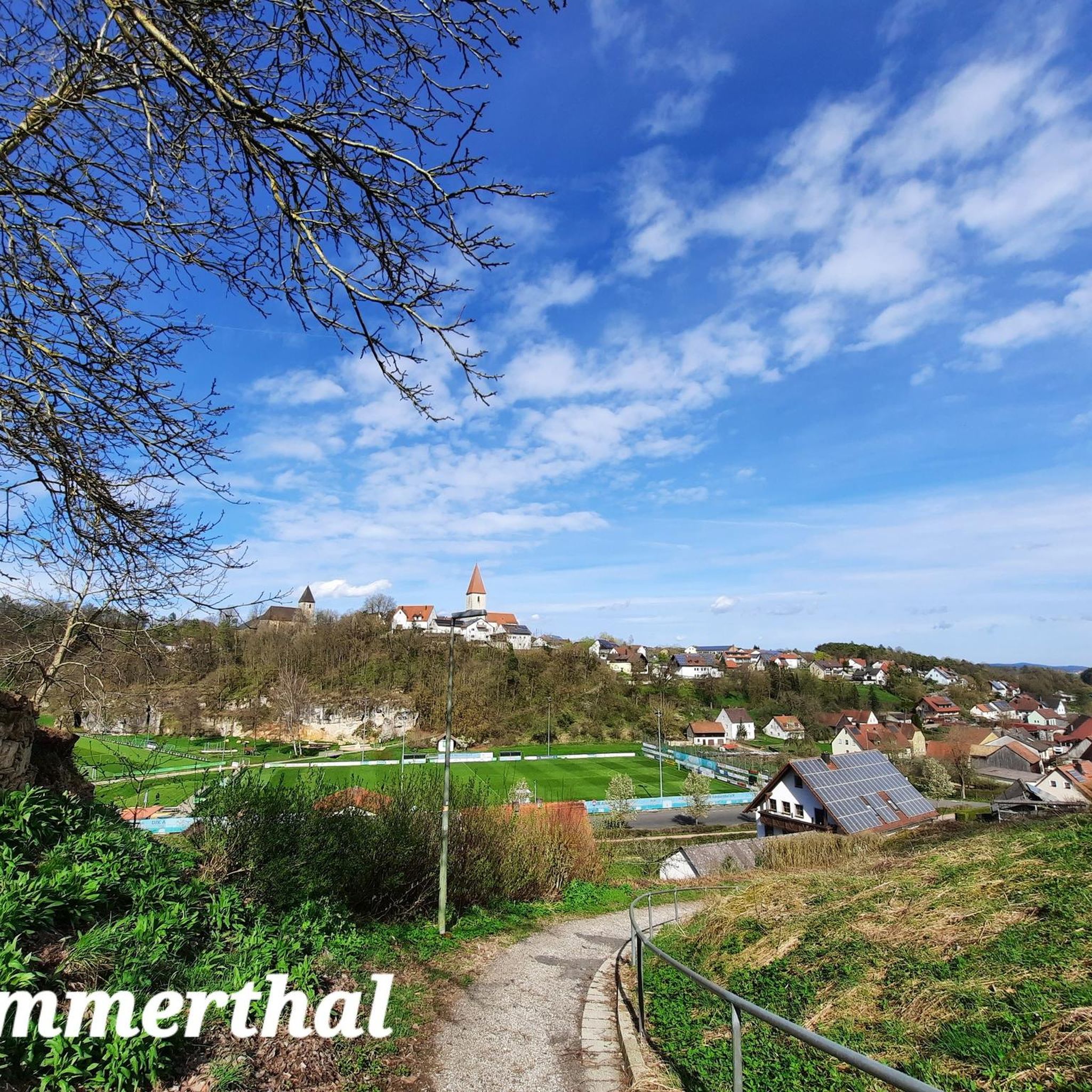
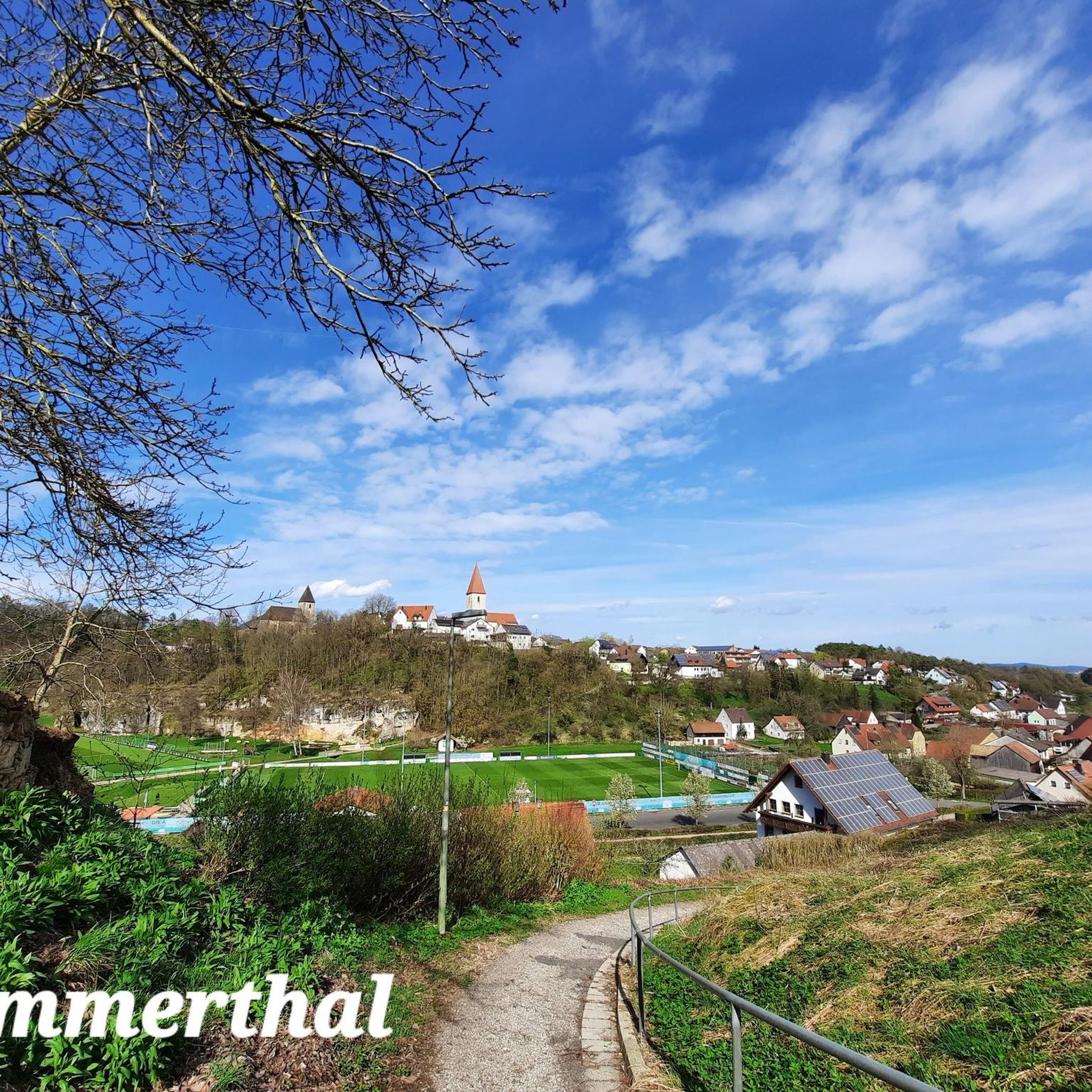
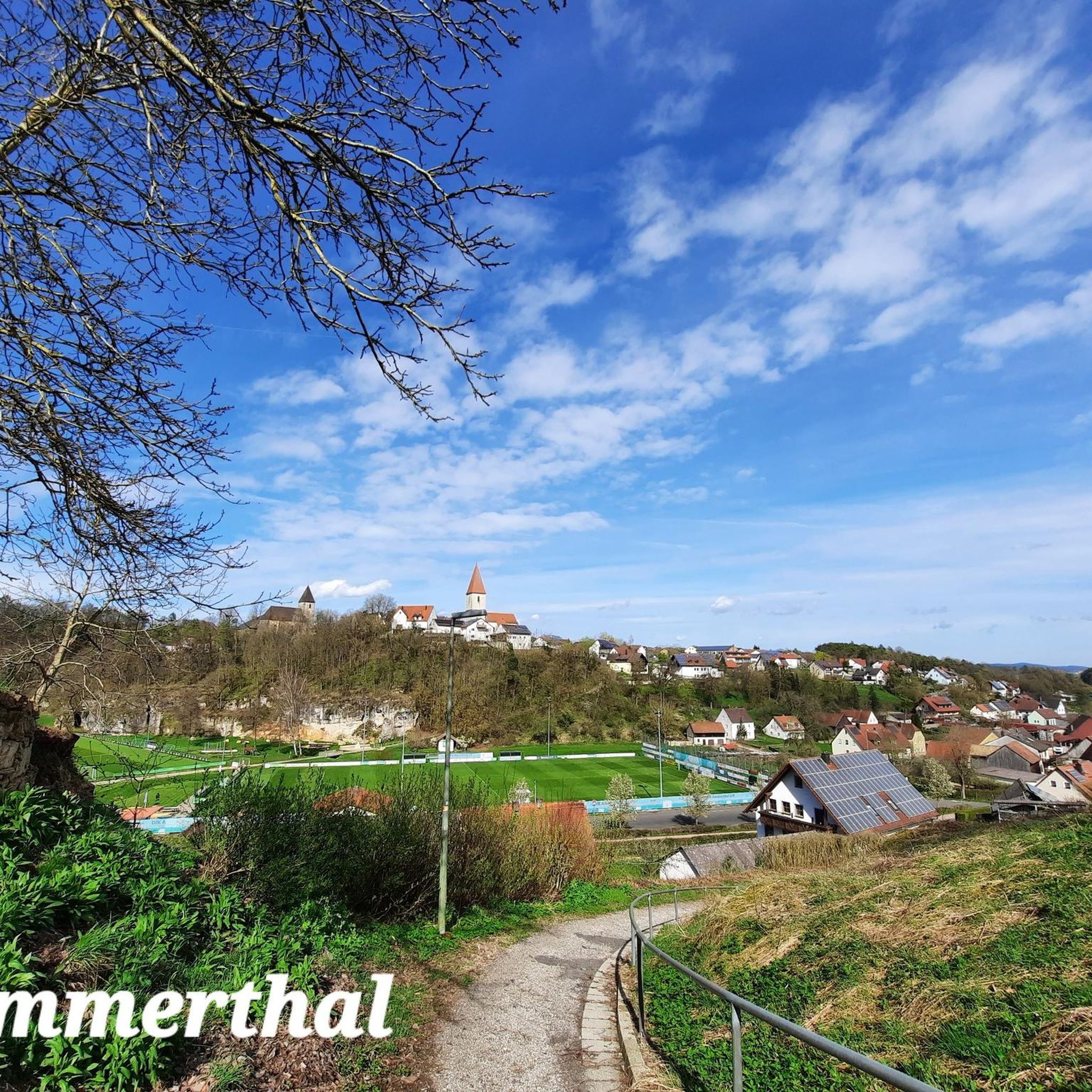
Very beautiful monastery castle currently serves as a police training center
0
0

Great monastery castle with an amazing view - be sure to take the small juniper hiking trail!
0
0
Frequently Asked Questions
What historical castles can I visit directly in Ammerthal?
Directly within Ammerthal, you can explore Schloss Ammerthal. This Renaissance castle, built starting in 1590, replaced an older medieval structure and is registered as a historical monument. It offers a glimpse into centuries of local history and architectural evolution, with features like visible firing slits and historical coats of arms.
Are there any family-friendly castles or historical sites near Ammerthal?
Yes, several sites are considered family-friendly. The Ziegeltor, Amberg, a Gothic gate system, is a popular man-made monument suitable for families. Additionally, Kastl Monastery Castle is listed as family-friendly and offers a rich historical experience.
What kind of historical significance do the castles around Ammerthal hold?
The castles in the region are steeped in history. For example, Kastl Monastery Castle was originally a Carolingian-era complex that became a Benedictine monastery, with its history tied to powerful counts and popes. Schweppermannsburg castle ruins are associated with the legendary field captain Seyfried Schweppermann from the 14th century, and Moos Water Castle played a role in the transfer of Amberg to Bavaria during the Counter-Reformation.
Are there any castle ruins to explore near Ammerthal?
Yes, the Schweppermannsburg castle ruins in Pfaffenhofen are a notable site. While the main castle with its keep is usually not accessible, the outer bailey is freely accessible, allowing visitors to view its preserved southern and western walls and imagine its medieval past.
What outdoor activities can I combine with a castle visit near Ammerthal?
The region offers various outdoor activities. You can find numerous cycling routes, such as the 'Historic Old Town of Sulzbach-Rosenberg – Sieben Quellen Pass loop' or the 'Hoibrücke Viaduct (Ursensollen) – Kastl Town Hall loop'. For mountain biking, there are trails like the 'Seven Springs Karst Springs – Amberg's "Stadtbrille" loop'. You can explore more options on the Cycling around Ammerthal or MTB Trails around Ammerthal guide pages.
What is the best time of year to visit the castles around Ammerthal?
While specific opening hours vary, the castles and ruins in the Ammerthal area can be enjoyed throughout the year. Spring and autumn offer pleasant weather for exploring the outdoor areas and trails. Winter visits can provide a unique, serene atmosphere, especially for sites like Schloss Ammerthal or the Schweppermannsburg ruins, though some facilities might have reduced hours.
Can I find any unique architectural features among the castles?
Absolutely. Ziegeltor, Amberg is a Gothic gate system flanked by two semicircular battery towers, still allowing vehicles to pass through. Moos Water Castle, though rebuilt, retains a late Gothic core and is surrounded by a ring of walls with four protruding towers and keyhole-shaped loopholes. Schloss Ammerthal also features visible firing slits from its defensive past.
Are there any religious historical sites among the castles?
Yes, the Monastic Church of St. Peter (Kastl Abbey) is a significant religious historical site. It was founded as a Benedictine monastery and features Romanesque and Gothic architectural elements. The church holds historical artifacts, including the mummy of Princess Anna and the Schweppermann sarcophagus.
What do visitors particularly enjoy about the castles in this region?
Visitors appreciate the rich history and well-preserved structures. For instance, the Kastl Monastery Castle has undergone recent renovations, enhancing its appeal. The romantic appearance of the Ziegeltor, Amberg, and the picturesque assembly of the Schweppermannsburg castle ruins are also frequently highlighted by the komoot community.
Are there any castles with interesting legends or stories?
The Schweppermannsburg castle ruins are famously linked to the legend of Seyfried Schweppermann, a field captain of Emperor Ludwig the Bavarian. After a victorious battle, the emperor supposedly ordered, 'An egg to each, but two to the brave Schweppermann,' due to his bravery. This story adds a unique charm to the ruins.
What should I wear when visiting castles and ruins in the Ammerthal area?
Comfortable walking shoes are highly recommended, especially if you plan to explore the grounds, outer baileys, or nearby trails. Layers of clothing are also advisable, as weather conditions can change, particularly in more open or elevated locations like Kastl Monastery Castle.
Are there any less crowded castles or historical sites to visit?
While popular sites like Ziegeltor, Amberg can attract visitors, exploring the outer bailey of Schweppermannsburg castle ruins or the grounds of Moos Water Castle might offer a more tranquil experience, especially during off-peak hours or weekdays.
Most popular routes around Ammerthal
Most popular attractions around Ammerthal

Get inspired with the komoot mobile app


Explore more
Looking for the best castles somewhere else? Discover other guides around Ammerthal:
