Top 14 Castles around Neroth
Best castles around Neroth are found within the Vulkaneifel district of Rhineland-Palatinate, Germany, a region characterized by its volcanic landscape and historical fortifications. Neroth, historically known for mousetrap craftsmanship, is situated on a basalt cone. While prominent castles are not within Neroth's immediate boundaries, the broader region offers a rich array of historical sites. The area provides opportunities to explore various castle types, from ruins to well-preserved structures.
Best castles around Neroth
- The most popular castles is Freudenkoppe Castle Ruins…
Last updated: May 14, 2026
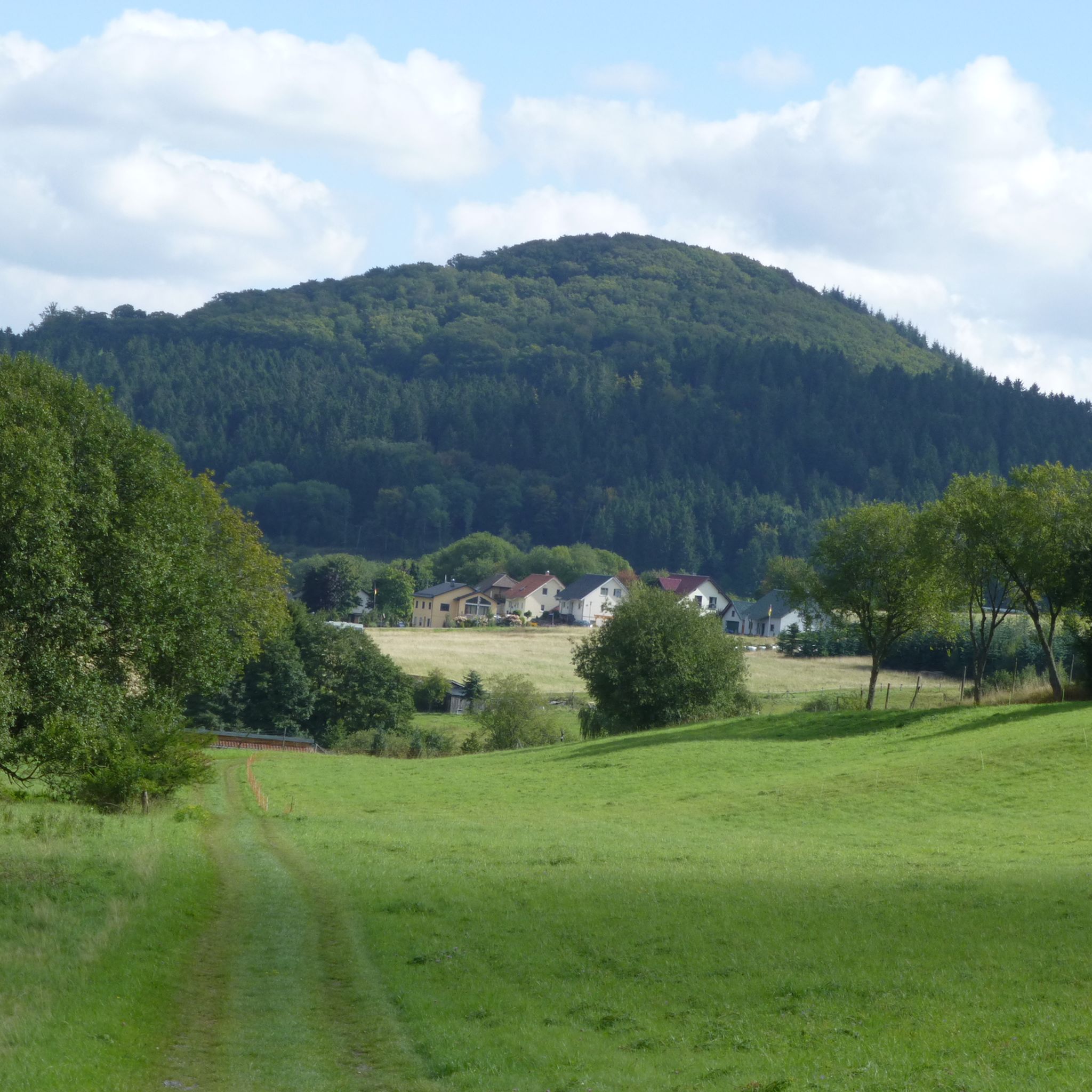
Freudenkoppe Castle Ruins
Highlight • Castle
Translated by Google •
Tip by

View of the Kasselburg
Highlight • Castle
Translated by Google •
Tip by

Sign up now to discover places like this
Get recommendations on the best single tracks, peaks, & plenty of other exciting outdoor places.
Sign up for free
Löwenburg (Gerhardstein Castle) ruins, Gerolstein
Highlight • Castle
Translated by Google •
Tip by

Kasselburg Eagle and Wolf Park
Highlight • Castle
Translated by Google •
Tip by

Lissingen Castle
Highlight • Castle
Translated by Google •
Tip by

Sign up for free to discover even more castles around Neroth.
Sign up for free
Already have an account?
Start today with a free account
Your next adventure awaits.
Login or Signup
Tips from the Community

Lissingen Castle near Gerolstein is a fascinating Komoot highlight for cyclists and culture enthusiasts in the Volcanic Eifel region. Perched high above the Kyll River, the upper and lower castles tell a vibrant history, ranging from Roman origins and a medieval moated castle to today's successful restoration and use. Originally founded as a Roman settlement around the 2nd century, the first castle was built between the 10th and 13th centuries. It was first documented in 1212, as the property of the knightly family of Liezingen. The castle was more than just a fortified structure: moats fed by the Kyll and Oosbach rivers made it a true moated castle. In 1559, the property was divided into the lower and upper castles – a situation that continues to this day. In the 17th century, the Lower Castle received its current Baroque-Renaissance manor house and characteristic tithe barn. During the Napoleonic era, the right of lordship was lost, but later both parts of the castle were reunited. In the 19th and early 20th centuries, the complex served as an agricultural and dairy center, including its own small power plant from 1906. Today, after extensive restoration, the Lower Castle is a living open-air museum with a castle courtyard, mill (including the court bakery), manor house, barns, mill race, and a historic power plant. Visitors can book guided tours, sample bread baked in a stone oven, or attend events such as weddings and exhibitions. A sculpture trail in the castle meadows completes the experience. The Upper Castle, a private residential and cultural complex, is also privately owned. Guided tours and vacation rentals are available upon request. Lissingen Castle is an ideal stopover for cyclists on the Kyll Valley Cycle Path or Eifel tours: located directly on the trail, with parking nearby and refreshment options. Visitors not only enjoy the picturesque architecture, but also experience the transformation from Roman origins to monastic fiefdom and commercial agricultural operation to today's living cultural heritage. Practical information: The lower castle can be visited regularly almost year-round (please check opening hours and guided tours in advance), the upper castle only by appointment. Food and drink are available at the castle mill/court bakery – perfect for a rest stop while cycling through the Eifel.
0
0

In the Eagle and Wolf Park Kasselburg, visitors can experience everything to do with wolves, eagles, falcons and other birds of prey. Here you can learn how conflict-free coexistence between humans and wild animals is possible. A visit to the Eagle and Wolf Park is something extraordinary that you won't forget in a hurry. See: https://adler-wolfspark.de/
1
0
The Kasselburg is the ruin of a hilltop castle on a 490-meter-high basalt rock in Pelm near Gerolstein in the Vulkaneifel district of Rhineland-Palatinate. See: http://www.adler-wolfspark.de/
1
0

In 1670 the castle was badly damaged by a lightning strike in the Powder Tower. It was occupied by the French on July 6, 1691, but was recaptured on August 5 of the same year. Gerolstein is destroyed in the process. In 1840 the castle was also known as Jungkernburg. The remaining remnants of the wall were partially demolished in the 18th century and further destroyed in the Second World War. Today only a few remains remain, but they have been restored. Excerpt from Wikipedia
3
0
The complex consists of the privately inhabited front castle and the ruins of the main castle behind it, accessible via a wooden bridge, from which there is a good view of Gerolstein and the rocks of the Munterlay.
3
0

The steep climb to the castle is quite difficult. A real calf biter! But once at the top you forget it all. Beautiful ruin and the cave is more than worth it.
5
0

I would like to see this castle from the inside!
0
0

In the Kasselburg Eagle and Wolf Park, visitors can experience everything to do with wolves, eagles, falcons and other birds of prey. Here you can learn how conflict-free coexistence between humans and wild animals is possible. A visit to the Eagle and Wolf Park is something extraordinary that you won't forget in a hurry. Beautiful hiking trails. Great animals, especially the birds and the wolves.
2
0
Frequently Asked Questions
What types of castles can I explore near Neroth?
The region around Neroth offers a diverse range of historical fortifications. You can find impressive castle ruins like Freudenkoppe Castle Ruins and Löwenburg (Gerhardstein Castle) ruins, as well as well-preserved structures such as Lissingen Castle, a completely intact moated castle.
Are there any castles near Neroth that are particularly well-preserved?
Yes, Lissingen Castle stands out as a completely preserved moated castle near Neroth. It consists of an upper and lower castle, both privately owned, with a castle museum in the lower section. It's notable for its continuous preservation.
Which castles offer the best views of the surrounding landscape?
For panoramic views, the Löwenburg (Gerhardstein Castle) ruins are highly recommended. Situated on a 440-meter-high rock hill, they provide a great vista of Gerolstein and the Gerolstein Dolomites. Freudenkoppe Castle Ruins, on a 610-meter basalt cone, also offers commanding views.
Are there family-friendly castle experiences near Neroth?
Absolutely. The View of the Kasselburg and the associated Kasselburg Eagle and Wolf Park offer a fantastic family outing. You can see birds of prey and wolves, with flight shows and wolf feedings that are particularly engaging for children. Lissingen Castle also offers guided tours and role-plays in its lower castle, which can be fun for families.
What kind of historical insights can I gain from visiting castles in this region?
The castles around Neroth offer a deep dive into medieval history. For example, Freudenkoppe Castle Ruins was built around 1340 by King John of Bohemia to secure Luxembourg's borders. Löwenburg (Gerhardstein Castle) ruins dates back to the 12th century and shows the evolution of fortifications through various expansions and destructions. Lissingen Castle provides a glimpse into the life of a continuously preserved moated castle with its museum.
What outdoor activities can I combine with a castle visit near Neroth?
The volcanic landscape around Neroth is ideal for outdoor activities. Many castles are accessible via hiking or cycling trails. For instance, Freudenkoppe Castle Ruins is best reached by hiking or mountain biking. You can find numerous routes for cycling, running, and gravel biking that pass by or lead to these historical sites.
Are there hiking trails that lead to castles around Neroth?
Yes, several castles are integrated into the region's hiking network. The Freudenkoppe Castle Ruins, for example, is a popular destination for hikers, though some paths can be steep. The broader area offers many running and hiking trails that allow you to explore the natural beauty and historical sites simultaneously.
What is the best way to access Freudenkoppe Castle Ruins?
The Freudenkoppe Castle Ruins are located on a 610-meter-high basalt cone. It's recommended to hike from the east or go by mountain bike, as other approaches can be very steep and challenging. The site is about one kilometer southeast of Neroth.
Can I visit Burg Eltz from Neroth?
While not directly in Neroth, Burg Eltz is a famous medieval castle in the broader Rhineland-Palatinate region, nestled in the hills above the Moselle River. It's one of Germany's most beautiful fairytale castles and has never been destroyed. It's a significant historical site worth visiting in the wider area, though it requires a drive from Neroth.
What do visitors particularly enjoy about the castles around Neroth?
Visitors appreciate the variety of historical sites, from imposing ruins to well-preserved moated castles. The stunning views from hilltop castles like Löwenburg, the unique experience of the Kasselburg Eagle and Wolf Park, and the historical depth of places like Lissingen Castle are frequently highlighted. The opportunity to combine history with outdoor activities in the volcanic landscape is also a major draw.
Are there any castles near Neroth that are suitable for cycling routes?
Yes, Lissingen Castle is conveniently located directly on a cycle route that runs from Gerolstein to Prüm, making it an excellent stop for cyclists. The region also offers numerous cycling routes that pass by other historical sites.
What is the historical significance of the castles in the Vulkaneifel district?
The castles in the Vulkaneifel district, including those around Neroth, played crucial roles in securing borders and asserting power during the medieval period. Many, like Freudenkoppe, were built as fortifications by powerful counts and kings. They reflect centuries of regional conflicts and architectural evolution, from simple keeps to complex fortified structures.
Most popular routes around Neroth
Most popular attractions around Neroth

Get inspired with the komoot mobile app


Explore more
Looking for the best castles somewhere else? Discover other guides around Neroth:
