Top 11 Gorges around Kindsbach
Canyons around Kindsbach offer natural attractions characterized by significant rock formations and valley systems within the Palatinate Forest. The region provides a "canyon-like" experience through deep, forested valleys and impressive geological features. These areas are integrated into hiking trails, allowing visitors to explore the natural beauty and historical significance of the landscape. The term "Schlucht" (gorge) is often used to describe the enclosed, valley-like character of these locations.
Best canyons around Kindsbach
- The most popular canyons is Fleischackerloch (natural monument)…
Last updated: April 29, 2026
Fleischackerloch (natural monument)
Highlight • Gorge
Translated by Google •
Tip by

Schluchtsteig
Highlight • Trail
Translated by Google •
Tip by

Sign up now to discover places like this
Get recommendations on the best single tracks, peaks, & plenty of other exciting outdoor places.
Sign up for free
Urkastergraben
Highlight • Gorge
Translated by Google •
Tip by

Descent into the Walkmühltal
Highlight (Segment) • Gorge
Good bypassable jump at the beginning.
stairs at the end.
Takes you to a beautiful valley.
Translated by Google •
Tip by

Witches' Dance Floor
Highlight • Natural Monument
Translated by Google •
Tip by

Sign up for free to discover even more gorges around Kindsbach.
Sign up for free
Already have an account?
Start today with a free account
Your next adventure awaits.
Login or Signup
Other adventures around Kindsbach

Tips from the Community

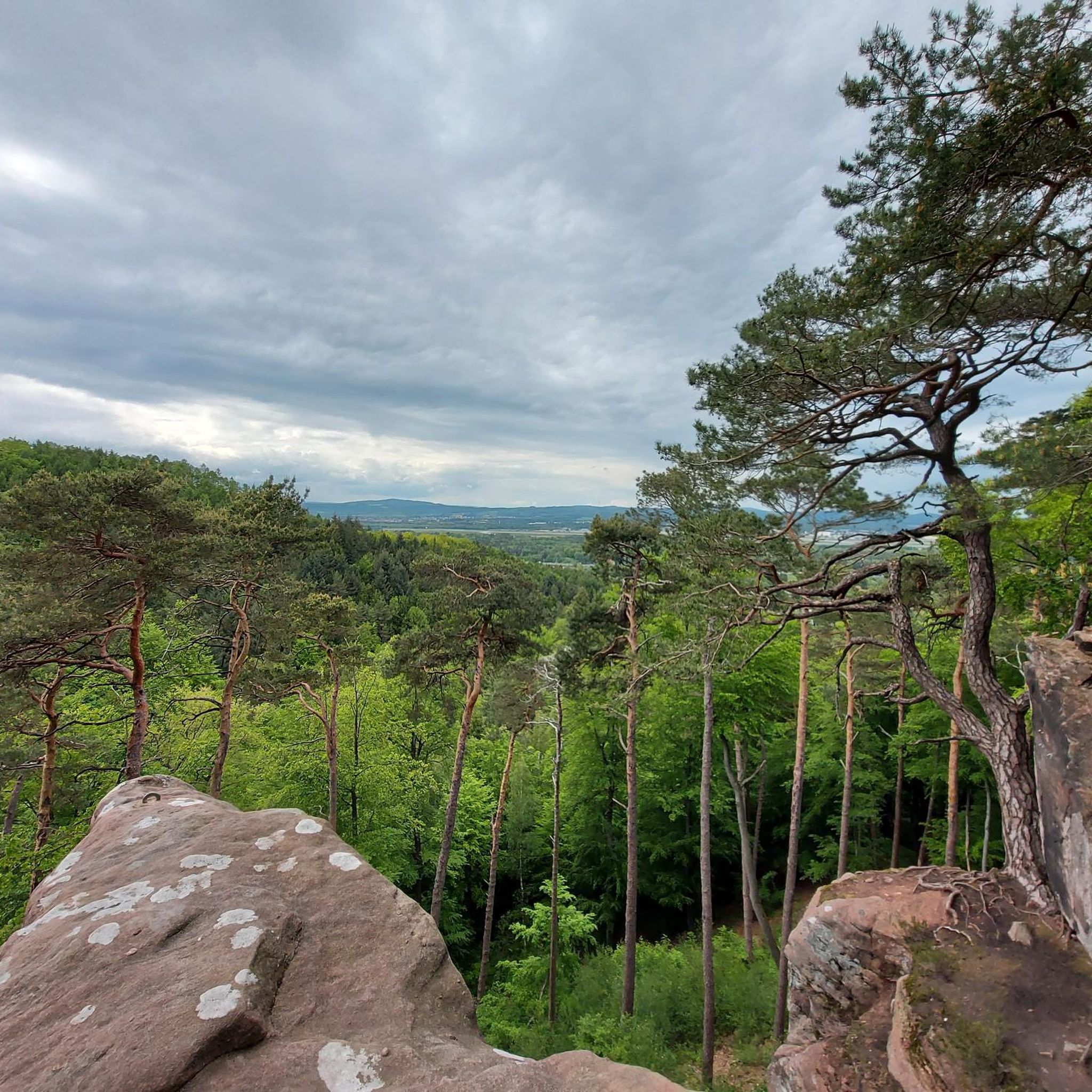
"The Fleischackerloch is a valley of rocky ruins where nature has preserved its originality. The large and, in some cases, meter-high sandstone cliffs in the Fleischackerloch date back to the Bunter Sandstone period and are approximately 200 million years old." Here, there is a "primeval forest-like old-growth tree population. The natural monument received its name from the leasing of the fields and meadows in the valley in exchange for meat." Source (quoted verbatim): https://www.westpfalz.wiki/wiki/das-fleischackerloch/
1
0

The Schluchtsteig is a stairway leading from Morlautern into the Eselsbach Valley. A hiking trail.
2
0

A little further east of the lock is the gorge path, at the foot of which there is a small waterfall. Well, waterfall means that water falls here. It only falls about half a meter... but it falls.
0
0

Uhrkastergraben There were around 10 fish ponds in Hagelgrund until the end of the Middle Ages. The monks of the Lautringer monastery ran a breeding facility here and bred eels that were intended for consumption during the meatless Lent. Monks have always been inventive and said: "Fish is not meat", and from their point of view they were right. The Eselsbach that flows here got its current name from the settlement "Eselsfürth", which consisted of a sawmill and mill. The donkeys that crossed the ford there with the grain sacks to get to the mill gave the settlement and the stream their current name. The local coat of arms of Morlautern from 1960 shows a golden forest hook, the monks' symbol for the Kaiserslautern monastery, and a golden reed stalk, the symbol for the moor in Hagelgrund. The floating silver lily is a heraldic symbol of the Mother of God.
0
0

The gorge path has been paved again and is easy to walk on. The railings have been repaired and the landslide at the very back has been secured.
0
0
The Fleischackerloch is a rock formation with a primeval forest-like old tree population. The natural monument got its name from the leasing of the fields and meadows in the valley in return for meat.
1
0

a gigantic sea of rocks - which can always inspire you at all times of the year and weather - a real feel-good terrain 👌
2
0

Frequently Asked Questions
What are the most notable canyon-like features around Kindsbach?
Kindsbach offers several remarkable natural attractions with significant rock formations and valley systems that provide a "canyon-like" experience. Key areas include the Bärenloch, known for its scenic valley and rock path, and the Heidenfelsen, impressive sandstone formations in the Biedenbach valley. Other popular spots include Fleischackerloch (natural monument), a gorge with moss-covered boulders, and Schluchtsteig, a trail leading through a small, deep ravine.
What kind of natural features can I expect to see in the Kindsbach gorges?
You'll encounter deep, forested valleys, impressive sandstone rock formations, and abundant springs. Areas like the Bärenloch feature a natural swimming lake, the Bärenlochweiher, and a rugged "rock path." The Heidenfelsen showcases ancient sandstone formations with historical carvings. Many paths meander through dense forests, past small streams, and over moss-covered boulders, creating a wild and romantic atmosphere.
Are there historical or cultural sites within the canyon-like areas?
Yes, the Heidenfelsen is particularly rich in history, featuring one of the best-preserved Roman spring sanctuaries in Central Europe still in its original location. It dates back to the 2nd to 4th centuries AD and includes ancient carvings of deities. The spring was also known as a healing source in Celtic times. Some hiking trails in the region also connect to historical sites like Nanstein Castle.
Are the canyon-like trails around Kindsbach suitable for families?
Yes, the Bärenloch area is very family-friendly. The Bärenlochweiher (lake) offers a non-swimmer area and an adventure playground, along with sunbathing lawns. Many hiking paths traverse the Bärenloch, providing accessible options for families to enjoy the scenic valley and rock formations. The trails are generally well-integrated into the natural landscape, offering a pleasant outdoor experience for all ages.
What are some popular hiking trails that explore these gorges?
Several trails allow you to explore the gorges. The "rock path at Bärenloch" leads through a gorge-like section, offering a rugged experience. The Schluchtsteig is a popular stairway trail leading into the Eselsbachtal. A circular trail also connects the Heidenfelsen with the Bärenloch and Nanstein Castle. For a unique experience, consider the Descent into the Walkmühltal, where the valley narrows and passes five Wooge.
Are there opportunities for climbing in the Kindsbach region?
Yes, above the Heidenfelsen, there is a designated climbing rock. It offers various routes of differing difficulty, equipped for secured lead climbing, and is also suitable for bouldering at jump height. This provides a great option for climbers looking for outdoor challenges in the area.
What is the best time of year to visit the gorges around Kindsbach?
The gorges and canyon-like areas around Kindsbach are beautiful year-round. Spring brings lush greenery and flowing streams, while autumn offers vibrant foliage. Summer is ideal for enjoying the Bärenlochweiher lake. However, if you plan to explore areas like the Fleischackerloch, which involves climbing through moss-covered boulders, dry weather is recommended as moisture can make the rocks slippery.
How can I get to the canyon-like areas around Kindsbach?
Many of the natural attractions, such as the Bärenloch, offer free parking facilities. Public restrooms and changing facilities are also available at the Bärenlochweiher. For specific trailheads, it's advisable to check local maps or komoot routes for parking information. While public transport options exist for the general Kindsbach area, direct access to all trailheads might require a short walk or car.
What should I bring for a hike in the Kindsbach gorges?
For hiking in the Kindsbach gorges, sturdy footwear is essential, especially for trails with uneven terrain or moss-covered boulders. If you plan to visit the Heidenfelsen, which can have steep paths, bringing hiking poles is recommended. Always carry water, snacks, and appropriate clothing for the weather. If visiting the Bärenlochweiher, swimwear might be a good idea.
What other outdoor activities can I do near the Kindsbach gorges?
Beyond hiking, the Kindsbach area offers diverse outdoor activities. You can find numerous running trails, including loops around Silver Lake. For cyclists, there are extensive MTB trails, such as the Bärenloch Pond – Nanstein Castle loop, and gravel biking routes like the Silver Lake – Vogelwoog loop.
What do visitors particularly enjoy about the canyon-like areas in Kindsbach?
Visitors appreciate the immersive natural beauty and the sense of discovery. The unique geological features, like the moss-covered boulders in Fleischackerloch, create an almost fairy-tale atmosphere. The historical significance of sites like the Heidenfelsen also adds a rich cultural layer to the outdoor experience. The combination of rugged trails, serene valleys, and recreational spots like the Bärenlochweiher makes the region highly appealing.
Can you recommend a challenging trail in the Kindsbach gorges?
For a challenging experience, the Fleischackerloch (natural monument) is noted for its difficulty, especially in wet conditions due to slippery moss-covered rocks. The path to the Heidenfelsen can also be steep, requiring good footing. Additionally, the Descent into the Walkmühltal is described as more demanding towards the end, with some sections suitable for experienced mountain bikers or requiring short sliding passages.
Are the trails in the Kindsbach gorges dog-friendly?
Generally, the natural trails and hiking paths in the Palatinate Forest, including those around Kindsbach's gorges, are dog-friendly. However, it's always recommended to keep dogs on a leash, especially in nature reserves or areas with wildlife. Some specific sections, like the boulder-strewn Fleischackerloch or steep climbs to the Heidenfelsen, might be more challenging for certain dogs.
Most popular routes around Kindsbach
Most popular attractions around Kindsbach

Get inspired with the komoot mobile app


Explore more
Already discovered everything in this region? See additional gorges around Kindsbach for your next adventure:
