Top 4 Castles around Krackow
Castles around Krackow offer visitors a glimpse into historical architecture and regional heritage. The area features several notable historical sites, providing opportunities for exploration and learning. These structures are often integrated into the natural landscape, allowing for varied outdoor experiences. The region is home to 4 castles, each with distinct characteristics.
Best castles around Krackow
- The most popular castles is Penkun Castle, a castle that was built at the end of the 15th century and rebuilt in the Renaissance…
Last updated: May 15, 2026
Penkun Castle
Highlight • Castle
Translated by Google •
Tip by

Löcknitz Castle
Highlight • Castle
Translated by Google •
Tip by

Sign up now to discover places like this
Get recommendations on the best single tracks, peaks, & plenty of other exciting outdoor places.
Sign up for free
Wartin Castle
Highlight • Castle
Translated by Google •
Tip by

Löcknitz Castle, Church and Soviet War Cemetery
Highlight • Historical Site
Translated by Google •
Tip by
Start today with a free account
Your next adventure awaits.
Login or Signup
Tips from the Community


The castle park is surrounded by a high wall and is off-limits. It's a bit disappointing that you can only see the castle from one side.
1
0

First mentioned as a castle at the end of the 12th century, Penkun Castle is today one of the last remaining castles of the Pomeranian Dukes. The castle association runs a border and customs museum in the former administrator's house, and there is a small exhibition on the judicial system in Pomerania in the castle cellar.
1
0

After the end of the Thirty Years' War (1618-1648), Löcknitz was largely in ruins, with only the castle and the fortifications and the castle mill remaining. The rivers Welse and Randow now formed the new border between Brandenburg and Swedish Pomerania. As a result, Löcknitz with its fortified castle became an important Brandenburg border fortress against Sweden after 1650.
0
0

Wartin Castle was built in 1695 under Captain Christoph von der Osten as the manor house of the Wartin manor. It was rebuilt and renovated after 1991 by the "European Academy" association. Today it is used by this association and is a meeting place for artists and scientists from all over the world. Opposite the castle there is a riding stable. (Source: https://www.reiseland-brandenburg.de)
0
0

Wartin Palace was built in 1695 under Captain Christoph von der Osten as a manor house for the Wartin manor. The baroque estate complex consists of a castle and surrounding manor buildings, including: former palace warehouse and schnapps distillery, currently housing a cultural barn. There was also a forge, stables and numerous barns. Currently, most of the buildings have been renovated and are used as accommodation facilities and for organizing events such as weddings, family celebrations and corporate events. An associated park and garden complete the complex and are surrounded by a wall of natural stone and brick up to five meters high. This makes the castle park one of the few preserved buildings in northern Brandenburg with a completely brick wall. In terms of cultural history, it is the equivalent of the leading landscape parks of Lenné. An old arched door leads from the park to a beautiful church from the 13th century. The palace is accessible from the outside.
1
0
The history of the city dates back to 1127, when the Slavs built a defensive stronghold in the Randow River valley. The first mention of a defensive structure in Löcknitz dates back to 1212, and in 1242 a bridge was built in place of the ford. For years, the border between Pomerania and Brandenburg running through here justifies the fortified character of the town. Once Löcknitz belonged to the Pomeranian princes, once to the Branderburgians. In the book Medieval Castles of Western Pomerania, Zbigniew Radacki wrote that the stronghold belonged to the bishops of Kamień. In 1280, a document on the division of the Kołobrzeg land was signed in the "castrum Lokenitz". In 1390, Bishop Filip von Rehberg renounced the castle to the princes of Szczecin, who gave it to the Wusses, knights from Lębork, "hus civitas i terra Lockenitze" for 3,000 marks towards the debt. Around 1400, the stronghold received a brick form, and in 1479 it came into the possession of the Schulenburg family. Then the place was rebuilt many times, in the mid-16th century it was converted into a Renaissance-style manor house. It lost its strategic importance in 1720 after the annexation of Brandenburg and Pomerania to Prussia.
1
0
Picturesquely situated on the castle hill, the residence in Penkun dominates the city. In addition to the castle dating from the 16th and 17th centuries, the entire complex of buildings includes relics of a medieval stronghold, a gatehouse from 1486, a gate from 1614, the manager's house from the 18th century and a farm building built in the 19th century.
1
0
Frequently Asked Questions
What are the most popular castles around Krackow?
The komoot community frequently visits Penkun Castle, a Renaissance-style castle high above the castle lake. Other popular spots include Wartin Castle, known for its Baroque and neo-Gothic architecture, and Löcknitz Castle, Church and Soviet War Cemetery, which offers multiple points of interest.
Are there family-friendly castles to visit in the Krackow region?
Yes, Penkun Castle is considered family-friendly, offering a museum association that maintains the castle and its grounds. Löcknitz Castle, Church and Soviet War Cemetery is also listed as family-friendly, providing a historical site suitable for all ages.
What kind of historical sites can I find near Krackow's castles?
Beyond the castles themselves, the region offers rich history. Löcknitz Castle, Church and Soviet War Cemetery combines a castle, a church, and a Soviet War Cemetery, offering a multifaceted historical experience. Wartin Castle, originally a Baroque manor, also has a cultural barn and an associated park with a 13th-century church nearby.
What outdoor activities can I do near Krackow's castles?
The area around Krackow's castles is great for outdoor activities. You can find various routes for road cycling, running, and hiking. For instance, near Penkun Castle, there are moderate road cycling routes like the 'Penkun Castle – Schmölln Village Church loop' and hiking trails such as the 'Penkun Castle and Museum – Penkun Castle loop'. Explore more options on the Road Cycling Routes around Krackow, Running Trails around Krackow, and Hiking around Krackow guide pages.
Are there hiking trails near Penkun Castle?
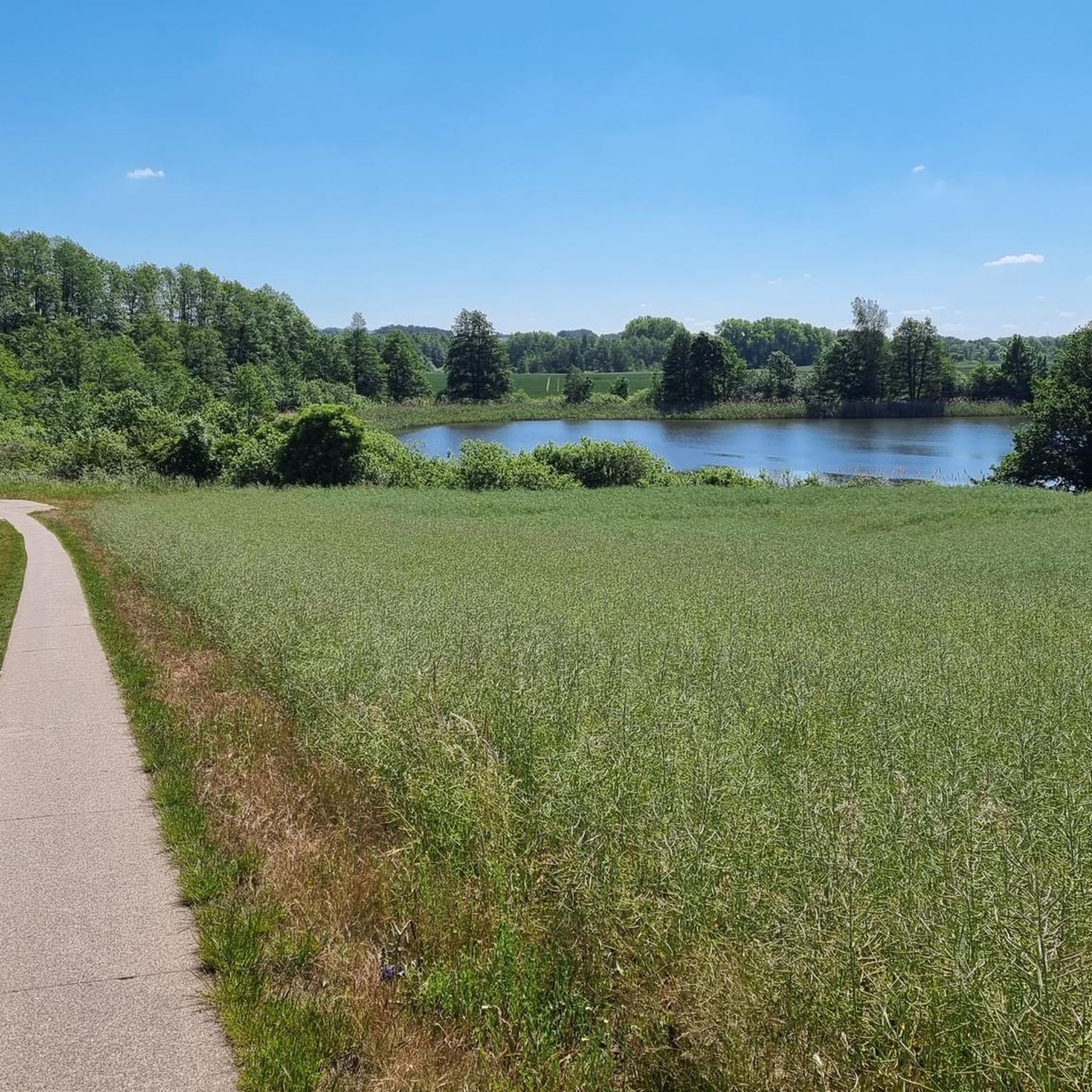
Yes, Penkun Castle is surrounded by options for hikers. You can find routes like the 'Penkun Castle and Museum – Penkun Castle loop' and the 'Schlosssee Penkun Beach – Penkun Castle loop'. A cycle path also leads down through the castle park to the lake. For more details on hiking, check out the Hiking around Krackow guide.
What are the architectural styles of the castles in Krackow?
Penkun Castle was originally built at the end of the 15th century and later rebuilt in the Renaissance style. Wartin Castle dates from the 18th century, featuring a Baroque style with later additions of neo-Gothic corner turrets and a Gothic-style portal.
What can I expect to see at Wartin Castle?
Wartin Castle is an 18th-century two-storey mansion with a court of honor, showcasing Baroque and neo-Gothic elements. While the castle park is often off-limits, you can view the castle from the outside. The complex also includes renovated manor buildings used for events and a cultural barn. An old arched door from the park leads to a beautiful 13th-century church.
What do visitors say about Penkun Castle?
Visitors appreciate Penkun Castle for its almost restored condition and the museum association that maintains it. It's described as a 'nice almost restored castle with a museum' and is noted for its picturesque location high above the castle lake, accessible via a cycle path through the castle park.
Are there cycling routes near Krackow's castles?
Yes, the Krackow region offers several cycling routes. For example, a cycle path leads through the castle park down to the lake at Penkun Castle. You can find various road cycling routes, including the 'Penkun Castle – Schmölln Village Church loop'. More options are available on the Road Cycling Routes around Krackow guide page.
What is the significance of Löcknitz Castle, Church and Soviet War Cemetery?
Löcknitz Castle, Church and Soviet War Cemetery is a historical site that combines a castle, a church, and a Soviet War Cemetery. This location offers multiple points of interest, making it a very worthwhile visit for those interested in history and cultural heritage.
Can I find places to eat near the castles in the Krackow area?
According to visitor tips, Löcknitz, where Löcknitz Castle, Church and Soviet War Cemetery is located, is noted as 'the only village far and wide where you can eat', suggesting it's a good spot to find dining options while exploring the castles in the area.
Most popular attractions around Krackow

Get inspired with the komoot mobile app


Explore more
Looking for the best castles somewhere else? Discover other guides around Krackow:
