Top 20 Lakes around Südliches Anhalt
Lakes around Südliches Anhalt, located in the Anhalt-Bitterfeld district of Saxony-Anhalt, Germany, offer diverse natural landscapes for outdoor activities. The region features several appealing lakes, with some directly within its municipal boundaries and others in close proximity. These bodies of water provide opportunities for recreation and nature exploration.
Best lakes around Südliches Anhalt
- The most popular lakes is Viereckteich, a lake that was created from a silted-up body of water in the Georgengarten. This square water surface is surrounded…
Last updated: July 11, 2026
Viereckteich
Highlight • Lake
Translated by Google •
Tip by

Kühnauer Lake
Highlight • Lake
Translated by Google •
Tip by

Sign up now to discover places like this
Get recommendations on the best single tracks, peaks, & plenty of other exciting outdoor places.
Sign up for free
Pfarrteich Krosigk
Highlight • Lake
Translated by Google •
Tip by

Lake Edderitz
Highlight • Lake
Source: de.wikipedia.org/wiki/Edderitzer_See
Translated by Google •
Tip by

Goethebruch Quarry
Highlight • Structure
Translated by Google •
Tip by
Sign up for free to discover even more lakes around Südliches Anhalt.
Sign up for free
Already have an account?
Start today with a free account
Your next adventure awaits.
Login or Signup
Tips from the Community

In the presence of this memorial, which commemorates the victims of war and tyranny, I would like to offer the viewer a very short excerpt from a remarkable speech given in 1985 by the then Federal President Richard Karl Freiherr von Weizsäcker (1920–2015): "We learn from our own history what humankind is capable of. Therefore, we must not imagine that we have become different and better as human beings. There is no ultimate moral perfection—for anyone and no country! We have learned as human beings, and we remain vulnerable as human beings. But we have the strength to overcome these dangers again and again. (...)" Richard von Weizsäcker delivered this widely noted speech on May 8, 1985, on the 40th anniversary of the end of the Second World War, and his words—even 40 years later—remain relevant.
0
0

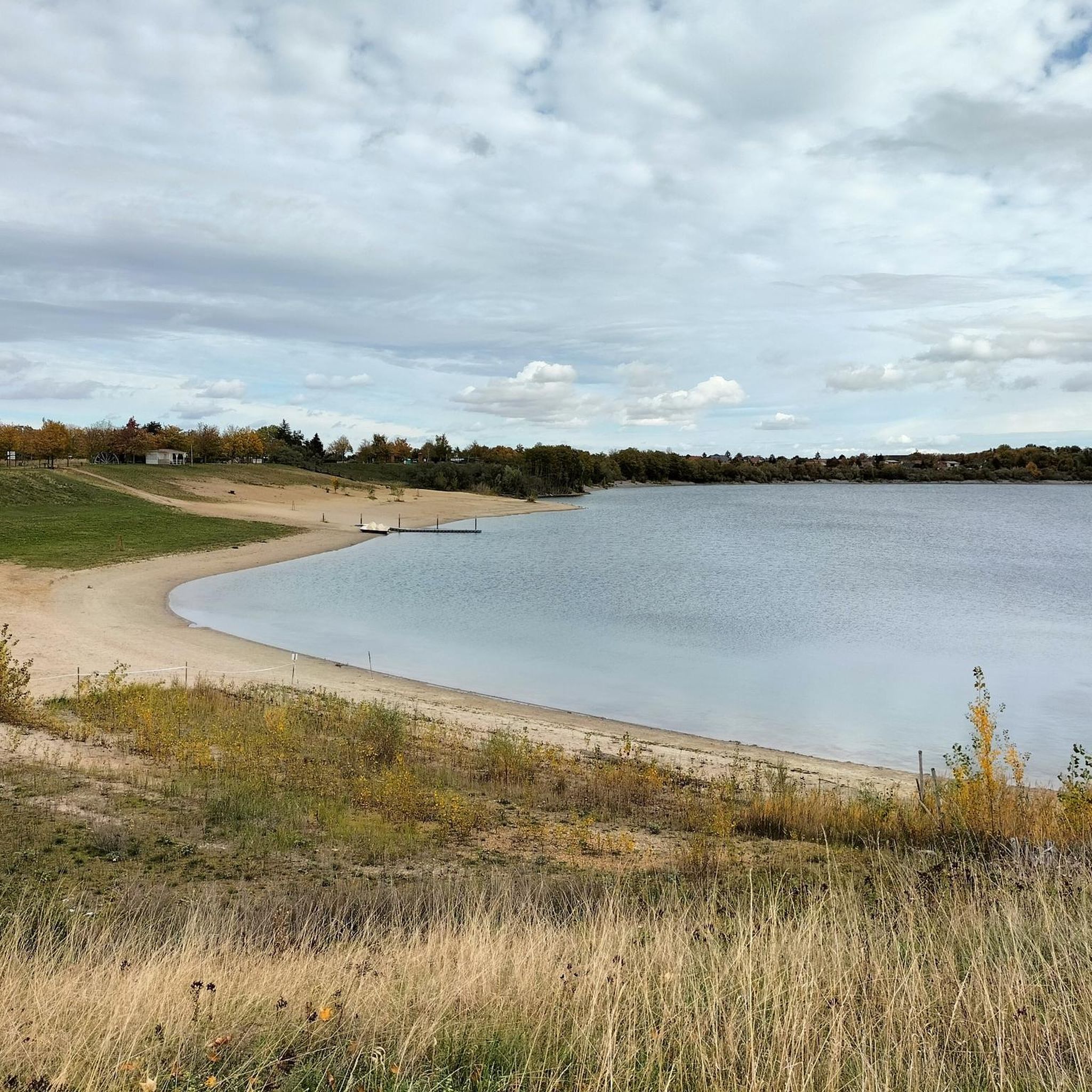
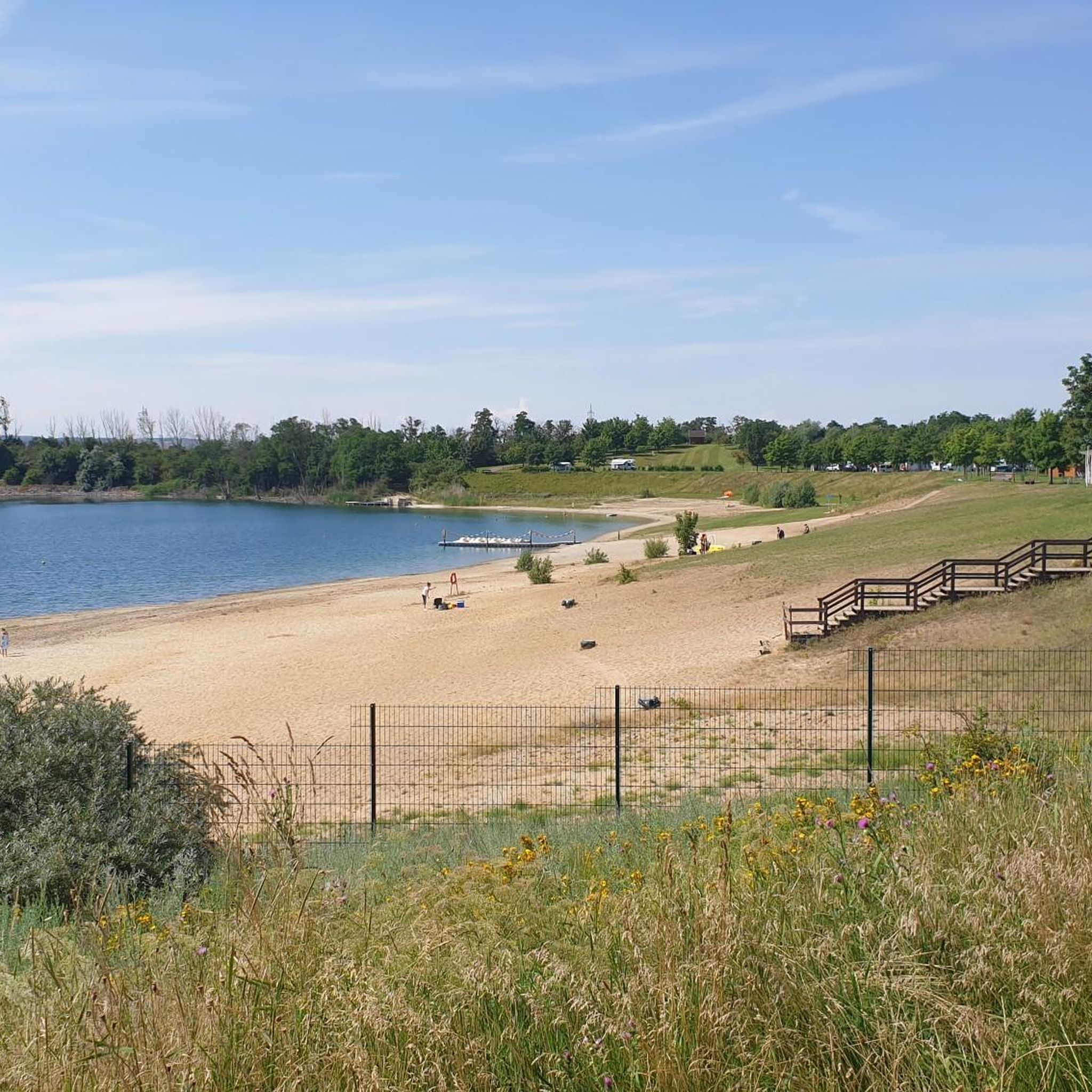
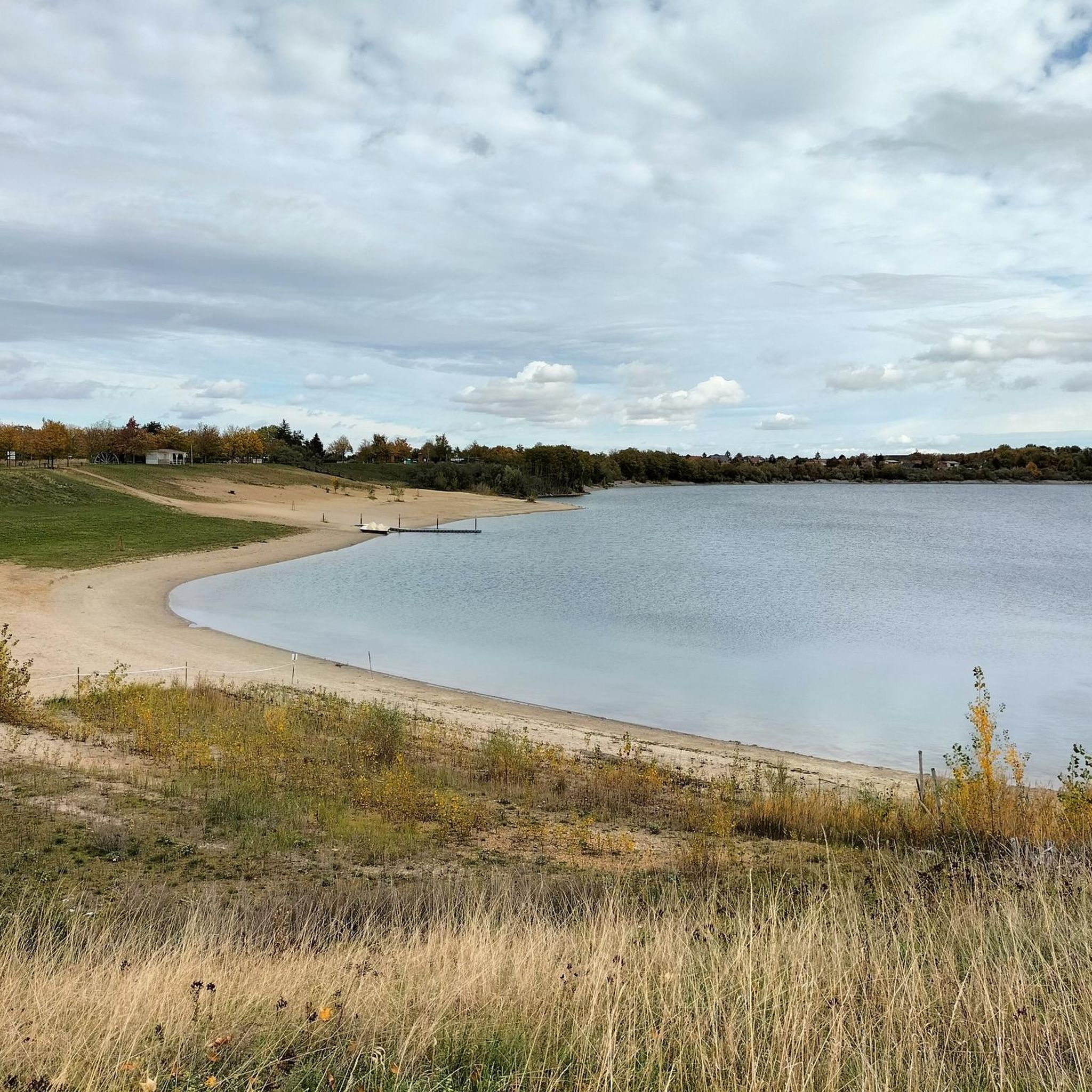
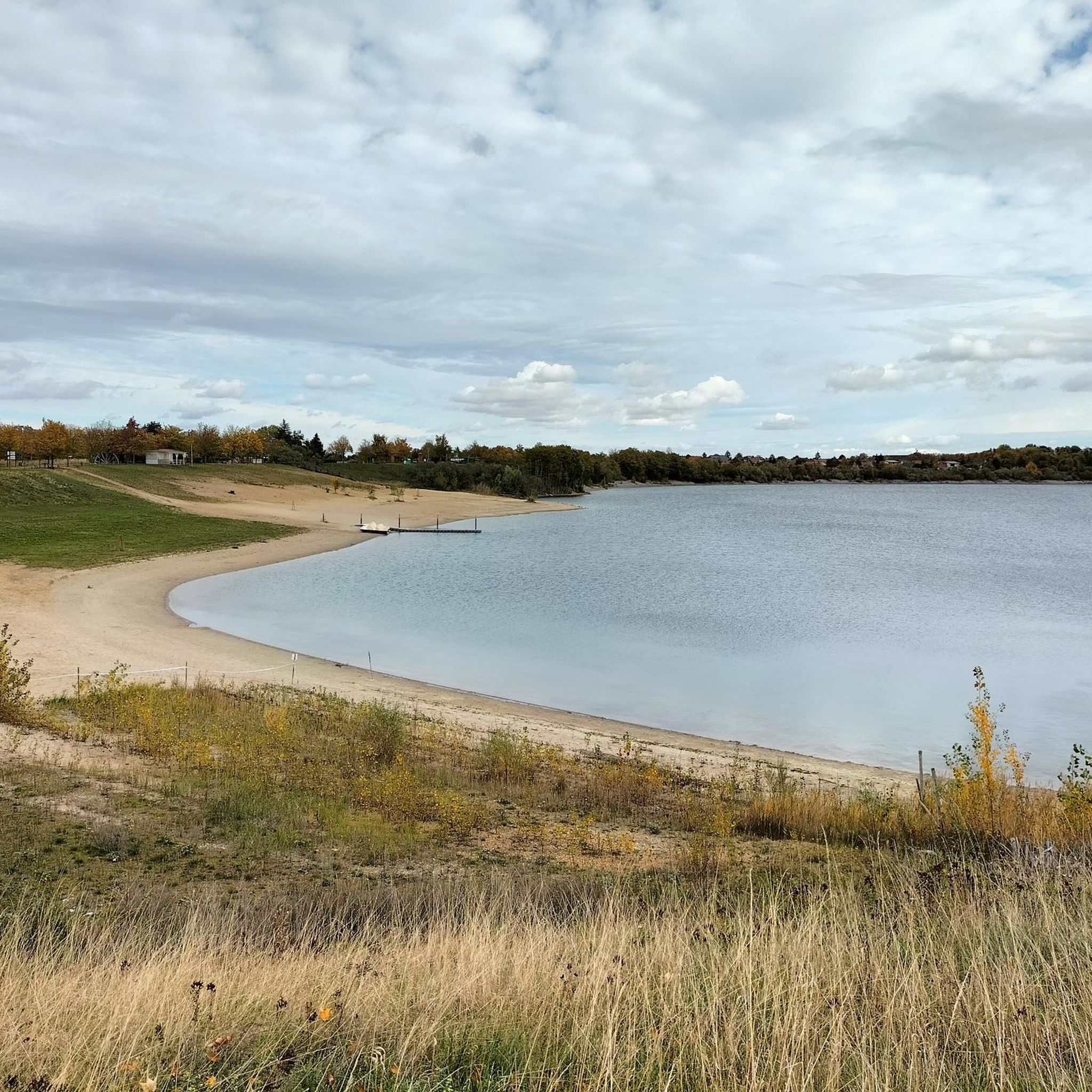
In 1958, after more than 100 years, open-cast mining operations at the site were discontinued because the deposits were exhausted. The remaining pit was gradually filled with water.[2] By 1967, the Edderitzer Lake, over 40 hectares in size and up to 41 meters deep, had formed from inflowing groundwater. It initially served primarily as a water reservoir for agriculture, but has also developed into a popular bathing lake.[4] It differs from traditional quarry lakes in its rather unplanned formation. After wild bathing areas had developed along various shores, problems with the embankment became apparent after 1989, presumably caused by the rising water level following the declining water extraction between 1990 and 1992, so large sections of the shore were closed off. From 1998 to 2003, the slopes were secured and a beach restaurant was created in the western area, while the former beaches on the eastern side remained closed.[4] For the reopening on May 15, a "House and Bathing Regulations of the Edderitz Seaside Resort" was published in the official gazette.[5] The lake has good water quality.[6] On the west side of the lake, there is a lido with a 400-meter-long sandy beach, volleyball courts, and a campsite. The lake is used for various water sports such as fishing and diving. A paved circular path surrounds the lake, which is used for hiking, cycling, skating, and summer and winter biathlon. There is also a geological educational garden with over 120 rocks on display and remnants of the open-cast mining history (lorry, water wheel).[7] In 2005, a life-sized "art cow" painted with fins and scales was sunk by the local diving club in Lake Edderitz and anchored at a depth of 25 meters.[8] Source: https://de.wikipedia.org/wiki/Edderitzer_See
4
0
The village of Edderitz is said to have received its name from the Slavic word jezerisco, as it was first mentioned as Ezeri in 973. There are and have been several ponds in the village, and several pit ponds near the village, but Lake Edderitz is by far the largest body of still water in the former municipality.[1] In the 19th century, the importance of coal mining increased significantly, and the Leopold mine was established in 1853. In 1935, it was decided to relocate a large part of the village to the north so that coal could be mined there as well. The new village was gradually built north of the Pfaffendorf-Edderitz road starting in 1938. A total of around 1,200 residents were resettled by 1952. In 1953, the sugar factory, which was located in the northwest of the old village, was demolished so that coal could be mined there as well. All that remained of the old village was the cemetery; the rest was dredged over. [Source: https://de.wikipedia.org/wiki/Edderitzer_See
4
0
Lake Edderitz is located in the Anhalt-Bitterfeld district, south of Köthen in the town of Southern Anhalt. It originated from the former Edderitz open-cast mine and is therefore also known as the "open-cast mine pit near Edderitz." Source: https://de.wikipedia.org/wiki/Edderitzer_See
5
0

A swan family with a brave, angry swan father who defends his young against every hungry wanderer with impressive gestures.
0
0

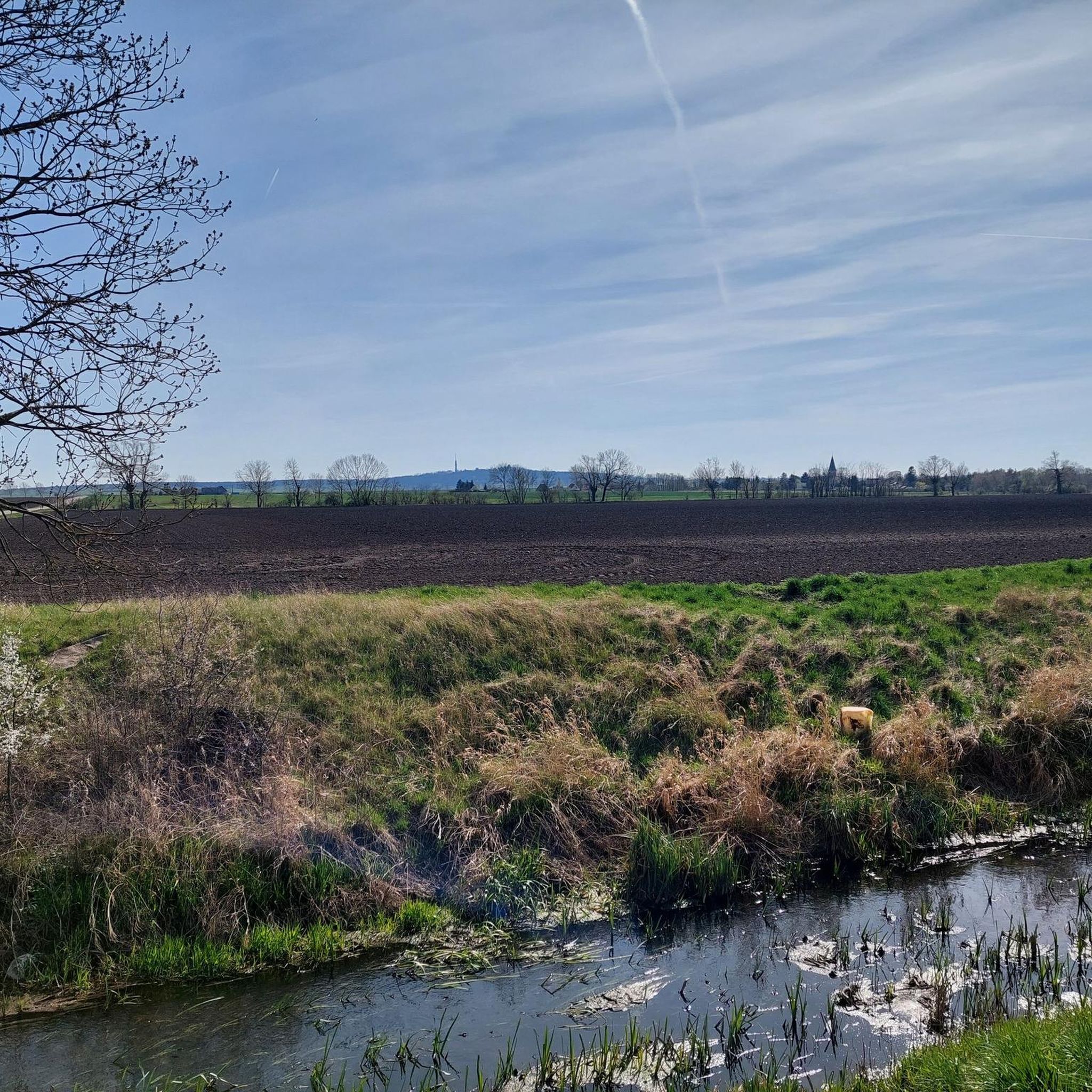
The war memorial was erected for the fallen soldiers of the village of Drehlitz in World War I and features inscriptions. On its east-facing side is the inscription: 1914-1918 Our Fallen gratefully honors the community of Krosigk... A plaque with the names of those who died in World War II was later added to the west-facing side: .... Source: https://de.wikipedia.org/wiki/Kriegerdenkmal_Krosigk
0
0

A magical place! Unfortunately, entry is prohibited.
0
0

Frequently Asked Questions
What lakes around Südliches Anhalt are suitable for families?
Several lakes in and around Südliches Anhalt are great for families. Kühnauer Lake offers a beach and is well-suited for swimming, with camping available. Seebad Edderitz (Edderitz Lake) is directly in Südliches Anhalt and features a natural sand and grass beach, an adventure playground, and a circular trail suitable for various activities. The Großer Goitzschesee also provides numerous bathing spots and family-friendly amenities.
Where can I go swimming or enjoy a beach day near Südliches Anhalt?
For swimming and beach activities, Seebad Edderitz (Edderitz Lake) is an excellent choice, offering a natural sand and grass beach with high water quality. Kühnauer Lake is another beautiful natural lake east of Dessau-Roßlau, also well-suited for swimming. The Großer Goitzschesee features several designated bathing spots and a water sports center.
Are there good hiking or cycling trails around the lakes?
Yes, the lakes offer extensive opportunities for hiking and cycling. Seebad Edderitz has a more than 3 km long circular trail. The Großer Goitzschesee is surrounded by a well-developed network of cycling and hiking trails. Similarly, the Muldestausee offers numerous cycling and hiking paths for nature exploration. You can find specific routes, such as the 'Creative Garden at the Beach Bath – South Shore of Lake Edderitz loop', by exploring the hiking guide for Südliches Anhalt.
What kind of water sports can I do at the lakes?
The larger lakes near Südliches Anhalt are popular for water sports. The Großer Goitzschesee offers swimming, sailing, diving, wakeboarding, and surfing, with a modern wake park. The Muldestausee is a paradise for water sports enthusiasts, hosting regular sailing regattas, dragon boat competitions, canoeing, and rowing.
Are there any historical or cultural sites near the lakes?
Yes, some lakes have historical significance or are near cultural sites. Pfarrteich Krosigk is a lake with a monument to the fallen nearby. Viereckteich, located in the Georgengarten (a UNESCO World Heritage Site), has historical context regarding its creation and restoration. Many of the larger lakes, like Großer Goitzschesee and Muldestausee, are former lignite mines, representing significant ecological transformation projects.
Where can I find viewpoints or scenic spots around the lakes?
The Großer Goitzschesee features the 26-meter high Goitzschesee water level tower, accessible via a pontoon bridge, which offers panoramic views. Goethebruch Quarry is known for its impressive water lilies and is part of the Petersberg circular route, offering scenic beauty. The varied landscape around Seelhausener See includes the striking 'Sausedlitzer Steilufer' (Sausedlitz Cliff).
Can I camp near the lakes in Südliches Anhalt?
Yes, camping facilities are available at some lakes. Seebad Edderitz offers camping from May to October. At Kühnauer Lake, it is possible to camp at the lido by arrangement. The Großer Goitzschesee has a camping park, and the Muldestausee features a popular camping and recreational facility called Heidecamp Schlaitz.
What wildlife can be observed around the lakes?
The region around Muldestausee is a valuable biotope, providing habitat for rare animal species such as red deer, foxes, Elbe beavers, and birds of prey like ospreys and white-tailed eagles. Seelhausener See also has areas appealing for water birds, making it a good spot for nature lovers.
Are there any cafes or restaurants near the lakes?
Yes, you can find refreshments and meals at some lake locations. The CASA Strandcafé at Seebad Edderitz offers meals with lake views. The Amber Promenade along the Großer Goitzschesee also features various gastronomic facilities.
What makes the lakes around Südliches Anhalt unique?
Many of the larger lakes, such as Großer Goitzschesee and Muldestausee, originated from former open-cast lignite mines. Their transformation into vibrant recreational landscapes and valuable biotopes is a testament to sustainable redevelopment, offering a unique blend of industrial history and natural beauty. Viereckteich, for example, was created from a silted-up body of water in a UNESCO World Heritage Site.
What are some easy walks around the lakes?
For easy walks, the circular trail around Seebad Edderitz is suitable for walking. The Seelhausener See also offers a 15 km circular route ideal for walking. You can explore easy routes like the 'Creative Garden at the Beach Bath – South Shore of Lake Edderitz loop' in the easy hikes guide for Südliches Anhalt.
Are there opportunities for fishing at the lakes?
Yes, fishing is possible at some of the lakes. Goethebruch Quarry is known as a fishing water. Anglers are also drawn to the Muldestausee for its population of zander and catfish. Seelhausener See also offers opportunities for fishing.
Most popular routes around Südliches Anhalt
Most popular attractions around Südliches Anhalt

Get inspired with the komoot mobile app


Explore more
Still not found your perfect lake around Südliches Anhalt? Check out the guides of these regions to see even more beautiful places.
