The 4 Most Amazing Peaks in Cabo De Gata-Níjar
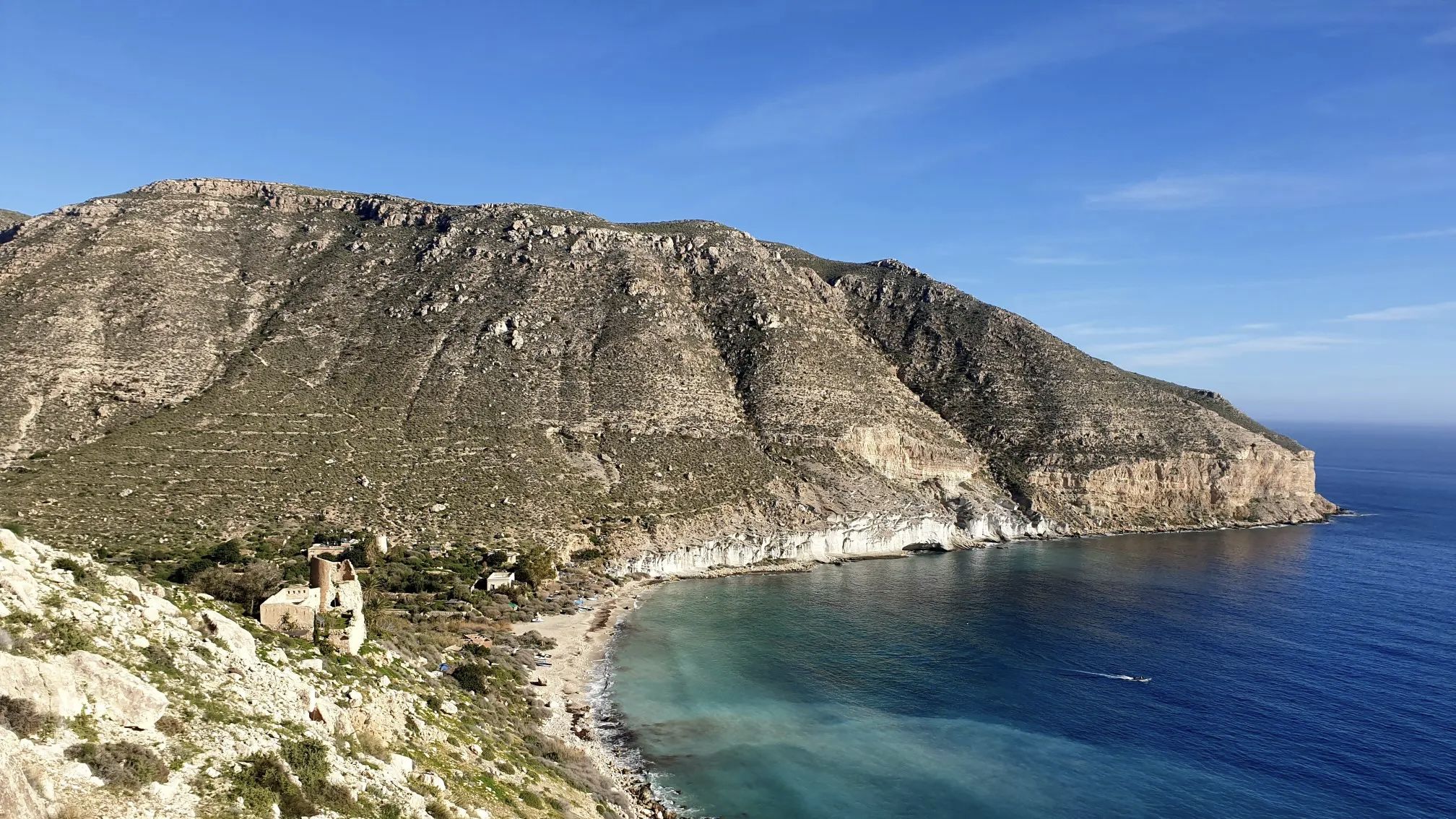
Best mountain peaks in Cabo De Gata-Níjar are found within a protected coastal area in Andalusia, Spain. This region features a rugged landscape shaped by its volcanic origins, including ancient lava flows, calderas, and sharp peaks. The terrain offers diverse rock formations that descend steeply into the Mediterranean Sea. It is a unique natural space for geological exploration and hiking.
Best mountain peaks in Cabo De Gata-Níjar
- The most popular mountain peaks is Cinto Hill, a summit that offers…
Last updated: July 13, 2026
Cinto Hill
Highlight (Segment) • Summit
Translated by Google •
Tip by

The dark mountain
Highlight • Summit
Translated by Google •
Tip by

Sign up now to discover places like this
Get recommendations on the best single tracks, peaks, & plenty of other exciting outdoor places.
Sign up for free
Mount Carlos, Mount San Miguel, Mount La Testa and Mount Coronillas
Highlight (Segment) • Summit
Translated by Google •
Tip by

Start today with a free account
Your next adventure awaits.
Login or Signup
Popular around Cabo De Gata-Níjar
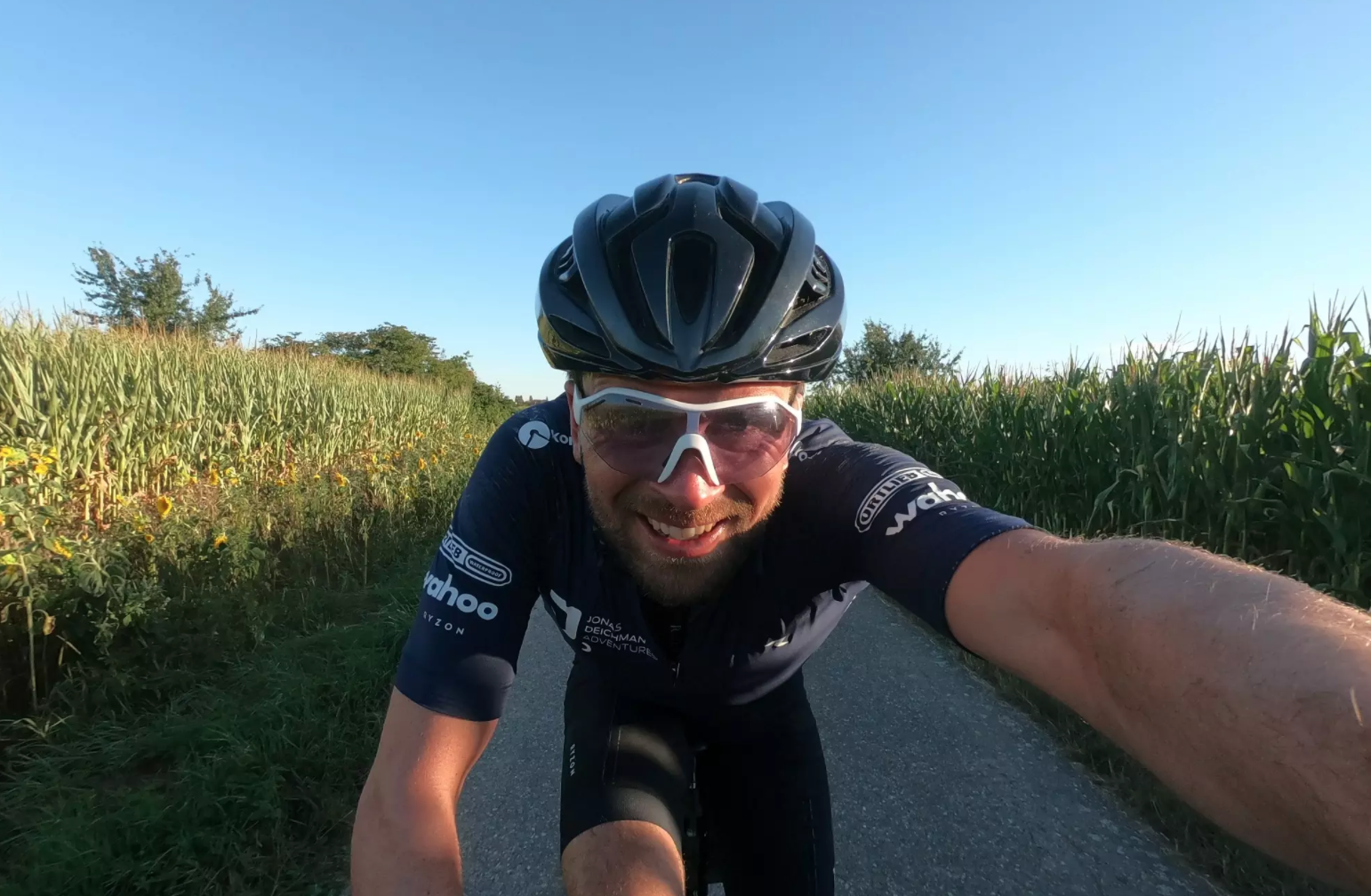
Triathlon 360 – my journey around the world
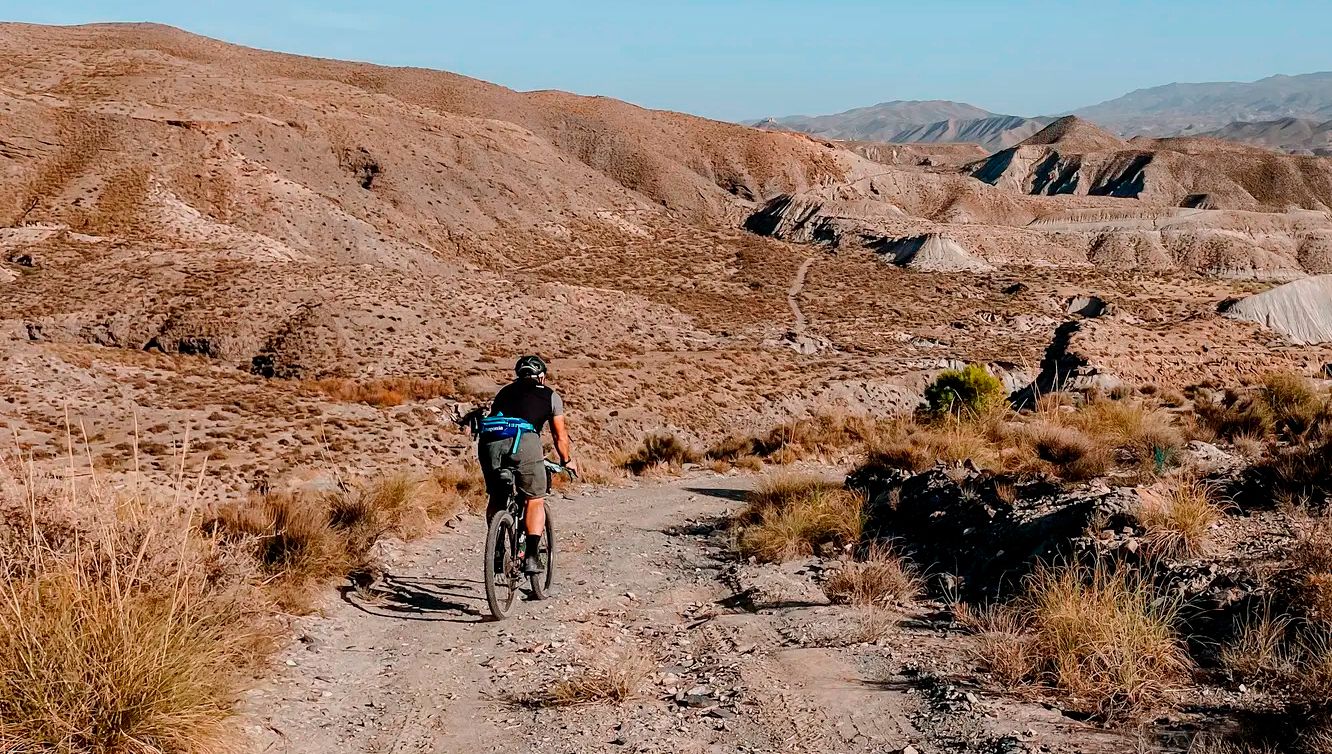
TransAlmería Gravel – Summits, dry riverbeds and deserts
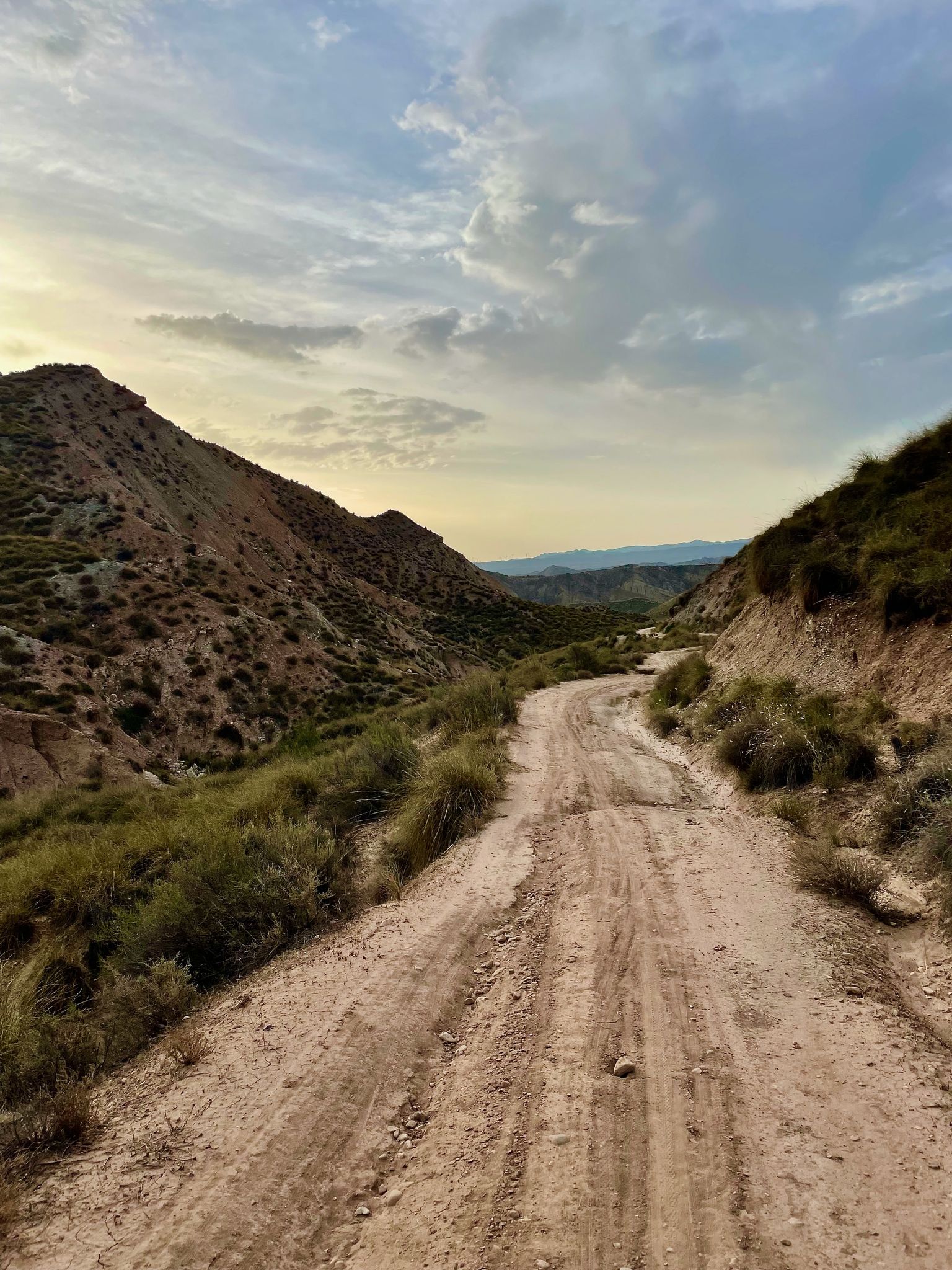
Badlands 2021 — 750km of gravel in the Spanish deserts
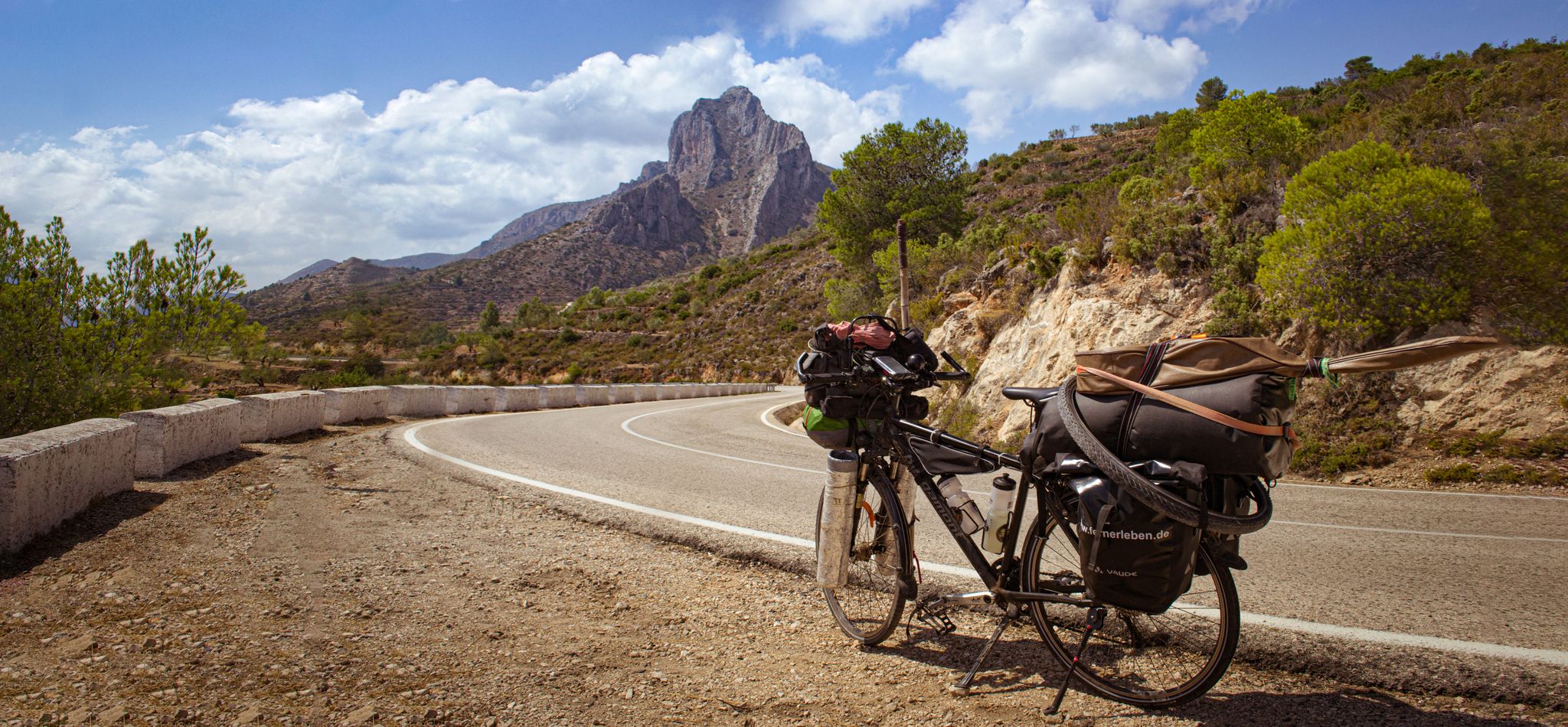
On the road to the sun — bikepacking to southeast Spain
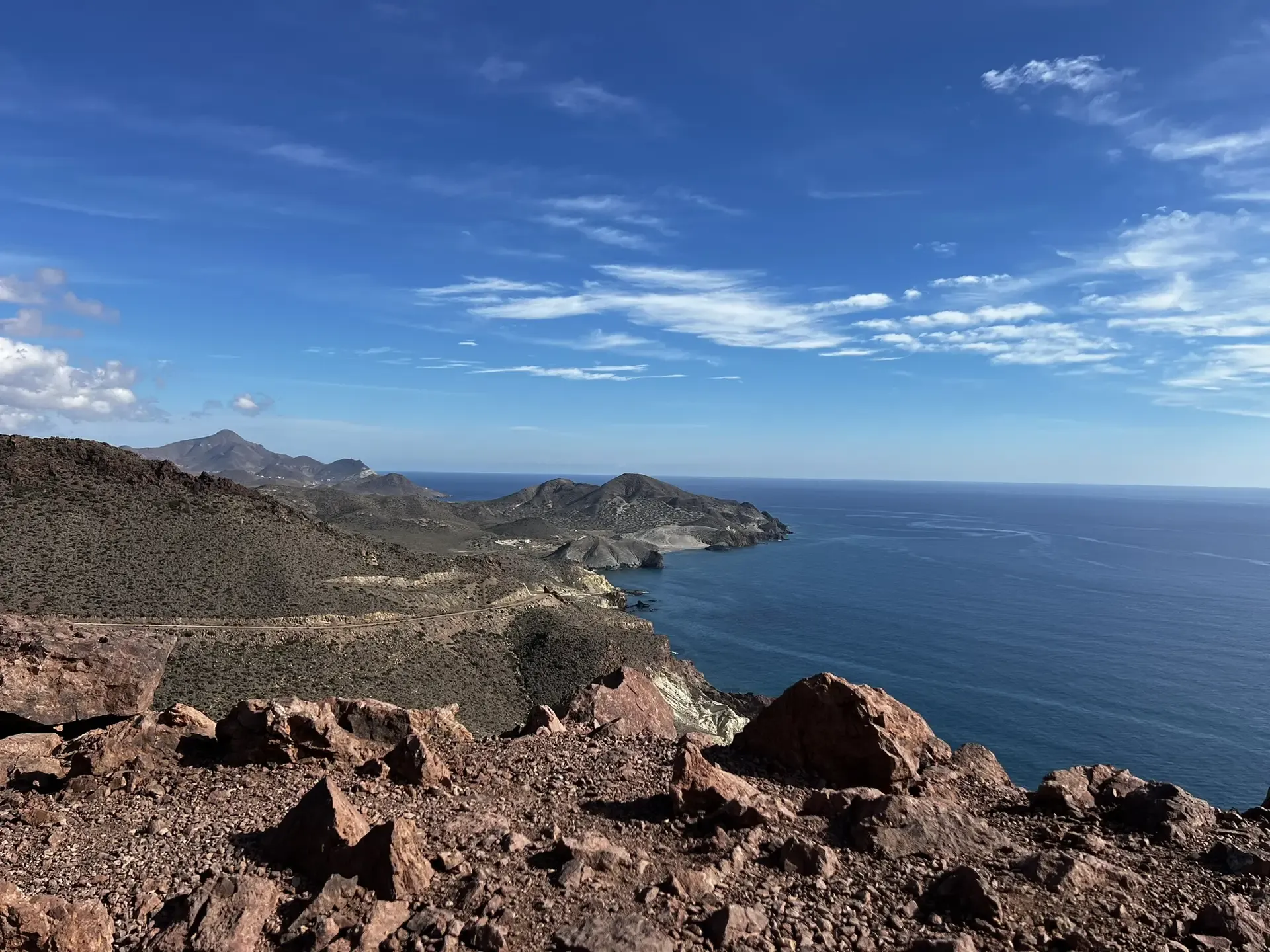
The Wild Side Of Almería — Transalmería By Mountain Bike
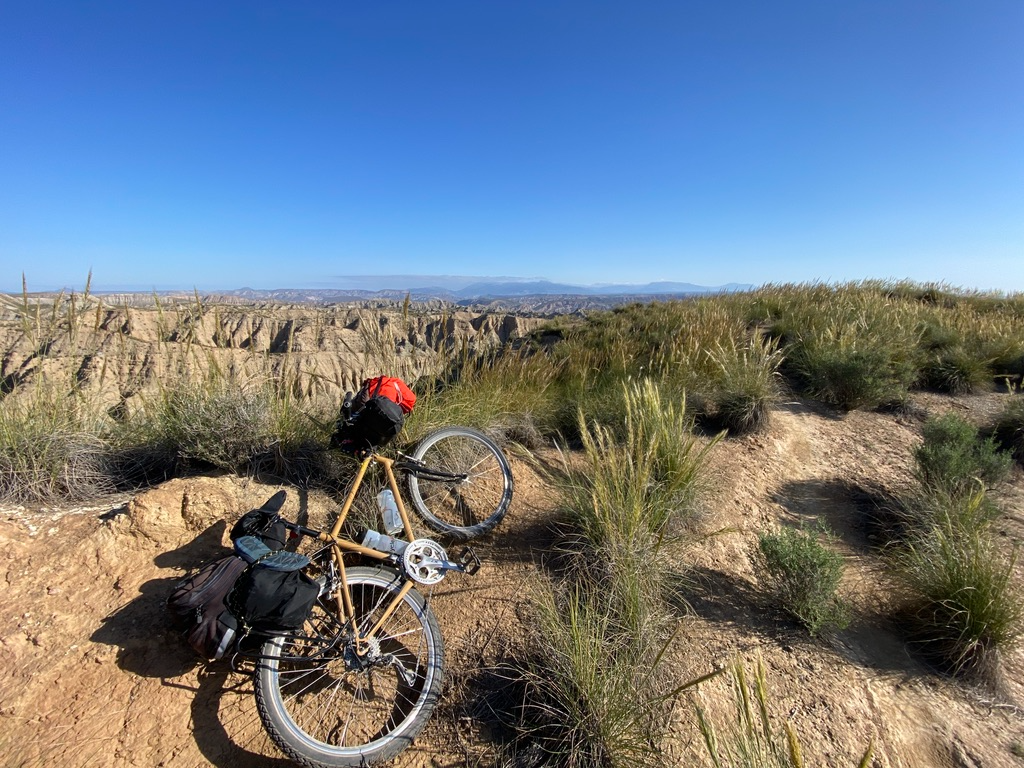
Mountain, Desert and Sea — Andalusian Trilogy
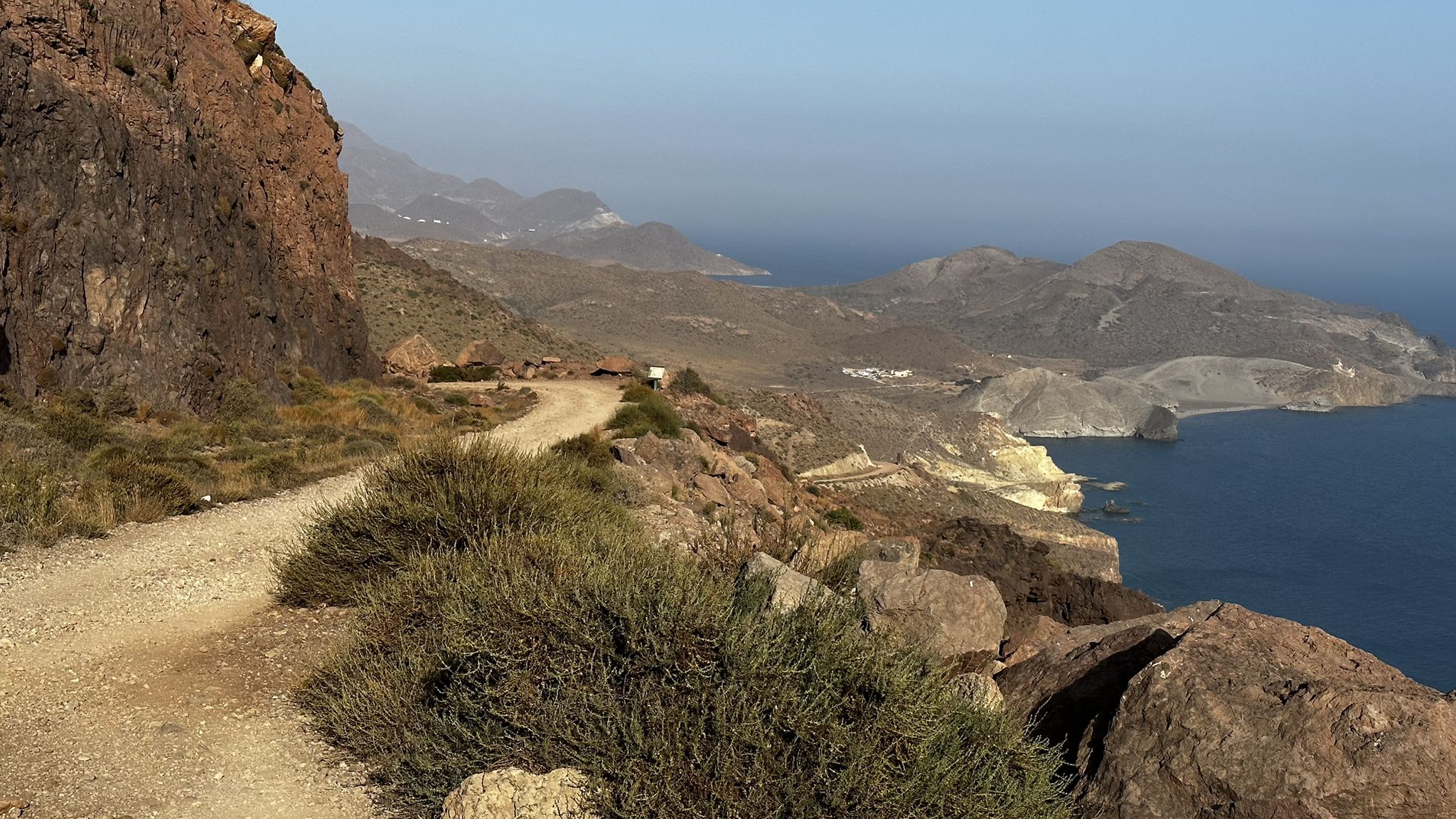
Beaches and desert – TransAlmería by MTB (El Levante)
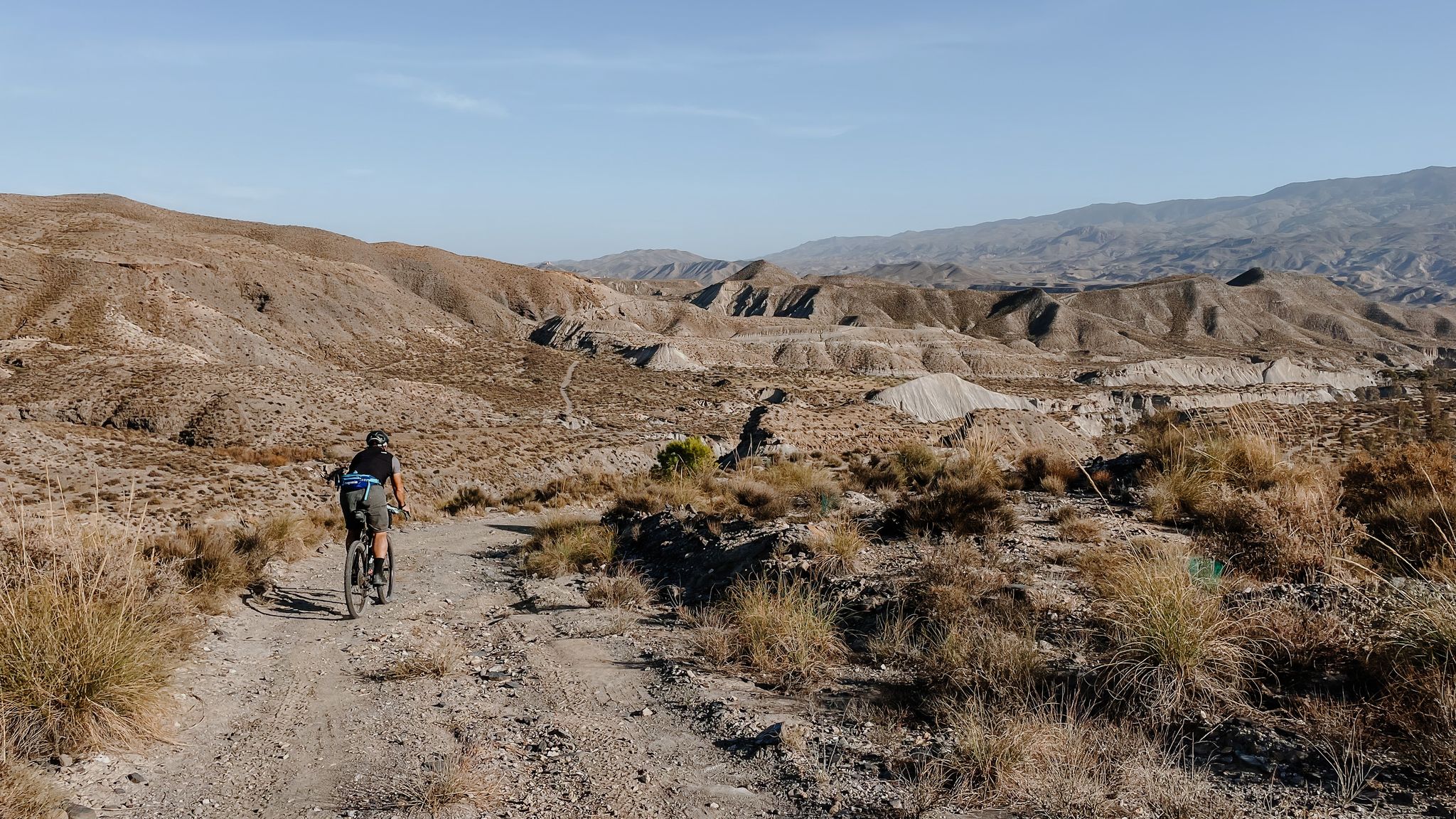
High mountains, desert and sea – an adventure of contrasts in Andalusia
A bike ride that’s like a movie – Natural Park of Cabo de Gata-Níjar
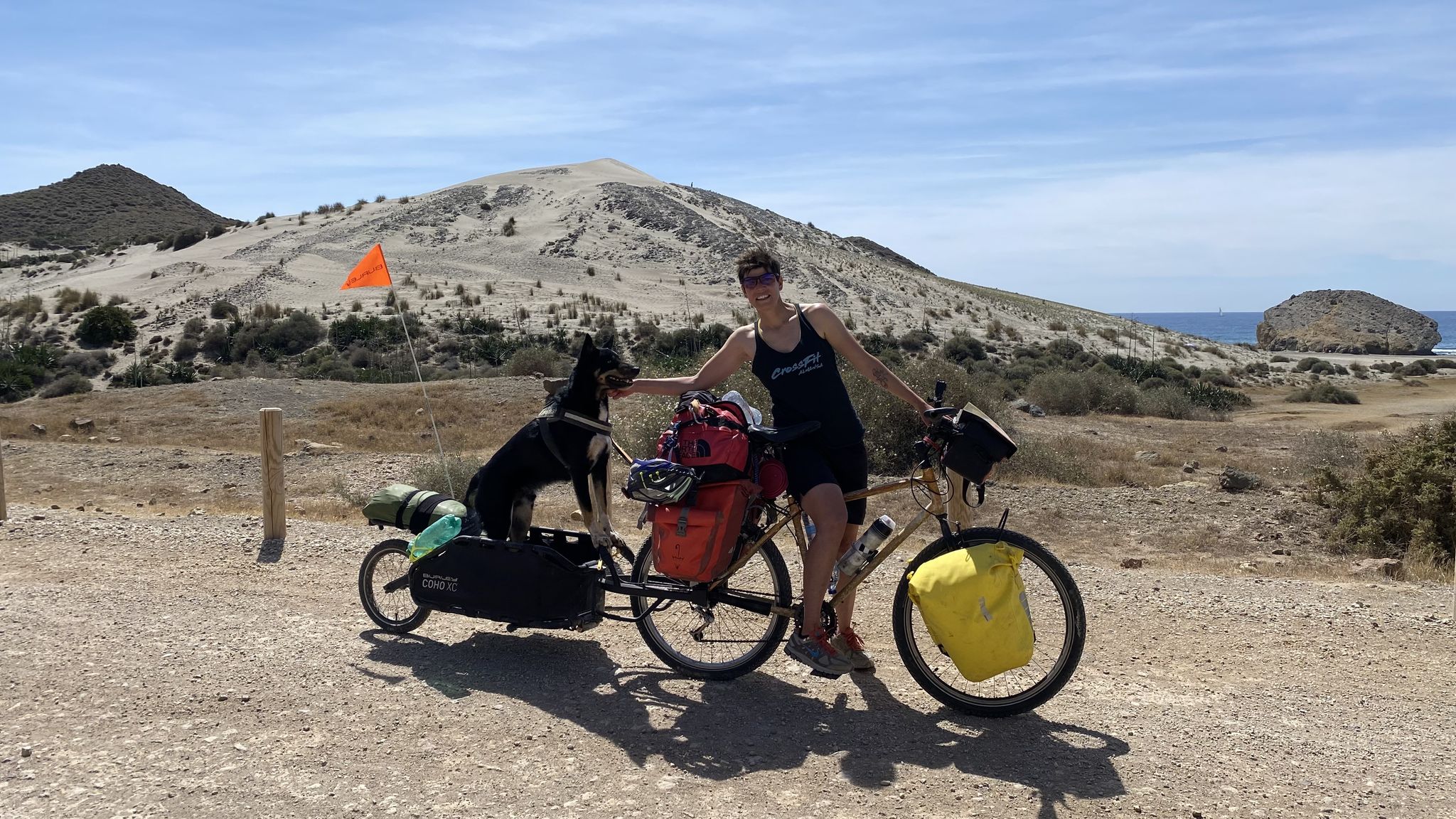
Let’s head south – cycle in Andalusia with me and my dog
Other adventures in Cabo De Gata-Níjar


Tips from the Community

The Cerro del Cinto trail (short version) goes around a hill that gives an overwhelming impression due to the number of holes that were created during the time of gold prospecting. The route, which takes you through the mining landscape of this natural area, shows you the remains of mines, abandoned gold mines and a village, Rodalquilar, a district of Níjar and the center of the mining sector. Route: 6 or 12 km round trip
1
0

The village of Las Negras is named after this black-colored mountain. The mountain is located behind the seaside village
11
0

The route could be classified as moderate, but since you have to do some climbing and climbing over rocks (good shoes that grip well and that will be ideal, above all, will be for ascending and descending the Cerro de San Miguel, quite steep and also that of La Testa but to a much lesser extent), and as it is possible that some people find it difficult due to the sensations that it may cause due to issues of vertigo or heights, the route could be classified as difficult.
0
0

This trail is a bit steep on the ascent, but it's worth the effort. You can follow a good stretch of the mountain and have a phenomenal view to the Sierra Nevada. The mountain trail itself is easy to hike.
2
0
Frequently Asked Questions
What are some of the most popular mountain peaks to explore in Cabo de Gata-Níjar?
Visitors frequently enjoy Cinto Hill, known for its phenomenal views towards the Sierra Nevada and its unique mining landscape with numerous gold prospecting holes. Another popular spot is The dark mountain, a distinctive black-colored peak that serves as a natural monument and viewpoint behind the village of Las Negras.
Are there challenging mountain peaks for experienced hikers in the region?
Yes, for those seeking a demanding experience, the route encompassing Mount Carlos, Mount San Miguel, Mount La Testa and Mount Coronillas offers a challenging summit route. It involves some climbing over rocks, particularly on Cerro de San Miguel, and requires good shoes for grip on steep sections.
What unique natural features can I observe on the mountain peaks of Cabo de Gata-Níjar?
The region's mountain peaks are characterized by their volcanic origins. You can observe ancient lava flows, calderas, and diverse rock formations. For instance, Cinto Hill features a landscape shaped by historical gold prospecting, while Mesa Roldán is notable for its fossil coral reefs and flat-topped structure.
Which mountain peaks offer the best panoramic views of the coastline and surrounding landscape?
Cerro del Fraile, the highest point in the park, offers impressive panoramic views of the coastline, the volcanic landscape, and the Mediterranean Sea. Similarly, the signposted walking trail to the top of Mesa Roldán provides superb views of the cliffs, the fishing village of Agua Amarga, and the coves of Cala de Enmedio and Cala del Plomo.
Are there any mountain peaks with historical significance in Cabo de Gata-Níjar?
Mesa Roldán is home to the 18th-century watchtower of Torre Vigia de Mesa Roldán and a lighthouse, adding a historical element to its distinctive flat-topped peak. Additionally, the area around Cinto Hill showcases a mining landscape with remnants from gold prospecting.
What kind of outdoor activities can I do near the mountain peaks in Cabo de Gata-Níjar?
Beyond hiking the peaks themselves, the region offers a variety of outdoor activities. You can find numerous running trails, including routes like the Parque Natural de Cabo de Gata – trail running circular to Morrón de los Genoveses from San José. Cycling and gravel biking are also popular, with routes such as the Salinas de Cabo de Gata — circular from San José. For more details, explore the Running Trails, Cycling, and Gravel Biking guides for the area.
What is the best time of year to visit the mountain peaks in Cabo de Gata-Níjar?
The Cabo de Gata-Níjar Natural Park generally enjoys a mild climate, making it suitable for visiting mountain peaks outside of the hottest summer months. Spring and autumn offer pleasant temperatures for hiking and exploring the volcanic landscapes without the intense heat of summer.
Are there any mountain peaks that are considered moderate or easy to hike for a general audience?
Cerro del Fraile, while the highest point, is generally considered a rewarding, moderate walk with great coastal and inland views. Cinto Hill also offers an easy-to-hike trail for its shorter version, making it accessible for many visitors.
What geological insights can I gain from visiting the mountain peaks in Cabo de Gata-Níjar?
The entire region is a geological marvel due to its volcanic origins. Peaks like Cerro del Fraile are remnants of ancient volcanic calderas and contain marine sedimentary levels with diverse fossil content. Visiting Cerro de Peñones allows you to observe the geological formations of the Majada Redonda volcanic caldera, providing insight into the Sierra's formation.
What do visitors particularly enjoy about the mountain peaks in Cabo de Gata-Níjar?
Visitors appreciate the unique volcanic landscapes, the impressive panoramic views from summits like Cerro del Fraile and Mesa Roldán, and the opportunity to explore the distinct flora and fauna. The blend of rugged mountains descending into the Mediterranean Sea creates a serene and visually stunning environment for nature lovers and hikers.
Is there a mountain peak near La Isleta del Moro with good views?
Yes, Cerro Rellana is a summit at 478 meters with beautiful views, located near La Isleta del Moro. It is part of a prominent hiking trail that allows you to enjoy panoramic views, including the climb up the Barranco del Negro to the caldera.
Can I find information about the volcanic history of the region by visiting specific peaks?
Absolutely. Peaks like Cerro del Fraile are the remains of ancient volcanic calderas, with its last eruption occurring approximately 8 million years ago. Cerro de Peñones, located near the Majada Redonda caldera, also offers a chance to observe significant geological formations that provide insight into the volcanic history of the Sierra del Cabo de Gata.
Most popular routes in Cabo De Gata-Níjar
Most popular attractions in Cabo De Gata-Níjar

Get inspired with the komoot mobile app


Explore more
See even more amazing summits in Cabo De Gata-Níjar with these guides:
