Top 8 Caves around Trecastagni
Best caves around Trecastagni are situated on the slopes of Mount Etna, providing access to a diverse underground world of volcanic formations. Trecastagni functions as a convenient starting point for exploring both local caves and more extensive Etna caves. The area's unique geology offers a range of underground experiences, from small lava tubes to complex multi-level systems. This region is known for its natural features, showcasing the geological history of the volcano.
Best caves around Trecastagni
- The most popular caves…
Last updated: August 23, 2026
Serracozzo Cave
Highlight • Cave
Translated by Google •
Tip by

Rifugio Santa Barbara
Highlight • Mountain Hut
Translated by Google •
Tip by

Sign up now to discover places like this
Get recommendations on the best single tracks, peaks, & plenty of other exciting outdoor places.
Sign up for free
Snow Grotto
Highlight • Cave
Translated by Google •
Tip by

Case del Vescovo Caves
Highlight • Cave
Translated by Google •
Tip by

Grotta d'Angela
Highlight • Cave
Translated by Google •
Tip by
Sign up for free to discover even more caves around Trecastagni.
Sign up for free
Already have an account?
Start today with a free account
Your next adventure awaits.
Login or Signup

Tips from the Community


Deep cave not visitable. Located near a shelter unfortunately now closed by the forestry.
1
0


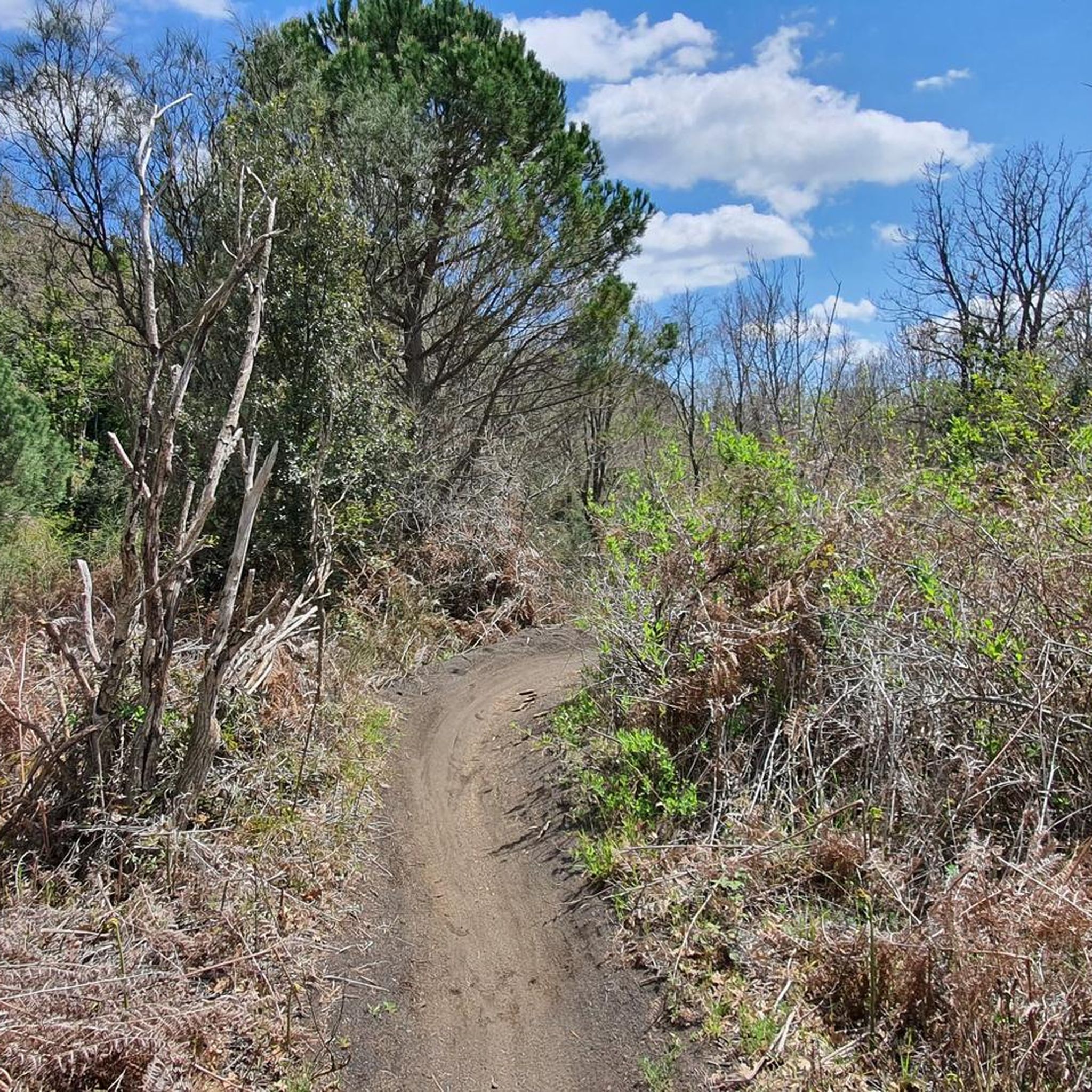
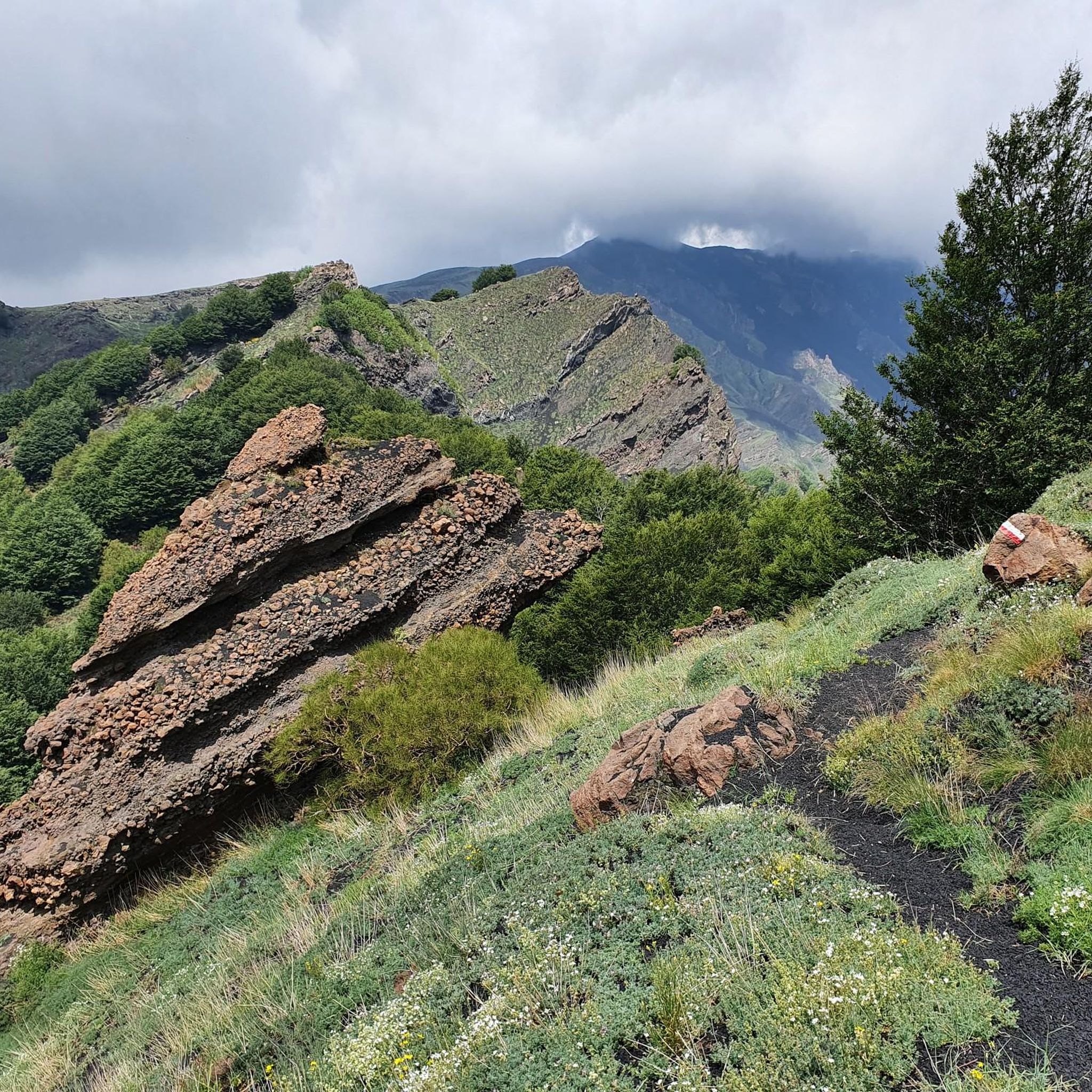
The Santa Barbara refuge is located in the Etna Park, immersed in a suggestive landscape of woods and lava flows. Recently renovated, it has a fireplace with a wood reserve and can be used as a bivouac. It is an excellent starting point for excursions around the volcano.
1
0

One of the most beautiful lava tunnels on the north side of Mount Etna is the Serracozzo Grotto (surely often visited, but not signposted). A lava tunnel is not a cave, but rather one formed during an eruption, when a crust forms on the surface of the slowly flowing lava in flatter terrain. This "tunnel" is easy to enter (assuming there's no threat of a thunderstorm (flooding!) or ice and snow making entry dangerous). Don't forget your flashlight; two cave-ins in the ceiling provide sufficient light until halfway through the tunnel, after which it becomes very shallow and pitch-dark in places. It's worth exploring!
0
0

This cave was formed from a lava flow that cooled and solidified on the outside, but continued to flow inside, leaving a hollow space behind. The Grotta Serracozzo is particularly impressive because it has collapsed in two places, allowing daylight to enter.
0
0

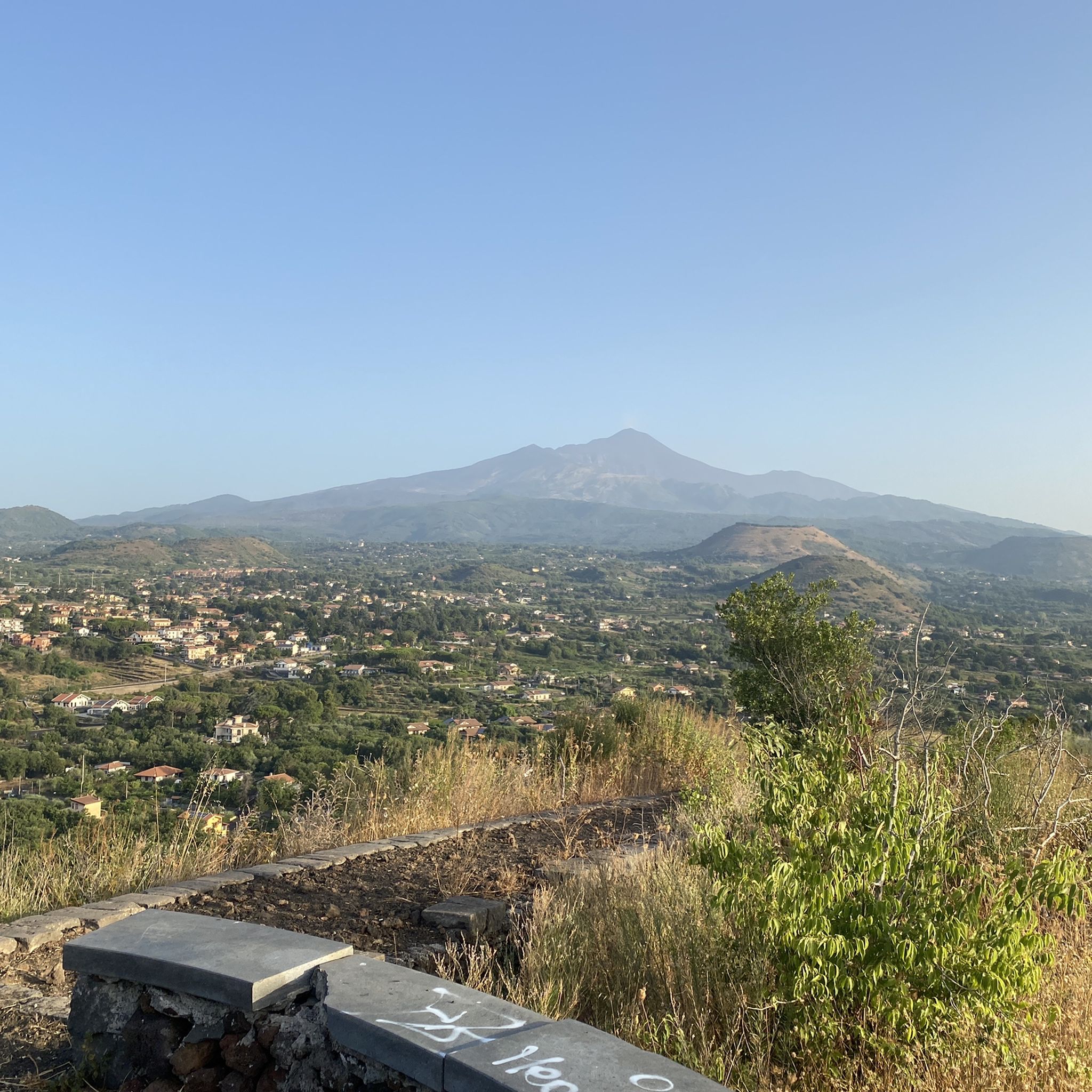
There is no equipped area. The cave is fenced off because it is an overhanging well. Good connection. The view of Etna and the crater of Monte Nero degli Zappini in the foreground is spectacular.
0
0

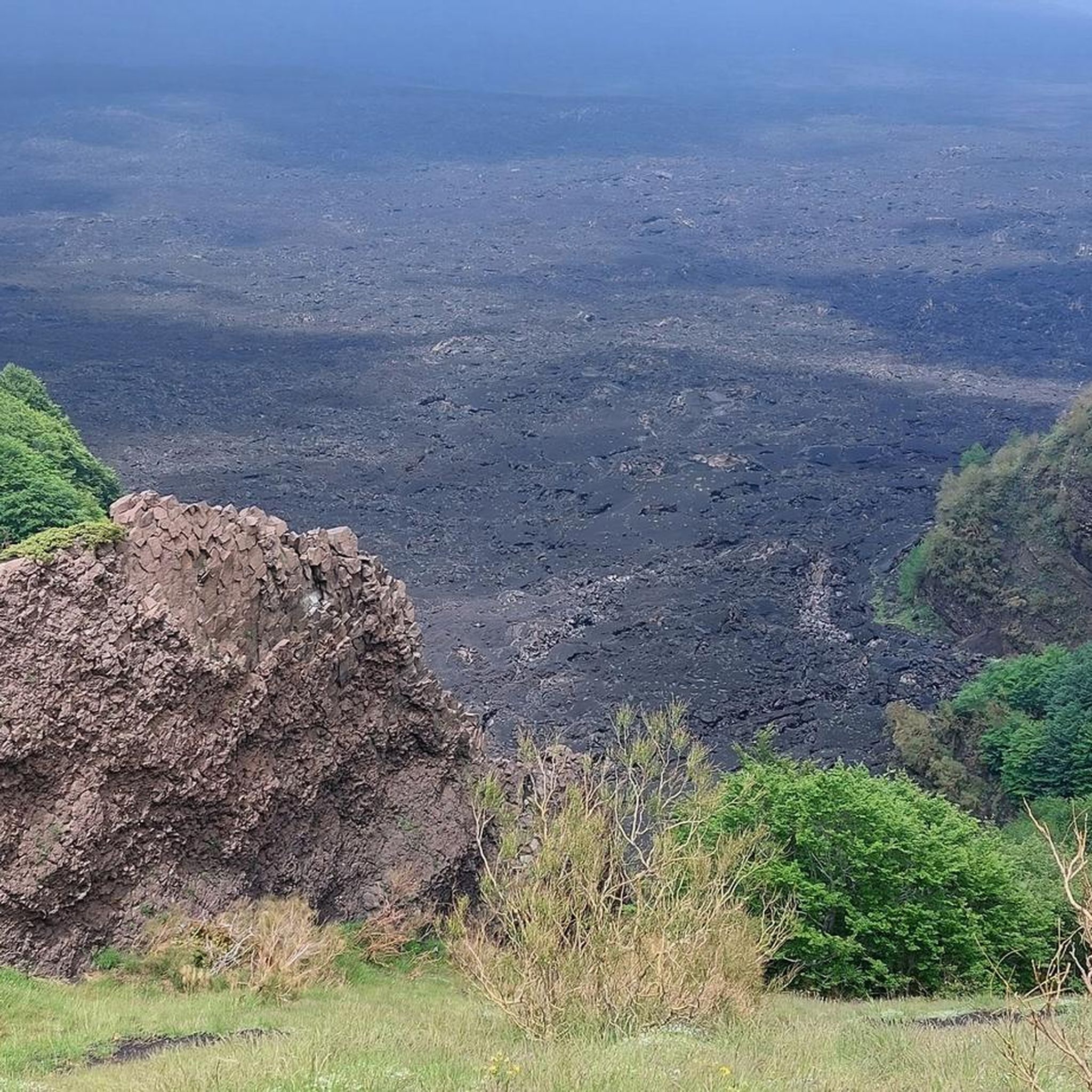
This cave, formed from the solidified lava rock of past eruptions, is a fascinating testament to volcanic activity and offers a rare insight into Sicily's geological history. When visiting this highlight, which is located in the protected area of the Parco dell'Etna, it is important to respect local regulations. The park was established to protect the unique landscape surrounding the volcano and to preserve the natural flora and fauna. Visitors are encouraged to respect the paths and leave no trace in order to preserve this extraordinary place for future generations. The hike continues uphill and eventually reaches the edge of the upper valley, where there are impressive views of the surrounding volcanic landscape. The classic route includes a descent down a volcanic sand gully on the way back, an experience that will be remembered not only for the spectacular scenery but also for the unique way of getting around. Discovering a cave in lava rock is not only an adventure, but also a lesson in geology and volcanology. It makes it possible to feel the forces that shape the earth and admire the quiet beauty that can arise from destruction. For anyone who wants to explore the wonder of Etna and its hidden treasures, this hike offers an incomparable experience that impressively illustrates the fascination of the volcano.
1
0
Frequently Asked Questions
What types of caves can I explore around Trecastagni?
The region around Trecastagni, situated on the slopes of Mount Etna, offers a diverse range of volcanic caves. You can explore lava tubes, multi-level cave systems, and historical snow storage caves. These include easily accessible single chambers and more complex structures showcasing the geological history of the volcano.
Are there any easy-to-access caves suitable for beginners near Trecastagni?
Yes, for a straightforward visit, Grotta Comune in Trecastagni is easily accessible and relatively flat, consisting of a single chamber. Another option is Grotta Cicirello, also in Trecastagni, which is accessible on foot, though it has a brief section requiring crouching. For a slightly longer but still manageable experience, Serracozzo Cave is a beautiful lava tube where visitors can explore several hundred meters.
Which caves offer a more challenging or adventurous experience?
For a challenging adventure, Grotta dei Tre Livelli is a complex, multi-layered cave with steep sections, recommended for exploration with professional guides. Grotta del Gelo is another challenging option, known for its permanent ice and difficult route, best suited for experienced hikers. The basal part of Case del Vescovo Caves also requires speleological equipment.
What unique natural features can I expect to see in the caves?
The caves around Trecastagni showcase fascinating volcanic formations. In Grotta dei Tre Livelli and Grotta dei Lamponi, you can observe remelted lava stalactites and intricate lava cords. Grotta Cassone features lava tubes and basalt columns with richly colored walls. Most uniquely, Grotta del Gelo contains permanent ice, making it Europe's southernmost glacier.
Are there any caves with historical significance or interesting legends?
Yes, Grotta dei Ladroni, also known as Snow Grotto, was historically used for storing snow and is associated with a legend of 18th-century bandits. Grotta Cicirello dates back to pre-Roman times. Case del Vescovo Caves were also formerly used as a summer deposit for snow.
What should I bring when visiting the caves?
Many caves, such as the Snow Grotto, are pitch-black, so bringing a flashlight or headlamp is essential. For more challenging caves, appropriate caving gear, sturdy footwear, and potentially a guide are recommended. Some cave walls can be sharp, so gloves might be useful.
What outdoor activities can I do near the caves around Trecastagni?
The area offers various outdoor activities. You can find numerous cycling routes, including challenging road cycling and touring bicycle options around Mount Etna. There are also mountain hiking trails, such as the moderate 'Serracozzo Lava Tube loop from Monte Concazza' or more difficult routes to the summit craters. For more details, explore the cycling, mountain hiking, and road cycling guides for the region.
Is it possible to visit caves that are part of the Etna Park?
Yes, many significant caves, such as Grotta dei Tre Livelli, Grotta Cassone, and Grotta dei Ladroni, are located on Mount Etna and are accessible from Trecastagni, often as part of guided tours within the Etna Park. Rifugio Santa Barbara, a hut in the Etna Park, also offers nearby cave access and serves as a starting point for excursions.
What do visitors enjoy most about exploring caves near Trecastagni?
Visitors appreciate the unique experience of exploring volcanic lava tubes and the geological insights they offer. Many enjoy the sense of adventure, the natural beauty of the formations, and the opportunity to witness the raw power of Mount Etna's past eruptions. The accessibility of some caves for a quick visit and the challenge of others for more experienced explorers are also highly valued.
Are there any caves that are currently difficult or unsafe to enter?
While previously popular, Grotta Cassone experienced a ceiling collapse in 2018, making entry unsafe. It's always advisable to check current conditions and safety regulations, especially for larger Etna caves, and consider visiting with professional guides.
Can I find a natural grotto within a building or commercial area?
Yes, there is a unique natural grotto known as Parco dell'Etna Natural Cave. It's located beneath an inconspicuous café on the side of the road, and you can view it from inside the establishment, behind a grille, upon request.
Which cave is known for its distinctive 'raspberry-like' walls?
Grotta dei Lamponi (Raspberry Cave) is named for the appearance of its walls, which are richly decorated with remelted lava stalactites, grooves, and overlapping lava cords that resemble raspberries. It is one of Etna's longest lava tunnels.
Most popular routes around Trecastagni
Most popular attractions around Trecastagni

Get inspired with the komoot mobile app


Explore more
Extend your search for the best caves by checking out these guides of the top ones around Trecastagni:
