The best cycling routes around Krostitz
4.5
(124)
416
riders
58
rides
Touring cycling around Krostitz offers a landscape characterized by gentle terrain, numerous lakes, and meandering rivers. The region features a network of quiet country roads, forests, and open fields, providing accessible routes for various cycling preferences. Elevations are generally low, making the area suitable for relaxed rides. This environment supports a range of cycling experiences, from easy, mostly paved paths to longer routes that may include unpaved sections.
Best touring cycling routes around Krostitz
- The most popular touring cycling route…
Last updated: July 10, 2026
4.8
(25)
54
riders
29.7km
01:41
80m
80m
Easy bike ride. Great for any fitness level. Mostly paved surfaces. Suitable for all skill levels.
4.7
(3)
9
riders
Moderate bike ride. Good fitness required. Mostly paved surfaces. Suitable for all skill levels.

Sign up for free
4.7
(22)
29
riders
22.2km
01:17
50m
50m
Easy bike ride. Great for any fitness level. Mostly paved surfaces. Suitable for all skill levels.
5.0
(3)
19
riders
Easy bike ride. Great for any fitness level. Mostly paved surfaces. Suitable for all skill levels.
4.8
(8)
17
riders
19.9km
01:09
50m
50m
Easy bike ride. Great for any fitness level. Mostly paved surfaces. Suitable for all skill levels.
Get access to more routes and recommendations from other explorers.
Sign up for free
Already have an account?
Our route recommendations are based on thousands of hikes, rides, and runs completed by other people on komoot.
Start today with a free account
Your next adventure awaits.
Login or Signup
Tips from the Community

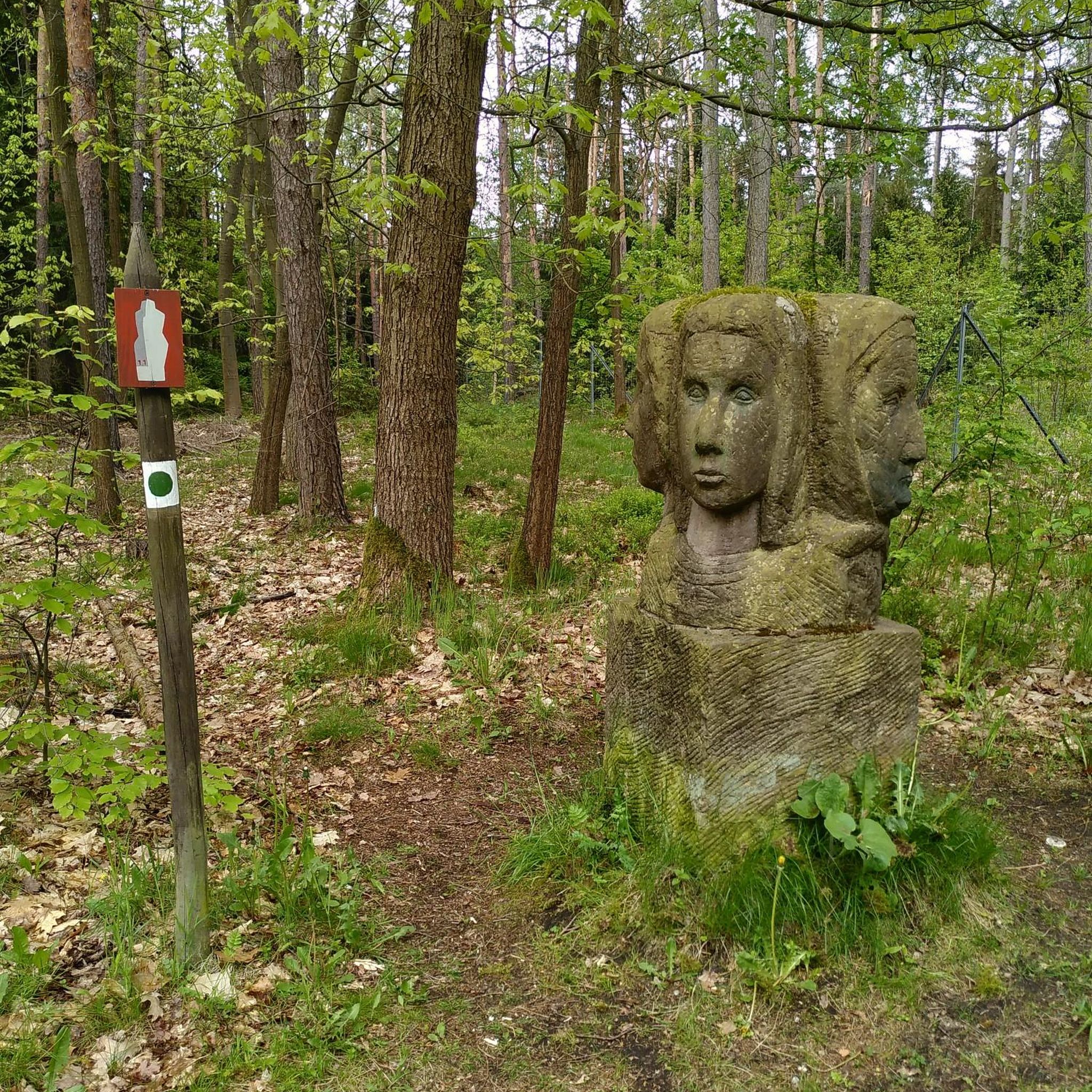
Invites you to take a short break
1
0

Really beautiful. And a great view.
0
0
Old church in the middle of town. Worth a look.
0
0
The organ with a richly decorated case[1] is a work by Johann Scheibe from 1745–1746 with 13 stops on one manual and pedal. It was tested in 1746 by Johann Sebastian Bach and found to be "efficient, diligent and well built". The original acceptance certificate is in the British Museum in London (Add. 33965, fol. 168–169, until 1872 in the possession of Consul General Clauss in Leipzig).[2] In 1870, the organ was moved to the lower gallery by Eduard Offenhauer and a rear organ with four stops was added. In 1954, Hermann Eule Orgelbau Bautzen returned the instrument to its original location, rearranged the rear organ and added several stops to the main organ.[2] In 2000, Eule restored the organ again and returned it to its original condition. The pedal coupler, installed in 1870, was preserved. Source: https://de.wikipedia.org/wiki/Dorfkirche_Zschortau
5
0
A carved altar with four panels and delicate, slender figures was probably created in a Halle workshop in 1517. In the predella, two high reliefs depict the birth and adoration of Christ. The shrine depicts Mary with Child and Saints Gertrude and Nicholas. The panels bear two rows of depictions of Saints Anthony, Wolfgang, Andrew, Stephen, Blaise, Catherine, Anne, Barbara, Dorothea, Margaret, and another saint. The altarpiece features important paintings by a Leipzig master influenced by Hans Baldung Grien. The left wing depicts Saints George, Maurice, Sebastian, and Christopher; the inner panels depict a bishop, James the Elder, Paul, presumably Benedict, and Bartholomew; and the right wing depicts a deacon, Pope Gregory, Ottilia, and Apollonia. The neo-Gothic sandstone baptismal font was created in the second half of the 19th century. The sandstone baptismal font was created in the second half of the 19th century. Source https://de.wikipedia.org/wiki/Dorfkirche_Zschortau
5
0
The village church dates back to the 12th/13th century. The Romanesque, transversely rectangular west tower survives from this period. The church was rebuilt around 1500. The nave and chancel were significantly enlarged, and the sacristy was added. The church was restored in 1975. The building is constructed of quarry stone with a brick interior. Large, double-track tracery windows and buttresses characterize the exterior. A two-story sacristy is attached to the north side of the chancel. A reticulated vault with colored ribs and remnants of flame and radiant paintings at the intersections completes the interior. The hall is separated from the chancel by a pointed arch and from the tower ground floor by a rounded arch supported by imposts. Simple wooden galleries from 1870 are built on three sides. A groined vault completes the sacristy. Source: https://de.wikipedia.org/wiki/Dorfkirche_Zschortau
5
0
Lake Schladitz is used as a bathing lake, water sports center, and fishing spot. Swimming has been permitted in two areas since 2003, following the reinforcement of the embankment. Use of the lake thus began years before the planned final water level of 104 m above sea level was reached. Due to its close proximity to the village, the Wolteritz beach was established as a local bathing area for the local population, based on the principle of "visitor guidance instead of prohibition signs."[1] Since August 2003, there have been four tournament-ready volleyball courts at Schladitz Bay on the Schladitz side of the lake. Since then, beach volleyball, beach handball, and beach soccer tournaments have been held regularly throughout the season. Among other events, the qualification for the German Beach Volleyball Championship, the "Sachsenmasters," is held here. Schladitzer Bay has been managed by a water sports school since June 2003 and, since 2013, has been developed into a sports resort with water sports activities and courses, overnight accommodations, and camping. The Hayna Beach Association is developing the beach along its shore into a Biedermeier beach, and the Priester Music and Theater Association is a frequent guest. Various concerts and plays are held annually on the Hayna Lake Stage.[2] There are dining options at all three beaches. Since 2005, an eight-kilometer-long, paved circular path has existed, which is used by walkers, cyclists, skaters, and hikers.[3] There are also connections to Lake Werbelin (north-south route) and to the 17-meter-high paddle wheel of the SR 6300 in Gerbisdorf. The water and sewage development of Schladitzer Bay began in the summer of 2012.[4] Source: https://de.wikipedia.org/wiki/Schladitzer_See
4
0
Frequently Asked Questions
How many touring cycling routes are available around Krostitz?
Krostitz offers a diverse network of over 50 touring cycling routes. These routes cater to various preferences, ranging from easy, mostly paved paths to more challenging, longer rides that may include unpaved sections.
What is the best time of year for touring cycling in Krostitz?
The region is particularly inviting for touring cycling in spring and autumn, when the natural beauty of the countryside and forests is at its peak. June is also noted as a popular month for cycling in the area, offering pleasant weather for exploration.
Are there easy touring cycling routes suitable for beginners or families in Krostitz?
Yes, Krostitz is very beginner and family-friendly, with 44 easy routes available. A great option is the Dicke Berta Windmill – Priester Village Church loop from Krostitz, which is just over 11 km and takes about 40 minutes, offering a relaxed ride through the local area.
What kind of terrain can I expect on touring cycling routes in Krostitz?
The terrain around Krostitz is generally gentle, characterized by low elevations, making it suitable for relaxed rides. Routes often traverse quiet country roads, forests, and open fields. While many paths are paved, some longer routes may include unpaved sections, offering a varied cycling experience.
Are there any circular touring cycling routes around Krostitz?
Yes, many routes in Krostitz are designed as loops. For example, the Schladitzer Lake – View of Schladitzer See loop from Krostitz is an easy 29.7 km route offering scenic views of Schladitzer Lake. Another popular option is the Krostitzer Brewery – Schladitz Bay loop from Krostitz, a 22.1 km ride through local countryside.
What natural features and scenic viewpoints can I discover along the cycling routes?
Krostitz's touring cycling routes offer picturesque views of beautiful lakes like Schladitzer Lake and Lake Goitzsche, and the meandering Mulde River. You can also find scenic viewpoints such as the View of Schladitzer Lake from Schäferhöhe. The routes often pass through tranquil forests and open fields, providing a close connection to nature.
Are there any historical or cultural landmarks to see while cycling in Krostitz?
Absolutely. Cycling routes in Krostitz often lead past historical and cultural attractions. You can encounter churches like St. Laurentius Church in Krostitz and Wölkau Church, or explore charming villages and towns that offer glimpses into local life and architecture. The Krostitz Town Hall – Biesen Manor loop from Krostitz is an easy route that takes you past local points of interest.
What do other touring cyclists say about the routes in Krostitz?
The touring cycling routes in Krostitz are highly regarded by the komoot community, with an average rating of 4.5 stars from over 100 reviews. Cyclists often praise the picturesque lakes, tranquil rivers, and serene country roads, highlighting the diverse options available for different ability levels.
Are there any longer or more challenging touring cycling routes in the area?
Yes, for those seeking a greater challenge, there are 10 moderate and 3 difficult routes. A notable moderate option is the View of Lake Goitzsche – Werbeliner Lake Loop Trail loop from Krensitz, which is a substantial 74.4 km ride offering extensive views of Lake Goitzsche and Werbeliner Lake.
Can I access Krostitz's cycling routes using public transport?
Krostitz is well-integrated into regional transport networks, and many routes are accessible via public transport connections. While specific details for each route vary, the area's proximity to Leipzig and its role as a stage on the Berlin-Leipzig Cycle Route suggest good connectivity for cyclists.
Are there opportunities for swimming or relaxing by the water along the routes?
Yes, the region is rich with lakes that offer opportunities for breaks and relaxation. Schladitzer Lake and Lake Goitzsche provide picturesque backdrops, and the Kulkwitzer See is specifically mentioned as a natural lake suitable for swimming during the summer months.
Most popular attractions around Krostitz

Get inspired with the komoot mobile app


Explore more
Browse the best Cycling routes in other regions.
