Top 7 Castles around Sicignano Degli Alburni
Best castles around Sicignano Degli Alburni are situated in a region characterized by the Tanagro valley and the Alburni Mountains, with much of the area included in the Cilento and Vallo di Diano national park. This historical area has ancient roots, with evidence of Roman civilization dating back to 450 BC. The medieval village of Sicignano Degli Alburni itself features paved alleys, arches, and covered passages, offering a historical context for its castles. The area provides commanding views over the borgo of Sicignano and the surrounding valley.
Best castles around Sicignano Degli Alburni
- The most popular castles is Sicignano degli Alburni, a settlement with castle elements that rises between the Tanagro valley and the Alburni Mountains. It features Giusso Castle and other medieval elements, offering a historical experience.
- Another must-see spot is The Castle of Buccino, a baronial castle. This manor, although in a state of ruin, has been restored and features a mighty Norman square-plan keep, with a first courtyard dating back to the late 13th century.
- Visitors also love Historic Center of Postiglione, a historical site featuring a Norman castle. Its origins trace back to the 10th century, and it is possible to visit the Norman castle of the 11th century.
- Sicignano Degli Alburni is known for Lombard-Norman-Swabian fortresses, baronial castles, and medieval structures. Visitors can explore a variety of historical castles, each offering insights into the region's past.
- The castles around Sicignano Degli Alburni are appreciated by the komoot community, with 3 upvotes and 14 photos shared across the highlights.
Last updated: May 2, 2026
The Castle of Buccino
Highlight • Castle
With the advent of the Swabians the castle had to lose importance, since it is not mentioned in the Statutum de reparatione castrorum imperialium. Even afterwards there is no news about the presence of castellans and servants inside the castle. From these data it can be deduced that the Buccinese castle did not play a particularly important role, from a military point of view, in the chessboard of the Kingdom's fortifications.
In 1247 the castrum Buccino or Pulcini belonged to the feudal lord Tommaso di Fasanella.
With the Angevins the castle was again assigned to important feudal lords, who changed the face of the manor according to the customs of the time. In 1269 the castle, together with those of Campagna, Eboli, Auletta and Quaglietta, was assigned to Roberto, eldest son of the Count of Flanders. Already in 1271 it was revoked from the Royal Curia, to be then assigned, until 1274, to Gualtiero de Sommerouse, soldier and executioner of the Kingdom.
During the fifth summons of Charles I of Anjou (1276-1277) the castle was stolen from Tommaso Count of Marsico to be assigned to Guidone d'Alemagna, soldier, executioner, councilor, royal family, treasurer and fiscal receiver.
In the following two centuries, the castle was in the possession of the d'Alemagna family, then passed to the Caracciolo and Di Sangro families.
At present the castle structure is characterized by a mighty Norman square-plan keep which must have been the only existing structure, at least until the advent of the Angevins. The construction of a first courtyard dates back to the late 13th century, with related residential buildings, two circular towers at the corners and a large cistern, with an adjoining service area in the southern part.
This first transformation is probably the work of the d'Alemagna family, in a crucial moment for the history of the Kingdom, characterized by the so-called war of the Vespers, which broke out in 1282 and which reached its peak in Campania at the end of the 13th century. In that period they began to build circular towers with escarpments at the base with an upper crown consisting of corbels and arches for the plumbing defense. Although the circular towers of the castle of Buccino are cut off, they fall within this type of construction, typical of Angevin castle architecture.
In the first half of the 14th century, the castle underwent a new structural reorganization. The hill is equipped with a defensive system consisting of a moat with two other circular towers and a second wall. Some rooms and a stable included in the perimeter area of the external walls can still be ascribed to the Angevin age.
Between the sixteenth and seventeenth centuries the castle underwent a gradual abandonment, as evidenced by the progressive filling layers of the moat and the levels of obliteration found in the environment identified as the stable.
The resumption of intensive occupation of the hill takes place between the eighteenth and nineteenth centuries when the reorganization of the internal courtyard, occupied along the northern edge by a stable, and the creation of a water drainage system, defined a substantial change in the intended use of the spaces.
During the nineteenth century. the castle assumes the appearance of a building witnessed by four large limestone, located along the northern slope of the hill, and by numerous lime extinguishing pits in the southern part.
arch. Lucio Ganelli
Translated by Google •
Tip by

Sicignano degli Alburni
Highlight • Settlement
Translated by Google •
Tip by

Sign up now to discover places like this
Get recommendations on the best single tracks, peaks, & plenty of other exciting outdoor places.
Sign up for free
Historic Center of Postiglione
Highlight (Segment) • Historical Site
of the Carmelites dating back to the 16th century; the Chapel of San Rocco (17th century), was built by some survivors of a cholera epidemic in 1656 as a tribute to the Saint; the Chapel of San Vito (16th century), is the oldest chapel in the town.
Translated by Google •
Tip by

Castello Guerritore
Highlight • Castle
Translated by Google •
Tip by
Volcei: Urban Archaeological Park
Highlight (Segment) • Historical Site
it.wikipedia.org/wiki/Parco_archeologico_urbano_di_Volcei
Translated by Google •
Tip by
Sign up for free to discover even more castles around Sicignano Degli Alburni.
Sign up for free
Already have an account?
Start today with a free account
Your next adventure awaits.
Login or Signup
Other adventures around Sicignano Degli Alburni

Tips from the Community

Buccino is the ancient Volcei. Worth seeing are the urban archaeological park in the pretty town center and the Norman castle.
0
0

Imposing and steep staircase that leads to the Guerritore Castle from the north side.
17
0
The Castle of Oliveto Citra, of which few walls are left standing due to the earthquake of November 23, 1980, although it does not appear frequently in the literature of significant castles in Irpinia, has an important significance. It stands out among the many examples of towns with castles, so widespread throughout the mountainous south, and this due to a particular natural and urban situation. At the top of the sloping village stands a high rock formation on which the current ruins rest, which dominate the whole surrounding valley. A beautiful frame of mountains forms the background between drawings of clouds that frequently linger there, contributing to a particularly suggestive effect. This magical beauty is perceived in an accentuated way along the beautiful vertical country; the chain of small squares at its first peak, then, the mysterious avenue beyond the gate, not surprisingly the site of the recent apparitions of the Madonna.
18
0

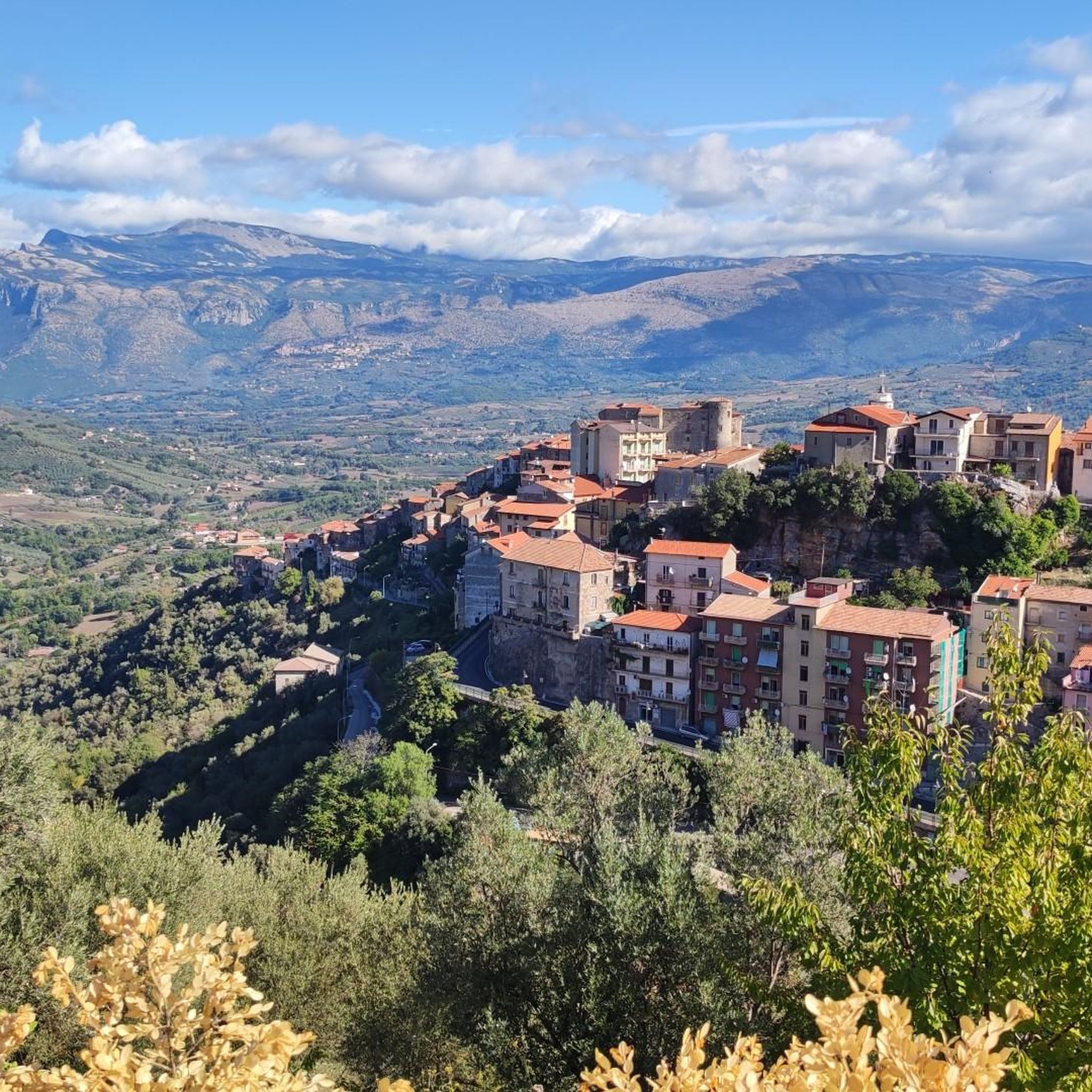
Sicignano degli Alburni is a small town in the province of Salerno. Part of the municipality is inserted within the boundaries of the Cilento, Vallo di Diano and Alburni National Park. Giusso Castle and the villages of Fontanella, Rupa and San Matteo still have many medieval features: a real leap into history!
3
0
Postiglione rises on the Alburni mountains and is part of the Cilento, Vallo di Diano and Alburni national park. The origins of Postiglione go back to the tenth century when the inhabitants of ancient Paestum, forced by the incursions of the Saracens and Turkish pirates, to abandon their land, took refuge in this place considered suitable for defense. It is possible to visit the Norman castle of the eleventh century; the parish church of San Giorgio (14th century), built in the Middle Ages; the Sanctuary of the Ss. Annunziata and monastery of the Carmelites dating back to the 16th century; the Chapel of San Rocco (17th century), was built by some survivors of a cholera epidemic in 1656 as a tribute to the Saint; the Chapel of San Vito (16th century), is the oldest chapel in the town.
4
0

The park develops entirely in the historic center of the city, in a path that is partly underground and partly raised. The stratification of the urban fabric, in the different eras, has made it possible to create a unique archaeological park, where ancient structures blend with medieval and recent buildings, making it a valid example of urban archeology. https://it.wikipedia.org/wiki/Parco_archeologico_urbano_di_Volcei
1
0
That of Buccino represents a typical example of the baronial castle of the Salerno hinterland. The manor, although in a state of ruin, has recently been restored as part of the programs of the Ancient Volcei urban park. The various architectural elements have been preserved through which it is possible to read the chronological and functional evolution of the site. It is not excluded that the promontory guarding the underlying inhabited area was already used in Roman times, as evidenced by the various elements of reuse found in recent works. However, we must wait until the 12th century to have the first documentary information of the fief of Buccino, through which we know the names of the first dominus: Nicola di Principato, count (1128); Judge Aminabad (1141); Riccardo Philippi (1141). With the advent of the Swabians the castle had to lose importance, since it is not mentioned in the Statutum de reparatione castrorum imperialium. Even afterwards there is no news about the presence of castellans and servants inside the castle. From these data it can be deduced that the Buccinese castle did not play a particularly important role, from a military point of view, in the chessboard of the Kingdom's fortifications. In 1247 the castrum Buccino or Pulcini belonged to the feudal lord Tommaso di Fasanella. With the Angevins the castle was again assigned to important feudal lords, who changed the face of the manor according to the customs of the time. In 1269 the castle, together with those of Campagna, Eboli, Auletta and Quaglietta, was assigned to Roberto, eldest son of the Count of Flanders. Already in 1271 it was revoked from the Royal Curia, to be then assigned, until 1274, to Gualtiero de Sommerouse, soldier and executioner of the Kingdom. During the fifth summons of Charles I of Anjou (1276-1277) the castle was stolen from Tommaso Count of Marsico to be assigned to Guidone d'Alemagna, soldier, executioner, councilor, royal family, treasurer and fiscal receiver. In the following two centuries, the castle was in the possession of the d'Alemagna family, then passed to the Caracciolo and Di Sangro families. At present the castle structure is characterized by a mighty Norman square-plan keep which must have been the only existing structure, at least until the advent of the Angevins. The construction of a first courtyard dates back to the late 13th century, with related residential buildings, two circular towers at the corners and a large cistern, with an adjoining service area in the southern part. This first transformation is probably the work of the d'Alemagna family, in a crucial moment for the history of the Kingdom, characterized by the so-called war of the Vespers, which broke out in 1282 and which reached its peak in Campania at the end of the 13th century. In that period they began to build circular towers with escarpments at the base with an upper crown consisting of corbels and arches for the plumbing defense. Although the circular towers of the castle of Buccino are cut off, they fall within this type of construction, typical of Angevin castle architecture. In the first half of the 14th century, the castle underwent a new structural reorganization. The hill is equipped with a defensive system consisting of a moat with two other circular towers and a second wall. Some rooms and a stable included in the perimeter area of the external walls can still be ascribed to the Angevin age. Between the sixteenth and seventeenth centuries the castle underwent a gradual abandonment, as evidenced by the progressive filling layers of the moat and the levels of obliteration found in the environment identified as the stable. The resumption of intensive occupation of the hill takes place between the eighteenth and nineteenth centuries when the reorganization of the internal courtyard, occupied along the northern edge by a stable, and the creation of a water drainage system, defined a substantial change in the intended use of the spaces. During the nineteenth century. the castle assumes the appearance of a building witnessed by four large limestone, located along the northern slope of the hill, and by numerous lime extinguishing pits in the southern part. arch. Lucio Ganelli
1
0
Sicignano degli Alburni is an Italian town of 3,181 inhabitants in the province of Salerno in Campania. The municipal territory rises between the Tanagro valley and the Alburni Mountains, and is largely included in the Cilento and Vallo di Diano national park. https://it.wikipedia.org/wiki/Sicignano_degli_Alburni
3
1
Frequently Asked Questions
What are the most historically significant castles to visit in the Sicignano Degli Alburni area?
The most prominent historical fortress is Castello Giusso, also known as Castello di Sicignano Degli Alburni. It boasts Lombard origins from the 11th century, later came under Norman rule, and features unique Norman-Swabian architecture. You can also explore The Castle of Buccino, a baronial castle with a mighty Norman square-plan keep, and the Norman castle within the Historic Center of Postiglione, which dates back to the eleventh century.
What kind of architectural styles can I expect to see in the castles around Sicignano Degli Alburni?
The region showcases a rich blend of architectural styles. Castello Giusso is a notable example of Norman-Swabian architecture with its irregular polygonal plan and defensive towers. The Castle of Buccino features a robust Norman square-plan keep, while the castle in the Historic Center of Postiglione is also Norman in origin.
Are there any castles that offer panoramic views of the surrounding landscape?
Yes, Castello Giusso is strategically perched on a rocky outcrop, offering breathtaking panoramic views of the entire Tanagro valley and the Alburni Mountains, often referred to as the 'Dolomites of the South'. The village of Sicignano degli Alburni itself, with its castle elements, also provides stunning vistas of the surrounding landscape.
What outdoor activities can I combine with a visit to the castles?
The area around Sicignano Degli Alburni, largely within the Cilento and Vallo di Diano National Park, is excellent for outdoor activities. You can find numerous hiking trails, such as 'The Sentiero Italia at Sicignano degli Alburni' or the 'La Loggia viewpoint – Summit of Monte Panormo loop'. For cycling enthusiasts, there's the 'Ring tour of the Monti Alburni'. Mountain biking options are also available, including routes like 'Palazzo Rosapepe XVII sec. loop'. You can explore more options on the Hiking around Sicignano Degli Alburni, Cycling around Sicignano Degli Alburni, and MTB Trails around Sicignano Degli Alburni guide pages.
Are there family-friendly castles or historical sites suitable for children?
The village of Sicignano degli Alburni, with its historical settlement and castle elements, is considered family-friendly. Exploring its paved alleys, arches, and covered passages can be an engaging experience for families. While specific child-focused activities at the castles are not detailed, the historical context and scenic views can be enjoyed by all ages.
What is the best season to visit the castles and the Sicignano Degli Alburni region?
The region's natural beauty, especially the Alburni Mountains and Tanagro valley, is best enjoyed in spring and autumn when the weather is mild and the landscapes are vibrant. These seasons are ideal for exploring the castles and combining your visit with outdoor activities like hiking. Summer can be warm, but also offers clear views, while winter might present challenges for some outdoor routes, though the castles remain accessible.
Are there any hidden gems or lesser-known historical sites near Sicignano Degli Alburni worth exploring?
Beyond the main castles, consider visiting the Volcei: Urban Archaeological Park. This unique site in Buccino showcases a stratification of urban fabric where ancient structures blend with medieval and recent buildings, offering a fascinating example of urban archaeology. It provides a deeper look into the region's long history.
What are the origins of the castles in this area?
Many castles in the Sicignano Degli Alburni area have ancient roots. Castello Giusso, for instance, has Lombard origins from the early 11th century and later came under Norman rule. The Norman castle in the Historic Center of Postiglione also traces its origins back to the tenth century, reflecting the region's long history of strategic importance and various ruling powers.
Are there any specific tips for a beginner exploring the castles in Sicignano Degli Alburni?
For beginners, start with Castello Giusso in Sicignano Degli Alburni for its historical significance and panoramic views. Wear comfortable shoes, as many castles are on elevated positions or within medieval villages with uneven terrain. Allow ample time to explore not just the castle structures but also the surrounding historic centers, like Sicignano degli Alburni itself, to fully appreciate the historical context.
What do visitors enjoy most about the castles and historical sites in Sicignano Degli Alburni?
Visitors particularly appreciate the deep historical roots and the tangible connection to centuries of history offered by these Lombard-Norman-Swabian fortresses. The unique architecture, such as the Norman square-plan keep of The Castle of Buccino, is a highlight. Many also value the stunning panoramic views from sites like Castello Giusso, which overlook the Tanagro valley and the Alburni Mountains.
Can I find restaurants or cafes near the castles in Sicignano Degli Alburni?
The castles are often located within or very close to historic villages. For example, Castello Giusso is in the medieval village of Sicignano Degli Alburni, and the castle in Postiglione is part of its historic center. These villages typically offer local restaurants and cafes where you can enjoy traditional cuisine and refreshments after your exploration.
Are tickets or permits required to visit the castles around Sicignano Degli Alburni?
For Castello Giusso, it's advisable to check local information for current access and potential entry fees, as it has undergone recent restoration. For other sites like The Castle of Buccino, which is in a state of ruin but restored, or the Norman castle within the Historic Center of Postiglione, access might be more open, but it's always best to verify locally for any specific requirements or guided tour options.
Most popular routes around Sicignano Degli Alburni
Most popular attractions around Sicignano Degli Alburni

Get inspired with the komoot mobile app


Explore more
Looking for the best castles somewhere else? Discover other guides around Sicignano Degli Alburni:
