Top 6 Castles around Visciano
Castles near Visciano offer insights into the historical landscape of the Campania region. Visciano itself is situated in an area known for its natural features and historical sites, though traditional castles are found in the surrounding localities. The region provides varied terrain, from volcanic landscapes to historical settlements, suitable for exploring historical structures. These sites often feature viewpoints and are integrated into the local environment.
Best castles around Visciano
- The most popular castles is Castello Village of Palma Campania,…
Last updated: June 30, 2026
Castello Village of Palma Campania
Highlight • Settlement
buonapalmacampania.it/borgo-castello
Translated by Google •
Tip by

Monteforte Irpino Castle
Highlight • Castle
But the history of Monteforte …
Translated by Google •
Tip by

Sign up now to discover places like this
Get recommendations on the best single tracks, peaks, & plenty of other exciting outdoor places.
Sign up for free
Ruins of Mercogliano Castle
Highlight • Castle
Translated by Google •
Tip by

Sarno Castle and Fortifications
Highlight • Castle
Translated by Google •
Tip by
Avella Castle and Roman Ruins
Highlight • Castle
Translated by Google •
Tip by

Sign up for free to discover even more castles around Visciano.
Sign up for free
Already have an account?
Start today with a free account
Your next adventure awaits.
Login or Signup


Tips from the Community

the park/green area is located next to the castle. there is parking, with a picnic area
0
0

The Castle of Monteforte was probably an ancient Roman castrum, on which a real castle was probably built by the Lombards in the 7th-8th century. But the history of Monteforte is very ancient: traces of its existence can be found already during the Second Punic War (fought between Rome and Carthage from 218 BC to 202 BC), when Annibale Barca passed through it on his way back from Capua towards Cannae, where he prepared the historic trap against the Romans. The first certain information we have about the village is contained in a document from 1102 preserved in the Montevergine Archives. In the Angevin period, it passed to the Princes of Montfort and Count Guido de Monfort lived there, who killed Prince Henry of England in 1271 in the cathedral of Viterbo. Having committed the crime, he was deprived of his possessions which passed to the Orsini family, whose lineage they remained in until 1806. The Castle was renovated and transformed into a summer residence by Charles of Anjou who lived there several times from 1271 to 1280. It was abandoned to itself from the 16th century; legend has it that who knows what treasures were buried in it, unfortunately this gave greedy hands the opportunity to complete its destruction.
11
0
The castle has an ancient and troubled history, about 1300 years long. In the 6th century the Longobards, coming from Benevento, settled in the area and less than a century later the castle was built, of which today only a few run-down ruins remain. As per practice in the Middle Ages, the first inhabited nucleus developed around the fortress, what is now known as Borgo San Matteo. In the following centuries the castle hosted King Manfredi of Swabia several times, who was buried there together with his son after having lost his life during the battle of Tagliacozzo. Later the castle passed into the hands of the Angevins and the County of Sarno ended up under the control of the Kingdom of Naples. In the 15th century, before passing to the Aragonese, the castle was occupied by the Orsini family, to whom we owe the building of the Bear Tower, still visible today. In these years the castle was the scene of the famous conspiracy of the barons and the Torre dell'Orso proved to be decisive for the fate of the battle of Sarno. The history of the Sarno fortress ends in the 17th century: in 1647 it was destroyed during the repressive actions against the revolts triggered by Masaniello. Also for this reason today the fortress is a set of almost unrecognizable ruins, which emerge scattered here and there in the mountain vegetation, where the central body of the castle is more intact and still viable, albeit with great attention and effort.
23
0

The municipality of Avella is famous for the cultivation of hazelnuts, the name of the city derives from this peculiarity since in Latin the fruit of the hazelnut is called nux avellana.
1
0

Ruins of the Castle of the hamlet of Mercogliano "Capocastello"
1
0

The Castello village, the original nucleus of the Palmese community that developed on the top of the homonymous hill overlooking the town, https://www.buonapalmacampania.it/borgo-castello/
5
0
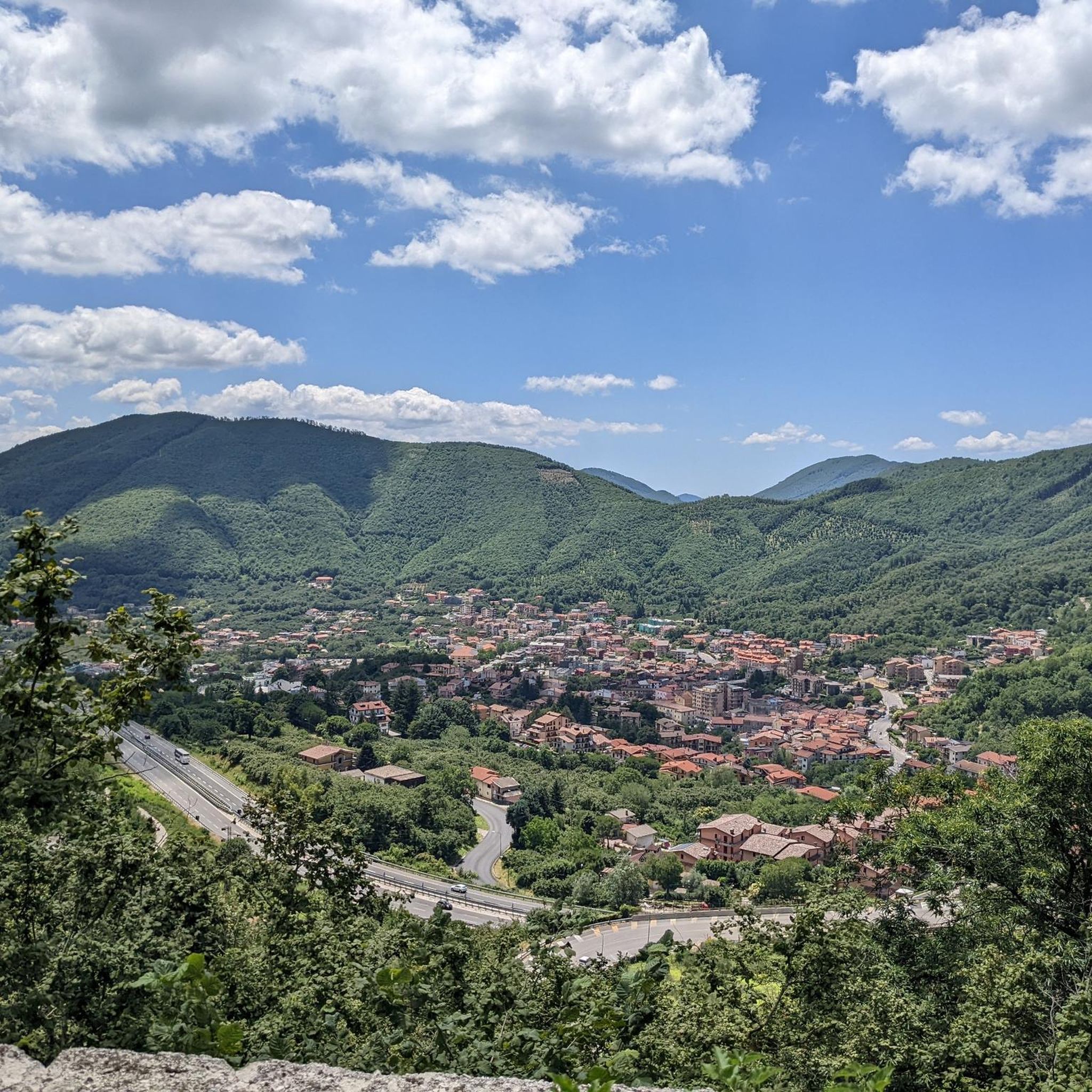
Panoramic point of the Castle of Monteforte Irpino
4
0

The ancient "Castle of Mercogliano", which dominated the town on the ancient Via del Partenio, was mainly intended to defend and prevent the passage on the western side, to reach Mugnano and Quadrelle.
4
0
Frequently Asked Questions
Are there traditional castles directly within Visciano?
Visciano itself is known for historical sites like the Ancient Abbey of Visciano and the Eremo dei Camaldoli, which offer beautiful views. However, traditional fortified castles are primarily located in the surrounding areas of the broader Campania region, not directly in Visciano.
What kind of historical sites can I expect to find near Visciano?
Near Visciano, you can explore a variety of historical castles, castle ruins, and fortified settlements. These structures often provide insights into the region's past and frequently come with associated panoramic viewpoints. Notable examples include the Castello Village of Palma Campania and the Ruins of Mercogliano Castle.
Which castles near Visciano offer significant historical insights?
For deep historical context, consider visiting Monteforte Irpino Castle, which has a history dating back to the 7th-8th century and even traces of existence during the Second Punic War. Another site with a long and complex history is Sarno Castle and Fortifications, which spans about 1300 years and was involved in events like the conspiracy of the barons.
Are there any castles near Visciano with panoramic viewpoints?
Yes, several castles in the vicinity offer excellent panoramic views. The Monteforte Irpino Castle is specifically noted for its panoramic viewpoint. Additionally, the Castello Village of Palma Campania developed on a hill overlooking the town, providing scenic vistas, and Avella Castle and Roman Ruins also offers viewpoints.
What outdoor activities can I do near these castles?
The region around Visciano offers various outdoor activities. You can find numerous hiking trails, such as those listed in the Hiking around Visciano guide, including routes like 'Campo Maggiore and its lake – loop in the Partenio Regional Park'. There are also extensive MTB Trails around Visciano and Gravel biking around Visciano options for cyclists.
Are there hiking trails that incorporate castle visits near Visciano?
While specific trails directly leading to all castles are not detailed, many castles are situated in areas conducive to walking and hiking. For example, the Ruins of Mercogliano Castle is located on the ancient Via del Partenio, suggesting historical walking paths. You can explore various routes in the Hiking around Visciano guide to combine nature with historical exploration.
What is the best time of year to visit castles near Visciano?
The Campania region generally enjoys a Mediterranean climate. Spring (April-May) and Autumn (September-October) are often ideal, offering pleasant temperatures for exploring historical sites and engaging in outdoor activities without the intense heat of summer or the cooler, wetter conditions of winter.
Are there any less crowded or 'hidden gem' castles to visit?
While the main castles are popular, exploring the Ruins of Mercogliano Castle might offer a more secluded experience as it focuses on historical ruins rather than a fully preserved structure. The Eremo dei Camaldoli in Visciano itself is described as a 'hidden gem' for its views, though it's not a castle.
What should I wear when visiting castles and historical sites in this region?
Comfortable walking shoes are highly recommended, as many castles involve uneven terrain, stairs, and walking through ruins. Layered clothing is advisable, especially during spring and autumn, to adapt to changing temperatures. If you plan to hike, appropriate outdoor gear is essential.
How long should I allocate for visiting castles around Visciano?
The time needed varies per site. For a comprehensive visit to a larger site like Monteforte Irpino Castle, you might spend 1-2 hours. Exploring ruins like those at Mercogliano Castle or Sarno Castle might take less time, depending on your interest in detailed exploration. If combining with hiking, plan for a half to full day per area.
Is public transport available to reach castles near Visciano?
While specific public transport routes directly to every castle are not detailed, the broader Campania region has a public transport network. For more remote sites, a combination of public transport to a nearby town followed by a walk or local taxi might be necessary. Planning ahead is recommended.
Are there family-friendly castles or activities near Visciano?
Many historical sites, including castles, can be engaging for families, especially those with scenic viewpoints or interesting ruins to explore. The Castello Village of Palma Campania, as a historical settlement, could offer an interesting walk for families. The Eremo dei Camaldoli in Visciano is also noted as suitable for a family-friendly escape.
Most popular attractions around Visciano

Get inspired with the komoot mobile app


Explore more
Looking for the best castles somewhere else? Discover other guides around Visciano:
