Top 5 Castles around Lastra A Signa
Best castles around Lastra A Signa are found in a region west of Florence, known for its rich history and strategic medieval importance. The area features well-preserved fortifications and historic residences rather than traditional castles. These sites offer insights into Tuscany's past and its defensive architecture. Visitors can explore a variety of historical landmarks that showcase the region's cultural heritage.
Best castles around Lastra A Signa
- The most popular castles is Pitti Palace, a historical site and castle that…
Last updated: October 3, 2026
Pitti Palace
Highlight • Historical Site
Translated by Google •
Tip by

Malmantile Fortified Castle
Highlight • Castle
Translated by Google •
Tip by

Sign up now to discover places like this
Get recommendations on the best single tracks, peaks, & plenty of other exciting outdoor places.
Poppiano Castle
Highlight • Castle
Place of historical, cultural, architectural and tourist interest
Via Fezzana, 45, 50025 Poppiano FI
guicciardini1199.it
05582315
Translated by Google •
Tip by

Montegufoni Castle
Highlight • Castle
Tip by

Viewpoint from the Rocca di Carmignano
Highlight • Viewpoint
Translated by Google •
Tip by

Sign up for free to discover even more castles around Lastra A Signa.
Already have an account?
Start today with a free account
Your next adventure awaits.

Tips from the Community

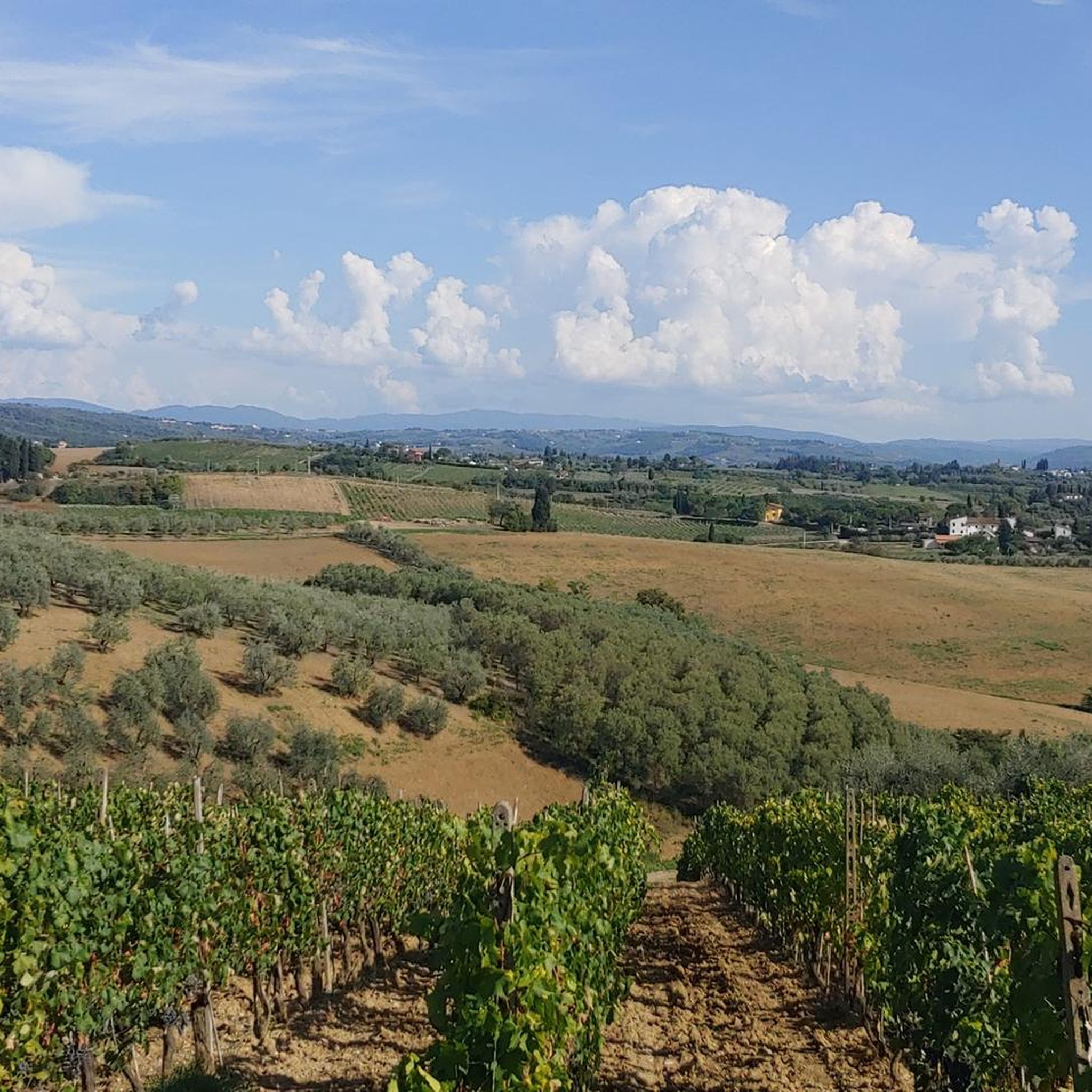
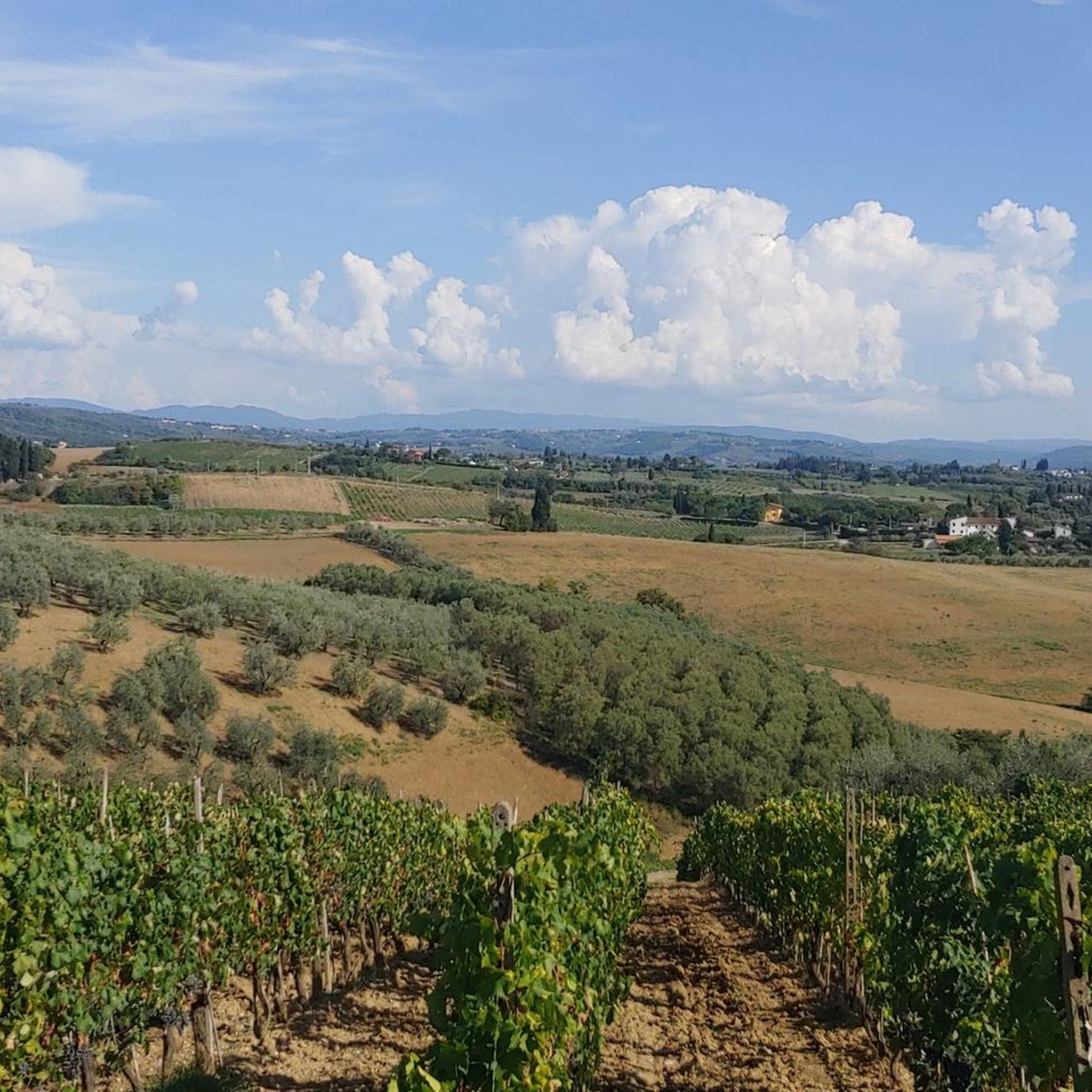
Poppiano Castle, located in the Florentine Chianti hills near Montespertoli, is an imposing medieval building that has endured centuries of history. Originally built as a defensive fortification, it was transformed over time into a stately residence. The Guicciardini family, among the most influential in Florence, had a profound connection to the castle: Francesco Guicciardini, a celebrated Renaissance historian and politician, spent part of his life there and used it as a base for his agricultural and political activities. Today, Poppiano Castle is an example of how history and tradition can coexist with modernity. The property is still owned by the Guicciardini family and continues to produce high-quality wine and olive oil, preserving the region's distinctive agricultural traditions. The castle is also open to visitors, offering guided tours that allow visitors to explore its history, cellars, and surrounding vineyards.
0
0

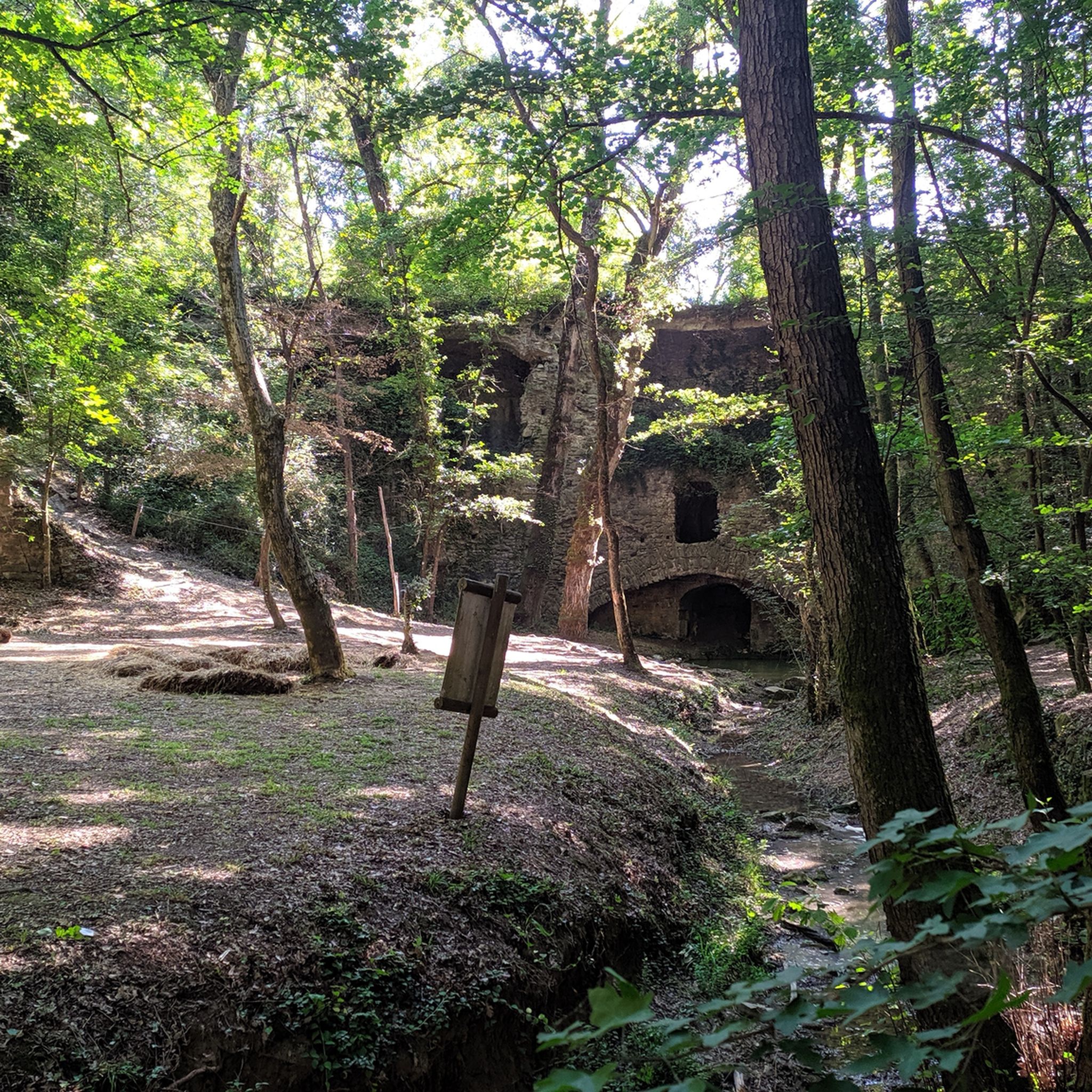
The small village of Malmantile has one of the best preserved examples of medieval city walls in Tuscany. Its origins are unknown, it was essentially a military center located along the ancient and very important road that connected Florence to Pisa and only later became an inhabited center. Legend has it that the episode that gave rise to its name dates back to the 4th century! St. Ambrose, bishop of Milan, was traveling towards central Italy while St. Zanobi, bishop of Florence, was in the area. The two met where the commemorative tabernacle of the meeting stands and stayed for a few days to talk in a farmhouse. Upon leaving, St. Ambrose was so dissatisfied with the welcome he received from the locals that he cursed the place so much that the farmhouse sank into a crevasse. Once word of what had happened spread, the town was called 'Malmantile', which literally meant 'bad tablecloth' but in a broader sense 'bad reception'. The late Gothic walls of the town date back to 1424 and are one of the first examples of a wall equipped with a projecting device, the most used type in Tuscany for the entire following century. It seems that Brunelleschi also supervised their construction. The walls have a layout of 125x70 meters and form an almost perfect rectangle, oriented with the longer sides to the north-west and south-east and with the short ones, in the center of which are the two gates, joined by the single road axis, to the north-east and south-west. Although the entire perimeter of the loose stone wall is preserved, little remains of the projecting defensive device. This is made up of stone corbels of the type with four rounded projections to support the slightly pointed brick arches. Compared to the nearby circle of Lastra a Signa, here there are, in alternating arches, the machicolations for the plunging defense. The wall is completed by square towers placed at the four corners plus two other towers, without an internal front, placed at the center of the longer sides, the largest of which is the one on the north-west side, the one facing the external road and also the best preserved as it is completely free from overlapping of subsequent buildings. The two gates, both with round arches, are obtained by projecting a section of the walls themselves outwards and equipped with a series of slits on both sides. The one towards Florence is currently in need of restoration with the arch at risk of collapse. To the west of the gate facing Pisa (southwest) we find the only still intact section of the projecting apparatus, crowned by a parapet made of finer stone than that of the walls. Along the entire perimeter the escarpment joins the upper part plumb without a roundabout. To the south of the gate and along the walls they are in some places pierced by the windows of the houses leaning against them. The north-west side is internally free from buildings but partially covered by buildings built externally.
0
0
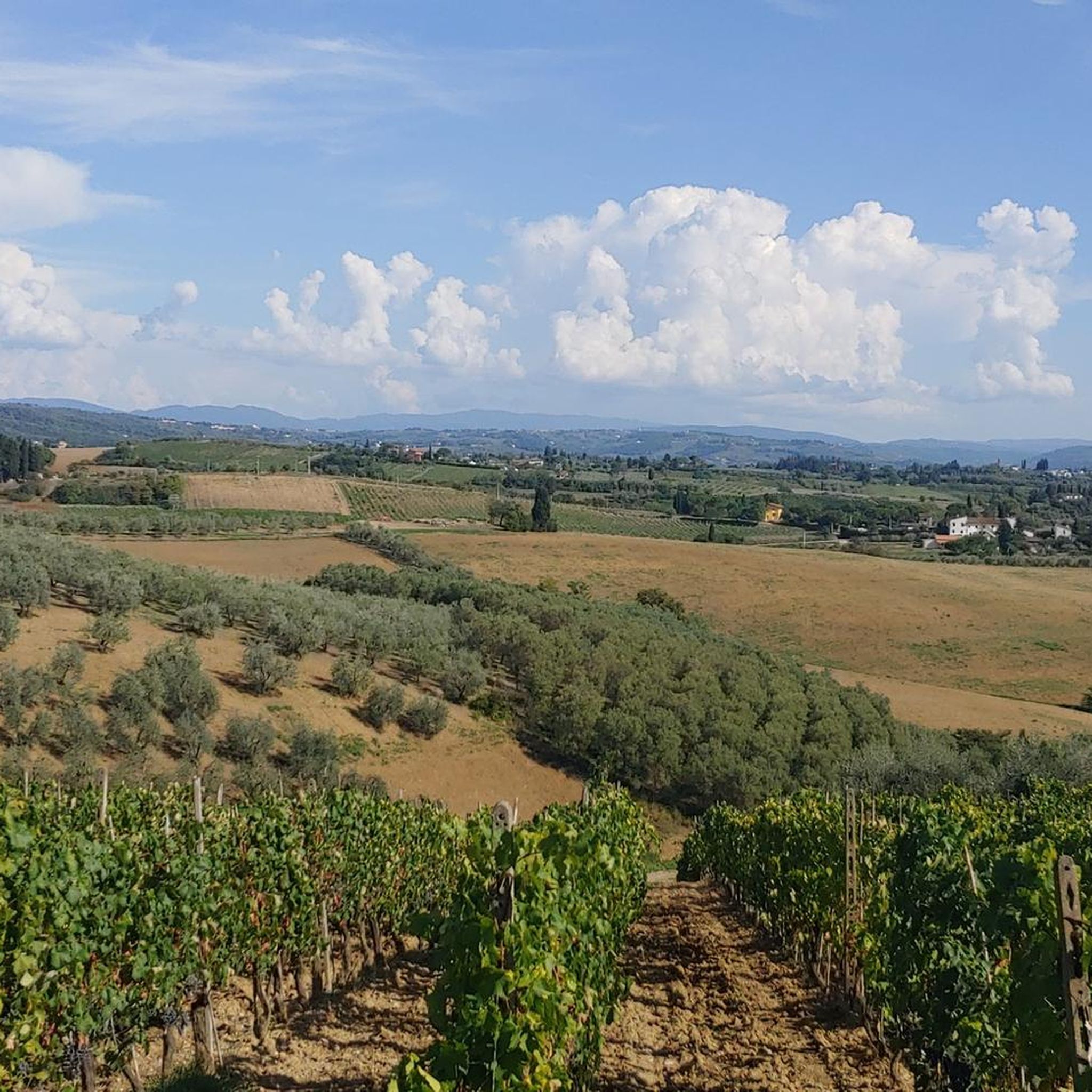
The Rocca or Castle of Carmignano has dominated the village from above for over a thousand years: the bastion was in fact mentioned for the first time in the year 998, in a document by Otto III of Saxony which granted ownership to the bishop of Pistoia. The Rocca was the object of continuous battles between Pistoia, Florence and Prato, due to its strategic position in the political-military context of the Middle Ages: from up here, in fact, you can admire the entire plain between the three cities. After having resisted, in 1154, a siege conducted by troops from Prato and Florence, the castle was destroyed for the first time in 1228 by the Florentines. Having regained possession of Pistoia in 1242, the fortification was rebuilt and in the early fourteenth century sold again to Florence, which proceeded to demolish the fortress and the castle walls once again. After a new parenthesis in Pistoia (1315-1324) the castle returned to Florentine hands, only to be besieged and conquered by Castruccio Castracani, who made it his own stronghold until 1328, when it finally returned to Florence. The Rocca di Carmignano can be accessed via a pedestrian path (starting from the church of San Michele, where Pontormo's famous Visitation is kept) that climbs the hill full of olive trees, where you can enjoy a beautiful view of Montalbano. Few remains of the medieval walls around the Rocca remain, partly rebuilt as the Campano, with the bell tower and clock, while in the center stands a medieval tower, called the Maschio della Rocca. (www.visittuscany.com)
0
0

A Renaissance palace located in the Oltrarno district, in the center of Florence and former residence of the banker Luca Pitti, Palazzo Pitti was for decades the main residence of the Grand Dukes of Tuscany. Today it houses important museums with works by artists such as Titian and Raphael.
0
0

"Count Ferdinando Guicciardini Castle" Place of historical, cultural, architectural and tourist interest Via Fezzana, 45, 50025 Poppiano FI http://www.guicciardini1199.it/ 05582315
2
0

Already in the dominions of the Acciaioli family and now owned by the Posarelli family, the castle of Montegufoni is known because, during the bombings suffered by Florence in the Second World War, some works of art were hidden there, including the Adoration of the Magi of Ghirlandaio and Botticelli's Spring.
0
0

La Rocca above The village of Carmignano is worth a visit and not just for the view. From this fortress there were two arms that the Pistoiesi had placed and that "made the figs" towards Florence. For more information, consult the Divine Comedy.
0
0
It is the Roccadi Carmignano
0
0
Frequently Asked Questions
What kind of 'castles' can I expect to find around Lastra a Signa?
Lastra a Signa is known more for its well-preserved medieval fortifications, historic villas, and significant historical buildings rather than traditional fairytale castles. You'll find impressive town walls, like those of Lastra a Signa itself, and grand residences such as Villa Caruso di Bellosguardo, which offer a rich glimpse into Tuscany's past.
Are there any medieval fortifications directly within Lastra a Signa?
Yes, the town of Lastra a Signa is encircled by formidable medieval walls, built between 1400 and 1426. These walls, crucial for Florence's defense, feature seven of their original ten fortified towers and two entrance gates: the Porta Pisana and the towering Porta di Baccio. You can walk through Porta di Baccio to enter the historic center and appreciate this well-preserved defensive architecture.
What historical sites are there to visit in Lastra a Signa besides the town walls?
Beyond the medieval walls, you can explore the magnificent Malmantile Fortified Castle, a small village with one of the best-preserved examples of medieval city walls in Tuscany. Also, within Lastra a Signa, the Spedale di Sant'Antonio, dating back to the 15th century, is notable for its elegant loggia and now serves as a cultural center.
Which historic villas are notable in the Lastra a Signa area?
The most significant historic residence is Villa Caruso di Bellosguardo. Acquired by the renowned tenor Enrico Caruso in 1906, this villa offers spectacular panoramic views and now houses a museum dedicated to Caruso, along with beautiful gardens designed by Tribolo.
Are there any castles near Lastra a Signa that are still active or have unique features?
Yes, Poppiano Castle, an imposing medieval building, is now known for its wine and olive oil production and is open to visitors. Another is Montegufoni Castle, a historic site dating back to the 10th century that once hosted kings and hid artworks during WWII, now operates as a hotel.
What is the best time of year to visit the historical sites and fortifications around Lastra a Signa?
The spring (April-May) and autumn (September-October) months generally offer pleasant weather for exploring the outdoor fortifications and historical sites. The mild temperatures are ideal for walking and enjoying the scenic views without the intense heat of summer.
Are there family-friendly activities or sites among the castles and villas?
Many of the sites, including the medieval walls of Lastra a Signa and Malmantile Fortified Castle, are considered family-friendly for exploration. The historical context and architectural marvels can be engaging for children. For a broader experience, Pitti Palace in nearby Florence, with its vast Boboli Gardens, is also a popular family destination.
Can I find hiking or cycling trails near these historical sites?
Absolutely! The area around Lastra a Signa offers various outdoor activities. For mountain biking, you can explore routes like the 'Roman Villa of Vergigno – Ginestra-Montelupo Cycleway loop' or the 'Pesa River – Cycle path along the Pesa loop'. Road cyclists can enjoy routes such as 'San Vito Ascent to Malmantile – Along the Ombrone Trail loop'. Find more details on these and other routes in the MTB Trails around Lastra A Signa or Road Cycling Routes around Lastra A Signa guides.
Are there running trails available near the castles and fortifications?
Yes, there are several running trails. You can try the 'Arno Embankment at Badia – Cyclopedestrian Bridge over the Arno loop' or the 'View from San Romolo loop', both starting from Lastra a Signa. These trails offer scenic views and varying difficulties. More options are available in the Running Trails around Lastra A Signa guide.
What are the parking options for visiting the medieval walls of Lastra a Signa or Malmantile Castle?
Parking is generally available in and around the historic centers of Lastra a Signa and Malmantile. For the medieval walls of Lastra a Signa, you can often find public parking areas within walking distance of the gates. For Malmantile Fortified Castle, parking is typically available in the village itself, close to the walls.
Are there any entry fees or permits required to visit the medieval walls of Lastra a Signa or Malmantile Castle?
Generally, there are no entry fees or permits required to walk along or explore the exterior of the medieval walls of Lastra a Signa or Malmantile Fortified Castle. These are public historical structures. However, specific museums or private sections within these areas, such as the Villa Caruso museum, may have their own admission fees.
What do visitors particularly enjoy about the Lastra a Signa area's historical sites?
Visitors frequently appreciate the well-preserved medieval architecture, especially the town walls of Lastra a Signa and Malmantile, which offer an immersive historical experience. The panoramic views from sites like Villa Caruso di Bellosguardo and Viewpoint from the Rocca di Carmignano are also highly praised. The blend of history, culture, and the opportunity for outdoor activities makes the region appealing.
Most popular routes around Lastra A Signa
Most popular attractions around Lastra A Signa

Get inspired with the komoot mobile app


Explore more
Looking for the best castles somewhere else? Discover other guides around Lastra A Signa:
