Top 12 Castles around Umbertide
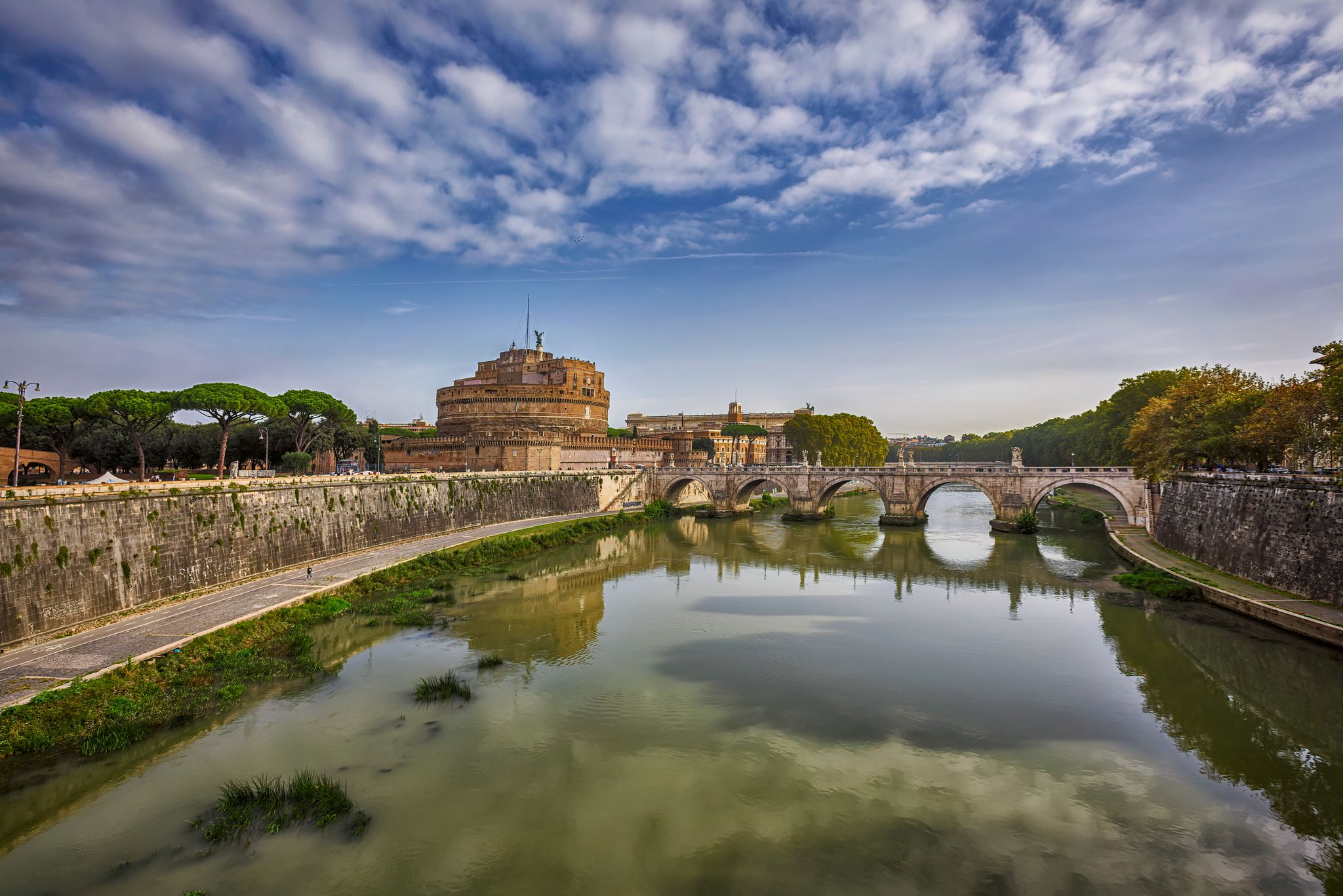
Best castles around Umbertide are found in the upper Tiber valley, a region in the province of Perugia, Italy. This area is characterized by its historical fortifications and estates, many of which are set amidst natural landscapes. The town itself is crossed by the Tiber River and features a rich cultural history. Visitors can explore a variety of historical sites that blend medieval architecture with modern uses.
Best castles around Umbertide
- The most popular castles is Triangular Tower, Passignano sul…
Last updated: August 23, 2026
Triangular Tower, Passignano sul Trasimeno
Highlight • Castle
The Rocca di Passignano (Castle of Passignano) is located inside the village, in an elevated position above the town, which …
Translated by Google •
Tip by

Antognolla Castle
Highlight • Castle
Translated by Google •
Tip by

Sign up now to discover places like this
Get recommendations on the best single tracks, peaks, & plenty of other exciting outdoor places.
Sign up for free
Fortress of Aries
Highlight • Castle
Translated by Google •
Tip by

Rocca di Umbertide
Highlight • Castle
Translated by Google •
Tip by

Historic village of Passignano
Highlight • Historical Site
Translated by Google •
Tip by

Sign up for free to discover even more castles around Umbertide.
Sign up for free
Already have an account?
Start today with a free account
Your next adventure awaits.
Login or Signup
Other adventures around Umbertide

Tips from the Community

**Why recommend it?** Because it's a simple and pleasant way to discover the most evocative side of **Passignano sul Trasimeno**. The historic center, listed among *The most beautiful villages in Italy*, is well-maintained, rich in history, and continuously offers characteristic views to photograph. It's a walk I recommend **at any time of the day**: even during the hottest summer hours, the alleys of the center offer several shaded stretches, allowing you to walk more peacefully. And then there's everything you need to make the walk even more enjoyable: along the path, you'll find **bars, restaurants, and pastry shops**, perfect for a break, whether sweet or savory. In short, a route without haste, to be experienced by strolling and letting curiosity guide you. 🌿🏘️
0
0

Medieval village on Lake Trasimeno, worth seeing
0
0
Ideal for grabbing something to eat during the tour or as a starting point and enjoying a splendid lunch dinner upon arrival
0
0

Very beautiful historic village, a must-see
0
0

The oldest part of the city retains its fortified appearance, still visible today and enclosed within the medieval walls, of which the entrance gates and towers still survive. At the highest point of the city stands the Rocca, built in the Middle Ages. Inside, the Boat Museum houses a display of some Lake Trasimeno vessels. It's a lovely place to visit, as is cycling along the lakeside.
1
0

Antognolla Castle, located on the slopes of Monte Tezio and now part of an exclusive golf club, owes its name to the ancient Antognolla family of Perugia. First mentioned in 1174 for the presence of a Benedictine monastery, it became a fiefdom in 1399 at the behest of Pope Boniface IX. Over the following centuries, it was at the center of conflicts between noble families, until it passed to the Oddi family in 1628 and then to the Guglielmi family in 1836. After a period under the Agnelli family, it was recently restored to become a luxury resort.
0
0

Rocca di Passignano (Castle of Passignano) - Passignano sul Trasimeno The Rocca di Passignano (Castle of Passignano) is located inside the village, in an elevated position above the town, which later expanded to the lakeshore. According to some sources, Passignano could mean "place of the pass," referring to the existence of a Roman military structure that served to control a "pass" between the present-day regions of Umbria and Tuscany. Nothing remains of this possible structure today. Currently, the castle consists of ruins of medieval structures: square walls, a half-ruined tower, and the northern part of the castle with a triangular tower. Furthermore, a series of alleys wind through this part of the historic center, once surrounded by walls, giving an idea of what the street layout within the castle might have looked like. The oldest core probably dates back to the 5th or 6th century; The square walls, however, were built between 820 and 850, when the castle belonged to the Marquises of Tuscany. In 1187, the property became the property of the canons of the Cathedral of San Lorenzo in Perugia. In the 13th century, the castle underwent significant renovations, transforming it into a true fortress, an outpost, and defensive bastion of the Perugian territory. Text / Source: Umbria Tourism.it https://www.umbriatourism.it/de/-/la-rocca-passignano-de
14
0

The Aries fortress, near Montone, has very ancient origins, it was built by the Fortebracci family on the remains of an ancient fortress to defend the primitive population. There is news of it since the year one thousand, but it is from 1376 that the fortress begins to intertwine its history with the Fortebracci family. In that year Oddo III, father of the famous Braccio, conquered it, bringing it back under the hegemony of the nearby Città di Castello.
0
0
Frequently Asked Questions
What are some historically significant castles to visit near Umbertide?
The region around Umbertide is rich in history. You can explore the Rocca di Umbertide, a 14th-century fortress that now serves as a contemporary art center. Another significant site is the Antognolla Castle, first mentioned in 1174, which has been restored and transformed into a luxury resort. The Fortress of Aries near Montone also boasts ancient origins, dating back to the year 1000.
Are there any castles near Umbertide that offer unique cultural experiences?
Yes, the Rocca di Umbertide is a prime example. This 14th-century fortress, after extensive restoration, now functions as a contemporary art center, hosting temporary exhibitions and housing a permanent collection. It blends medieval architecture with modern art, offering a unique cultural destination. Additionally, Castello di Civitella Ranieri hosts an international residency program for artists, though general public access may be limited.
Can I visit a well-preserved medieval castle near Umbertide?
Absolutely. Castello di Civitella Ranieri is considered one of Umbria's best-preserved castles, with its current structure largely dating back to the 16th century. Another excellent example is Castello di Polgeto, a 12th-century fortification rebuilt in 1399, which has been continuously inhabited and is known for its well-preserved historical architecture and luxurious amenities.
What is the history behind the castles in the Umbertide region?
The castles around Umbertide often served as strategic fortifications, guarding borders and controlling territories, particularly for Perugia. Many have origins dating back to the 11th-14th centuries, undergoing various transformations from defensive strongholds to residential buildings and even luxury resorts or cultural centers. They reflect centuries of conflicts between noble families and the region's rich medieval past.
Are there any castles near Umbertide that are not open to the public?
Yes, Castello di Serra Partucci, despite its historical significance and good condition, is unfortunately not currently open to visitors due to years of neglect. Additionally, while Castello di Civitella Ranieri is historically preserved, its primary function as an international artist residency program means general tourism access may be limited.
Are there family-friendly castles to visit around Umbertide?
Yes, several castles offer family-friendly experiences. The Rocca di Umbertide, with its art center, can be engaging for families. The Fortress of Aries is also categorized as family-friendly and offers panoramic views that can be enjoyed by all ages. When planning a visit, it's always a good idea to check specific opening hours and activities for children.
What is the best time of year to visit the castles around Umbertide?
The best time to visit the castles around Umbertide is generally during the spring (April to June) and autumn (September to October). During these seasons, the weather is pleasant for exploring, with milder temperatures and beautiful natural scenery. Summer can be quite hot, while winter might be chilly, though some indoor attractions remain open year-round.
Can I combine a castle visit with outdoor activities like hiking or cycling?
Absolutely! The region around Umbertide is perfect for combining historical exploration with outdoor adventures. You can find numerous hiking trails, MTB trails, and gravel biking routes that pass by or lead to various castles and historical sites. For example, the Abbey of San Salvatore di Montecorona is connected to the Hermitage by 'La Mattonata,' an ancient road built by monks, offering a scenic walk.
Are there hiking trails near the castles in Umbertide?
Yes, there are several hiking opportunities. For instance, the Abbey of San Salvatore di Montecorona is located in a serene natural setting and is connected to the Hermitage of Montecorona by an ancient road, offering a historical walk. You can find more detailed routes and options in the Hiking around Umbertide guide, which includes trails like the Monte Acuto Summit Cross loop.
What natural features can I see near the castles?
Many castles in the Umbertide region are set amidst beautiful natural landscapes. For example, Castello di Polgeto is surrounded by approximately 54 hectares of land, including olive trees, woodlands, and a small lake. The Abbey of San Salvatore di Montecorona is nestled in serene natural surroundings, offering a peaceful experience. The Fortress of Aries also provides excellent panoramic views of the area.
What do visitors enjoy most about the castles around Umbertide?
Visitors appreciate the blend of rich history and stunning architecture found in the region's castles. Many enjoy the panoramic views offered by sites like the Fortress of Aries. The unique transformation of places like the Rocca di Umbertide into a contemporary art center also provides a fresh perspective on historical sites. The opportunity to combine cultural exploration with outdoor activities in the beautiful Umbrian landscape is also highly valued.
Are there any castles that are part of a larger estate or resort?
Yes, Antognolla Castle is now part of an exclusive golf club and has been restored to become a luxury resort. Similarly, Castello di Polgeto is privately owned and offered as a luxury residence for rent, encompassing extensive grounds with modern amenities like a tennis court and formal gardens, allowing for a high-end historical retreat experience.
Most popular routes around Umbertide
Most popular attractions around Umbertide

Get inspired with the komoot mobile app


Explore more
Looking for the best castles somewhere else? Discover other guides around Umbertide:
