Top 11 Caves around Aviano
Best caves around Aviano are found within the Friuli Venezia Giulia region, characterized by its diverse natural landscape at the foot of the Dolomites. The broader area, particularly the province of Pordenone, features notable karst formations. These geological features create a landscape with various underground cavities and natural springs. The Grotte di Pradis, located approximately 4.5 km from Clauzetto, represent a significant cave system in the region.
Best caves around Aviano
- The most popular caves is Gorgazzo Spring, a natural spring and cave system where the Livenza river originates. The water exhibits a distinct green color due to light reflections.
- Another must-see spot is Bus de la Lum Sinkhole, a karst cavity formed by the dissolution of rock by water. The name is believed to derive from luminescence observed above the cavity on summer nights.
- Visitors also love Adriano Bruna Botanical Trail and Caves, a trail featuring multiple caves. This location is noted for its accessibility and engaging features, such as a small ford, making it suitable for families.
- Aviano is known for its natural springs, sinkholes, and other karst caves. The area offers a variety of underground formations and geological features to explore.
- The caves around Aviano are appreciated by the komoot community. With more than 230 upvotes and over 100 photos, these locations are well-documented by explorers.
Last updated: August 24, 2026
Gorgazzo Spring
Highlight • Natural
Translated by Google •
Tip by

Bus de la Lum Sinkhole
Highlight • Cave
During the Second World War, the cesspool was used by partisans (the resistance was particularly active in the Cansiglio area) to dump the bodies of several soldiers of the Italian Social Republic and German soldiers, as well as civilians. Burial in natural caves has led some sources to compare this event to the Venezia Giulia (the Foibe) massacres.
According to the association Silentes Loquimur, created specifically to commemorate the victims of the Bus de La Lum, a 1949 report by the Carabinieri of Vittorio Veneto counted over 300 victims, while the speleologists of the Italian Cave Rescue Center were working on theirs Investigations in the 1960s assumed up to 500 victims (200 German soldiers, 100 RSI soldiers, 200 civilians). The same association reports that in the early 1950s the remains of 26 people were recovered, while a search carried out in 1992 turned up another 68 people who were later buried in the Caneva cemetery. No further surgeries have been performed since then due to the high economic cost.
According to Umberto Lorenzoni, president of the Treviso ANPI, "no more than a dozen skeletons were recovered" from the Bus de la Lum; and when, in the early 1990s, the president of the ANPI of Pordenone, Bruno Giust, asked for further investigations to be opened, "we were told by the president of the Victims' Association that it was not appropriate to proceed. Obviously because, in our opinion, there was nothing else to be found gave". He concluded that the Bus de La Lum was used as an improvised burial ground in the final months of the war, at a time "when nothing else could be made available".
Translated by Google •
Tip by

Sign up now to discover places like this
Get recommendations on the best single tracks, peaks, & plenty of other exciting outdoor places.
Sign up for free
Adriano Bruna Botanical Trail and Caves
Highlight (Segment) • Cave
Translated by Google •
Tip by

Bus del Gias Cave
Highlight • Cave
Translated by Google •
Tip by

Landri Scur Cave and Val Colvera Trail
Highlight • Cave
Inside you can see some bats.
Translated by Google •
Tip by

Sign up for free to discover even more caves around Aviano.
Sign up for free
Already have an account?
Start today with a free account
Your next adventure awaits.
Login or Signup

Tips from the Community

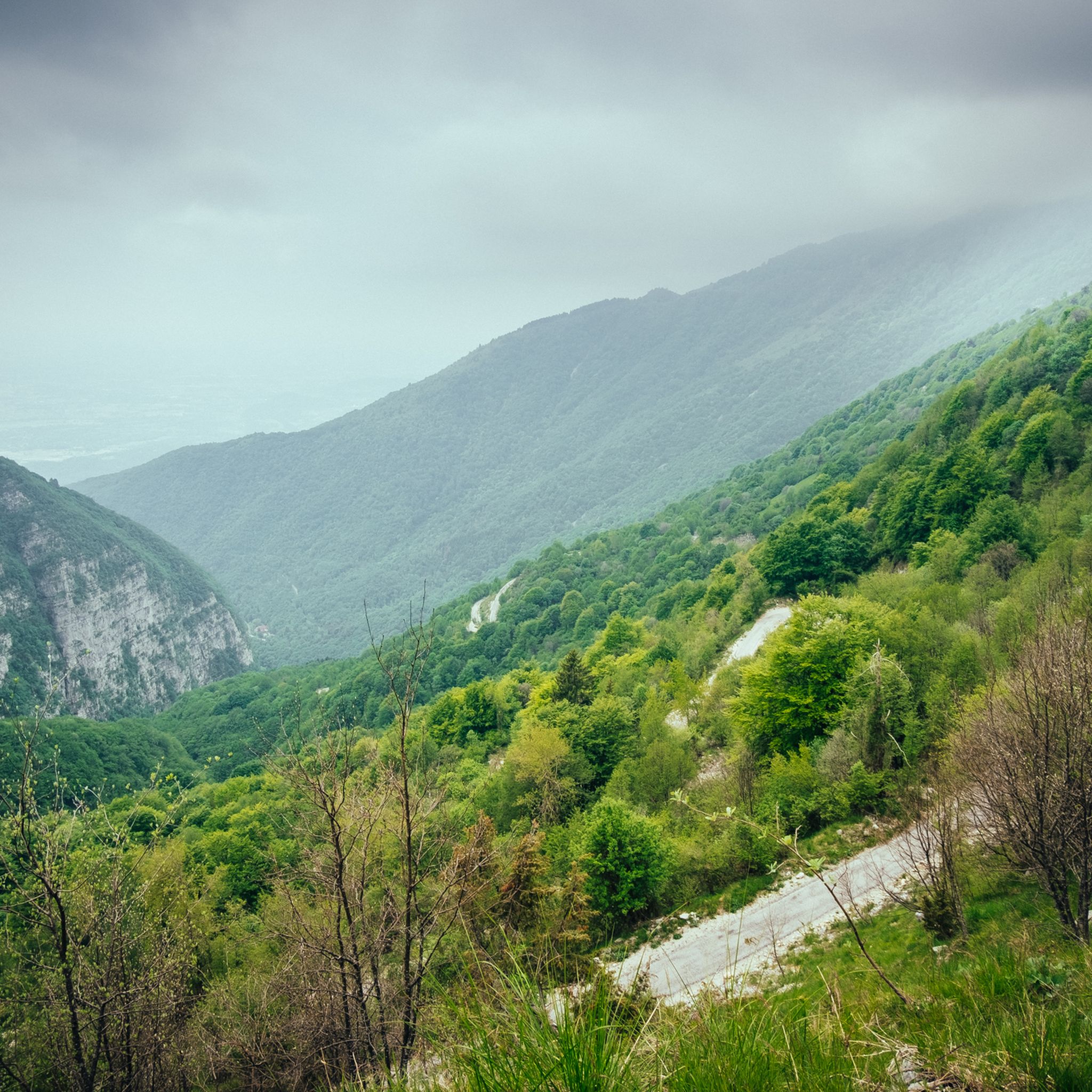
The Cansiglio Forest hides a myriad of sinkholes, pits, and swallow holes of all sizes, due to the karst morphology of the territory: the rain dissolves the limestone rock, slowly but inexorably forming these natural chasms and fissures on the ground. The Bus de la Lum is an abyss characterized by a single large vertical entrance shaft 180m high, which then develops into a very large and articulated underground complex. The depth of the shaft is best appreciated out of season, because in summer the lush vegetation tends to partially obscure the view. According to ancient beliefs, it is the dwelling of the Anguane or Anduane, fierce and evil witches, toothless, with long rusty nails instead of hair and sharp fangs, who kidnapped and ate children! They gathered at the bottom of the cave, lighting fires, whose glows rose to the surface, visible at night to the shepherds of the area: hence the name 'Buco della Luce' (Hole of Light). In reality, the legend has a grain of truth: on hot summer nights, will-o'-the-wisps could indeed be formed by the decomposing carcasses of livestock dead from illness, which it was customary to throw into the Buso. During World War II, the cavity was sadly used by partisans as a foiba, to dispose of the bodies of fascists and nazis, but also of civilians: over the years, several bodies and bones have been found during explorations. https://it.wikipedia.org/wiki/Bus_de_la_Lum
0
0


A really interesting area.
0
0

The Gorgazzo springs have the characteristic of collecting rainwater which, infiltrating the karst structure of the Cansiglio plateau, emerges at the base of the mountain with an already considerable flow rate.
0
0

An easy but beautiful hike. Suitable for everyone, but children with strollers are only allowed on the first part of the trail. Hiking shoes are recommended... bring a swimsuit if you want. Clear pools are available for swimming!
0
0
Detour onto a narrower but well-marked path, no difficulty.
0
0
Special and relaxing place.
0
0
Small cave. Inside you can see some bats.
0
0
Frequently Asked Questions
What are the most notable caves and natural formations to visit near Aviano?
The most significant natural cave system in the broader Aviano area is the Grotte di Pradis, known for its unique geological formations and archaeological importance. Other notable spots include Gorgazzo Spring, where the Livenza river originates with distinct green water, and the Bus de la Lum Sinkhole, a karst cavity with historical significance.
Are there family-friendly caves or trails suitable for children near Aviano?
Yes, the Adriano Bruna Botanical Trail and Caves is particularly suitable for families. It features multiple caves, an accessible path, and engaging elements like a small ford that children enjoy. The trail is even manageable with high-wheeled strollers.
What kind of geological features can I expect to see in the caves around Aviano?
The Grotte di Pradis showcase a variety of captivating geological formations, including stalactites, stalagmites, and columns. The area is characterized by karst topography, meaning you'll find sinkholes, natural springs, and other underground cavities formed by water dissolving rock.
What is the best time of year to visit the caves near Aviano?
The Grotte di Pradis are typically open during the summer months, from June to September. This period generally offers the most favorable conditions for exploring the caves and the surrounding ravine. It's advisable to check specific opening times before planning your visit.
What should I wear when visiting the caves?
When visiting caves like the Grotte di Pradis, it's recommended to wear comfortable clothing and appropriate footwear, as the terrain inside can be uneven. A light jacket is also advisable due to cooler temperatures within the caves, even during warmer months.
Are there guided tours available for the caves?
Yes, guided tours are usually available for the Grotte di Pradis. It is recommended to book in advance, especially during peak season, to ensure your spot and make the most of your visit.
What is the historical significance of the caves in the Aviano region?
The Grotte di Pradis hold significant archaeological importance. Excavations have unearthed flint tools, fire coal, and bones, indicating human occupation as far back as 14,000 years ago during the Upper Paleolithic, and even Middle Paleolithic Neanderthal tools. The Grotta della Madonna within Pradis also served as a refuge for prehistoric humans and cave bears.
Can I find other outdoor activities or trails near the caves?
Yes, the region around Aviano offers a variety of outdoor activities. You can find numerous hiking trails, MTB trails, and running routes. For example, the Landri Scur Cave and Val Colvera Trail offers an easy hike with clear pools for swimming.
Is there a museum related to the caves in the area?
Yes, there is a Museum of the Caves of Pradis located nearby. It houses paleontological and archaeological findings from the caves and the surrounding territory, providing deeper insights into the region's natural and human history.
How long does it typically take to explore the Grotte di Pradis?
While the exact duration can vary, a visit to the Grotte di Pradis, including exploring the various cavities, the Grotta della Madonna, and descending into the Don Giacomo Bianchini Ravine, can take a couple of hours, especially if you join a guided tour.
Are there any caves that retain ice or snow year-round?
Yes, the Bus del Gias Cave is a natural cavity so narrow and deep that ice and snow remain inside it throughout the year. Historically, this feature made it useful for shepherds as a place for storing food.
Where can I find more information about the Grotte di Pradis?
For more detailed information about the Grotte di Pradis, including potential booking and opening hours, you can visit viaggiando-italia.it.
Most popular routes around Aviano
Most popular attractions around Aviano

Get inspired with the komoot mobile app


Explore more
Extend your search for the best caves by checking out these guides of the top ones around Aviano:
