Top 5 Castles around Grañón
Castles around Grañón are found in La Rioja, Spain, a region characterized by its historical significance and diverse landscape. The area's strategic location made it a key defensive point during the Middle Ages, with structures like the historic Castillo de Grañón on Mirabel hill playing a pivotal role. While the original castle is largely in ruin, its site offers panoramic views and connects to the region's ancient past. The surrounding area features a mix of river valleys and rolling hills,…
Last updated: July 3, 2026
Leiva Castle
Highlight • Castle
Translated by Google •
Tip by

Castillo de los Velasco
Highlight • Castle
Built with ashlar masonry from the region, …
Translated by Google •
Tip by

Sign up now to discover places like this
Get recommendations on the best single tracks, peaks, & plenty of other exciting outdoor places.
Sign up for free
Velasco Castle and Cuzcurrita de Río Tirón Bridge
Highlight • Castle
Translated by Google •
Tip by

Torreon Sor Maria de Leiva
Highlight • Historical Site
Translated by Google •
Tip by

Cerezo de Río Tirón
Highlight • Settlement
Translated by Google •
Tip by

Start today with a free account
Your next adventure awaits.
Login or Signup
Tips from the Community

The Torreón de Sor María de Leiva is one of the historical attractions of Santo Domingo de la Calzada. It is part of the walled enclosure of Santo Domingo de la Calzada. Built between the 14th and 16th centuries, the tower is an example of the defensive architecture of the period. The tower and its surroundings offer excellent opportunities for photography, especially at sunset.
1
0

Castle with towers at the corners of the structure. The ancient Roman road that connected Italy to Spain passes through here. Information table on site.
7
0

The Castillo de los Velasco is a castle built between the 14th and 15th centuries by the powerful Velasco family, who ruled these lands in the Middle Ages. It is the most important and interesting castle of Mena and one of the most striking in the province of Burgos.
3
0

Fortification located in the town of Leiva, La Rioja. It is a fortified palace with a rectangular floor plan, with a tower located at each corner. Three of the towers are octagonal, and the one on the southeast corner, considered the keep, is decagonal in plan and taller. The origin of the castle was a tower erected in 1335 by Juan Martínez de Leiva. After sinking, in 1478 the construction of the castle began. The building has undergone numerous modifications, especially from the 17th century, in which it abandoned its defensive character and became solely residential. Later, already in the 20th century, it was used as an agricultural warehouse and offices. Starting in the year 2000, a reconstruction of elements such as the southern part of the west canvas and the southeast tower began.
4
0

Beautiful town located at the foot of the Río Tirón with a typical morphology of this area. Little vegetation with small hills created due to the passage of the river year after year. The old castle dominates the upper part of the town.
1
0

Gothic-style castle, dating from the late fourteenth century, located in the center of the Cuzcurrita de Río Tirón municipality, in La Rioja Alta. Built with ashlar masonry from the region, the castle stands out for its square-plan keep. In addition, the fortification took advantage of the river as a defense ditch. Although you cannot visit its interior, it is worth contemplating it from the outside while walking along the banks of the Tirón River.
5
0

Cuzcurrita de Río Tirón is a municipality in the Rioja Alta. The river Tirón crosses it and it is at the foot of the El Bolo forest. From the bridge you can admire the Church of San Miguel Arcángel and the Castillo de los Velascos.
0
0
This tower is part of the defensive belt of the city, whose layout was defined in the mid-14th century, according to tradition on the initiative of Pedro I the Cruel. There is still part of the defensive moat and the wall.
1
0
Frequently Asked Questions
What is the historical significance of castles around Grañón?
The castles around Grañón, particularly the site of the ancient Castillo de Grañón on Mirabel hill, were strategically vital during the Middle Ages. They formed part of a defensive line protecting the Astur-Leonese kingdom from Muslim incursions and later became points of contention between the kingdoms of Navarre and Castile. These fortifications played a crucial role in the region's development and its rich medieval history.
Are there any well-preserved castles or mostly ruins in the Grañón area?
While the original Castillo de Grañón on Mirabel hill is largely in ruins, offering remnants of its walled enclosure and moat, other castles in the vicinity are better preserved. For example, Castillo de los Velasco is a Gothic-style castle from the 14th-15th centuries that can be admired from the outside. Leiva Castle is a fortified palace that has undergone numerous modifications but retains its impressive structure with corner towers.
Which castles are considered must-see for history buffs near Grañón?
History buffs will appreciate Castillo de los Velasco in Cuzcurrita de Río Tirón, known for its Gothic architecture and strategic use of the Tirón River as a defense. Leiva Castle, a fortified palace with origins dating back to 1335, also offers a deep dive into medieval defensive architecture and regional power struggles. The site of the Castillo de Grañón itself, though ruined, is historically significant for its role in the Reconquista.
Are there family-friendly castles to visit around Grañón?
Yes, several sites are suitable for families. Velasco Castle and Cuzcurrita de Río Tirón Bridge is part of a charming architectural ensemble in the Plaza Mayor, offering a pleasant setting for all ages. The nearby settlement of Cerezo de Río Tirón, with its old castle dominating the town, also provides an engaging historical experience for families.
What is the best time of year to visit castles near Grañón?
The best time to visit castles near Grañón is typically during the spring (April to June) and autumn (September to October). During these seasons, the weather is generally mild and pleasant, ideal for exploring historical sites and enjoying the surrounding landscapes without the intense heat of summer or the chill of winter. This also avoids peak tourist crowds.
What outdoor activities can I do near these castles?
The area around Grañón offers excellent opportunities for outdoor activities. You can find numerous hiking and cycling routes. For hiking, consider trails like the 'Redecilla del Camino and Grañón Loop via Camino Francés' or 'La Picota and Sampol Loop from Grañón'. Cyclists can explore routes such as 'Santo Domingo de la Calzada and Vía Verde del Oja Loop' or 'Anguciana – Castillo de los Velasco loop'. For more details and route options, visit the Hiking around Grañón or Cycling around Grañón guides.
Are there specific hiking trails that include castle views or ruins?
Yes, you can find routes that incorporate castle views. For instance, the 'Leiva Castle loop from Leiva' and 'Leiva Castle loop from Tormantos' hiking routes offer views of Leiva Castle. Many trails in the region pass through historical settlements or offer panoramic views from strategic points like Mirabel hill, where the Castillo de Grañón once stood. Check the Hiking around Grañón guide for detailed routes.
What natural features can I see when visiting castles around Grañón?
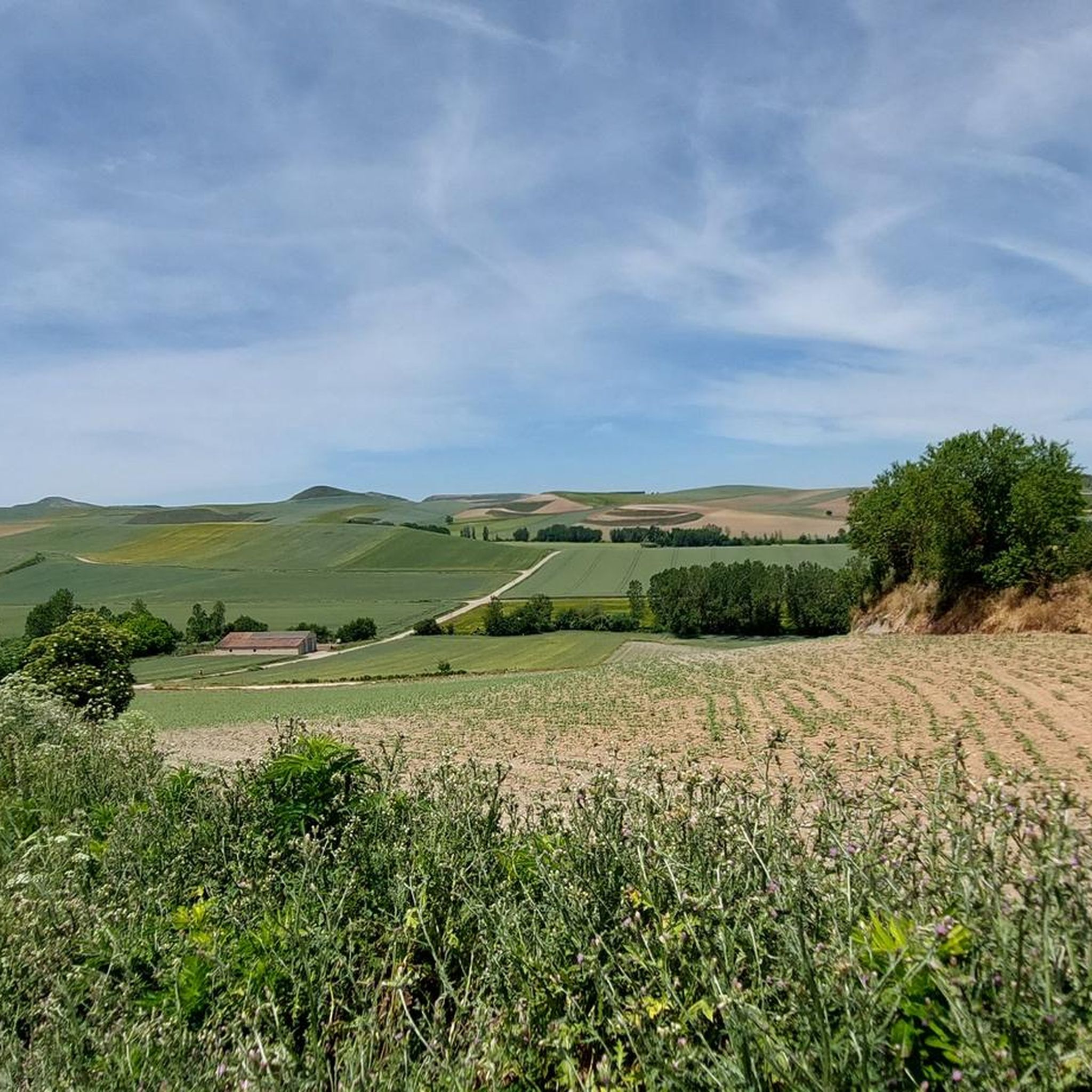
The castles around Grañón are set amidst a landscape characterized by river valleys and rolling hills. The Tirón River is a prominent natural feature, utilized as a defense ditch for castles like Castillo de los Velasco. The Mirabel hill, site of the ancient Castillo de Grañón, offers panoramic views of the surrounding countryside. You'll also encounter typical Riojan agricultural landscapes, including vineyards and fields.
What do visitors enjoy most about the castles and historical sites near Grañón?
Visitors particularly enjoy the rich history and the tangible connection to the past that these sites offer. The architectural beauty of structures like Castillo de los Velasco and Leiva Castle, along with the scenic views from locations like Mirabel hill, are frequently praised. The opportunity to explore medieval fortifications and understand their strategic importance in the region's history is a major draw.
Is there public transport available to reach the castles near Grañón?
Public transport options directly to every castle ruin or site might be limited, as many are in rural settings. However, Grañón itself is accessible, and from there, some sites may be reachable by local bus services or require a short drive. For the most flexibility in exploring multiple castles, traveling by car is often recommended. Always check local transport schedules in advance for specific destinations.
Are there any viewpoints overlooking castles near Grañón?
Yes, the Mirabel hill, where the Castillo de Grañón once stood, offers excellent panoramic views of the surrounding area. From the bridge in Cuzcurrita de Río Tirón, you can admire the Castillo de los Velasco. Many of the castles are situated on elevated positions, providing natural viewpoints of the towns and landscapes below.
Can I find cafes or restaurants near the castles for refreshments?
While some castles are in more isolated locations, those situated within or near towns like Cuzcurrita de Río Tirón or Leiva will have cafes, restaurants, and other amenities. For example, Velasco Castle and Cuzcurrita de Río Tirón Bridge is part of an architectural ensemble in the Plaza Mayor, where you can expect to find dining options. It's always a good idea to check for local establishments in the nearest village before your visit.
Most popular attractions around Grañón

Get inspired with the komoot mobile app


Explore more
Looking for the best castles somewhere else? Discover other guides around Grañón:
