Top 6 Castles around Sant Climent De Llobregat
Best castles around Sant Climent de Llobregat are found within a region rich in history and natural landscapes, despite the town itself not featuring traditional medieval castles. Sant Climent de Llobregat is characterized by its agricultural heritage, including cherry orchards, and its location at the foot of Sant Ramon mountain. The area's past is reflected in significant historical buildings like Can Molins, a masia with medieval origins, and its medieval association with the Barony of Eramprunyà. This setting provides a…
Last updated: July 17, 2026
Castellciuró Ruins
Highlight • Castle
Translated by Google •
Tip by

Castellciuró
Highlight • Castle
Translated by Google •
Tip by

Sign up now to discover places like this
Get recommendations on the best single tracks, peaks, & plenty of other exciting outdoor places.
Sign up for free
Eramprunyà Castle
Highlight • Castle
Translated by Google •
Tip by

Castelldefels Castle
Highlight • Castle
Translated by Google •
Tip by

Salvana Tower
Highlight • Castle
Translated by Google •
Tip by

Sign up for free to discover even more castles around Sant Climent De Llobregat.
Sign up for free
Already have an account?
Start today with a free account
Your next adventure awaits.
Login or Signup
Popular around Sant Climent De Llobregat
Tips from the Community

Beautiful castle, you have a wide view over the city, the landscape, and the sea. Can really be recommended.
1
0

It's in very bad condition. If you go in, be very careful.
0
0

More than 1,000 years of history Although recent archaeological studies testify to the occupation of the Eramprunyà cliff since prehistoric and Iberian times, the history of the castle begins in the 9th century. In 801 the Franks took the city of Barcelona from the Saracens, who had to retreat to the right bank of the Llobregat. The defense of Barcelona required the protection of the flat area, but also the entire lower part of the Llobregat valley, from Martorell to the sea, as it is a natural area of access to Barcelona. It was also necessary to control the entire coastline and the paths of the Garraf. Some of the castles that were built at this time were those of Cervelló, Castellví de Rosanes, Sant Boi, Corbera, Castelldefels and Eramprunyà. For visits Second Sunday of the month, at 10 am Meeting point at the Hermitage of Bruguers. Source and for + info https://www.patrimonigava.cat/espais-patrimonials/castell-deramprunya
0
0

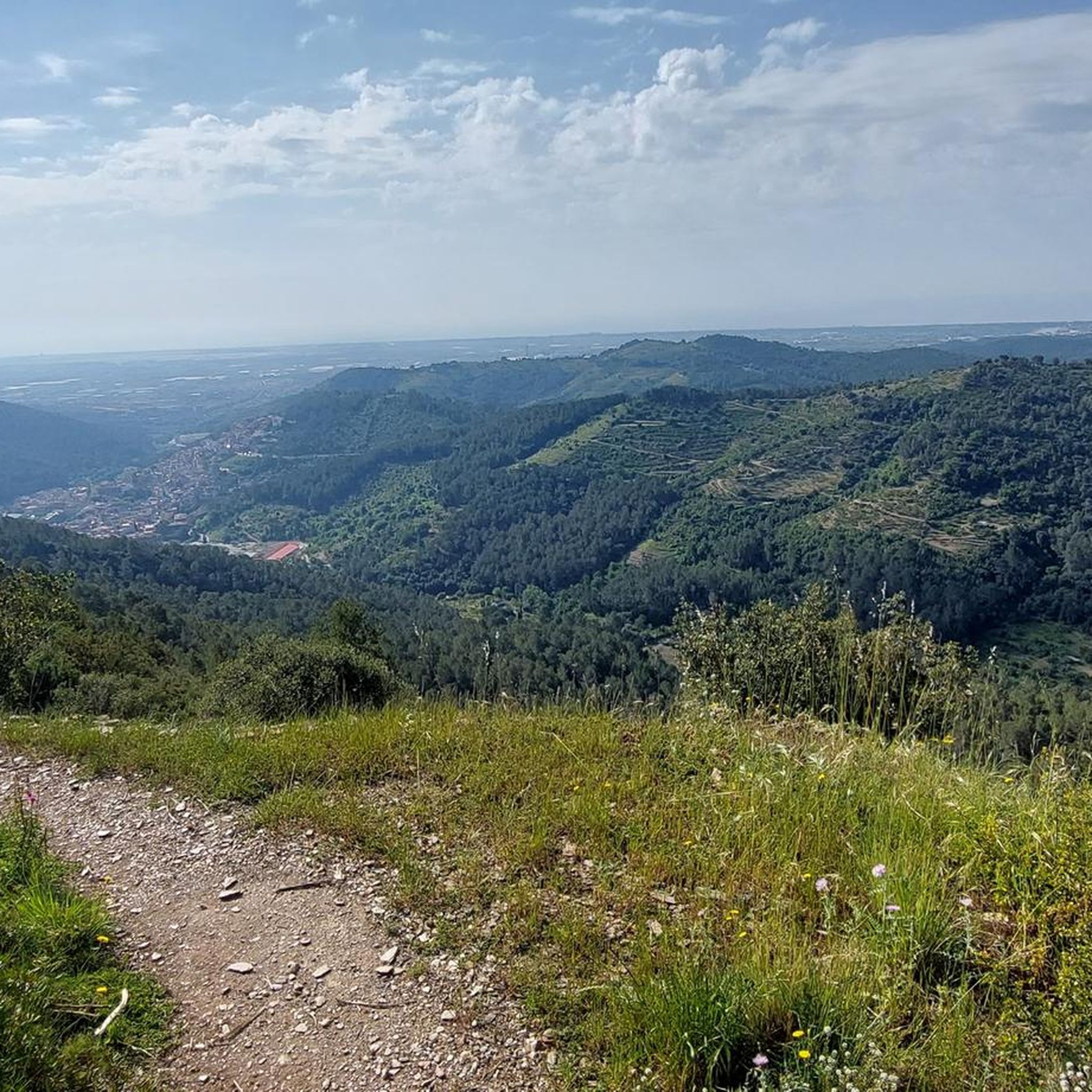
This castle is located near Sant Miquel d'Eramprunyà and is located on an elevated part, between the slopes of the Garraf with magnificent views over the Llobregat delta.
0
0

On a small hill, above the town of Molins de Rei, are the ruins of the castle that was built in the 14th century on the remains of an old circular defensive tower, called Guadall or Guadallo, of Visigothic origin (8th century) , that is to say, pre-Romanesque. This is confirmed by the remains of a wall lock that used an opus spicatum facing characteristic of that period. On the west facade stands a three-tiered tower where the door and two openings are preserved, one of which is currently reconstructed. There are also remains of the trapezoidal plant, a small tower attached to the rock, the walls of the Guadall tower and the remains of a large cistern, partially drilled into the rock and protected by a barrel vault (10th and 12th centuries ).
2
0

Because it is a very quick way to get away from the city and integrate into nature without making a great effort.
0
0

A century later the castle would pass under the direct domain of King Jaime II. In 1320, the sovereign granted Simón des Llor (de Lauro) permission to build a new castle on the site, and in 1332 Molins de Rey and the site of Ciuró were sold for 10,000 salaries. In 1632, "Molins de Rey" and "Santa Creu d'Olorda" are recorded as places owned by Countess Benavent, although by then the castle must have been in a very poor state of preservation. The current owner is Mr. Lluís Vila, a resident of Molins de Rey.
5
0
The castle was built on the site of the Guadallo tower (mentioned in 998), at a height of 155 meters and in a fairly strategic location. It is located on the westernmost hill of the branch that leaves the hill of Can Ribes joined, and a very short distance, with the Puig de Olorda. This situation gives it a good perspective of the course of the Llobregat river and the town of Molins de Rey. It was granted to the Hospitallers in the 12th century, according to a document from 1162 in what is known as “Cidró”. In 1202 it was owned by the Order of the Temple.
4
0
Frequently Asked Questions
What kind of historical sites can I explore around Sant Climent de Llobregat, given it doesn't have traditional castles?
While Sant Climent de Llobregat itself doesn't feature traditional medieval castles, the area is rich in historical buildings and nearby castle ruins. You can visit Castellciuró Ruins, which date back to 1066 and feature ancient *opus spicatum* walls. Another significant site is Eramprunyà Castle, with over 1,000 years of history and magnificent views. Within Sant Climent de Llobregat, the masia **Can Molins** offers a glimpse into the region's agricultural and social past, with medieval origins and 18th-century architecture.
Are there any castle ruins with good viewpoints near Sant Climent de Llobregat?
Yes, several castle ruins offer excellent viewpoints. Castellciuró provides ancient ruins with great views over the Baix Llobregat. Similarly, Eramprunyà Castle is situated on an elevated part of the Garraf massif, offering magnificent views over the Llobregat delta.
What are some of the oldest historical sites or castle ruins in the vicinity?
The Castellciuró Ruins are documented from 1066, with some parts featuring *opus spicatum* construction that could be of Visigothic or pre-Romanesque origin (8th-10th century). Eramprunyà Castle also boasts a history stretching back to the 9th century, making it over 1,000 years old.
Are there family-friendly historical sites or castles to visit?
Yes, Olesa de Bonesvalls, a settlement featuring the ruins of a 13th-century castle, is categorized as family-friendly. The historical context and natural surroundings make it suitable for family outings.
What outdoor activities can I do near these historical sites and castles?
The area around Sant Climent de Llobregat offers various outdoor activities. You can find numerous routes for gravel biking, mountain biking, and running. For example, explore the 'Vallgrassa Trail – Castelldefels Beach loop' for gravel biking, or the 'Castelldefels Beach Promenade loop' for mountain biking. Running enthusiasts can try the 'Termes romanes loop'. You can find more details and routes in the Gravel biking around Sant Climent De Llobregat, MTB Trails around Sant Climent De Llobregat, and Running Trails around Sant Climent De Llobregat guides.
Are there hiking trails near the castle ruins?
Yes, the castle ruins are often integrated into hiking routes. For instance, Castellciuró offers easy access and possibilities to follow other directions from there, making it a good starting point for walks. The area around Eramprunyà Castle also provides trails with scenic views over the Llobregat delta.
What do visitors enjoy most about the historical sites around Sant Climent de Llobregat?
Visitors appreciate the rich history and the natural beauty surrounding these sites. Many enjoy the ancient ruins of places like Castellciuró and the panoramic views they offer. The connection to the region's past, from medieval origins to agricultural heritage, is a significant draw.
Is there a castle or historical site that is particularly well-preserved or unique?
The Salvana Tower in Santa Coloma de Cervelló is a unique fortification documented since 992. While currently in very bad condition, it features Romanesque style with Gothic modifications and later 19th-century additions, including a neo-Gothic barbican, giving it a distinctive appearance.
What is the historical significance of the Sant Climent de Llobregat area?
Sant Climent de Llobregat has deep historical roots, particularly its medieval association with the Barony of Eramprunyà. The area was strategically important, with significant residential structures and historical buildings like Can Molins, which has medieval origins. The presence of Gothic halls in the rectory, where King Pere el Gran is said to have stayed in 1295, further underscores its medieval importance.
Can I visit the ruins of the castle of the count of Cervelló?
Yes, you can visit the ruins of the 13th-century castle of the count of Cervelló, which are located in Olesa de Bonesvalls. This site is notable for its historical significance, having once served as a hospital for pilgrims.
Are there any hidden gem historical sites or less-known castles worth exploring?
While not a traditional castle, **Can Molins** in Sant Climent de Llobregat is a historical gem. This masia, with its medieval origins and 18th-century architecture, offers a tangible connection to the region's past and is situated in a naturally beautiful area surrounded by cherry orchards. It provides a unique insight into local heritage beyond the more commonly known castle ruins.
What is the best time of year to visit the historical sites and castle ruins around Sant Climent de Llobregat?
The region generally enjoys a Mediterranean climate. Spring (April-May) and autumn (September-October) are often ideal, offering pleasant temperatures for exploring the outdoor ruins and trails. These seasons also showcase the natural beauty, such as the cherry orchards around Sant Climent de Llobregat in spring.
Most popular routes around Sant Climent De Llobregat
Most popular attractions around Sant Climent De Llobregat

Get inspired with the komoot mobile app


Explore more
Looking for the best castles somewhere else? Discover other guides around Sant Climent De Llobregat:
