Top 7 Castles around Winnezeele
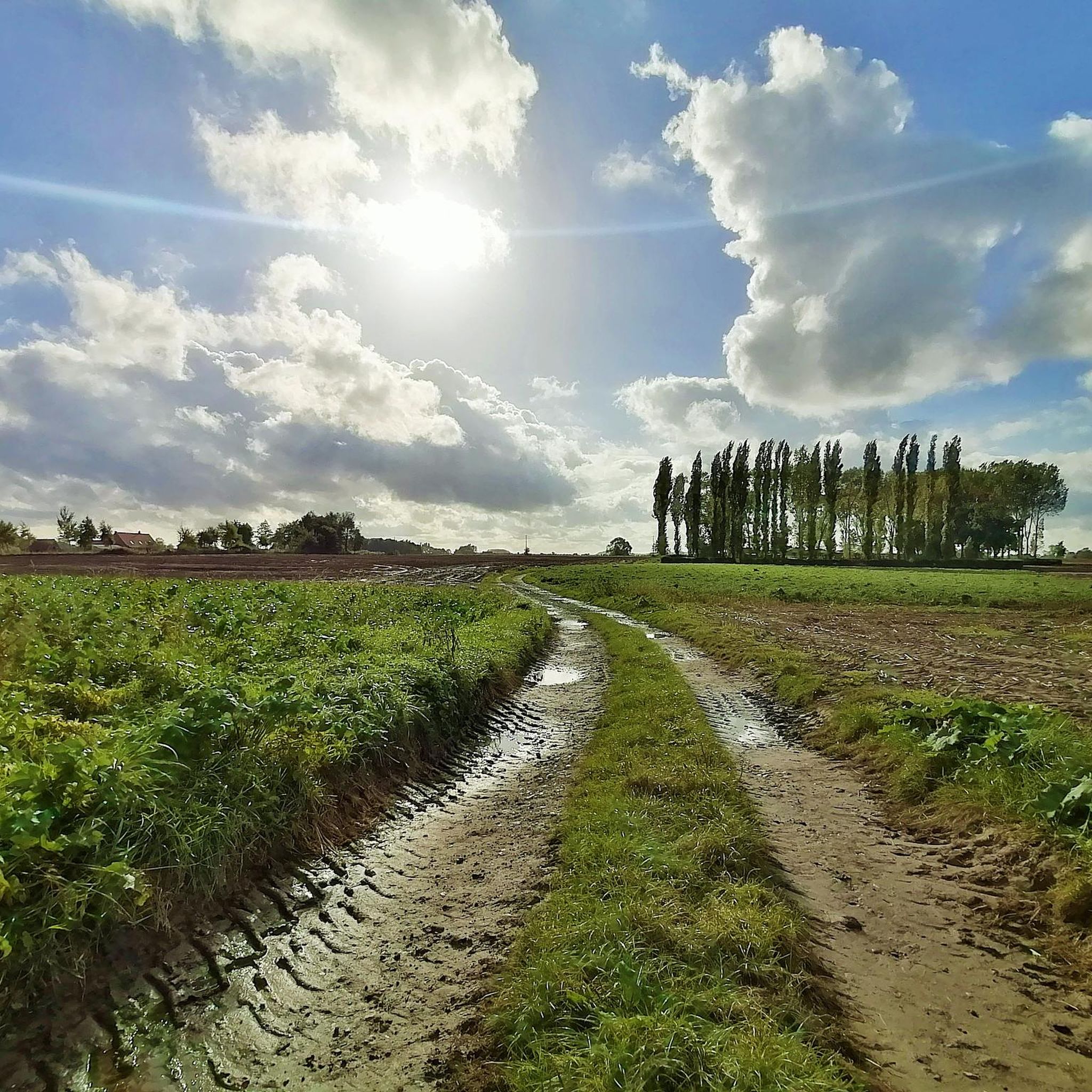
Castles around Winnezeele are found within French Flanders, a region known for its historical significance and varied landscape. While the original Renaissance-style château du seigneur in Winnezeele no longer stands, the area provides opportunities to explore historical architecture and fortified settlements. The surrounding terrain features rolling hills and agricultural land, offering a backdrop for discovering cultural heritage. This region reflects centuries of history through its remaining structures and historical sites, making it a point of interest for those exploring Winnezeele…
Last updated: July 5, 2026
De Lovie Castle Park
Highlight • Castle
The castle of De Lovie dates from 1856 and is built in neoclassical style.
Translated by Google •
Tip by

View from the castle terrace
Highlight • Viewpoint
Translated by Google •
Tip by

Sign up now to discover places like this
Get recommendations on the best single tracks, peaks, & plenty of other exciting outdoor places.
Sign up for free
Château du Couthof
Highlight • Castle
Translated by Google •
Tip by
Esquelbecq
Highlight • Settlement
Translated by Google •
Tip by
Château Schabaillie
Highlight • Castle
Showing Translation
Tip by

Sign up for free to discover even more castles around Winnezeele.
Sign up for free
Already have an account?
Start today with a free account
Your next adventure awaits.
Login or Signup

Tips from the Community

The most beautiful town in France (2023, according to the French)
1
0

Formerly called 'Chalet Schabaillie' after the builder and former resident, brickmaker A. Schabaillie. Mansion with a tower that gives the whole a castle-like appearance. The property stands in the middle of a still partly wooded garden with an L-shaped coach and stable wing to the north of which the facade faces the street. A garden pavilion leans against the garden wall to the northeast. On the street side, there is a low garden wall with a gate between pedestals to the right of the paved driveway. The whole was later divided: the former coach and stable wing now serves as a warehouse, part of the garden on the street side was subdivided and includes low new construction. The eclectic architectural style is characterized, among other things, by the decorative use of yellow and yellow-painted bricks and refers to similar local 'castles' from the same period. Mansion on a rectangular floor plan. Double house of two bays + central tower and entrance risalit of one bay + a wide bay ending in a dormer window with a gable roof, and two storeys under a hipped roof with an iron ridge, decorated with lilies, small dormers, and high chimneys, among other things. A year stone 1900 is incorporated into the gable. Red brick construction with the use of yellow bricks for horizontal facade bands, corner stones, finishing panels, and relieving arches of the Tudor and round arched openings. A wooden loggia is located to the right on the main floor. Tower with three storeys under a truncated pyramidal roof with a lantern under a slate spire. The other facades have a similar facing. On the left side of the rear facade, there is a partly adjoining low extension (kitchen) under a hipped roof (ridge direction perpendicular to the main house, mechanical tiles), in a matching architectural style; conservatory against the garden facade. L-shaped coach and stable wing of one and a half storeys under a gable roof with mechanical tiles. The striking corner tower with a slate spire is crowned with iron decoration, referring to the ridge of the mansion. The inscription 'Anno 1914' is incorporated into the plastered casement of the dormer window. Analogous brick architecture; additional decorative motifs of yellow brick, including St. Andrew's crosses. The street facade is a variation on the traditional gable facade: the stepped gable with a Bruges bay, and the central arched coach gate above which is a round arched window crowned with a cross of yellow brick. The garden pavilion against the northeast garden wall is a variation on the medieval dovecote type. Octagonal low building under a slightly constricted spire (slate) with wooden dormers. Matching architectural style. Source: DELEPIERE A.-M. & HUYS M. 1989: Inventory of cultural heritage in Belgium, Architecture, Province of West Flanders, District of Ypres, Canton Poperinge, Building through the centuries in Flanders 11n2, Brussels - Turnhout. Authors: Delepiere, Anne Marie; Huys, Martine Date: 1989 Text made available by: Agency for Immovable Heritage (AOE) Additional information Number 20 forms the last part of the stable wing. The part facing the street has since been demolished, but the rear part with the tower is still preserved. Information obtained from the Intermunicipal Immovable Heritage Service CO7 (July 29, 2021). Authors: Jacobs, Els Date: 11-04-2022 Text made available by: Agency for Immovable Heritage (AOE)
6
0

The panoramic terrace of the Château de Cassel offers a breathtaking view of the Flanders plain. You can see the mill, the monument of the Three Battles and the old crypt. All are emblematic places of the site. On the way back down the alpine ramp, a tavern awaits walkers for a friendly break.
5
0

At 176 metres high, this is the highest point in the area. It is a former castle terrace and until 1788, the St. Peter's Church stood here, of which remains of the crypt are still present. The belvedere is also a viewpoint. The Roman highways that can be seen from here and that fan out in all directions are spectacular.
8
0

Esquelbecq Castle is a French castle located in the commune of Esquelbecq, in the Nord department and the Hauts-de-France region. To visit the castle it is open Saturday and Sunday but you can visit the garden for 5 euros and 10 euros for the garden and the castle 🏰 🤩
2
0
This village, bisected by the Yser in the middle of the French Westhoek, is typically Flemish with its Grand Place, surrounded by brick houses from the 17th and 18th centuries, and its large church. The blond and dark Esquelbecq beers are brewed here.
6
0

The castle 't Couthof, built as a summer residence in 1763, is surrounded by a 19th-century landscape-style park, characterized by a pond, grasslands, visual axes and scattered garden ornaments, furniture and buildings. The Couthof domain is open to the general public to a limited extent. You can walk on the cleared paths through the forest and around the old garden. Queen Mathilde spent many summers in the castle in her youth. In the past there was a maze with a neo-Gothic arcade, also called the gallows, as a landmark. The arcade is still there. This can be viewed in the Gravendreef.
2
0
A typical castle from the end of the 19th century was built in the Rekhof for brickmaker Alfonse Schabaillie.
3
0
Frequently Asked Questions
What happened to the historical castle in Winnezeele itself?
The original Renaissance-style "château du seigneur" in Winnezeele no longer stands. Historical accounts describe a grand brick structure with a hexagonal tower and moats, as depicted in Sanderus's "Flandria Illustrata." While remnants of its former presence, such as its surrounding moats, are believed to have communicated with a "motte féodale" (feudal mound) which is now a picturesque islet, the grand structure itself is gone. Modern references to "château" in Winnezeele often refer to private residences, not publicly accessible historical monuments.
Which are the most notable castles or historical sites to visit near Winnezeele?
While the original Winnezeele castle is gone, the region offers several significant historical sites. You can visit Cassel Village, a fortified town on a hill with panoramic views and a museum. Another option is Esquelbecq, a village home to Esquelbecq Castle, which opens its castle and gardens on specific days. Also, explore De Lovie Castle Park, featuring a neoclassical castle and an English landscape park.
Are there any family-friendly castles or historical parks around Winnezeele?
Yes, several sites are suitable for families. Cassel Village is considered family-friendly, offering a mix of history, culture, and nature. De Lovie Castle Park is also family-friendly, with its expansive park, water features, and walking paths. The Esquelbecq village and its castle gardens are also a good option for families.
What kind of views can I expect from these castle sites?
For breathtaking panoramic views, head to Cassel Village. From its highest point, the former castle terrace (now View from the castle terrace), you can see the vast Flanders plain, Roman highways fanning out, and other emblematic landmarks like the mill and the monument of the Three Battles.
Can I explore the grounds of Château du Couthof?
Yes, the domain of Château du Couthof is open to the general public to a limited extent. You can walk on the cleared paths through the forest and around the old garden, which features a pond, grasslands, and scattered garden ornaments. The castle itself was built as a summer residence in 1763.
What outdoor activities can I do near these castles?
The region around Winnezeele offers various outdoor activities. You can find numerous hiking trails, such as the moderate "Watou Village – Helleketel Forest Trail loop." For running, there are routes like the "Bunker of Winnezeele loop." Mountain biking enthusiasts can explore trails like the "MTB abbey path – Catsberg Descent loop." You can find more details and routes in the Hiking around Winnezeele, Running Trails around Winnezeele, and MTB Trails around Winnezeele guides.
Are there specific visiting hours or access information for Esquelbecq Castle?
Esquelbecq Castle and its gardens are open for visits on specific days, typically Saturdays and Sundays. It's advisable to check local information or the castle's official website for the most current opening hours and any potential entrance fees for the castle and gardens.
What natural features can I find near the castles around Winnezeele?
The area around Winnezeele is characterized by rolling hills and agricultural land. At De Lovie Castle Park, you'll find remnants of an English landscape park with water features, avenues of red beech trees, and remarkable older trees. The Canadabos, located north of De Lovie, also offers natural exploration. Château du Couthof is surrounded by a 19th-century landscape-style park with a pond and forest paths.
What do visitors enjoy most about the castles and historical sites in this region?
Visitors frequently praise the panoramic views from places like Cassel Village, often highlighting the unique estaminets and the blend of history and culture. The peaceful ambiance of castle parks like De Lovie Castle Park and the historical significance of sites like Esquelbecq are also highly appreciated.
Is there parking available at these castle locations?
Parking is generally available at or near these locations. For instance, De Lovie Castle Park has designated parking. For villages like Cassel and Esquelbecq, village parking facilities are typically available, though it's always good to check local signage upon arrival.
What is the best time of year to visit the castles and historical sites around Winnezeele?
The spring and summer months (April to September) generally offer the most pleasant weather for exploring the castles, historical sites, and surrounding parks. During these seasons, gardens are in bloom, and outdoor activities are more enjoyable. However, autumn can also be beautiful with changing foliage, and some sites may remain accessible in winter, though specific opening hours might vary.
Most popular routes around Winnezeele
Most popular attractions around Winnezeele

Get inspired with the komoot mobile app


Explore more
Looking for the best castles somewhere else? Discover other guides around Winnezeele:
