Top 4 Castles around Salins-Les-Bains
Best castles around Salins-les-Bains are situated in the Jura department of France, a region known for its historical fortifications and natural landscape. The area features several sites with medieval origins that underwent significant transformations, often influenced by military engineers like Vauban. These structures are strategically located on heights and rocky corridors, offering historical insights into regional defense. The landscape provides a backdrop for exploring these sites, which played roles in various conflicts.
Best castles around Salins-les-Bains
- The most popular castles…
Last updated: May 11, 2026
Arbois
Highlight • Settlement
Translated by Google •
Tip by

Ruins of the La Châtelaine castle complex
Highlight • Castle
Translated by Google •
Tip by

Sign up now to discover places like this
Get recommendations on the best single tracks, peaks, & plenty of other exciting outdoor places.
Sign up for free
Château de Vaulgrenant
Highlight • Castle
Translated by Google •
Tip by

Château Mirabeau
Highlight • Castle
Translated by Google •
Tip by

View of Salins-les-Bains, Fort Belin, and Fort Saint-André
Highlight • Viewpoint
Translated by Google •
Tip by

Start today with a free account
Your next adventure awaits.
Login or Signup
Popular around Salins-Les-Bains


Other adventures around Salins-Les-Bains

Tips from the Community

Meanwhile, there are QR codes in various places to get information. Still worth a detour
0
0

The Château de La Châtelaine is an 11th-century fortified castle, the remains of which stand in the municipality of La Châtelaine. Built on a rocky plateau framed by two inlets of the Planches Valley, it overlooks the large source of the Cuisance River. It towers 200 meters above the municipality of Planches-près-Arbois.
6
0

The ruins of this once impressive complex lie hidden in a magical forest. Large and small structures are scattered throughout, offering magnificent views of the valley.
3
0

we have been coming to Nans-sous-Sainte-Anne for several years. I have never seen the Château Mirabeau with its shutters open. It almost seems as if only the gardener comes by. The building is really impressive and I would love to walk through the château. But it is privately owned and unfortunately not possible. On the Internet, on the homepage of www.chateau-fort-manoir-chateau.eu, I found the following: In the 15th century, the Montrichard, Lords of Nans, vassals of Chalon, abandoned the fortress of the source of the Verneau and built a more comfortable castle in the village of Nans. In the 18th century, this house became the property of a Robe family from Les Monnier. On the eve of the Revolution, the young wife of the old Sieur de Monnier, who lived in Pontarlier, was seduced by Mirabeau, who was imprisoned in the Château de Joux at the time. It is said that the castle of Nans housed their adulterous loves. From then on, it kept the name of this illustrious lover...
0
0

ruins of a medieval castle built in the 13th century. At the top, a 360° view of the Chaux forest, Val d'Amour, Mont de Pretin, Forts Saint-André and Belin and Mont Poupet.
0
0

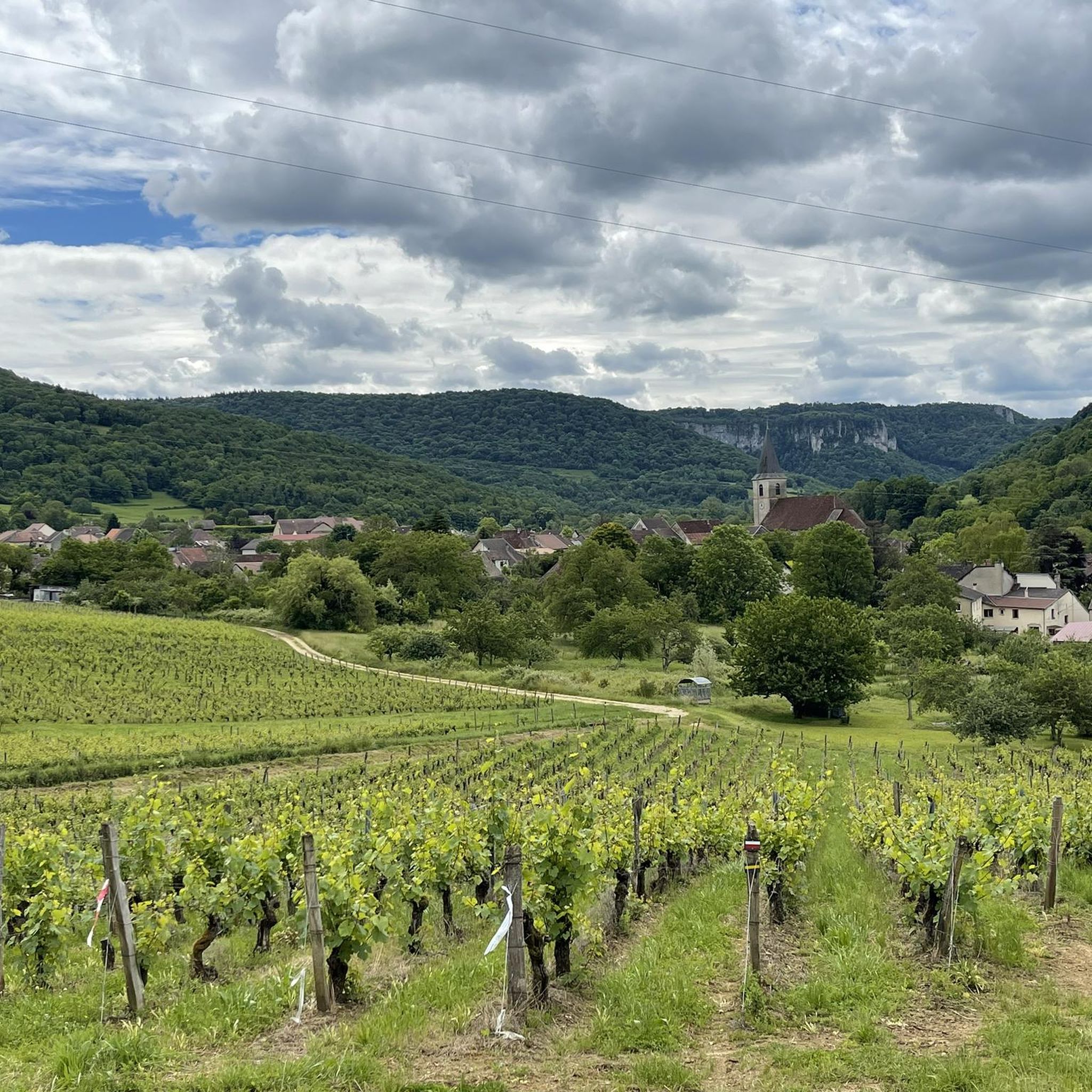
Arbois is one of the main communes of the Jura. It is the country of Louis Pasteur and a nerve center of viticulture. It was one of the first controlled designations of origin in France, which won its titles of nobility in 1936. Surrounded by vineyards, the old town is characterized by yellow-ochre buildings. Stroll and discover every magnificent corner of Arbois!
3
0


The remains of a medieval village with a castle. If you are lucky, you can chat with the archaeologists who work there and who have a lot of exciting things to tell.
1
0
Frequently Asked Questions
Which castles near Salins-les-Bains can I actually visit?
You can visit Fort Saint-André, which offers guided tours and has been repurposed as a hotel and event venue. The Ruins of the Château de La Châtelaine and Château de Vaulgrenant are also accessible ruins with historical significance and scenic views. Unfortunately, Fort Belin is on private property and not open to the public, and Château Mirabeau is also privately owned.
What is the historical significance of the fortifications in Salins-les-Bains?
The fortifications, particularly Fort Saint-André and Fort Belin, played a crucial role in the region's defense, especially after Franche-Comté became part of France in the 17th century. They showcase the strategic designs of military engineers like Vauban and were vital in protecting the valuable salt mines of Salins-les-Bains. Many of these sites have medieval origins, undergoing transformations over centuries of conflict.
Are there family-friendly castles or historical sites to visit?
Yes, Fort Saint-André is suitable for families, offering guided tours that provide insights into its history. The View of Salins-les-Bains, Fort Belin, and Fort Saint-André is an easily accessible viewpoint that offers a great perspective on the town and its forts. Exploring the ruins of Château de La Châtelaine can also be an engaging activity for families, as the ruins are scattered in a magical forest.
Which castles or viewpoints offer the best panoramic views?
Fort Saint-André, situated at an altitude of 588 meters, provides exceptional, breathtaking views over Salins-les-Bains and the surrounding countryside. The Château de Vaulgrenant also offers a 360° view of the Chaux forest, Val d'Amour, Mont de Pretin, and the forts. Additionally, the Ruins of the Château de La Châtelaine provide magnificent views of the Cuisance River valley.
Can I combine a castle visit with outdoor activities like hiking or biking?
Absolutely! The region around Salins-les-Bains is excellent for outdoor activities. You can find numerous routes for gravel biking, mountain biking, and running that often pass by or offer views of these historical sites. For example, there's a 'Fort Saint-André loop from Salins-les-Bains' for running, and many trails offer scenic views of the forts and surrounding nature.
What is the best time of year to visit the castles in Salins-les-Bains?
The best time to visit is generally from spring to autumn (April to October) when the weather is mild and conducive to exploring both the castles and the surrounding natural landscapes. During these months, you can fully enjoy the panoramic views and outdoor activities. While winter can offer beautiful snowy vistas, some access might be limited due to weather conditions.
Are there any medieval castles or ruins to explore near Salins-les-Bains?
Yes, the Ruins of the Château de La Châtelaine date back to the 11th century, and the Château de Vaulgrenant are ruins of a 13th-century medieval castle. Both offer a glimpse into the region's medieval past, with explanatory panels at Vaulgrenant detailing its organization. Fort Saint-André and Fort Belin also have medieval origins, though they underwent significant 17th-century modifications.
What natural features can I see around the castles?
The castles are often nestled within or overlook beautiful natural landscapes. For instance, the Ruins of the Château de La Châtelaine are located in a magical forest overlooking the Cuisance River. From Château de Vaulgrenant, you can enjoy views of the Chaux forest and Val d'Amour. The strategic locations of these forts provide stunning vistas of the Jura countryside.
Is there parking available near the main castle sites?
Yes, parking is generally available near the more accessible sites. For Fort Saint-André, there are parking options as it functions as a hotel and event venue. For other ruins like Château de Vaulgrenant or Château de La Châtelaine, you'll typically find designated parking areas at the start of the trails leading to the ruins.
How long should I allocate for visiting the castles around Salins-les-Bains?
For Fort Saint-André, a guided tour might take 1-2 hours, plus additional time if you wish to explore the grounds or enjoy the views. Visiting the ruins like Château de La Châtelaine or Château de Vaulgrenant can range from 1 to 3 hours, depending on how much you wish to hike to and around the sites, and how long you spend enjoying the views and reading explanatory panels.
Are there any dog-friendly options for visiting castles or nearby trails?
While specific castle interiors might have restrictions, the outdoor areas and trails leading to ruins like the Ruins of the Château de La Châtelaine and Château de Vaulgrenant are generally dog-friendly, provided dogs are kept on a leash. Many of the nearby hiking and biking trails in the Jura region also welcome dogs.
What is Arbois and how is it related to the castles in the region?
Arbois is a charming town in the Jura, known for its viticulture and as the country of Louis Pasteur. While not a castle itself, it's a significant historical settlement near Salins-les-Bains, often serving as a starting point or a point of interest for those exploring the region's heritage, including its castles and fortifications. It's surrounded by vineyards and features beautiful yellow-ochre buildings.
Most popular routes around Salins-Les-Bains
Most popular attractions around Salins-Les-Bains

Get inspired with the komoot mobile app


Explore more
Looking for the best castles somewhere else? Discover other guides around Salins-Les-Bains:
