Top 6 Castles around Fornos De Algodres
Best castles around Fornos De Algodres are part of a region rich in historical and archaeological heritage. The area features ancient fortified settlements and nearby castle ruins, offering insights into early communities and strategic defense. While Fornos de Algodres itself is known for prehistoric and Chalcolithic fortified sites, the wider region includes medieval castles. These sites often provide panoramic views of the surrounding valleys and the foothills of the Serra da Estrela.
Best castles around Fornos De Algodres
- The most…
Last updated: July 9, 2026
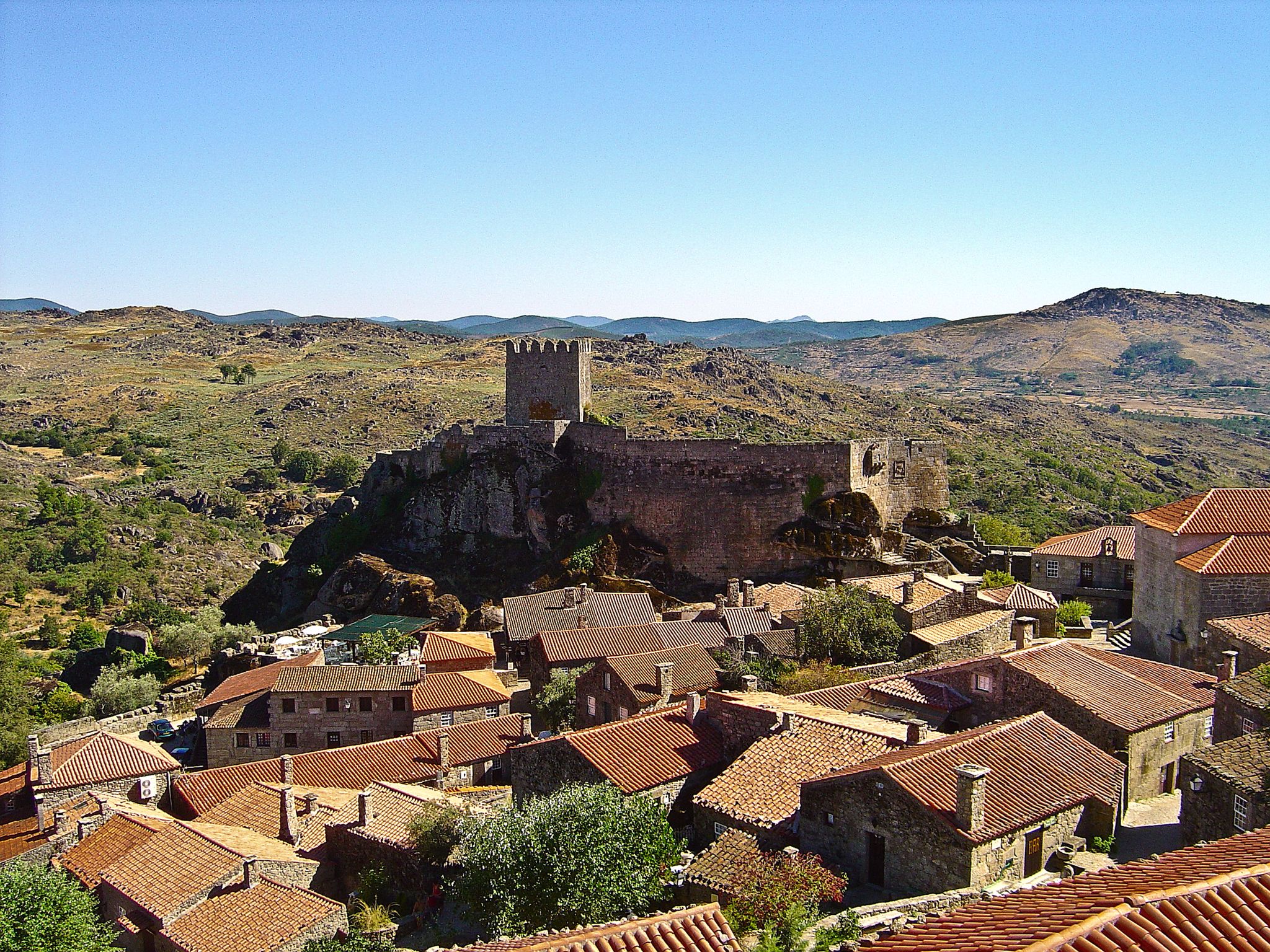
Aldeia Histórica de Linhares da Beira
Highlight • Settlement
Translated by Google •
Tip by

Castle Walls of Trancoso
Highlight • Castle
Translated by Google •
Tip by

Sign up now to discover places like this
Get recommendations on the best single tracks, peaks, & plenty of other exciting outdoor places.
Sign up for free
Historic Village of Trancoso
Highlight • Historical Site
Translated by Google •
Tip by

King's Gate
Highlight • Castle
Tip by
View of Linhares da Beira and Castle
Highlight (Segment) • Viewpoint
Translated by Google •
Tip by

Start today with a free account
Your next adventure awaits.
Login or Signup
Other adventures around Fornos De Algodres

Tips from the Community

A historic village of undeniable beauty. Thank you for sharing the photos.👍🥾🚲
0
0

Linhares da Beira is steeped in centuries of history. Founded, apparently, in the 6th century BC by the Turduli, it saw the passage of the Lusitanians, Romans, and Visigoths, who made it the seat of their diocese. It was the scene of Moorish legends, recovered by the kings of León and later by Afonso Henriques, who granted it a charter in 1169 and integrated it into the region's defensive line. Over time, it welcomed Jews, resisted invasions, and lost its municipality in 1842, but never its soul. Today, it is proud to be one of the 12 Historic Villages of Portugal, where every stone tells a piece of the past.
3
0

Its ancient castle contrasts with the fears and fears experienced by the people of yesteryear. It was a border town, the scene of many important battles and struggles for the formation and independence of the kingdom. It received important privileges. D. Afonso Henriques granted it a charter and D. Afonso III the charter of Feira. D. Dinis ordered the construction of the walls that still protect a village where Christians and Jews lived together. The ring of walls that still surround the old medieval town, as well as the vast civil and religious architectural heritage, give the Historic Centre a unique image.
3
0
The Castle of Trancoso is erected atop a hill in the North-Easternmost extreme of the city of Trancoso, within the district of Guarda, Portugal. It is a castle build in between the 10th and 13th centuries, featuring towers and the characteristic walls inclined to the tower of Moorish connotations. From the primitive castle appears the walled fortress with five towers and an homage one, the walls featuring several gates as well. Among these, the Porta do Rei stands out the most for being flanked by two towers.
2
0
The Castle of Trancoso is erected atop a hill in the North-Easternmost extreme of the city of Trancoso, within the district of Guarda, Portugal. It is a castle build in between the 10th and 13th centuries, featuring towers and the characteristic walls inclined to the tower of Moorish connotations. From the primitive castle appears the walled fortress with five towers and an homage one, the walls featuring several gates as well. Among these, the Porta do Rei stands out the most for being flanked by two towers.
2
0
The Castle of Trancoso is erected atop a hill in the North-Easternmost extreme of the city of Trancoso, within the district of Guarda, Portugal. It is a castle build in between the 10th and 13th centuries, featuring towers and the characteristic walls inclined to the tower of Moorish connotations. From the primitive castle appears the walled fortress with five towers and an homage one, the walls featuring several gates as well. Among these, the Porta do Rei stands out the most for being flanked by two towers.
4
0

Beautiful hike from the village, on the route you will find a beautiful place for a picnic with a panoramic view
0
0

Trancoso is one of the 12 historic villages in Portugal with a castle, city wall, Jewish quarter and a small, picturesque old town. In this place was the marriage of Dom Dinis and Saint Elizabeth of Portugal (Isabel de Aragon, also called Rainha Santa Isabel).
4
0
Frequently Asked Questions
What kind of historical fortifications can I explore around Fornos De Algodres?
The region around Fornos De Algodres offers a diverse range of historical fortifications. While Fornos de Algodres itself is renowned for ancient fortified settlements like Castro de Santiago, dating back over 5,000 years to the Chalcolithic period, nearby areas feature traditional medieval castles. These include the well-preserved Castelo de Linhares and the imposing structures of Trancoso and Folgosinho. You can learn more about the ancient sites at Castro de Santiago.
Which medieval castles are highly recommended near Fornos De Algodres?
Among the most recommended medieval castles and fortified villages near Fornos De Algodres are Aldeia Histórica de Linhares da Beira, a historic village with a significant castle, the impressive Castle Walls of Trancoso, and the charming village of Folgosinho, known for its medieval castle and granite houses.
What makes Aldeia Histórica de Linhares da Beira a significant historical site?
Aldeia Histórica de Linhares da Beira is one of the 12 Historic Villages of Portugal, founded in the 6th century BC. It has witnessed the passage of various civilizations, from Turduli to Romans and Visigoths, and played a crucial role in the region's defensive line during medieval times. Its castle and well-preserved architecture offer a deep dive into centuries of history.
What are the key features of the Castle Walls of Trancoso?
The Castle Walls of Trancoso are a prominent example of military architecture from the 10th to 13th centuries. Erected atop a hill, the castle features characteristic walls with Moorish connotations, multiple towers, and several gates, including the notable King's Gate. It's part of the wider Historic Village of Trancoso, which was a vital border town.
Are there any family-friendly castles or historical sites in the area?
Yes, the King's Gate within the Castle of Trancoso is categorized as family-friendly. Exploring the walls and towers of Trancoso, or wandering through the historic villages like Linhares da Beira and Folgosinho, can be an engaging experience for families, offering a glimpse into the past in an accessible way.
Can I find good viewpoints at these castles?
Absolutely. Many of the castles and fortified settlements in the region offer spectacular panoramic views. For instance, Castro de Santiago provides extensive views of the surrounding valleys and the Serra da Estrela foothills. The Castle Walls of Trancoso and the castle in Folgosinho are also noted for their stunning vistas of the landscape.
What kind of outdoor activities can I do near these castles?
The region around Fornos De Algodres is excellent for outdoor activities. You can find numerous hiking trails, such as the 'Hiking loop from Melo e Nabais' or 'Freixo da Serra loop'. For mountain biking enthusiasts, there are challenging routes like the 'Folgosinho and Videmonte Loop'. Running trails are also available, including the 'Linhares Roman Road loop'. You can explore more options in the Hiking around Fornos De Algodres, MTB Trails around Fornos De Algodres, and Running Trails around Fornos De Algodres guides.
What is the best time to visit the castles and historical sites?
The best time to visit the castles and historical sites around Fornos De Algodres is generally during spring (April-June) and autumn (September-October). During these seasons, the weather is typically mild and pleasant for exploring, and the natural scenery is particularly beautiful. Summer can be hot, while winter might bring colder temperatures, especially in higher elevations.
Are there any hidden gems or lesser-known historical sites worth visiting?
While not a traditional castle, Castro de Santiago in Fornos de Algodres is a significant hidden gem. It's an ancient Chalcolithic fortified settlement, offering immense historical significance and panoramic views, though it requires a curious mind as it's not a heavily curated tourist site. The fortified settlement in Queiriz, with its preserved wall section, also offers a glimpse into early defensive structures.
What do visitors enjoy most about the castles and historical sites in this region?
Visitors frequently highlight the rich history and the stunning views. The sense of stepping back in time in places like Aldeia Histórica de Linhares da Beira and the imposing presence of the Castle Walls of Trancoso are often praised. The beautiful scenery from viewpoints like Folgosinho's castle and the archaeological insights from sites like Castro de Santiago also receive positive feedback.
What is the typical duration for exploring these castle sites?
The duration for exploring varies by site. For a comprehensive visit to a historic village with a castle like Linhares da Beira or Trancoso, you might spend half a day to a full day to fully appreciate the castle, village, and surrounding areas. Smaller sites or specific castle ruins might take 1-2 hours. Ancient sites like Castro de Santiago are more about the historical context and views, which can be explored in an hour or two.
Are the castle walks and trails difficult?
The difficulty of walks around the castles varies. Many historic villages involve walking on cobbled streets and some inclines to reach the castle, which can be moderate. For example, the highlights like Aldeia Histórica de Linhares da Beira and Folgosinho are rated as 'intermediate' for exploration. The ancient fortified sites might involve walking on uneven terrain. Always wear appropriate footwear.
Are there cafes or restaurants near the castles?
Yes, the historic villages like Linhares da Beira, Trancoso, and Folgosinho typically have local cafes and restaurants where you can enjoy traditional Portuguese cuisine and refreshments. These establishments are often found within the village centers, close to the main historical attractions.
Most popular routes around Fornos De Algodres
Most popular attractions around Fornos De Algodres

Get inspired with the komoot mobile app


Explore more
Looking for the best castles somewhere else? Discover other guides around Fornos De Algodres:
