Top 6 Castles around Krapkowice
Best castles around Krapkowice offer a journey through the region's rich history, featuring structures that span from medieval origins to Renaissance transformations. Situated in Opole Voivodeship, the area provides a historical landscape shaped by various architectural styles and significant events. Visitors can explore both well-preserved historical sites and atmospheric ruins. The presence of the Oder River further defines the local geography, influencing the strategic placement of these historical landmarks.
Best castles around Krapkowice
- The most popular castles is Moszna Castle…
Last updated: July 2, 2026
Moszna Castle
Highlight • Castle
Translated by Google •
Tip by

Upper Gate Tower
Highlight • Historical Site
Translated by Google •
Tip by
Sign up now to discover places like this
Get recommendations on the best single tracks, peaks, & plenty of other exciting outdoor places.
Sign up for free
Ruins of the Castle
Highlight • Castle
Translated by Google •
Tip by
Medieval City Walls and Obertorhaus Tower
Highlight (Segment) • Historical Site
Translated by Google •
Tip by
Dobra Castle
Highlight • Castle
Translated by Google •
Tip by

Zdieszowice Palace
Highlight • Castle
Translated by Google •
Tip by
Start today with a free account
Your next adventure awaits.
Login or Signup

Tips from the Community

Dobrau Castle was built in 1750 in the Baroque style by the royal court councilor Count Erdmann Karl von Roedern, son of Minister Carl Gustav von Roedern. In 1856, it was rebuilt in the Neo-Gothic style based on a design by the Berlin architect Moritz Gottgetreu. At the end of the war in 1945, the castle burned down and fell into ruin. The building has been under reconstruction since 2014. Source: Wikipedia According to Google Maps, the castle is temporarily closed. It is to be converted into a hotel. For more information and pictures, see https://de.m.wikipedia.org/wiki/Schloss_Dobrau For me, its exterior is the Taj Mahal of Poland, although it's no Mausoleum.
0
0
The small castle is unfortunately hidden in a small park. Only the outbuildings are clearly visible from ul. Zamkowa.
0
0

Beautiful rhododendrons blooming in May. Lots of people on weekends.
0
0

There is information on the access road that this is private property.
1
0


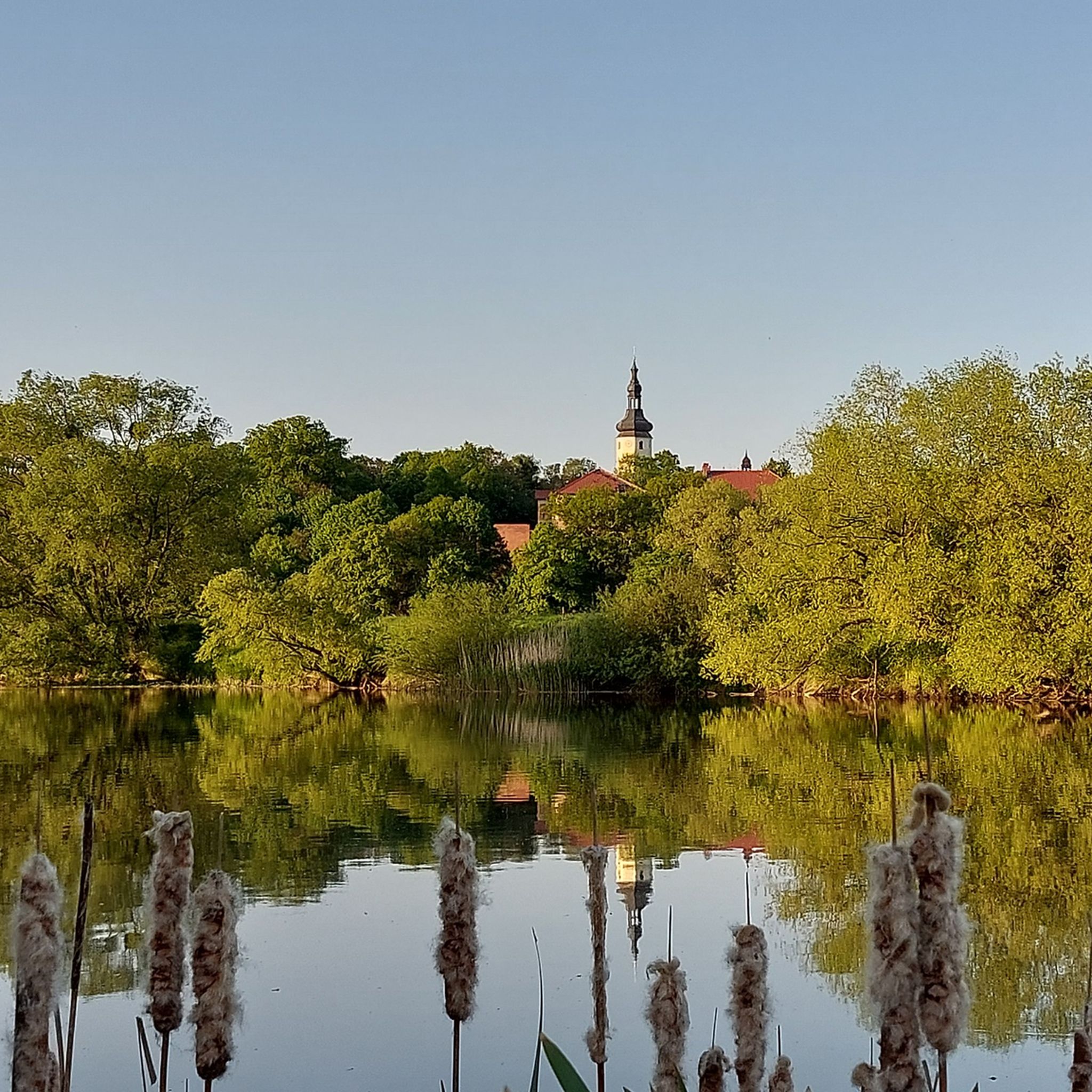
According to legend, this 14th century castle, like several others in the area, belonged to the Templars. The stories tell of crusades, great expeditions and kidnappings of princesses. The castle, which changed owners many times, was rebuilt into a baroque palace. Unfortunately, in the 19th century it was destroyed by the then owner who, in debt and overcome by the Templar treasure "fever", almost demolished it in search of the alleged wealth hidden in the walls of the building. When he found nothing, he set the mansion on fire, which led to its almost complete destruction. The ruins of the castle from the 4th century, located in the palace and farm area among lush green trees and bushes, look extremely charming. Next to the pond there is another object - the palace of the Magdelung family, which developed the lime industry in the area. The family owned this area until 1945. Then the property became the property of the State Treasury. From 1996 to 2001, the palace was almost completely rebuilt from its ashes, until the new owner reopened it as a restaurant and hotel complex.
0
1

Moschen // Moszna. The name of the village probably comes from the surname Moschin. According to legend, Moszna belonged to the Knights Templar in the Middle Ages. In 1679, Moszna was owned by the von Skall family. In 1723, after the death of the owner Ursula Maria von Skall, Moszna passed into the hands of her cousin, the court marshal of Frederick the Great - Georg Wilhelm von Reisewitz. The castle - the central part of the current castle - dates from this period. In 1771, the von Reisewitz family lost Moszna and the property was purchased at auction by Heinrich Leopold von Seherr-Thoss. In 1853, Karl Gotthard Seherr-Thoss sold Moszna to Heinrich von Erdmannsdorf, who sold it in 1866 to Hubert von Tiele-Winckler from Miechowice. His son Franz Hubert was the originator and builder of the castle, which was built after the partial burnt down of the Baroque castle in 1896. Franz Hubert's grandfather, Franz Winckler, worked as a miner in the mine in Miechowice. After the death of his wife and mine owner, he married his rich widow Maria Aresin. In 1840, the Prussian king granted him the title of nobility. The heiress of the fortune was his daughter Valeska, who married Hubert von Tiele in 1854, who bought Moszna in 1866. After the marriage, they used a combined surname - Tiele-Winckler. Hubert died in 1893, and his estate passed to his eldest son Franz-Hubert according to the majority principle. In 1895, he was ennobled by the title of count awarded to him by Emperor Wilhelm. A year later, after a fire, he rebuilt and expanded his residence. In 1904, and later in 1911 and 1912, the count was visited by the ruler of Germany for hunting, and the west wing was built for him in 1911–1913. Franz Hubert's son Claus-Peter spent part of his ancestors' fortune in the interwar period. When he died childless, he adopted his cousin, whose son was to inherit the estate and the title of count. His family lived in Moszna Castle until the end of the war and fled to Germany to escape the approaching Red Army. After the war, the fate of the castle was different - from 1972 it has been operating as a hospital for the treatment of neuroses. Moszna - According to Franz Hubert's imagination, the castle has 365 rooms and 99 towers, for which it is famous. The unique architecture of the castle attracts crowds of tourists every year.
1
1

The Obertorhaus, built at the turn of the 14th and 15th centuries and rebuilt in 1508, is a square quarry stone building with an attic and loopholes. It is the last remnant of the former city wall, which existed from the 14th century to 1829 and surrounded the city with a total of four entrance gates.
1
0
Frequently Asked Questions
What are some of the most historically significant castles in the Krapkowice region?
The region boasts several castles with rich histories. The Krapkowice Castle, a late Renaissance building, has a history dating back before the town's charter. The nearby Otmęt Castle, now largely ruins, was a medieval knight's castle. For a more grand experience, Moszna Castle is renowned for its unique architecture, 365 rooms, and 99 towers, rebuilt after a fire in 1896.
What is the history behind Krapkowice Castle?
The Krapkowice Castle is believed to have existed before the town received its charter in the late 13th century. It underwent a significant Renaissance transformation by the von Redern family, completed in 1678. After a devastating fire in 1722, it was rebuilt, though reduced in size. Over centuries, it served various functions and is now home to the Piastów Opolskich Vocational School.
Can I visit castle ruins in the Krapkowice area?
Yes, you can explore the Ruins of the Castle, which, according to legend, once belonged to the Templars. While fenced and on private property, its remnants offer a poignant glimpse into a turbulent past. Additionally, the Otmęt Castle, now integrated into Krapkowice, consists of medieval ruins with visible fragments of residential quarters and perimeter walls.
Are there any family-friendly castles to visit around Krapkowice?
Yes, Moszna Castle is categorized as family-friendly and offers guided tours, making it an engaging visit for all ages. The Medieval City Walls and Obertorhaus Tower are also suitable for families interested in historical structures.
What outdoor activities can I do near these castles?
The region around Krapkowice offers various outdoor activities. You can find numerous hiking, cycling, and running routes. For example, there are easy hiking loops around Moszna Castle, and moderate cycling routes like the 'Bridge over the Oder Otmęt-Krapkowice – Upper Gate Tower loop'. You can explore more options in the Hiking around Krapkowice, Cycling around Krapkowice, and Running Trails around Krapkowice guides.
Are there hiking trails near the castles?
Yes, there are several hiking trails. For instance, near Moszna Castle, you can find easy loops like the 'Moszna Castle – Palace in Moszna loop'. For more challenging options, the 'John Paul II Black Trail' offers a moderate hike through St. Anne's Mountain Landscape Park. Discover more hiking routes in the Hiking around Krapkowice guide.
What are the best times to visit the castles in Krapkowice?
Most castles and historical sites in the Krapkowice area, such as Moszna Castle, are open for sightseeing all year round. However, visiting during spring or autumn often provides pleasant weather for exploring the grounds and nearby outdoor routes, avoiding the summer heat or potential winter chill. Always check specific opening hours for individual sites.
What unique architectural features can I expect to see?
Moszna Castle is famous for its eclectic architecture, boasting 99 towers and 365 rooms. Krapkowice Castle, a late Renaissance building, features a unique historic courtyard and a fountain. The Upper Gate Tower is a square quarry stone building with an attic and loopholes, representing medieval fortifications.
What do visitors enjoy most about the castles around Krapkowice?
Visitors appreciate the diverse historical perspective offered by the castles, ranging from the grand architecture of Moszna Castle to the medieval remnants of the Upper Gate Tower and the atmospheric Ruins of the Castle. The komoot community has shared over 40 photos and given more than 50 upvotes, highlighting the visual appeal and historical intrigue of these sites.
Are there any medieval fortifications still visible in Krapkowice?
Yes, the Upper Gate Tower is the last remnant of Krapkowice's former city wall, which existed from the 14th century. It was rebuilt in 1508 and provides insight into the town's medieval defenses. You can also see fragments of the Medieval City Walls.
Is it possible to take guided tours of the castles?
Yes, guided tours are possible at Moszna Castle, allowing visitors to delve deeper into its history and unique features. For other sites like the Upper Gate Tower, while theoretically visitable, access might require prior arrangement.
What is the significance of Otmęt Castle?
Otmęt Castle, now part of Krapkowice, is historically significant as a distinct knight's castle believed to have been built around the 12th century. It was a fortified settlement on the opposite bank of the Oder River from Krapkowice Castle. Though largely in ruins today, its remnants offer a glimpse into the region's medieval past and its strategic importance.
Most popular routes around Krapkowice
Most popular attractions around Krapkowice

Get inspired with the komoot mobile app


Didn’t find what you were looking for?
Explore Krapkowice’s best castles region by region:
Explore more
Looking for the best castles somewhere else? Discover other guides around Krapkowice:
