Top 5 Castles around Beaudignies
Best castles around Beaudignies offer a glimpse into the region's rich history and architectural heritage. This area is characterized by its historical sites, providing a backdrop for exploration. Visitors can discover various types of fortifications and historical buildings. The landscape around Beaudignies complements these historical structures, inviting discovery.
Best castles around Beaudignies
- The most popular castles is Potelle Castle, a castle that is a feudal structure from the 13th century. It is open to the public during heritage days. …
Last updated: July 6, 2026
Le Quesnoy
Highlight • Historical Site
Translated by Google •
Tip by

Marguerite of Burgundy Castle
Highlight • Castle
Translated by Google •
Tip by

Sign up now to discover places like this
Get recommendations on the best single tracks, peaks, & plenty of other exciting outdoor places.
Sign up for free
Potelle Castle
Highlight • Castle
Translated by Google •
Tip by

The castle
Highlight • Castle
Translated by Google •
Tip by
Start today with a free account
Your next adventure awaits.
Login or Signup
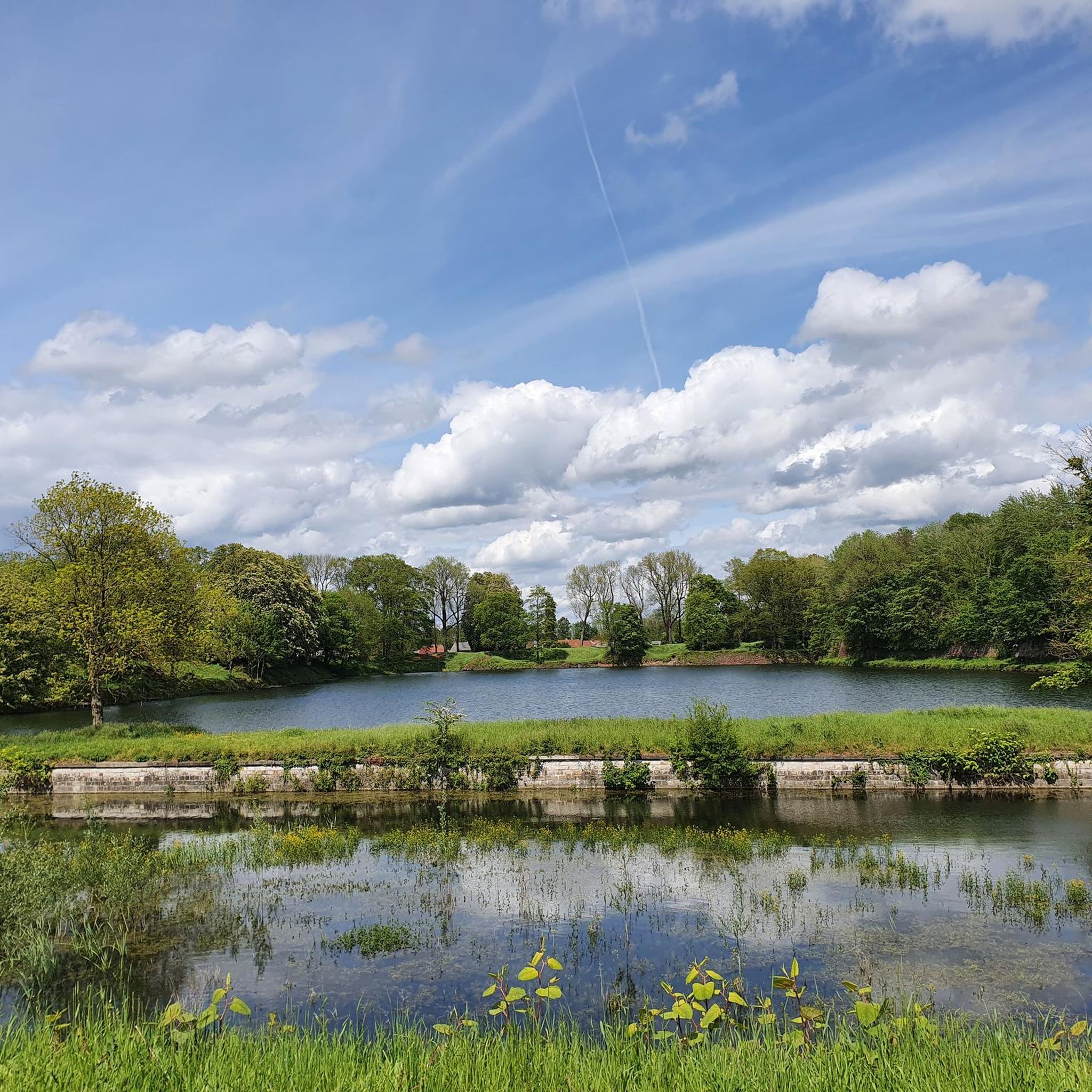


Tips from the Community

The ramparts, built in the Spanish period, were modified by the famous Vauban himself. We can still admire the towers surrounding the city since the seventeenth century, as well as many other monuments: the tower of the Edifieur Baudoin, one of the oldest of all, Caesar Bastion built under Louis XIV the Green stronghold and the headquarters hospital, or the Fauroeulx door, the only one that did not suffer the Second World War and its demolition. The current castle, the Cernay, was built in the seventeenth century, replacing the twelfth century built by Baldwin IV of Hainaut. You can still see some remains of the original castle that served as a residence to Charles the Bold, as a gateway and a set of Romanesque cellars.
0
0

The castle, built in the 12th century by Baldwin IV of Hainaut, was the home of the Counts of Hainaut, also Counts of Holland and Zeeland. Its last sovereign was a woman who was born in the castle in 1401. Charles the Bold and then his daughter were the last sovereigns to reside there. It was then abandoned and almost completely abandoned from the 16th century. Of the prestigious castle of the Middle Ages, few remains remain: an entrance gate and a set of remarkable Romanesque cellars. The current large building called Cernay actually dates from 1681.
15
0
The Palace of Margaret of Burgundy in Le Quesnoy is a historic building that used to serve as the residence of Margaret of Burgundy, Duchess of Bavaria-Straubing and Countess of Hainaut, Holland, Zeeland and Oosterbant. Margaret of Burgundy (1374-1441) was the daughter of Philip the Bold of Burgundy and Margaret of Male. She married William VI of Holland in 1385, and after his death in 1417 she continued to live in Le Quesnoy as a dowager. The palace was one of her favorite residences, and she lived there with her daughter Jacoba of Bavaria. The palace is designed in a Renaissance style with strongly fortified walls and gateways strategically placed to protect the city. The building is built of brick and stone, which is typical of the military architecture of that period.
15
0


Interesting place, a former fortress of Vauban.
1
0

Built in a pleasant valley carved out by the Rhonelle, this superb castle was built at the end of the 14th century. This ancient stronghold of Hainaut is an incredible historical witness, take the time to admire it from its gates.
1
0
Frequently Asked Questions
Which castles around Beaudignies are suitable for families?
Several castles in the Beaudignies area are considered family-friendly. Le Quesnoy offers fortifications with pleasant paths and green spaces for strolling. Potelle Castle, a 13th-century feudal structure, is also family-friendly and open to the public during heritage days. Additionally, The castle, with its historical significance and Romanesque cellars, is noted as family-friendly.
What kind of historical sites can I explore in the Beaudignies region?
The Beaudignies region is rich in historical sites. You can explore fortifications dating from the 16th century at Le Quesnoy, which features pleasant paths and green spaces. Potelle Castle is a beautiful 13th-century feudal structure. There's also Marguerite of Burgundy Castle, a historic building in Le Quesnoy with Renaissance style and fortified walls. The castle, built in the 12th century, retains an entrance gate and remarkable Romanesque cellars.
Are there any hidden gem castles or lesser-known historical sites near Beaudignies?
While not explicitly 'hidden,' Marguerite of Burgundy Castle in Le Quesnoy offers a glimpse into the residence of historical figures like Margaret of Burgundy. Its Renaissance style and fortified walls make it a significant, perhaps less-publicized, historical building to discover.
What outdoor activities can I do near the castles around Beaudignies?
The area around Beaudignies offers various outdoor activities. You can find numerous running trails, such as the 'Ramparts garden – Le Quesnoy loop' or the 'Ramparts garden – Potelle Castle loop'. For road cycling, routes like the 'Potelle Castle – Côte de la Cascade loop' are available. Hiking is also popular, with options like the 'Circuit of the Ramparts of Le Quesnoy' or the 'Potelle Castle – Porte de Fauroeulx loop'. You can find more details on these activities in the Running Trails around Beaudignies, Road Cycling Routes around Beaudignies, and Hiking around Beaudignies guides.
What is the best time of year to visit the castles near Beaudignies?
The best time to visit the castles around Beaudignies generally depends on your preference for weather and crowds. Spring and autumn offer milder temperatures, which are ideal for exploring the outdoor fortifications and paths. Summer provides warmer weather, but may also see more visitors. Some castles, like Potelle Castle, are open to the public during specific heritage days, which often occur in warmer months.
Are there specific events or heritage days for visiting castles like Potelle Castle?
Yes, Potelle Castle is known to be open to the public specifically during heritage days. These events offer a unique opportunity to explore the 13th-century feudal structure. It's advisable to check local event listings for specific dates and times of these heritage days.
What are the main attractions at Le Quesnoy's historical site?
Le Quesnoy is primarily known for its fortifications, which date from the 16th century. These fortifications feature pleasant paths and green spaces, making it an ideal spot for strolling and enjoying the historical atmosphere. Visitors appreciate its undeniable charm and the opportunity to explore the former fortress.
Can I find hiking trails that incorporate visits to these castles?
Yes, there are hiking trails that allow you to explore the historical sites. For example, the 'Circuit of the Ramparts of Le Quesnoy' is an easy hike around the town's fortifications. Another moderate option is the 'Potelle Castle – Porte de Fauroeulx loop from Le Quesnoy', which takes you past Potelle Castle. More hiking routes can be found in the Hiking around Beaudignies guide.
What remains of the original medieval castle known as 'The castle'?
Of the prestigious medieval castle, built in the 12th century, few remains exist today. These include an entrance gate and a set of remarkable Romanesque cellars. The current large building on the site, known as Cernay, actually dates from 1681, indicating that much of the original structure was abandoned and altered from the 16th century onwards.
What do visitors particularly enjoy about the castles around Beaudignies?
Visitors appreciate the rich history and architectural heritage of the castles. They enjoy the opportunity to explore structures like the 13th-century Potelle Castle and the 16th-century fortifications of Le Quesnoy. The pleasant paths and green spaces around the fortifications are often highlighted as inviting for strolls. The komoot community has shown its appreciation with numerous upvotes and shared photos of these historical sites.
Are there any cycling routes that pass by the castles in the Beaudignies area?
Yes, several road cycling routes in the region incorporate views of the castles. For instance, the 'Potelle Castle – Côte de la Cascade loop from Beaudignies' is a moderate route that passes by Potelle Castle. You can find more road cycling options in the Road Cycling Routes around Beaudignies guide.
Most popular routes around Beaudignies
Most popular attractions around Beaudignies

Get inspired with the komoot mobile app


Explore more
Looking for the best castles somewhere else? Discover other guides around Beaudignies:
