The 4 Most Amazing Peaks around Olula De Castro
Best mountain peaks around Olula De Castro are situated within the Sierra de los Filabres, the largest mountain range in Almería Province, Spain. This region features dramatic hills, reforested woodlands of holm oaks and pine trees, and a landscape transitioning from lower valley groves to higher altitudes. The area offers access to several notable peaks and scenic viewpoints, providing diverse natural environments for exploration. It is a remote mountain range with a rich history, including remains of Roman aqueducts and…
Last updated: August 26, 2026
Sierras de Baza and Los Filabres
Highlight • Mountain Pass
Tip by

Calar Alto Astronomical Observatory
Highlight • Structure
Translated by Google •
Tip by

Sign up now to discover places like this
Get recommendations on the best single tracks, peaks, & plenty of other exciting outdoor places.
Sign up for free
Ascent to Calar Alto from the Tabernas Desert via Gérgal
Highlight (Segment) • Climb
The road surface is in good condition, there …
Translated by Google •
Tip by

Tetica de Bacares Summit
Highlight • Summit
Translated by Google •
Tip by

Collado de Conde
Highlight • Mountain Pass
Showing Translation
Tip by

Start today with a free account
Your next adventure awaits.
Login or Signup
Tips from the Community

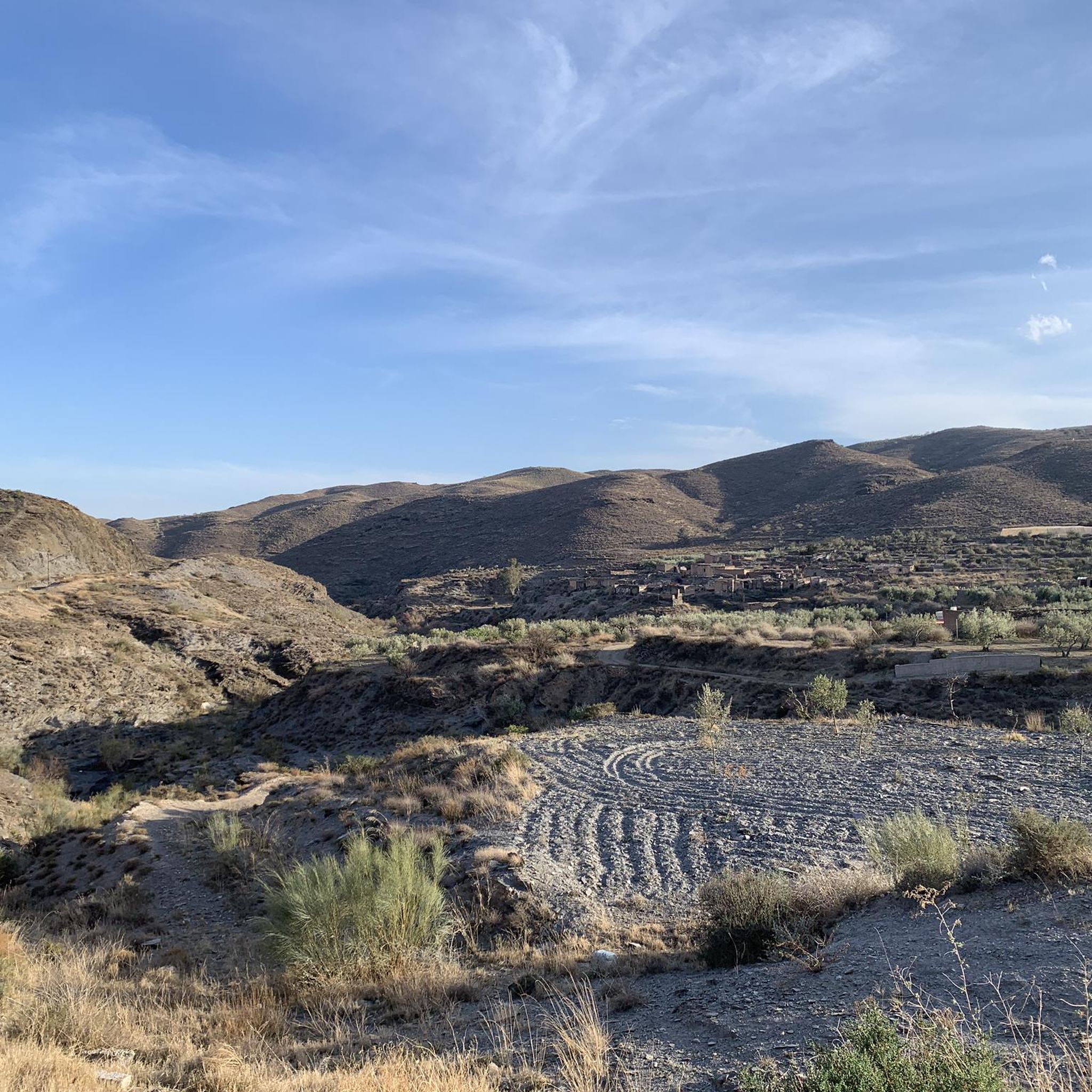
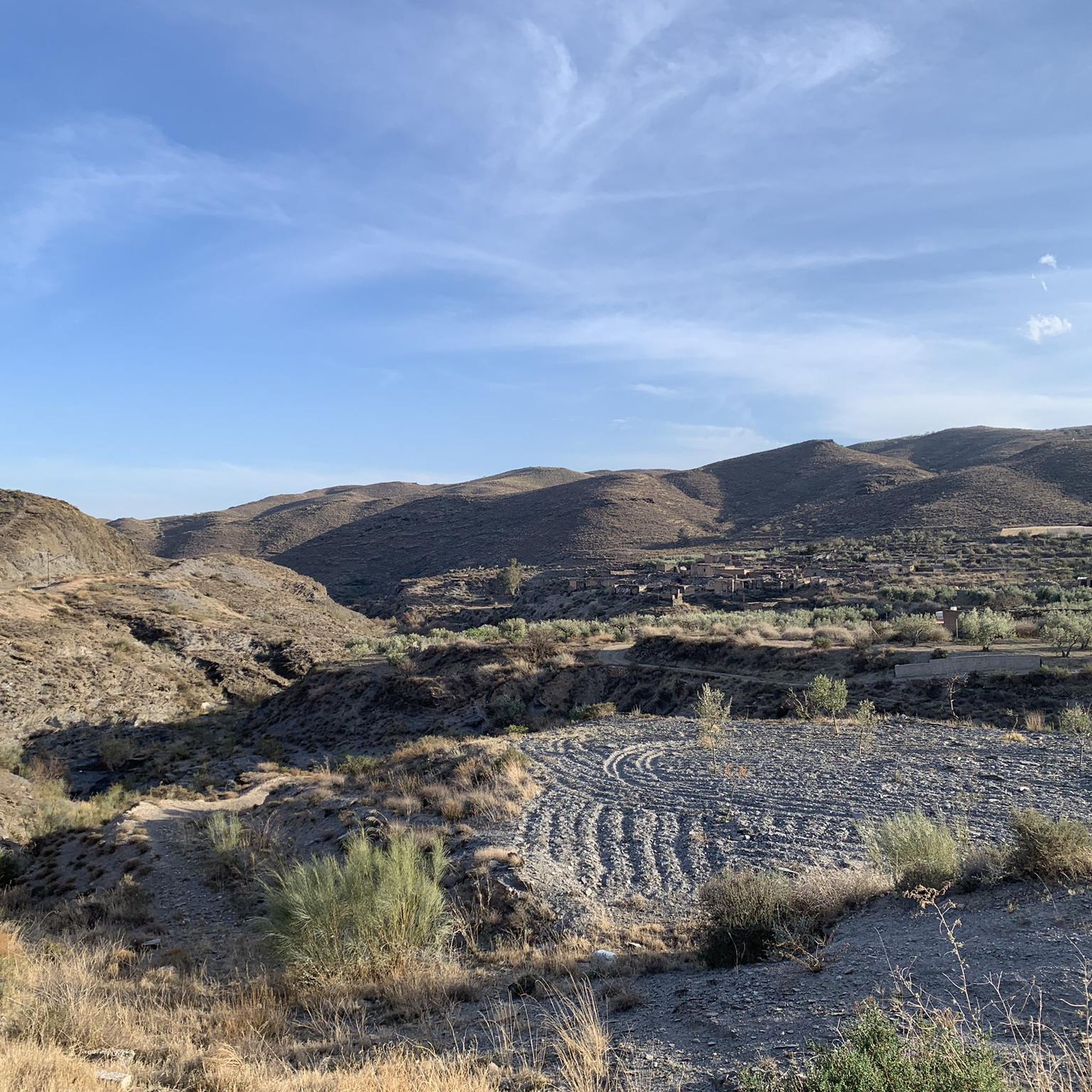
At 1,870 meters above sea level, the Collado de Conde marks a total change in the Almería landscape, moving from the arid environment, known for Western films, to a much cooler setting of mountains and pine forests. This point also functions as a crossroads, with roads, trails, and gravel tracks opening up in various directions.
0
0

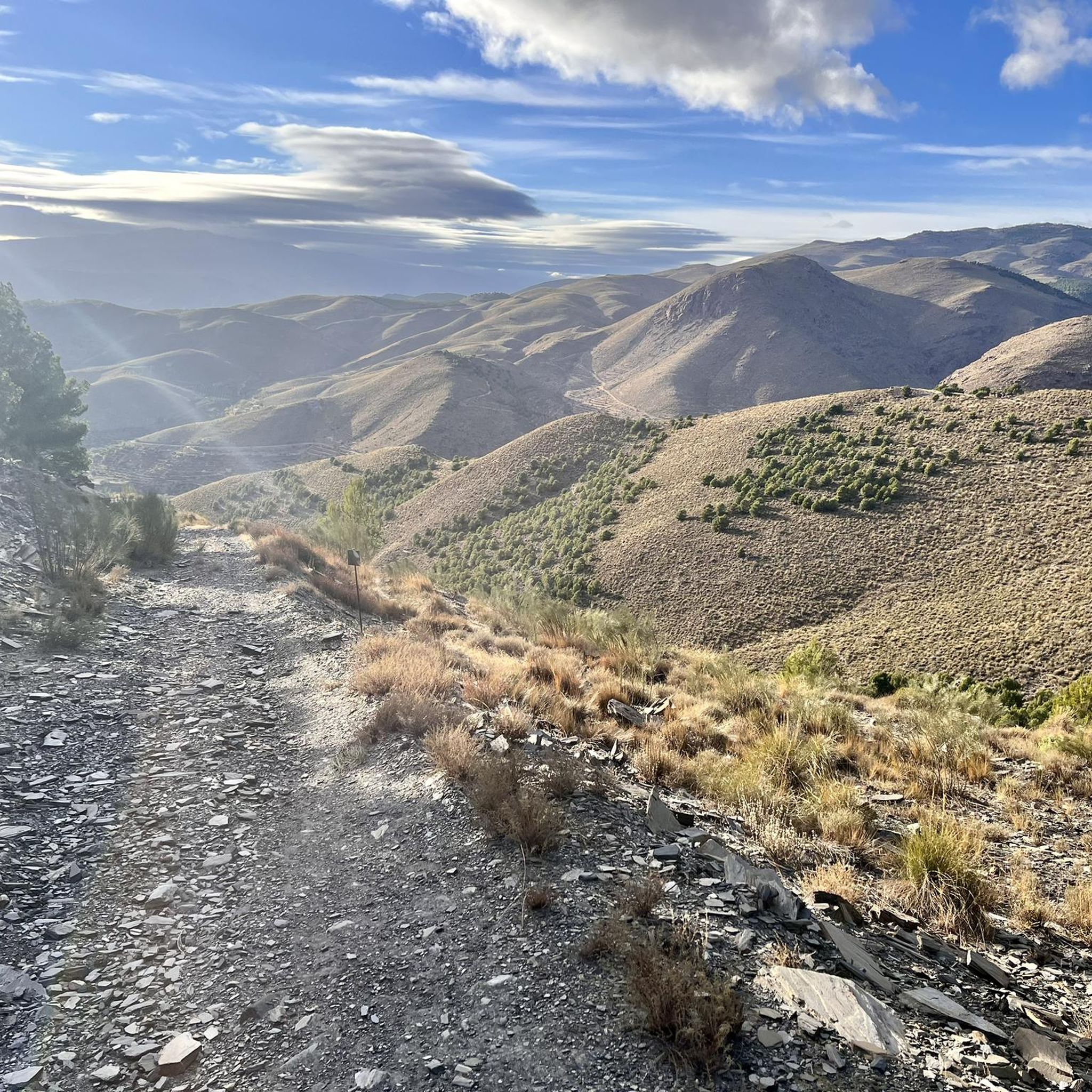
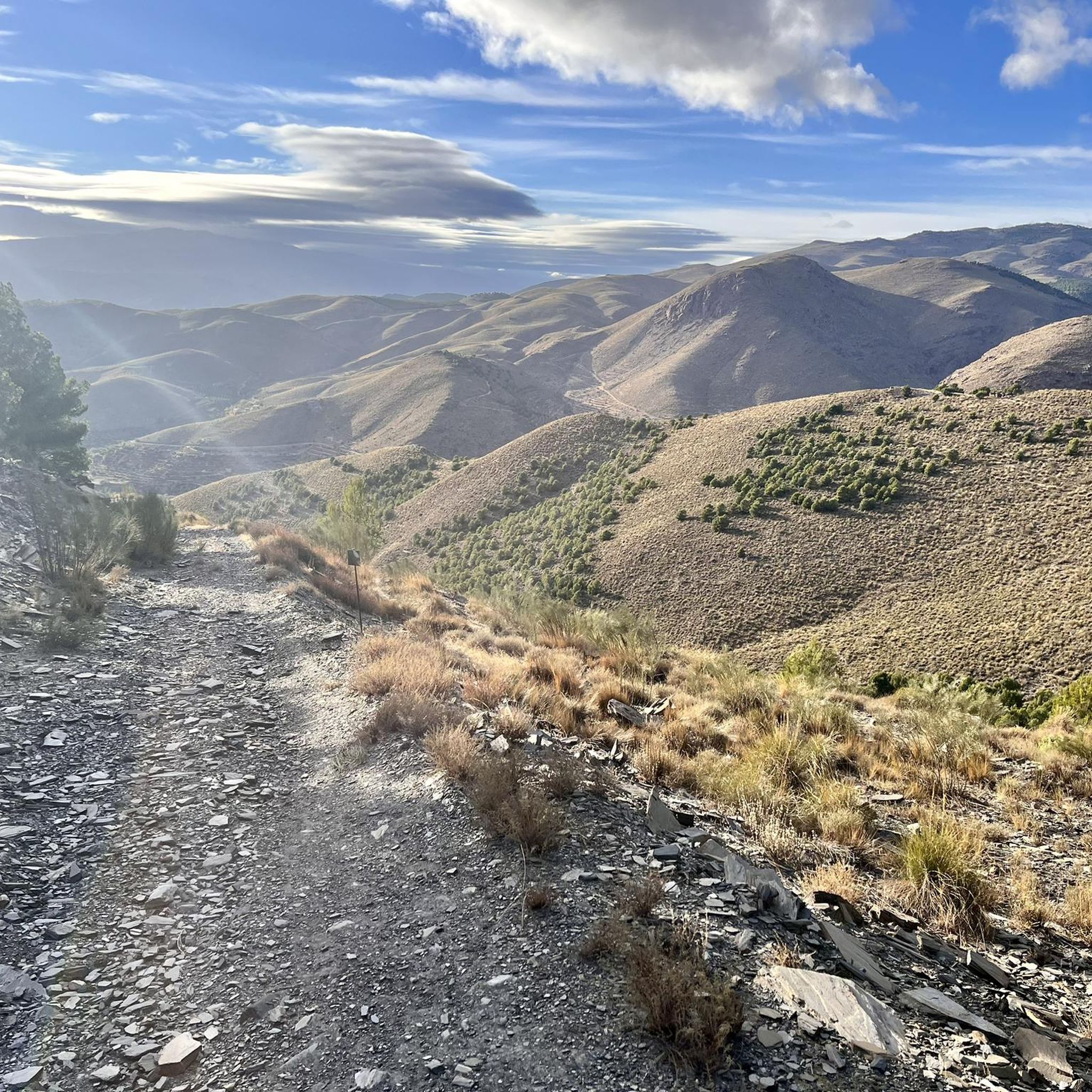
This is a long, steep, and spectacular climb to the summit of Calar Alto, crossing part of the Tabernas Desert from Gérgal. The road surface is in good condition, there is rarely much traffic, and the views are spectacular. Take it easy because, although the average gradient is 5.3%, the climb is long, exceeding 37 kilometers.
1
0

Both mountain ranges ensure that it hardly rains in this semi-desert area.
1
0

breathtaking place ... so extraterrestrialy beautiful and interesting ..also totally isolated
0
0

The Calar Alto plateau is located at an altitude of 2,168 metres, in the heart of the Sierra de los Filabres. Its clear sky allows us to see the stars at night, which is why this peak houses the largest observatory in Europe.
0
0

One big long climb with views over the telescopes. The descent gets chilly at night as it's so long!
0
0

Sierra de Baza and Sierra de Los Filabres are part of a remote mountain range over 2.000m height in the province of Granada and Almería, and the most isolated area of Badlands. This mountain range was a historic crossroads of cultures, and its legacy includes remains of Roman aqueducts or Arab castles. At the highest point of the range lies the iconic Calar Alto Observatory (2.168m), easy recognizable from far away. The range also includes one of the most iconic and spectacular mountain pass in the Iberian Peninsula, el Puerto de Velefique (1.820m), popular by the high number of hairpin in the South side. The South limit of Sierra de los Filabres reaches the village of Gérgal, considered the North gate of the Tabernas Desert.
1
0

Calar Alto Astronomical Observatory.
0
1
Frequently Asked Questions
What are the most notable mountain peaks and viewpoints near Olula de Castro?
The Sierra de los Filabres, the largest mountain range in Almería Province, offers several significant peaks. Among them are Calar Alto, the highest at 2,168 meters, known for its observatory; Tetica de Bacares Summit, the second highest at 2,086 meters; and Calar Gallinero at 2,049 meters. For stunning panoramas, Mirador La Merendera offers views of the Campo de Tabernas.
What unique attractions can I find at Calar Alto?
Calar Alto is home to the Calar Alto Observatory, which houses the largest telescope in continental Western Europe. Visitors can often take guided tours to learn about astronomy and experience the clear night skies, ideal for stargazing. The plateau itself is at 2,168 meters, offering expansive views.
Are there hiking opportunities between the main peaks?
Yes, a walking trail connects Calar Alto and Tetica de Bacares, providing hikers with far-reaching vistas from both summits. Additionally, Mirador La Merendera serves as a starting point for an easy circular trail that heads towards Calar Alto.
What kind of views can I expect from Mirador La Merendera?
Mirador La Merendera offers stunning panoramas of the Campo de Tabernas, a vast, desert-like basin known for its golden and ochre tones. It provides a different perspective of Almería, away from the coast, with views stretching to the horizon over bare, stony hills, contrasted by reforested pine trees in the immediate area.
What outdoor activities can I do near these mountain peaks?
The region around Olula de Castro and the Sierra de los Filabres is excellent for various outdoor activities. You can find numerous MTB trails, cycling routes, and traffic-free bike rides, many of which involve challenging climbs to peaks like Calar Alto and Alto de Velefique.
What is the best time to hike in the Sierra de los Filabres?
The Sierra de los Filabres experiences a semi-desert climate, ensuring it hardly rains. While specific best times can vary, the clear skies are particularly noted for stargazing at Calar Alto. Be prepared for chilly descents at night due to the high altitude.
Are there any historical or cultural points of interest in the Sierra de los Filabres?
The Sierra de los Filabres has a rich history as a crossroads of cultures. Its legacy includes remains of Roman aqueducts and Arab castles. Notably, Tetica de Bacares Summit played an important role in the geodetic connection between Europe and Africa in 1878.
What can I expect from the landscape when visiting the Sierra de los Filabres?
The landscape of the Sierra de los Filabres is diverse and dramatic. You'll encounter reforested woodlands of holm oaks and pine trees, transitioning from almond and olive groves in lower valleys to rugged, high-altitude environments. The region also borders the unique desert-like terrain of the Campo de Tabernas.
What is the Collado de Conde?
Collado de Conde, at 1,870 meters above sea level, marks a significant change in the Almería landscape. It transitions from the arid, Western film-like environment to a cooler setting of mountains and pine forests. It also serves as a crossroads for various roads, trails, and gravel tracks.
Are there challenging climbs for experienced cyclists in the area?
Yes, the region offers several challenging climbs. For instance, the Ascent to Calar Alto from the Tabernas Desert via Gérgal is a long, steep, and spectacular climb exceeding 37 kilometers with an average gradient of 5.3%. Many routes in the area, including those to Alto de Velefique, are rated as difficult.
What makes the Sierra de los Filabres a unique mountain range?
The Sierra de los Filabres is unique for being the largest mountain range in Almería Province, featuring peaks over 2,000 meters. It's known for its remote, isolated areas, its historical significance as a cultural crossroads, and the presence of the Calar Alto Observatory, making it a blend of natural beauty, scientific importance, and historical depth.
Most popular routes around Olula De Castro
Most popular attractions around Olula De Castro

Get inspired with the komoot mobile app


Explore more
See even more amazing summits around Olula De Castro with these guides:
