Top 20 Natural Monuments in Heves
Best natural monuments in Heves County are located in northern Hungary, featuring diverse landscapes. The region includes volcanic formations, extensive cave systems, and national parks. These natural features offer opportunities to explore unique geological and biological characteristics.
Best natural monuments in Heves
- The most popular natural monuments is Kékes Peak, a summit that is the highest peak in Hungary at 1014 meters. Many activities are available at the summit, including dining, souvenirs, and skiing in winter.
- Another must-see spot is Fátyol Waterfall, a waterfall. This is a popular place in the Szalajka Valley and is considered one of Hungary's most beautiful natural phenomena.
- Visitors also love Rákóczi Spring, a natural monument with clean, cold source-water. It is a suitable place to relax and includes a picnic area.
- Heves is known for its summits, waterfalls, and cave systems. The region offers a variety of natural monuments to see and explore, from high peaks to unique geological formations.
- The natural monuments in Heves are appreciated by the komoot community, with 46 upvotes and 20 photos shared by visitors.
Last updated: April 28, 2026
Szalajka Valley: Crystal-clear Stream and Waterfalls
Highlight • River
Translated by Google •
Tip by

Istállós-kő Cave
Highlight • Cave
Translated by Google •
Tip by
Sign up now to discover places like this
Get recommendations on the best single tracks, peaks, & plenty of other exciting outdoor places.
Sign up for free
Olasz-kapu Pass
Highlight • Mountain Pass
Translated by Google •
Tip by

Kékes Peak
Highlight • Summit
Tip by

Tar-kő
Highlight • Summit
Translated by Google •
Tip by

Fátyol Waterfall
Highlight • Waterfall
Tip by
Törökasztal Rock Formation
Highlight • Natural Monument
we can get there. From here you will find the Turkish Table almost a stone's throw away
a flat-topped formation called. It is incomparably beautiful from the protected rock group
panoramic view of the castle, the hills of Bükk and Mátra.
Translated by Google •
Tip by

Rákóczi Spring
Highlight • Natural Monument
Tip by
Ilona Valley Waterfall
Highlight • Waterfall
Translated by Google •
Tip by

Rock ledge in the Mátra Protected Landscape Area
Highlight • Viewpoint
Translated by Google •
Tip by
Sign up for free to discover even more natural monuments in Heves.
Sign up for free
Already have an account?
Start today with a free account
Your next adventure awaits.
Login or Signup

Tips from the Community

Extensive archaeological work since 2000 has confirmed that people lived in the Szalajka Valley as early as 40,000 years ago. The cave dwellers lived in the Istállós cave and even had contact with other tribes from the valley, some of which lived 500 kilometers away. People also lived in the idyllic valley during the Bronze Age, as evidenced by Celtic relics and an early earthwork. Nevertheless, there were no major settlements within the valley until the Middle Ages, as trade routes were difficult to establish in the heavily forested area. Continuous settlement in the Szalajka Valley began in the 14th century, when people settled in the village of Wárad, now known as Szilvásvárad. The high-quality timber served as a source of urban income even in the Middle Ages, leading to increasing numbers of settlements. Source: https://www.urlaub-ungarn.at/sightseeing/natuerliche-gehenswuerdigkeiten-ungarn/szalajka-tal.html
0
0
Extensive archaeological work since 2000 has confirmed that people lived in the Szalajka Valley as early as 40,000 years ago. The cave dwellers lived in the Istállós cave and even had contact with other tribes from the valley, some of which lived 500 kilometers away. People also lived in the idyllic valley during the Bronze Age, as evidenced by Celtic relics and an early earthwork. Nevertheless, there were no major settlements within the valley until the Middle Ages, as trade routes were difficult to establish in the heavily forested area. Permanent settlement in the Szalajka Valley began in the 14th century, when people settled in the village of Wárad, now known as Szilvásvárad. The high-quality timber served as a source of urban income even in the Middle Ages, attracting increasing numbers of people to settle there. Later, potash was also extracted from the valley, which ultimately gave the area its current name. Potash means "sal alcali" in Latin, and these words have been incorporated into the Hungarian language. Until the 20th century, the valley was only known regionally. With the construction of the Szilvásvárad narrow-gauge railway, the first tourists arrived to travel to the valley by train. Since the 21st century, however, the Szalajka Valley has become a purely tourist destination, with forestry operations remaining minimal. Source: https://www.urlaub-ungarn.at/sightseeing/natuerliche-sehenswuerdigkeiten-ungarn/szalajka-tal.html
0
0

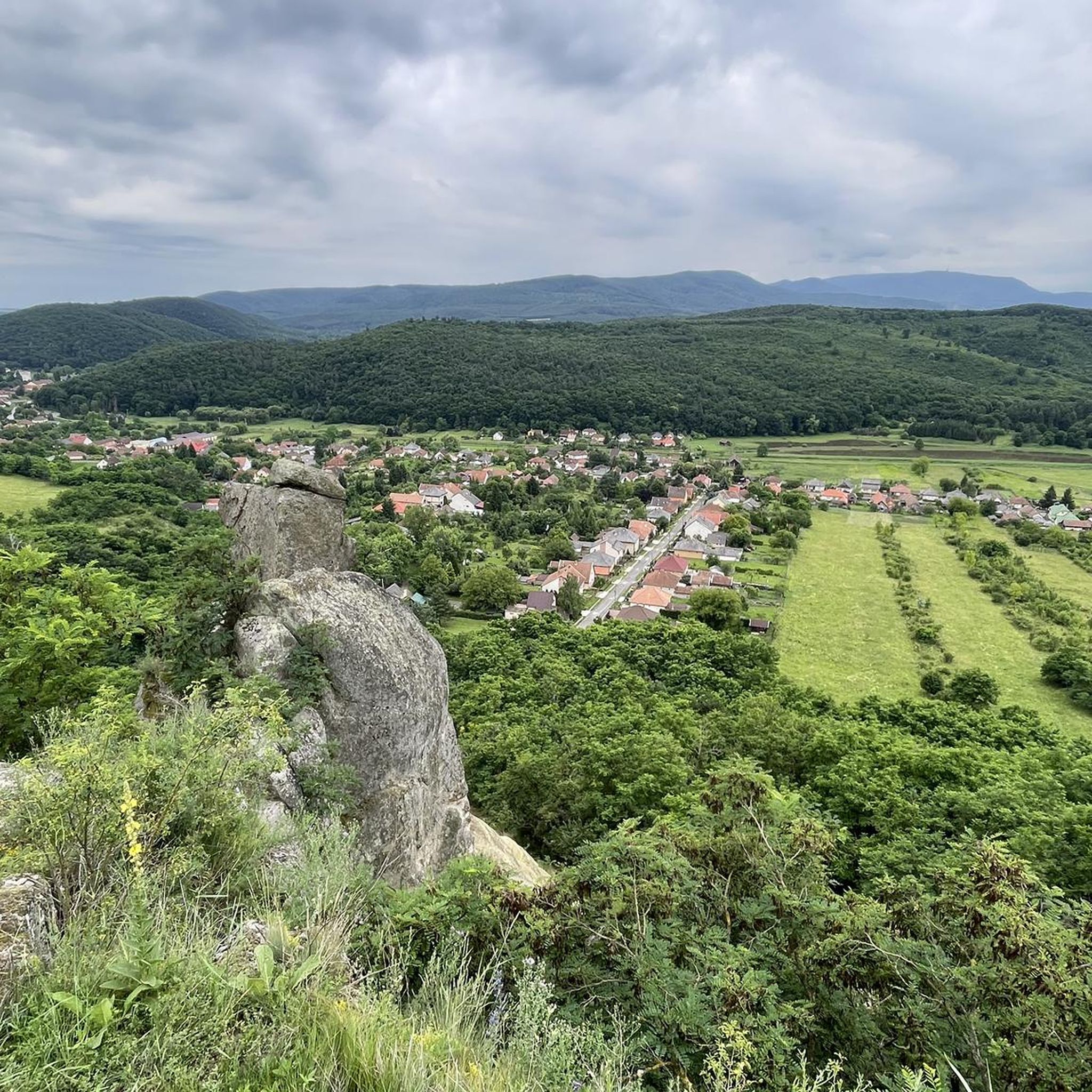
The top of the rocky outcrop is flat (so there’s no need to worry about climbing up). It offers a magical view, and in good weather you can even see Sirok Castle
0
0

This place can be explored starting from Jávorkút. You can go on forest paths and on a designated bike route on asphalt. I am now describing the asphalt route. From Jávorkút, you actually have to follow the asphalt road leading there until there is a fork. Here you can head back to the Lazy Valley towards Miskolc - Lillafüred, and turn right to Nagy mező. You have to go to Nagy mező, and when you reach it, you have to continue on the asphalt. There will be another fork where you have to keep right, and in a short time you will reach the Jewish Meadow where the Italian Gate is located. It is noteworthy that the asphalt we came on is actually the track of the old light railway, so there used to be a train here. It also transported stone and wood to the iconic landmark, the engine house, from where the wagons were lowered onto a funicular and then continued through Szilvásvárad towards Slovakia. The Italian Gate is famous because 150 Italian prisoners carved through the rock face here by hand so that the train could pass.
0
0

One of the most famous springs in the Mátra was originally called Közel-kút. The name referred to the fact that the former residents of Mátrafüred could reach it with a short walk from the village.
0
0
The waterfall can be reached via a steep path, so please drive carefully!
0
0
Frequently Asked Questions
What are some of the most popular natural monuments in Heves County?
Heves County offers a variety of popular natural monuments. Among them, Kékes Peak stands out as Hungary's highest point, offering dining, souvenirs, and winter skiing. The Fátyol Waterfall in Szalajka Valley is another must-see, known for its beauty. Visitors also appreciate Rákóczi Spring for its clean, cold water and picnic area.
Are there family-friendly natural monuments in Heves?
Yes, several natural monuments in Heves are great for families. The Szalajka Valley, with its crystal-clear stream and waterfalls, is a popular destination. It offers a scenic forest train ride and opportunities to explore the Fátyol Waterfall. Kékes Peak also provides facilities and activities suitable for families.
What unique geological features can I explore in Heves County?
Heves County is rich in unique geological formations. The Egerszalók - Salt Hill is a world-famous travertine terrace formed by thermal waters, creating a striking white 'salt hill.' The Szomolyai Kaptárkövek, or Beehive Stones of Szomolya, are fascinating formations with numerous niches carved into them, shrouded in mystery. Additionally, Bükk National Park features extensive karst formations, including caves and ravines.
Are there any historical or archaeological sites among the natural monuments?
Yes, Heves County has natural monuments with significant historical and archaeological value. The Istállós-kő Cave is one of Hungary's most protected and visited prehistoric caves, offering insights into ancient human activity. The Szomolyai Kaptárkövek (Beehive Stones) also present an archaeological mystery with their ancient carvings.
What kind of views can I expect from the natural monuments in Heves?
Many natural monuments in Heves offer exceptional panoramic views. From Kékes Peak, you can enjoy expansive vistas from Hungary's highest point. Bél-kő Hill provides unique views contrasting barren rock with green valleys. Nagy-Eged Hill offers panoramic views of Eger, the Bükk Mountains, and even the Mátra Mountains and Lake Tisza on clear days. Other viewpoints include Olasz-kapu Pass and Törökasztal Rock Formation.
What outdoor activities can I do near the natural monuments in Heves?
Heves County is ideal for outdoor enthusiasts. You can find numerous hiking trails, such as the 'Szikla-forrás (Rock Spring) – Upper Szalajka Lake loop' near Szalajka Valley. For cycling, there are road cycling routes like the 'Kékestető Lookout Tower – Kékestető loop.' Running trails are also available, including the 'Síkfőkúti-tó – Attila-kút loop.' You can explore more options on the Hiking in Heves, Road Cycling Routes in Heves, and Running Trails in Heves guide pages.
Are there any waterfalls to visit in Heves County?
Yes, Heves County is home to beautiful waterfalls. The Fátyol Waterfall (Veil Waterfall) in Szalajka Valley is considered one of Hungary's most beautiful natural phenomena. Another notable waterfall is the Ilona Valley Waterfall.
What is the best time to visit the natural monuments in Heves?
The best time to visit Heves County's natural monuments largely depends on your preferred activities. Spring and autumn offer pleasant temperatures for hiking and exploring the diverse flora. Summer is great for enjoying the thermal baths near Egerszalók - Salt Hill, while winter provides opportunities for skiing at Kékes Peak.
Can I find natural monuments suitable for challenging hikes?
For those seeking more challenging hikes, Tar-kő offers a demanding ascent with rewarding views. The Rock ledge in the Mátra Protected Landscape Area also presents a challenging climb. Bél-kő Hill features a 6.5 km trail from Bélapátfalva village to an 815-meter high lookout point, providing a unique and strenuous experience.
What do visitors enjoy most about the natural monuments in Heves?
Visitors frequently praise the stunning natural beauty and diverse landscapes of Heves. They particularly enjoy the unique geological formations like the Egerszalók - Salt Hill, the historical significance of sites like Istállós-kő Cave, and the panoramic views from summits such as Kékes Peak. The clear, clean water at places like Szalajka Valley and Rákóczi Spring is also highly appreciated for relaxation.
Are there any natural monuments that offer opportunities for relaxation and wellness?
Yes, Egerszalók - Salt Hill is an excellent spot for relaxation and wellness. The unique travertine terraces are formed by thermal waters, and the nearby thermal baths utilize the healing properties of this water, making it a perfect place to unwind in a beautiful natural setting.
Most popular routes in Heves
Most popular attractions in Heves

Get inspired with the komoot mobile app


Didn’t find what you were looking for?
Find even more amazing natural monuments in Heves by checking out the top Highlights region by region:
Explore more
Extend your search for the best caves by checking out these guides of the top ones in Heves:
