Top 9 Natural Monuments around Harly
Best natural monuments around Harly are found within the Harly Forest, a low hill range in the district of Goslar, Lower Saxony, Germany. This area rises to approximately 256 meters above sea level, characterized by a distinct natural landscape in the northern foothills of the Harz mountains. Geologically, the Harly is a "Geological Anticline," supporting a near-natural hillside forest on warm-dry chalk and silicate habitats. Its accessibility and unique ecological features make it a notable natural retreat.
Best natural monuments…
Last updated: June 27, 2026
Herb‑August Cave
Highlight • Cave
Translated by Google •
Tip by

Lisa von Harly Giant Sequoia
Highlight • Natural Monument
Translated by Google •
Tip by

Sign up now to discover places like this
Get recommendations on the best single tracks, peaks, & plenty of other exciting outdoor places.
Sign up for free
Fritz Laube Memorial
Highlight • Monument
Translated by Google •
Tip by

Bismarck Memorial Stone
Highlight • Monument
Translated by Google •
Tip by
Gottsched Square
Highlight • Monument
Translated by Google •
Tip by

Sign up for free to discover even more natural monuments around Harly.
Sign up for free
Already have an account?
Start today with a free account
Your next adventure awaits.
Login or Signup

Tips from the Community

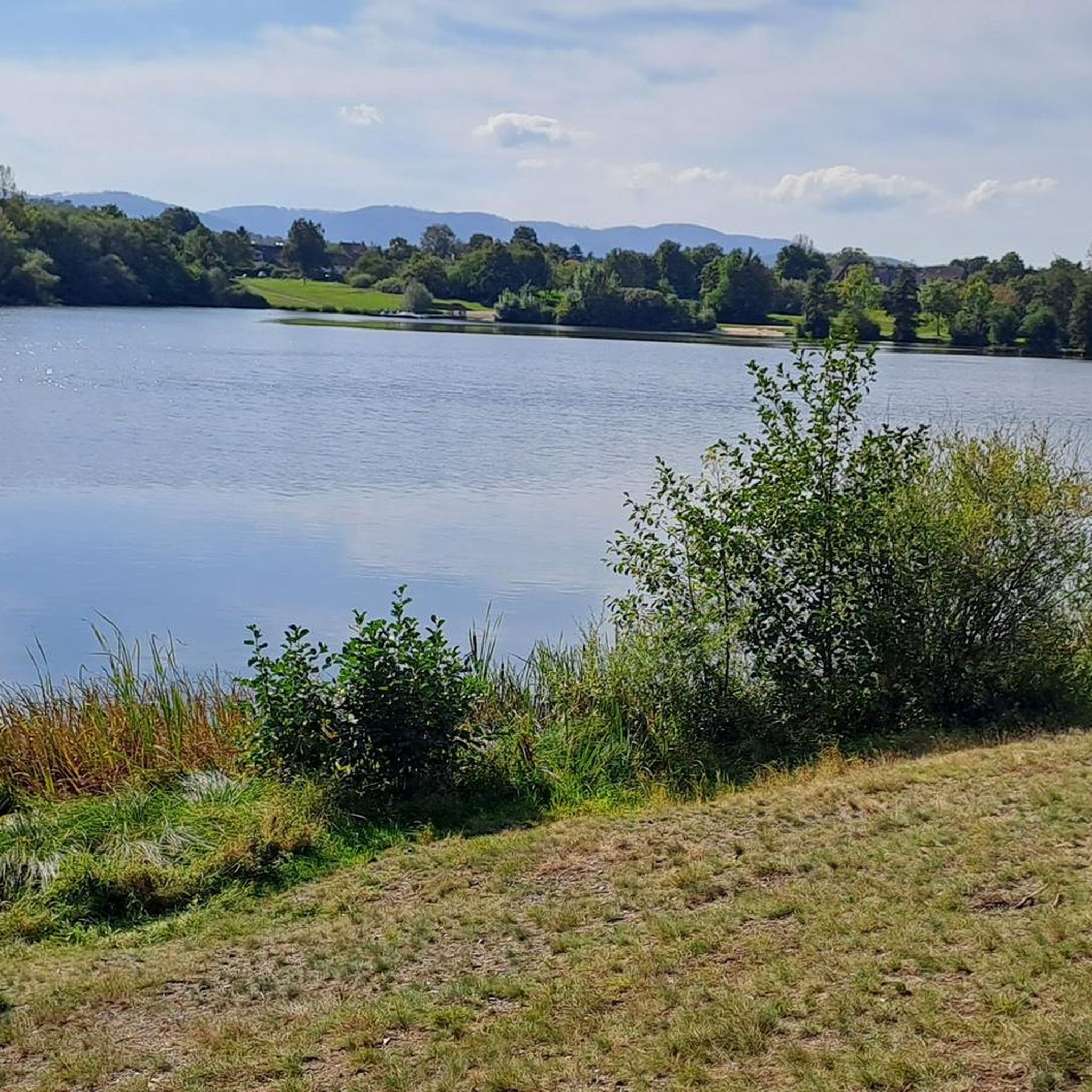
Surprisingly, a monolith with a memorial plaque stands on the slope. At first you might think that Prince Otto von Bismarck was banished from the center of Vienenburg - far from it. It is Albert Schloenbach (1811-1877), he was an important senior saltworks inspector and geologist who was intensively involved in researching the Harly forest. His work contributed significantly to the geological understanding of the region. In honor of his services, a memorial plaque was erected in Harly, which is attached to his favorite research area. (Source: Regionalheute). In Harly forest there is also an impressive sequoia tree, which was planted in 1880 by the then district forester. This tree has a circumference of 4.45 meters and was declared a natural monument in 1976. The giant sequoia tree is called 'Lisa von Harly' in Harly (Sequoiadendron giganteum). Nearby is the Kräuter-August Cave, which is also worth discovering because of the legend, before heading up to the Harly Tower. Although the name cave is a bit over-promising... have fun exploring. 🙋♂️
1
0

This tree is named "Lisa von Harly". The sequoia in Harly was planted by the then district forester in 1880 and has a circumference of 4.32 meters. This value was determined using a tape measure. The tree is 38 meters high.
1
0

The Harly Tower is usually open on Sundays from April to October from 10 a.m. to 4 p.m. Outside these times, the outdoor seating can be used, even if the tower itself is closed. Please note that access to the Harly Tower is not barrier-free.
2
1
On the way to the Harlyturm, a popular hiking destination and landmark on the Harlyberg near Vienenburg, there are several seating areas that offer hikers the opportunity to rest. The tower itself has seating both inside and outside. The tower's observation room has seating and a counter area, while outside the tower there are additional benches where you can relax.
2
1

In our latitudes, giant sequoias can grow up to 30 metres tall. In other regions of the world, there are even trees that measure over 80 metres.
3
0


Otto Eduard Leopold von Bismarck-Schönhausen was the first Chancellor of the German Empire. There is also a large, little-known memorial stone here in beautiful Harly. This granite block comes from the quarry in Bad Harzburg and was set at the suggestion of the two volunteers from Hau and Count Kolata. This stone stands with its base as deep in the earth as above, in its foundation. When the foundation stone was laid, a certificate was lowered, which was decorated with a few coins. This stone was donated in 1885 for Bismarck's 70th birthday. (Source: https://www.geocaching.com)
0
1
The Geopark Harz - Braunschweiger Land - Ostfalen is a UNESCO Global Geopark in the three German states of Lower Saxony, Saxony-Anhalt and Thuringia. In an area of about 100 × 120 kilometers, the Geopark Harz - Braunschweiger Land - Ostfalen includes nature parks and other nature conservation areas that identify the Harz, Braunschweiger Land and Ostfalen with Elm and Drömling as target areas for nature-oriented tourism. Within the Geopark Harz - Braunschweiger Land - Ostfalen, a natural change takes place from the Geesten lowlands of the Aller lowlands to the richly structured East Westphalian hills to the Harz low mountain range. (Source: Wikipedia)
0
0
Frequently Asked Questions
What unique natural features can I expect to see in the Harly Forest?
The Harly Forest is characterized by its unique geology as a "Geological Anticline," a tectonic salt formation. It is also home to a near-natural hillside forest thriving on warm-dry chalk and silicate habitats, supporting specific flora and fauna. You can also find impressive individual natural monuments like the Lisa von Harly Giant Sequoia.
Are there any historical sites among the natural monuments in Harly?
Yes, several natural monuments in Harly also have historical significance. For example, the Herb‑August Cave is a former sandstone quarry with a local legend. You can also find memorial stones like the Bismarck Memorial Stone and the Fritz Laube Memorial, which are points of interest along hiking trails.
What are some family-friendly natural monuments to visit in Harly?
Many natural monuments in Harly are suitable for families. The Lisa von Harly Giant Sequoia is an impressive tree that amazes visitors of all ages. The Herb‑August Cave offers a touch of history and legend, while the Bismarck Memorial Stone and Fritz Laube Memorial are located on pleasant hiking trails, often with benches for resting.
Can I go hiking near the natural monuments in Harly?
Absolutely! The Harly Forest offers numerous hiking opportunities. You can explore trails that lead past monuments like the Bismarck Memorial Stone and Gottsched Square. For more extensive hiking routes in the area, check out the Mountain Hikes around Harly guide.
Are there cycling opportunities around the Harly natural monuments?
Yes, the Harly region provides various cycling routes. While the natural monuments themselves are often within the forest, you can find many trails for different cycling styles nearby. Explore options in the Cycling around Harly guide for touring bicycles or the Gravel biking around Harly guide for off-road adventures.
What kind of forest environment is found in Harly?
The Harly Forest is recognized as a near-natural hillside forest (naturnaher Hangwald). It thrives on warm-dry chalk and silicate habitats, which contribute to a distinct ecosystem and specific types of flora and fauna adapted to these conditions.
What do visitors particularly enjoy about the natural monuments in Harly?
Visitors frequently express amazement at the impressive size and beauty of the Lisa von Harly Giant Sequoia. The historical aspect and inviting atmosphere of places like the Herb‑August Cave are also highly appreciated. Many enjoy the beautiful hiking trails that connect these interesting monuments within the quiet forest atmosphere.
Is there a specific natural monument that offers panoramic views?
While specific viewpoints are associated with some monuments like the Fritz Laube Memorial and Bismarck Memorial Stone, the highest point in the Harly Forest is the Harlyberg. An observation tower, the Harlyturm, is located there and likely offers panoramic views of the surrounding area.
What is the best time of year to visit the natural monuments in Harly?
The Harly Forest, with its near-natural hillside forest, is beautiful throughout the year. Spring brings fresh greenery, summer offers pleasant conditions for hiking, and autumn showcases vibrant foliage. Visiting during milder weather ensures a comfortable experience on the trails.
Are the trails around Harly's natural monuments suitable for dogs?
Generally, natural areas like the Harly Forest are dog-friendly, especially on marked trails. It's always recommended to keep dogs on a leash to protect wildlife and ensure a pleasant experience for all visitors. There are no specific restrictions mentioned for dogs at the individual natural monuments.
Where can I find parking when visiting the Harly natural monuments?
The Harly Forest is accessible via major roads like the A 395 motorway, B 241, and B 82, as well as various side roads and tracks. While specific parking areas for each natural monument are not detailed, you can typically find designated parking spots at trailheads or near popular access points to the forest.
Are there any natural monuments with unique trees in Harly?
Yes, the most prominent unique tree is the Lisa von Harly Giant Sequoia. This impressive, straight, and huge tree with an astonishing foot is a significant natural monument and a highlight within the forest, well worth seeing.
Most popular routes around Harly
Most popular attractions around Harly

Get inspired with the komoot mobile app


Explore more
Extend your search for the best caves by checking out these guides of the top ones around Harly:
