The best walks and hikes around Torremaggiore
5.0
(2)
17
hikers
4
hikes
Hiking around Torremaggiore offers access to diverse natural landscapes in Puglia, Italy. The region is characterized by its position near the Northern Daunian Mountains and the Gargano National Park, providing a blend of rolling hills, lush forests, and karstic plateaus. Hikers can explore varied terrain, from ancient woodlands to areas with striking white limestone cliffs.
Best hiking trails around Torremaggiore
- The most popular hiking route is Church of the Rosary – Arco Borrelli loop from Torremaggiore, a 4.3 miles…
Last updated: June 28, 2026
5.0
(1)
8
hikers
6.52km
01:44
70m
70m
Easy hike. Great for any fitness level. Easily-accessible paths. Suitable for all skill levels.
3
hikers
Easy hike. Great for any fitness level. Easily-accessible paths. Suitable for all skill levels.

Sign up for free
5.0
(1)
2
hikers
6.92km
01:48
50m
50m
Easy hike. Great for any fitness level. Easily-accessible paths. Suitable for all skill levels.
2
hikers
Easy hike. Great for any fitness level. Easily-accessible paths. Suitable for all skill levels.
2
hikers
4.32km
01:06
20m
20m
Easy hike. Great for any fitness level. Easily-accessible paths. Suitable for all skill levels.
Our route recommendations are based on thousands of hikes, rides, and runs completed by other people on komoot.
Start today with a free account
Your next adventure awaits.
Login or Signup
Tips from the Community

Historically, Chiesa di Sant Agostino is the most important religious center and largest sanctuary in the heart of the old town. Here, the wooden original of the patron saint of the city and diocese, the Black Madonna, is venerated. Augustinian monks brought the miraculous image of the Madonna, carved from pear and apple wood, from Sicily. The world-famous patronal festival Festa del Soccorso in May attracts tens of thousands of visitors annually and is considered intangible cultural heritage. During the procession, the highly revered wooden image, magnificently adorned with real jewelry and crowns, is carried on a heavy gilded canopy for hours through the streets. Particularly noteworthy is the explosive tradition of the Batterie Sanseveresi, where long chains of extremely loud firecrackers are ignited along the procession route, and brave locals, so-called Fujienti, run in the smoke right next to the exploding fireworks to prove their fearless devotion and gratitude to the Madonna.
1
0
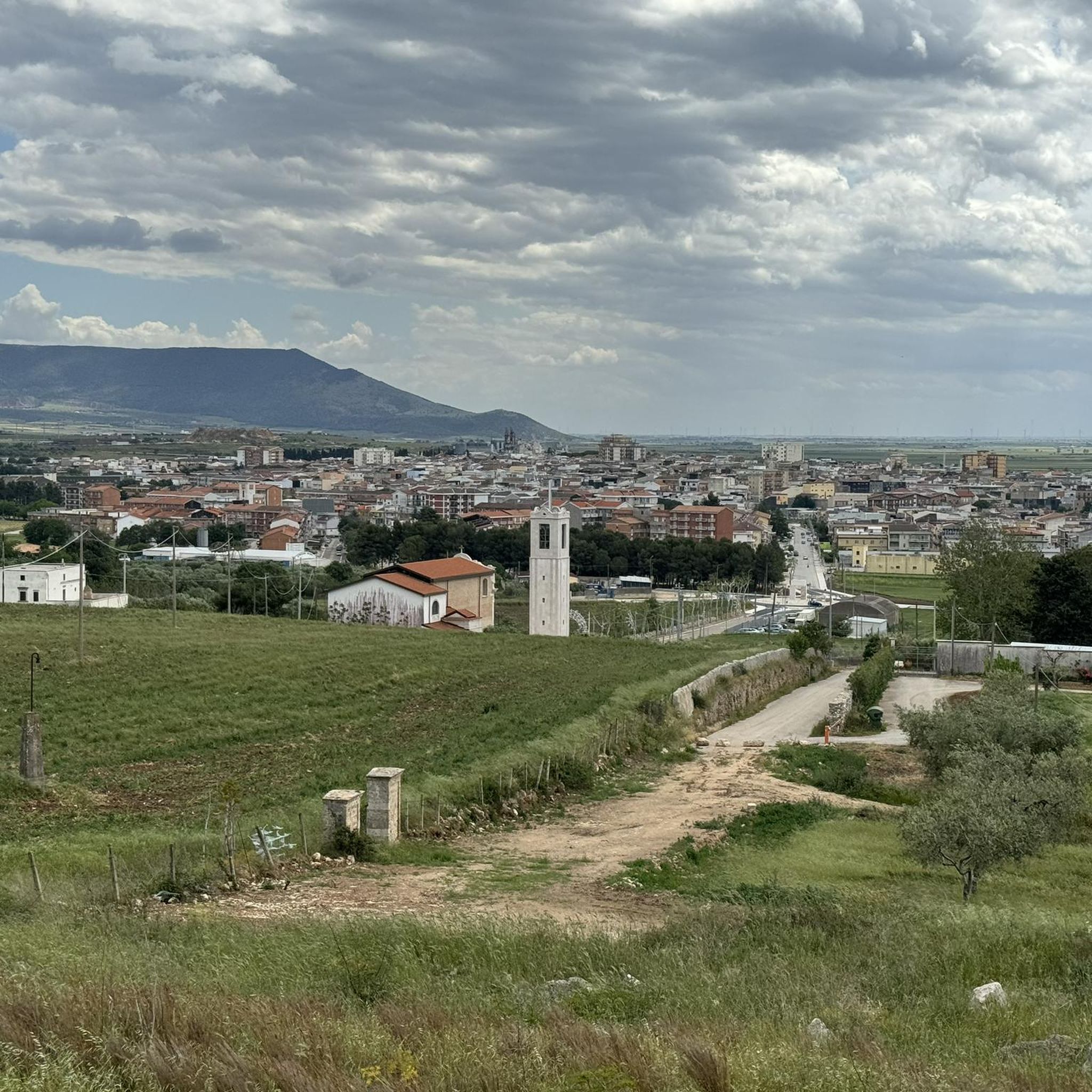
San Severo has around 49,000 inhabitants. It serves as a starting point for tours into the Gargano National Park and lies on the Via Francigena Sud route from Rome to Monte Sant'Angelo.
1
0
The Archconfraternity of Saint Anthony the Abbot preserves centuries-old traditions with solemn masses and processions.
1
0
According to legend, chronicles report that the patron saint, San Severino Abate, personally appeared on the city walls in 1522 and again in 1528 to put attackers and imperial troops to flight. Traditionally, hoofprints of his horse, which are said to be visible on the church altar, are considered proof of these miracles.
1
0
Also known as Chiesa Matrice, it is the oldest and historically most significant church building and is considered the historical nucleus of the city, as the original settlement developed around this sanctuary in the Middle Ages, Castellum Sancti Severini. It is protected as a National Monument. Originally in the Romanesque style as a three-nave church, first mentioned in 1059, it later received the form of a Latin cross through extensions.
1
0
Former Celestines monastery, now town hall
1
0
The Chiesa della Santissima Trinita dei Padri Celestini is the Baroque church on Piazza della Republica and forms a structural unit with the adjacent former Celestinian monastery, which today houses the town hall, Palazzo Celestini. The facade is a masterful example of 18th-century Neapolitan Baroque with elegant curved lines. The bell gable consists of a rare flat campanile a vela, which was typical of certain mendicant orders. The single-nave interior is richly decorated with marble altars and valuable paintings
1
0
Church of Santa Maria delle Grazie, also called Santa Lucia because it is located in the historic city center directly on Via Santa Lucia. It is famous for its magnificent marble altars and ceiling paintings and shapes this neighborhood.
1
0
Frequently Asked Questions
What is the best time of year to go hiking around Torremaggiore?
The most pleasant times for hiking in the Torremaggiore region are spring, from April to June, and autumn, from September to early November. During these seasons, the temperatures are milder, making for more comfortable walks, and the trails are generally less crowded. Summer can be very hot, especially in July and August, while winter might bring cooler temperatures and occasional rain.
Are there any easy, family-friendly hiking trails near Torremaggiore?
Yes, the area offers several easy trails suitable for families. For instance, the Church of the Rosary – Arco Borrelli loop from Torremaggiore is an easy 6.8 km circular route starting directly from Torremaggiore. Another option is the Church of San Severino – Church of Christ the King loop from San Severo, which is a shorter 3.7 km easy walk. These routes are generally flat with minimal elevation gain, perfect for a relaxed family outing.
Can I find circular hiking routes in the Torremaggiore area?
Absolutely. Many of the trails around Torremaggiore are designed as circular routes, allowing you to start and end at the same point without retracing your steps. Examples include the Castle of Lucera – Castello di Lucera loop from Lucera, which is an easy 6.7 km circular hike, and the Church of the Rosary – Arco Borrelli loop from Torremaggiore, a 6.8 km loop starting in town.
What kind of natural landscapes can I expect to see while hiking near Torremaggiore?
The region around Torremaggiore is incredibly diverse. To the west, the Monti Dauni offer rolling hills, lush forests, and green meadows, with the highest peak in Puglia, Monte Cornacchia, providing spectacular panoramic views. To the east, the Gargano National Park features karstic plateaus, deep gorges, and dramatic white limestone cliffs along its coastline, including the ancient Foresta Umbra, a UNESCO World Heritage site known for its towering trees and rich biodiversity.
Are there any historical sites or castles I can visit while hiking?
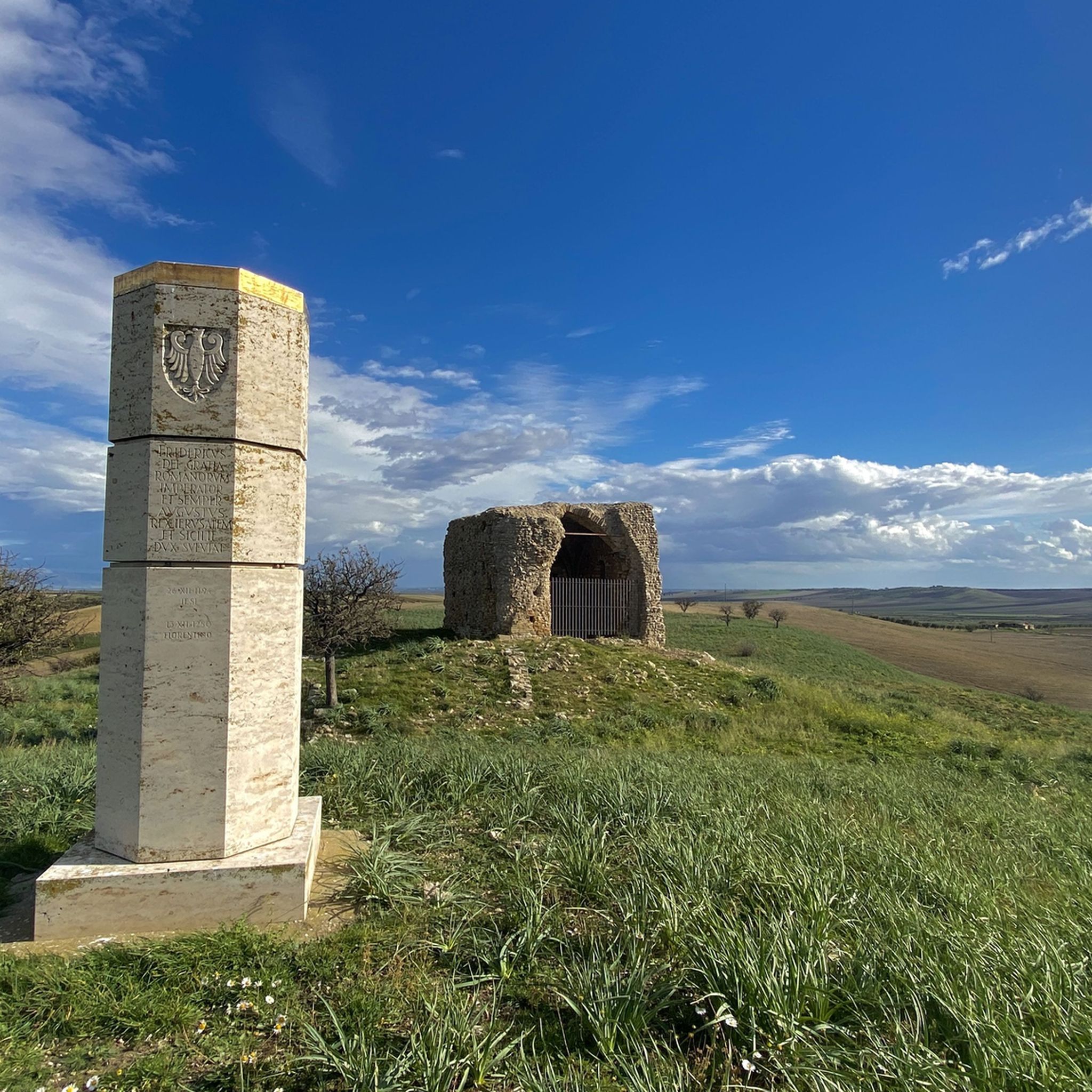
Yes, the area is rich in history. Many trails pass by or are close to significant historical landmarks. For example, the Castle of Lucera – Castello di Lucera loop from Lucera takes you near the impressive Castle of Lucera. You can also explore the archaeological site of Castel Fiorentino, where Emperor Frederick II died, or visit the Ducal Castle of Torremaggiore, a national monument.
What is the difficulty level of hiking trails around Torremaggiore?
The hiking trails directly around Torremaggiore and in the immediate vicinity are generally considered easy. All the routes listed in this guide are rated as easy, featuring minimal elevation gain and well-maintained paths. This makes them accessible for most fitness levels, including families and casual walkers. For more challenging terrain, you would need to venture further into the Monti Dauni or Gargano National Park.
Is it possible to hike with dogs on trails near Torremaggiore?
While specific regulations can vary by protected area, many trails in the broader Monti Dauni and Gargano National Park regions are generally dog-friendly, especially if dogs are kept on a leash. It's always advisable to check local signage or park authority guidelines for any specific restrictions, particularly in sensitive natural areas like the Foresta Umbra. Ensure your dog is well-behaved and that you carry waste bags.
Are there any trails that offer great viewpoints or panoramic vistas?
For truly spectacular views, you'll want to head towards the Monti Dauni. Monte Cornacchia, the highest peak in Puglia, offers rewarding hiking experiences with breathtaking 360-degree views encompassing Irpinia, Gargano, Maiella, and Tavoliere. Within the Gargano National Park, coastal trails provide stunning vistas of the Adriatic Sea, dramatic cliffs, and hidden coves like Baia delle Zagare.
What do other hikers say about the trails around Torremaggiore?
The komoot community highly rates the hiking experience around Torremaggiore, with an average score of 5.0 stars. Hikers often praise the accessibility of the trails, their suitability for relaxed walks, and the opportunity to explore both natural beauty and historical sites within easy reach of the town.
How can I get to the hiking trailheads if I don't have a car?
While some trails, like the Church of the Rosary – Arco Borrelli loop, start directly from Torremaggiore, reaching trailheads further afield in the Monti Dauni or Gargano National Park often requires a car. Public transport options to the more remote natural parks are limited. For local routes, check if regional bus services connect Torremaggiore to nearby towns like San Severo, where other routes like the Al Contadino Sanseverese – Church of San Severino loop begin.
Are there any specific attractions or points of interest near the trails?
Beyond the trails themselves, the region boasts several points of interest. Near San Severo, you can explore Old San Severo, known for its baroque decorations and historic churches. The Ducal Castle of Torremaggiore is a prominent landmark in town. For those venturing towards Lucera, the impressive Castle of Lucera is a must-see.
Most popular attractions around Torremaggiore

Get inspired with the komoot mobile app


Explore more
Browse the best Hikes in other regions.
