Top 7 Natural Monuments around Ciminna
Best natural monuments around Ciminna are found in a region characterized by diverse geological formations and protected natural areas. This Sicilian town is surrounded by landscapes featuring Messinian selenite chalks, karst structures, and extensive forests. The area offers opportunities to observe distinct geological formations, diverse flora, and significant birdlife within its natural reserves. It presents a blend of traditional agricultural landscapes and natural beauty.
Best natural monuments around Ciminna
- The most popular natural monuments is King's Pulpit, a man-made…
Last updated: June 28, 2026
Rocca Busambra summit (1,613 m)
Highlight • Summit
Translated by Google •
Tip by

San Felice Hermitage
Highlight • Religious Site
The refuge is located …
Translated by Google •
Tip by

Sign up now to discover places like this
Get recommendations on the best single tracks, peaks, & plenty of other exciting outdoor places.
Sign up for free
King's Pulpit
Highlight • Monument
Translated by Google •
Tip by
Ficuzza Forest
Highlight • Forest
This wood is part of the green lungs …
Translated by Google •
Tip by

Long Pool
Highlight • Lake
Translated by Google •
Tip by
Sign up for free to discover even more natural monuments around Ciminna.
Sign up for free
Already have an account?
Start today with a free account
Your next adventure awaits.
Login or Signup
Other adventures around Ciminna

Tips from the Community

As a great lover of hunting, King Ferdinand III of Bourbon, owner of the entire Ficuzza Forest and the Royal Hunting Lodge built nearby, had steps and a large ledge carved into this rocky outcrop for hunting. This is the so-called King's Pulpit, a beautiful and evocative sight.
0
0

Be careful on the westward ascent! The final 150 meters to the summit are quite steep and very exposed. The terrain is also not ideal, consisting of scree, small stones, tufts of grass, and loose earth, which can lead to falls. Furthermore, the path from this side is almost completely unmarked, and the depression between Rocca Ramusa and Rocca Busambra is completely overgrown, at least in summer. Furthermore, the path to the summit itself from the west is dominated by tall grasses, thistles, and other plants at this time of year. In high temperatures, you should carry at least two liters of water per person and wear a hat. In summer, I recommend spending plenty of time in the depression between Rocca Ramusa and Rocca Busambra because of the thick undergrowth there. I advise inexperienced hikers against the westward ascent.
0
0

At the end of the stairs you can see the remains of a bench and possibly a table.
1
1
A small pond. An oasis for the animals. Lots of birds and wild boar tracks.
0
0

Beautiful and easy excursions, nearby we find the Capreria refuge
1
0

At a height of 927 meters and is a throne carved on the sandstone rock that the reuse used to hunt while sitting.
0
0

Magnificent 360 degree panorama over the whole of western Sicily, especially sunrise and sunset. The ascent and descent can be very challenging.
1
2
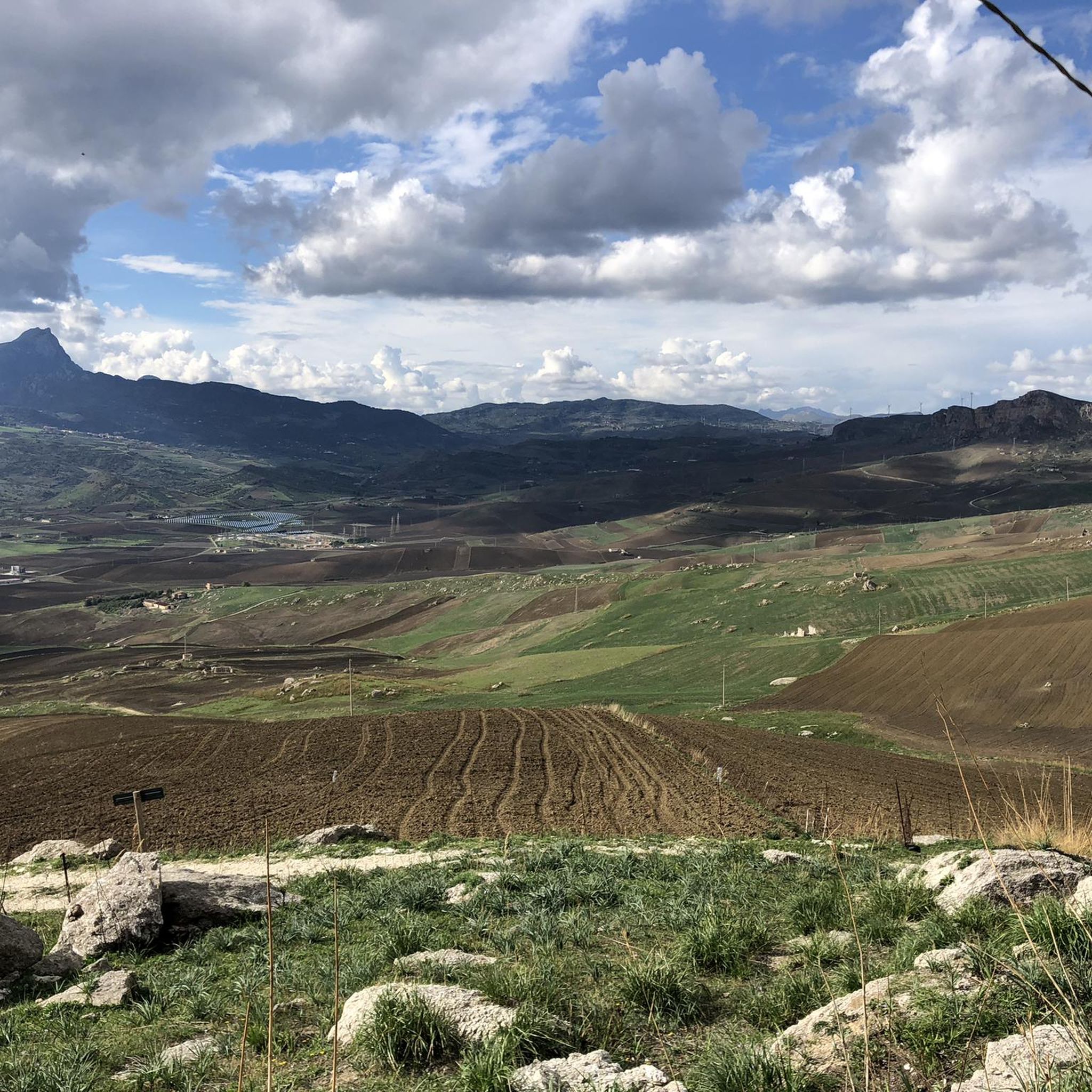
The highest point of Rocca Busambra, at 1613 meters above sea level. The view is spectacular and recalls that of the much higher continental mountains.
1
0
Frequently Asked Questions
What unique geological features can I explore around Ciminna?
The region around Ciminna is renowned for its distinct geological formations, particularly within the Serre di Ciminna Oriented Nature Reserve. Here, you can observe Messinian selenite chalks, which are gypsum crystals formed over 6 million years ago. These formations have created various karst and tectonic structures, including numerous sinkholes and small caves like the suggestive Skull Cave.
Are there any natural monuments suitable for families with children?
Yes, several natural monuments around Ciminna are family-friendly. The Ficuzza Forest offers beautiful and easy excursions, making it ideal for families. Additionally, the San Felice Hermitage, located within a nature reserve, provides a tranquil refuge and hospitality services for groups and families.
Where can I find the best panoramic views of the area?
For spectacular panoramic views, head to the Rocca Busambra summit (1,613 m). It offers a magnificent 360-degree panorama over western Sicily, with views reminiscent of much higher continental mountains. Another excellent viewpoint is the King's Pulpit, which provides historical insight along with scenic vistas from its 927-meter elevation.
What kind of wildlife can be observed in the natural monuments near Ciminna?
The rocky cliffs of the Serre di Ciminna Oriented Nature Reserve are a vital habitat for various bird species. You can often spot nocturnal and diurnal birds of prey, such as buzzards and kestrels. Rarer species like the lesser kestrel, lanner falcon, and the critically endangered Egyptian vulture also find refuge here. Mammals like porcupines and hedgehogs inhabit the reserve as well.
What hiking opportunities are available near Ciminna's natural monuments?
Ciminna offers diverse hiking opportunities. You can find trails leading through the Ficuzza Forest, including a path to Rocca Busambra. The Serre di Ciminna Oriented Nature Reserve also provides trails for nature enthusiasts. For more detailed routes, explore the Hiking around Ciminna guide, which includes routes like the moderate 'Dragon's Whirlpool Pond – Torretta Tower loop'.
Is there a specific natural monument that is particularly peaceful or unique?
The Dragon's Whirlpool Pond offers a unique and peaceful experience, especially in the low season. While it remains dry for most of the year, the surrounding landscape is considered fascinating and provides an oasis of serenity.
What is the best time of year to visit the natural monuments around Ciminna?
The best time to visit is generally during the spring (April-May) and autumn (September-October) when the weather is mild and pleasant for outdoor activities like hiking and wildlife observation. Summer can be very hot, especially for challenging ascents like Rocca Busambra, where you should carry plenty of water and wear a hat.
Are there any historical sites integrated with the natural landscapes?
Yes, the area blends natural beauty with historical significance. The King's Pulpit is a notable example, where King Ferdinand III had a stairway carved into the rock for hunting. The San Felice Hermitage also offers a historical and spiritual refuge within a natural reserve.
Can I find information about the Serre di Ciminna Oriented Nature Reserve online?
Yes, for more detailed information about the Serre di Ciminna Oriented Nature Reserve, including its ecological importance and features, you can visit the official Ciminna tourism website: visitciminna.it.
What other outdoor activities are available near Ciminna's natural monuments besides hiking?
Beyond hiking, you can explore mountain biking and road cycling. For mountain biking, check out the MTB Trails around Ciminna guide, which features routes like the 'Caccamo, Roccapalumba, and Borgo dei Ferrovieri Loop'. Road cycling enthusiasts can find routes in the Road Cycling Routes around Ciminna guide, including a challenging 'Piazza Duomo, Termini Imerese loop'.
What should I be aware of when attempting challenging routes like Rocca Busambra?
When ascending Rocca Busambra summit (1,613 m), especially from the westward side, be aware that the final 150 meters are quite steep and exposed. The terrain can be loose, consisting of scree and small stones. The path may also be unmarked and overgrown in summer. It's crucial to carry at least two liters of water per person in high temperatures and wear appropriate gear. Inexperienced hikers are advised to exercise caution on the westward ascent.
Most popular attractions around Ciminna

Get inspired with the komoot mobile app


Explore more
Extend your search for the best caves by checking out these guides of the top ones around Ciminna:
