Top 7 Natural Monuments around Tonco
Natural monuments around Tonco offer a diverse landscape in the Monferrato region of Piedmont, Italy. This area is characterized by rolling hills, vineyards, and protected natural reserves. Visitors can explore unique geological features, ancient trees, and sites where nature and history intertwine. The region provides opportunities for outdoor exploration amidst its natural beauty.
Best natural monuments around Tonco
- The most popular natural monuments is Sanctuary of the Madonna di Crea, a religious building located within a protected nature reserve.…
Last updated: August 22, 2026
Sanctuary of the Madonna di Crea
Highlight • Religious Site
Translated by Google •
Tip by

Bialbero di Casorzo
Highlight • Natural Monument
Showing Translation
Tip by

Sign up now to discover places like this
Get recommendations on the best single tracks, peaks, & plenty of other exciting outdoor places.
Sign up for free
Church and Fountain of Sant'Eusebio
Highlight • Religious Site
Translated by Google •
Tip by
Astigiano Paleontological Park
Highlight • Natural Monument
Translated by Google •
Tip by
WWF Oasis Villa Paolina
Highlight • Natural Monument
Translated by Google •
Tip by

Sign up for free to discover even more natural monuments around Tonco.
Sign up for free
Already have an account?
Start today with a free account
Your next adventure awaits.
Login or Signup

Tips from the Community

The Bialbero di Casorzo is one of the most famous natural curiosities of Piedmont, in Italy.
15
0
Place of worship kept in perfect condition.
9
1

The German-language television series "Treasures of the World - Heritage of Humanity" - which I highly recommend - is dedicated to short film clips featuring UNESCO World Heritage sites from all continents and eras. This includes the "Sacri Monti" in northern Italy (there are eight of these "Sacred Mountains" in Piedmont, and a ninth in Lombardy), which are presented to culture-loving viewers in a 15-minute segment. This can be accessed in the ARD Media Library at the following link =>> https://www.ardmediathek.de/video/schaetze-der-welt/heilige-berge-in-piemont-italien-folge-396/3sat/Y3JpZDovL3N3ci5kZS84ODgxMzc2
3
0
The German-language television series “Treasures of the World - Heritage of Humanity” - which I can recommend without reservation - is dedicated to the places with UNESCO World Heritage sites on all continents and eras in short film clips. This includes the “SACRI MONTI” in northern Italy (there are a total of eight of these “Holy Mountains” in Piedmont and a ninth in Lombardy), which are presented to the culture-loving viewer in a 15-minute clip. This can be accessed in the ARD media library at the following link => https://www.ardmediathek.de/video/schaetze-der-welt/heilige-berge-in-piemont-italien-folge-396/3sat/Y3JpZDovL3N3ci5kZS84ODgxMzc2
1
0

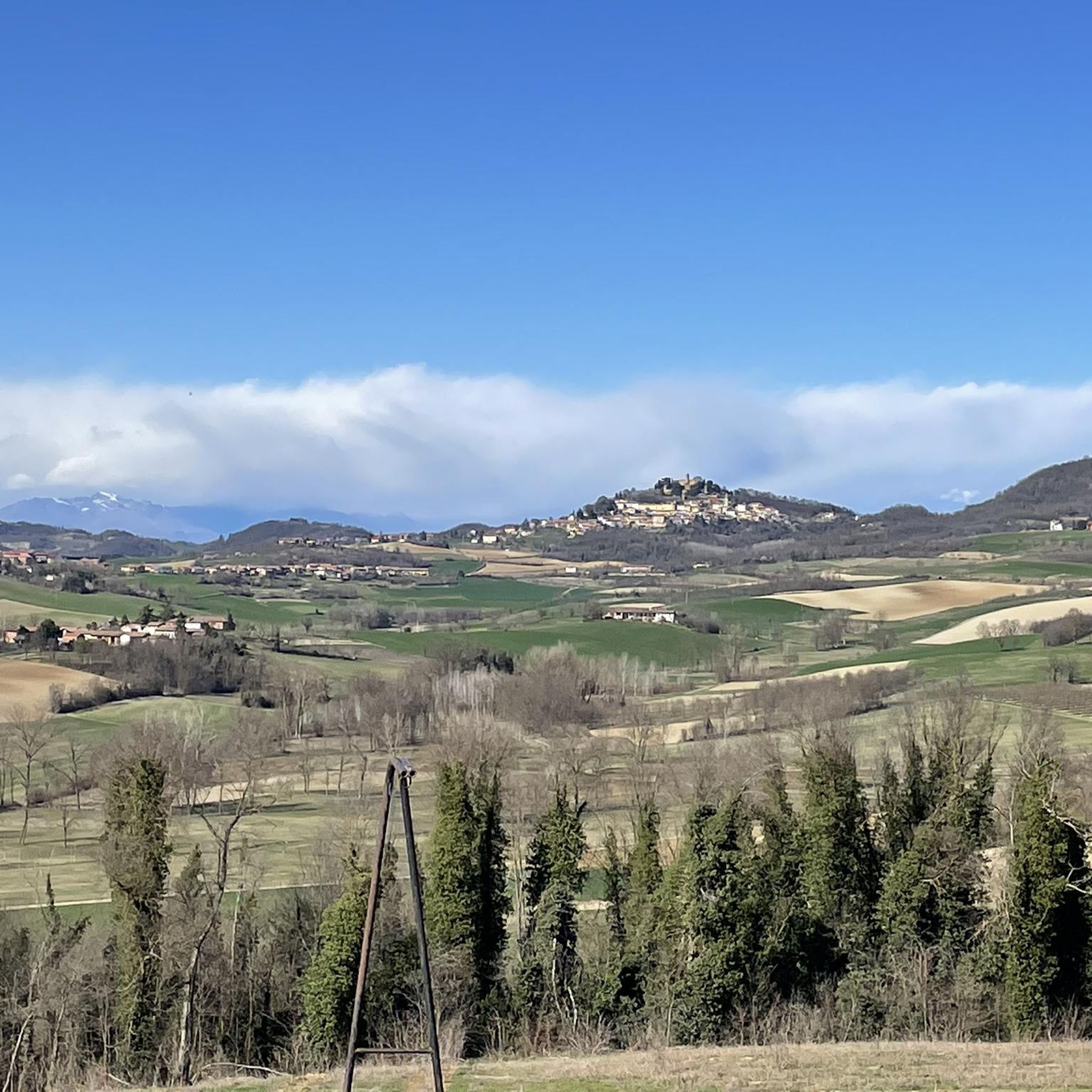
On the top of a hill immersed in a splendid landscape of vineyards, stands the Sacro Monte di Crea, founded in 1589. Inspired by the Sacro Monte di Varallo, it was born as a pilgrimage destination and today it is an enchanting place, perfect for walking among the greenery of the protected nature reserve. Along the route you will encounter 23 chapels and 5 hermitages, among which the evocative chapel of Paradise, dedicated to the Coronation of Mary, stands out. From here, your gaze is lost in a breathtaking panorama that embraces the Alpine chain and the surrounding rolling hills.
5
1

In the heart of Monferrato, on the top of a hill surrounded by a wonderful wine-growing landscape, stands the Sacro Monte di Crea, founded in 1589 on the initiative of Costantino Massino, Lateran prior of the Sanctuary of the Madonna Assunta. Costantino Massino proposed building a religious itinerary inspired by the Sacro Monte di Varallo, to encourage prayer and meditation and to renew the Marian devotion linked to the Sanctuary, a pilgrimage destination of considerable importance since the 11th century. The strong bond between the sanctuary and the ruling dynasty in Monferrato made the duke, the nobility, the high clergy and the local communities participate in the enterprise. In the first phase of the history of the Sacro Monte, which ended around 1657, important artists also active in the Sacri Monti of Orta, Varallo and Varese worked there, including Moncalvo, the Prestinari and the de Wespin, authors of the spectacular sculptural complex of the Chapel of Paradise (c. 23), created in the years between 1604 and 1612. During the 18th century, the Sacro Monte gradually fell into a state of abandonment and, between 1796 and 1801, the incursions of the French revolutionary troops contributed to the ruin of many structures, statues and frescoes. For several decades, the Sacro Monte was abandoned and only in 1820 a community of Franciscan friars, who had become responsible for the Sanctuary, began to restore some buildings. In 1885, a systematic restoration campaign began, supported by the bishop of Milan Nazari di Calabiana and destined to last until the 1920s. During this phase, in which some buildings were built from scratch, the famous symbolist sculptor Leonardo Bistolfi intervened in chapel 16, modeling the statues of the Ascent to Calvary. (c) https://www.sacrimonti.org/it/sacro-monte-di-crea
3
0

Church and fountain of Sant'Eusebio, patron saint of the entire Piedmont region, it was he who brought the oriental cult of the Black Madonna, to which the Cathedral of Vercelli and the Sacro Monte of Crea are linked; legend has it that passing by here he sat down and put down his stick; at that point the water began to gush;
2
0

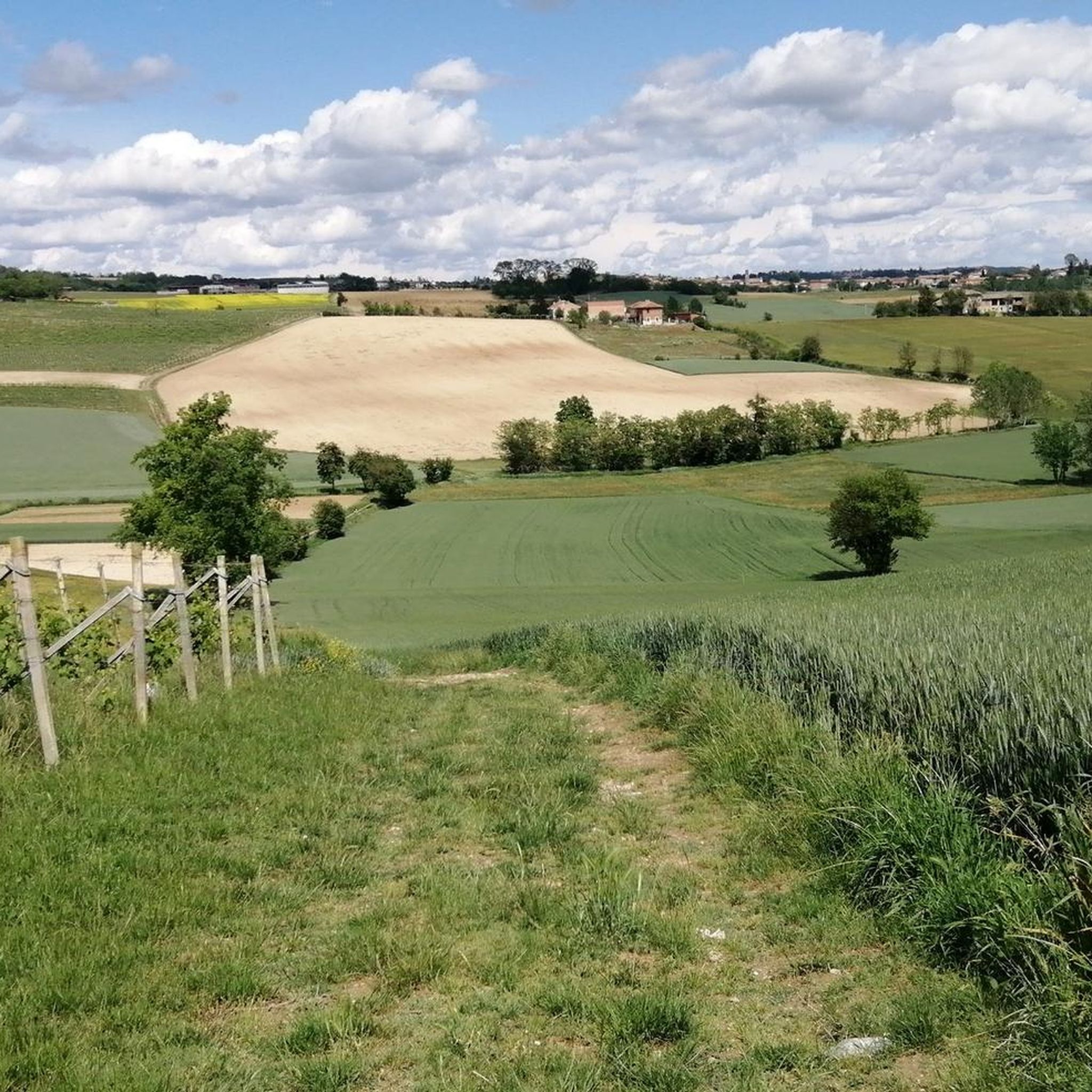
The Biarancio di Casorzo is located between Grana Monferrato and Casorzo, in Piedmont. It is called 'Biarancio' as this tree is a mulberry tree on which a cherry tree has grown. The best season to admire the Biarancio is at the end of spring, when it is in bloom.
2
0
Frequently Asked Questions
What unique natural features can I explore around Tonco?
The Monferrato region around Tonco is known for its diverse natural features. You can discover ancient trees, such as the fascinating Bialbero di Casorzo, where a cherry tree grows atop a mulberry tree. The area also features paleontological sites like the Astigiano Paleontological Park, rich in greenery and birdlife, and protected natural reserves such as the WWF Oasis Villa Paolina.
Are there any historical or cultural sites integrated with nature near Tonco?
Yes, the region beautifully blends nature with history and culture. The Sanctuary of the Madonna di Crea is a prominent example, located on a hilltop within a protected nature reserve. It offers panoramic views of the Alpine chain and surrounding hills. Another site is the Church and Fountain of Sant'Eusebio, a place of worship with historical significance, where legend says water began to gush from the ground.
What is the best time of year to visit the natural monuments around Tonco?
Spring is an excellent time to visit, especially if you wish to see the Bialbero di Casorzo in its most spectacular state, when the cherry tree blossoms. Generally, spring and early autumn offer pleasant weather for exploring the rolling hills and natural reserves of Monferrato.
Are there family-friendly natural monuments in the Tonco area?
Absolutely! Several natural monuments are suitable for families. The Bialbero di Casorzo is a curious natural wonder that children often find fascinating. The Astigiano Paleontological Park provides a serene environment for all ages to enjoy nature and birdlife. Additionally, the WWF Oasis Villa Paolina offers facilities and educational opportunities within its meadows, woods, and paths.
What kind of outdoor activities can I do near these natural monuments?
The Monferrato region offers various outdoor activities. You can find numerous cycling routes, including road cycling and touring bicycle options, that take you through the scenic landscapes near these monuments. For example, there are routes like the 'Via Cavour (Tonco AT) – Cardona loop' for touring bicycles or the 'Castello di Montemagno – View of Frassinello Monferrato loop' for road cycling. You can explore more options on the Road Cycling Routes around Tonco guide or the Cycling around Tonco guide.
Are there hiking or gravel biking trails available around Tonco's natural areas?
Yes, the area is well-suited for both hiking and gravel biking. You can find trails that lead to or pass by natural monuments. For gravel biking, routes like the 'Moncalvo town centre – Sanctuary of Crea loop' offer a challenging way to explore the region. More gravel biking options are detailed in the Gravel biking around Tonco guide.
What makes the WWF Oasis Villa Paolina a significant natural monument?
The WWF Oasis Villa Paolina is a protected natural area near Asti, part of the Natura 2000 Network, recognized for its biodiversity conservation. It spans approximately 10 hectares of meadows, woods, and paths, featuring a naturalistic museum, a library, an apiary, a pond, and an educational vegetable garden. It's an excellent spot for nature education and observing local flora and fauna.
How long should I plan for a visit to the natural monuments?
The duration of your visit depends on the specific monument and your interests. For sites like the Bialbero di Casorzo, a short stop of 30 minutes to an hour might suffice. For larger areas like the Sanctuary of the Madonna di Crea or the WWF Oasis Villa Paolina, you could easily spend a half-day or more exploring the grounds, trails, and facilities.
What kind of views can I expect from the natural monuments?
Many natural monuments in the Tonco area offer breathtaking views. From the hilltop location of the Sanctuary of the Madonna di Crea, you can enjoy panoramic vistas of the Alpine chain and the rolling hills of Monferrato. Other viewpoints, such as those near the Bialbero di Casorzo, provide picturesque scenes of the surrounding vineyards and countryside.
What do visitors particularly enjoy about the natural monuments around Tonco?
Visitors frequently praise the serene beauty and unique character of the natural monuments. The peaceful environment of the Astigiano Paleontological Park, with its rich greenery and constant bird chirping, is often highlighted. The historical and spiritual atmosphere of sites like the Sanctuary of the Madonna di Crea, combined with its stunning views, also receives high acclaim from the komoot community.
Are there any less crowded natural spots to visit near Tonco?
While popular sites like the Sanctuary of Crea can attract visitors, the Monferrato region has many quieter corners. Exploring the various trails within the WWF Oasis Villa Paolina or venturing into the broader natural landscapes of the Astigiano Paleontological Park can offer a more tranquil experience, especially during off-peak hours or seasons.
Most popular attractions around Tonco

Get inspired with the komoot mobile app


Explore more
Extend your search for the best caves by checking out these guides of the top ones around Tonco:
