Top 20 Natural Monuments around San Ginesio
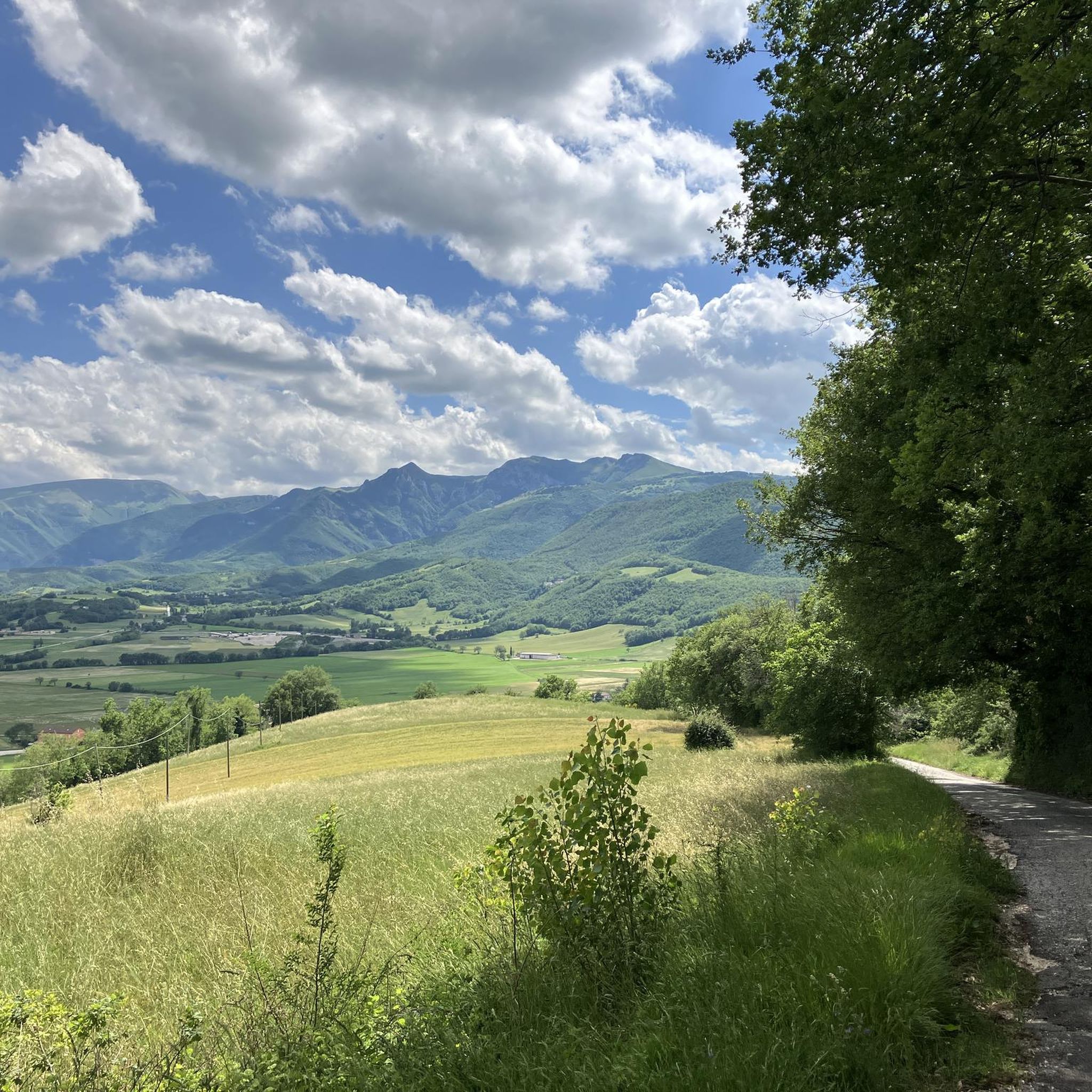
Best natural monuments around San Ginesio are found within the picturesque Marche region of Italy, offering a blend of geological wonders, serene waters, and expansive mountain landscapes. Situated within the Monti Sibillini National Park, the area provides diverse natural features for outdoor exploration. This region is a gateway to impressive natural attractions, making it a prime destination for outdoor enthusiasts.
Best natural monuments around San Ginesio
- The most popular natural monuments is Lame Rosse - incredible geological panorama, a…
Last updated: July 12, 2026
Lame Rosse - incredible geological panorama
Highlight • Natural Monument
Bring water …
Translated by Google •
Tip by

Ancient Mill Waterfalls
Highlight • Waterfall
Translated by Google •
Tip by

Sign up now to discover places like this
Get recommendations on the best single tracks, peaks, & plenty of other exciting outdoor places.
Sign up for free
Eagle Spring
Highlight • Natural Monument
Translated by Google •
Tip by

Monte Amandola Summit Cross
Highlight • Summit
Translated by Google •
Tip by

Grande Anello dei Sibillini Trail
Highlight • Trail
Translated by Google •
Tip by
Sign up for free to discover even more natural monuments around San Ginesio.
Sign up for free
Already have an account?
Start today with a free account
Your next adventure awaits.
Login or Signup
Tips from the Community

Short and relatively simple route, but still requires shoes with a good grip, because the last stretch to get to the Lame has a steep slope and is on scree, so it is easy to slip. I recommend doing it in autumn or spring because it is very exposed to the sun, but not after the rain because it could be slippery. Lame Rosse are beautiful! Negative note: very busy path, so much so that you can't get into a rhythm. You have to continually let people and groups traveling in the opposite direction pass. If you love hiking in the peace of nature, this place is not for you. For the rest, everything is very beautiful!
0
0

Beautiful place, the climb is tiring as is the descent, excellent shoes and poles are necessary!
0
0

Lame Rosse is simply gorgeous. But the short path there, branching off from the hiking trail, is very strenuous and steep, as there are lots of loose, small pebbles and it is very difficult to walk. Hiking poles are recommended.
0
0

The Lame Rosse di Fiastra are stratifications of rock in the shape of pinnacles and towers made up of gravel held together by clay and silt, formed thanks to the erosion of atmospheric agents. They are located above Lake Fiastra, in the hamlet of San Lorenzo al Lago in the municipality of Fiastra, in the province of Macerata, between Mount Fiegni (1323 m above sea level) and Mount Petrella (1155 m above sea level). Below them flows the Fiastrone river which originates from the lake of the same name. There are various possible routes to get to the Lame Rosse but the most common is the one that starts from Lake Fiastra; the itinerary, round trip on the same path, is 7 kilometers long and the difference in altitude is 200 metres. It is therefore suitable for most people: you walk first on a dirt road and then almost always in the shade inside an holm oak forest, where the road becomes a pleasant path. The area is particularly suggestive and varies between long stretches of lush vegetation, brief glimpses of the lake up to a fairytale landscape due to the typical red color of the Lame. Due to the abundance of water, the flora and fauna are very rich. The round trip travel time is approximately 3 hours. You start on foot from the lake dam, leaving your car here and continuing on foot above the dam, then go up and at the first crossroads on the dirt road turn right and continue for another 30 minutes. Alternatively, you can also start from the Ruffella viewpoint, passing through the hamlet of Fiegni, still in the municipality of Fiastra.
0
1

Fonte dell'Aquila is a source of pure water that flows between the rocks of the Sibillini Mountains, and can be reached with an easy excursion from Bolognola, crossing woods and prairies. From the source you can enjoy a splendid panorama of the northern Sibillini, and if you are lucky you may spot some eagles, an animal present in these mountains and from which the source takes its name.
0
0

Beautiful view of this geological heritage
0
0
The Lame Rosse are a very suggestive geological formation, made up of pinnacles and towers of reddish rock, formed by the erosion of atmospheric agents. They can be reached by following various paths, the most common being the one that starts from Lake Fiastra, an itinerary on a dirt road immersed in a forest of holm oaks. Under the Lame Rosse flows the Fiastrone river, which originates from Lake Fiastra.
1
0

In the 16th century there was a mill here which, exploiting the energy of the waterfall, was used by the inhabitants of Sarnano. From 1929 the old mill was replaced with a hydroelectric plant.
1
0
Frequently Asked Questions
What are some of the most unique natural monuments to visit around San Ginesio?
The region offers several distinctive natural monuments. The Lame Rosse, often called the 'Grand Canyon of the Marche,' features incredible reddish rock formations sculpted by erosion. Another unique spot is the Ancient Mill Waterfalls, a historical site where a waterfall once powered a mill. For expansive views, the Monte Amandola Summit Cross provides a challenging hike with rewarding panoramas.
What kind of outdoor activities can I do near the natural monuments?
The area around San Ginesio, especially within the Monti Sibillini National Park, is excellent for outdoor activities. You can find numerous trails for hiking, trekking, and mountain biking. For example, there are many gravel biking routes, such as the 'Lake Fiastra – Road to Rifugio del Fargno loop,' and running trails like 'From Sarnano to the Ancient Mill Waterfall.' You can explore more options on the Gravel biking around San Ginesio, Running Trails around San Ginesio, and Cycling around San Ginesio guide pages.
Are there family-friendly natural monuments around San Ginesio?
Yes, several natural monuments are suitable for families. The Ancient Mill Waterfalls offer an easy and pleasant path. The Eagle Spring is also considered family-friendly, reachable via an easy excursion from Bolognola, offering pure water and splendid views. Lake Fiastra provides a serene environment with opportunities for relaxation and sunbathing, and an adventure park nearby offers additional open-air activities.
When is the best time to visit the natural monuments in the San Ginesio area?
The Monti Sibillini National Park, which encompasses San Ginesio, is particularly recommended for hiking and exploring its natural monuments in the months between May and October. During this period, the weather is generally favorable for outdoor activities, and the landscapes are vibrant.
What geological features can I expect to see in this region?
The area is rich in diverse geological formations. The most prominent are the Lame Rosse, with their unique pinnacles and towers of reddish rock. You'll also find glacial valleys, rugged peaks, and the stunning blue waters of Lake Fiastra, an artificial lake nestled in a basin surrounded by hills. The entire Monti Sibillini National Park showcases dramatic landscapes shaped by natural erosion.
Can I go swimming or do water sports near San Ginesio's natural monuments?
Yes, Lake Fiastra, located at the foothills of the Sibillini Mountains, is known for its clean, pure, and intensely blue waters. It offers various recreational activities including swimming, water sports, hiking, and mountain biking along its perimeter. It's a refreshing alternative to coastal beaches.
Are there opportunities for long-distance hiking or trekking in the Monti Sibillini National Park?
Absolutely. The Monti Sibillini National Park is home to the famous Grande Anello dei Sibillini Trail. This 124 km route is divided into 9 stages and is considered one of Italy's most fascinating paths, offering pristine landscapes, historic villages, steep forests, and expansive pastures. It's particularly recommended between May and October.
What wildlife might I encounter in the Monti Sibillini National Park?
The Monti Sibillini National Park boasts a rich biodiversity. You might encounter wildlife such as wolves, deer, golden eagles, and peregrine falcons. The area around Monte Amandola is known to host eagles, peregrine falcons, wolves, and even the Marsican bear.
Are there easy hikes suitable for beginners around San Ginesio's natural monuments?
Yes, there are options for beginners. The path to the Ancient Mill Waterfalls is described as easy and very nice. Additionally, the Eagle Spring can be reached with an easy excursion, crossing woods and prairies. These offer accessible ways to enjoy the natural beauty of the region.
What makes the Monti Sibillini National Park a significant natural area?
The Monti Sibillini National Park is a protected area characterized by rugged peaks, glacial valleys, and rich biodiversity, spanning the Marche and Umbria regions. It features a diverse range of flora, including rare orchids, and is home to significant wildlife. The park's dramatic landscapes, high-altitude plateaus, and lush forests, combined with its mystical mythology, make it a unique and less crowded natural retreat in Italy.
Are there any specific tips for visiting the Lame Rosse?
When visiting the Lame Rosse, it's important to bring water as there are no refueling possibilities during the journey. The route is considered intermediate, with the last uphill stretch entirely on scree, which can be tiring. The most common path starts from Lake Fiastra, following a dirt road through a holm oak forest.
Most popular routes around San Ginesio
Most popular attractions around San Ginesio

Get inspired with the komoot mobile app


Explore more
Extend your search for the best caves by checking out these guides of the top ones around San Ginesio:
