Top 10 Mountain Passes around Pove Del Grappa
Best mountain passes around Pove Del Grappa are primarily found within the Monte Grappa massif, a region known for its diverse routes. The area offers numerous ascents to Cima Grappa, catering to various interests from challenging cycling climbs to scenic hiking trails. These routes often feature historical significance and panoramic views over the Venetian plain and Dolomites. Pove Del Grappa serves as a gateway to exploring these mountainous landscapes.
Best mountain passes around Pove Del Grappa
- The most popular mountain…
Last updated: May 16, 2026
Foza–Valstagna Hairpin Road
Highlight (Segment) • Mountain Pass
Little traffic, partly beautiful views.
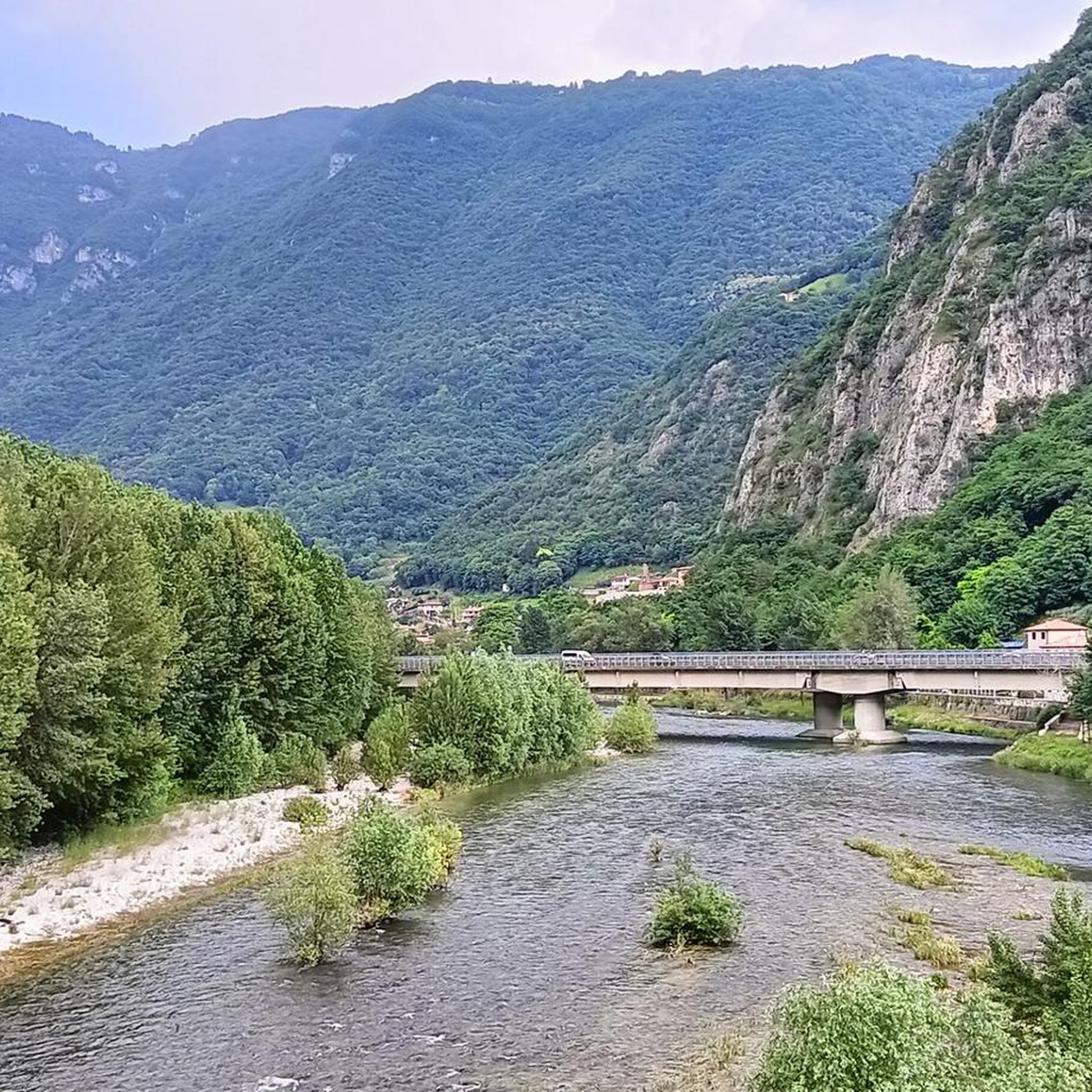
From Valstagna to Foza to the Sette Comuni, the Asiago plateau.
More information: de.wikipedia.org/wiki/Sieben_Gemeinden_(Italien)
Translated by Google •
Tip by

Col d'Astiago
Highlight • Mountain Pass
Translated by Google •
Tip by

Sign up now to discover places like this
Get recommendations on the best single tracks, peaks, & plenty of other exciting outdoor places.
Sign up for free
Valstagna–Foza Climb
Highlight (Segment) • Climb
Translated by Google •
Tip by

Ascent to Monte Grappa from Romano d'Ezzellino
Highlight (Segment) • Climb
Translated by Google •
Tip by

Monte Grappa Nature Loop (Trail 156)
Highlight (Segment) • Trail
Translated by Google •
Tip by

Sign up for free to discover even more mountain passes around Pove Del Grappa.
Sign up for free
Already have an account?
Start today with a free account
Your next adventure awaits.
Login or Signup

Tips from the Community

This climb is a must-do, and shouldn't be underestimated. Fortunately, it has some sections where you can catch your breath.
0
0

The path isn't as steep as the paved climb at the foot of the mountain when coming from Bassano. However, the many rocks mean it's still quite a challenge. Beautiful views from here!
1
0

This large concrete tank pumps water from the springs of the Oliero Caves, thanks to an aqueduct that exceeds 1000m of altitude, and then distributes it throughout the Asiago Plateau: up here in fact the territory is karst, so it does not retain the water that flows downstream through underground passages... practically the same water from rain and snow that naturally flows from the summit, is artificially made to rise out of necessity! The current aqueduct and tank were built on the traces of a system already built during the First World War, to overcome the primary problem of water supply to the Plateau, which presented itself in all its gravity during the conflict, both due to the exponential growth in the number of men present at altitude, and due to the dispute over the few springs by the opposing adversaries. Considered by many to be a horrible structure, for me it is a suggestive, totally detached brutalist architecture, positioned in a natural and uncontaminated environment: a fascinating contrast!
1
0
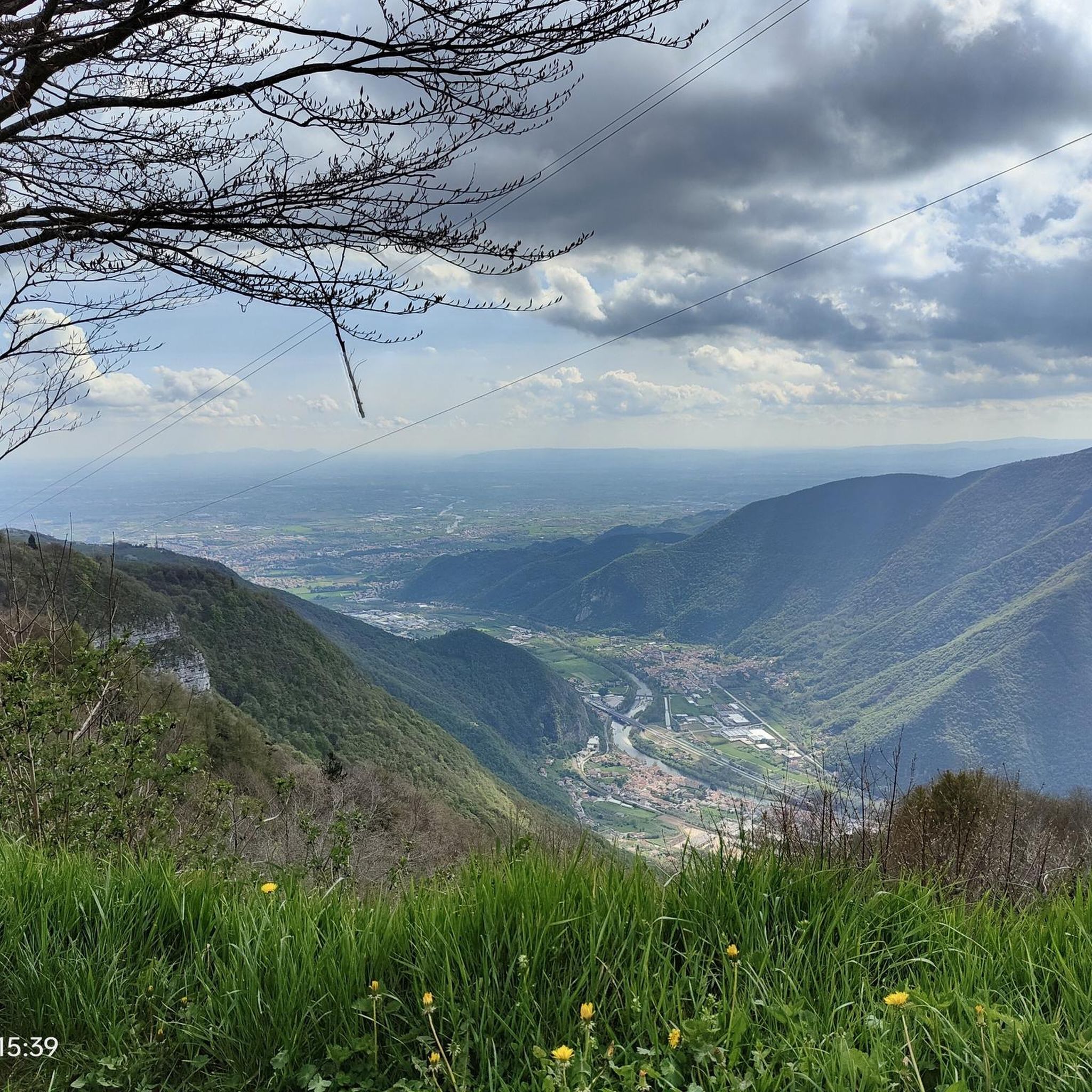
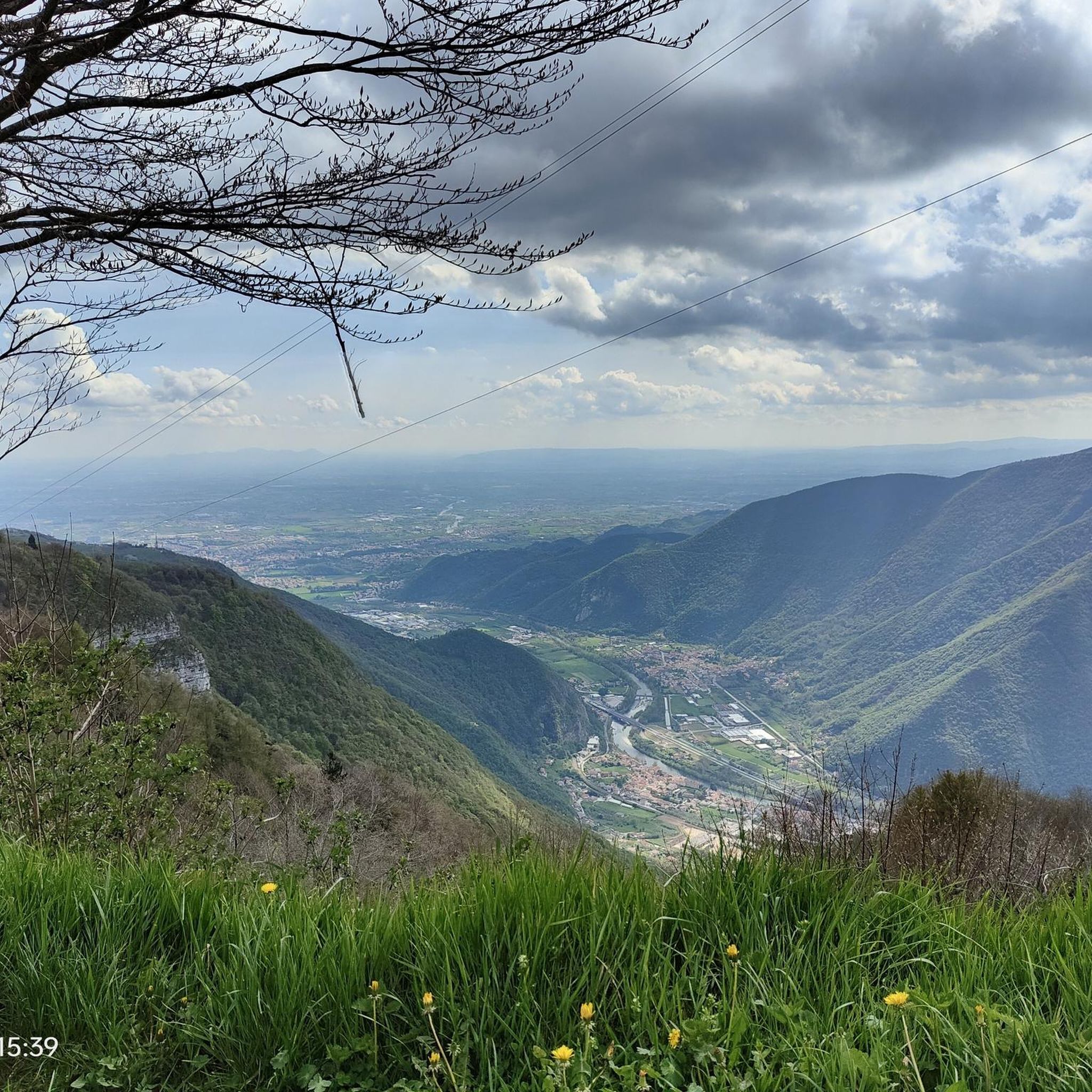
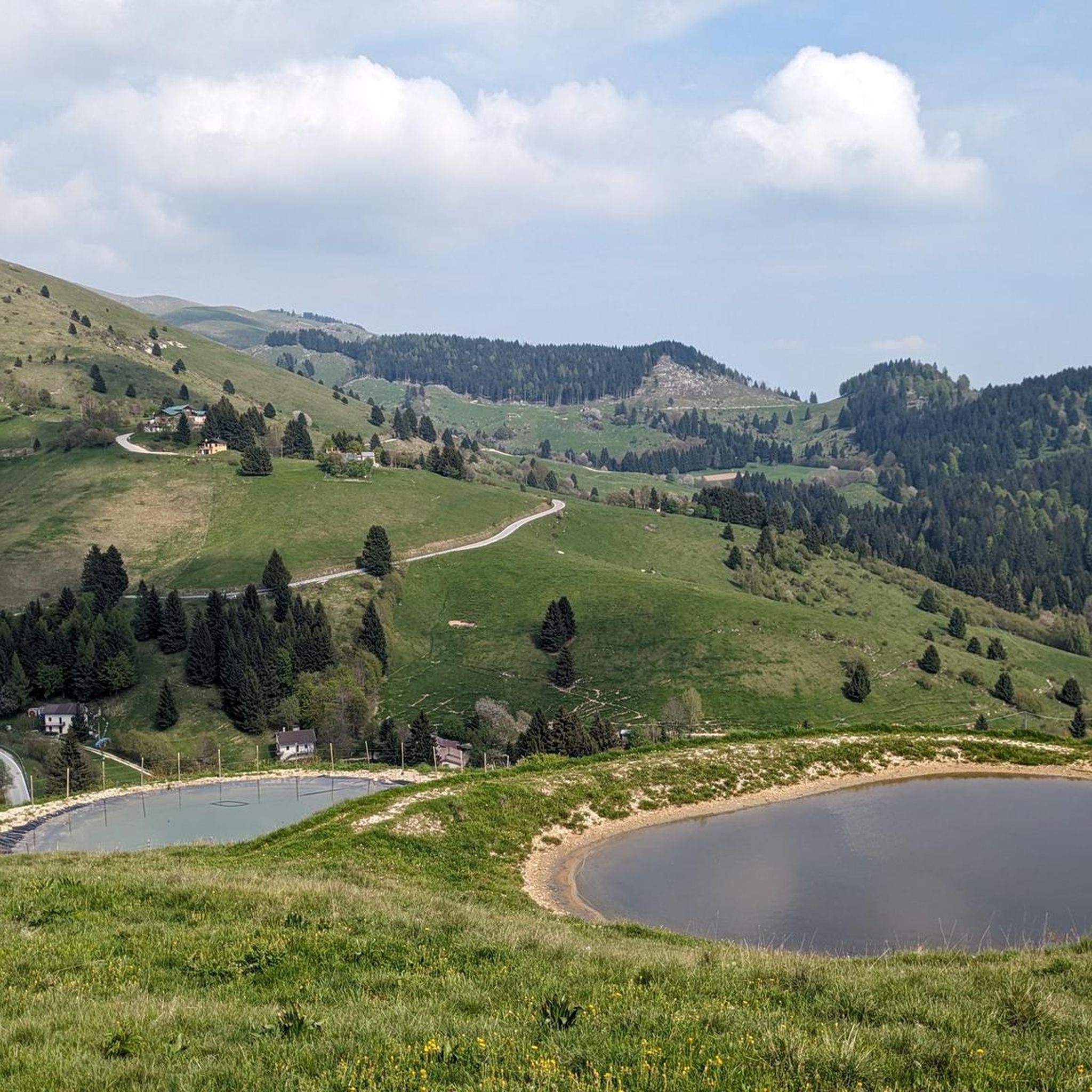
Col d'Asiago offers a beautiful and privileged panoramic point on the underlying Canale del Brenta, or the narrow and deep terminal part of Valsugana. But the view extends over the Asiago Plateau and the entire skyline of mountains that border it to the north, the Grappa Massif to the east and the mouth of Val Brenta. In the distance, the Piccole Dolomiti, the Pale di San Martino and the Vette Feltrine. Precisely because of its strategic position, during the First World War it was a strongly armed Italian defensive bastion and decisive in various phases of the conflict. The peak is also known locally by the ancient and dialect toponym 'Col del S-ciavo', dating back to the time of the Serenissima: on the slopes of the hill in fact the 'schiavoni' (i.e. the non-Latin inhabitants of the dominions of Dalmatia and the Venetian hinterland) cut wood for the naval fleet; the trunks (especially beech trees) were lowered down the valley through the famous and nearby Calà del Sasso; they were then loaded onto rafts that went down the entire Brenta, until they reached the lagoon and the Arsenale of Venice. A large concrete cistern dominates the summit, collecting the water pumped from the Oliero Caves, 1000m further downstream, and distributing it to the Plateau.
0
0

From the 13th to the 15th km, pay attention and travel with caution due to the presence of many loose stones and a narrow and exposed path in some sections.
2
0

The easiest climb to tackle the grappa, which allows for some stretches to catch your breath
2
1

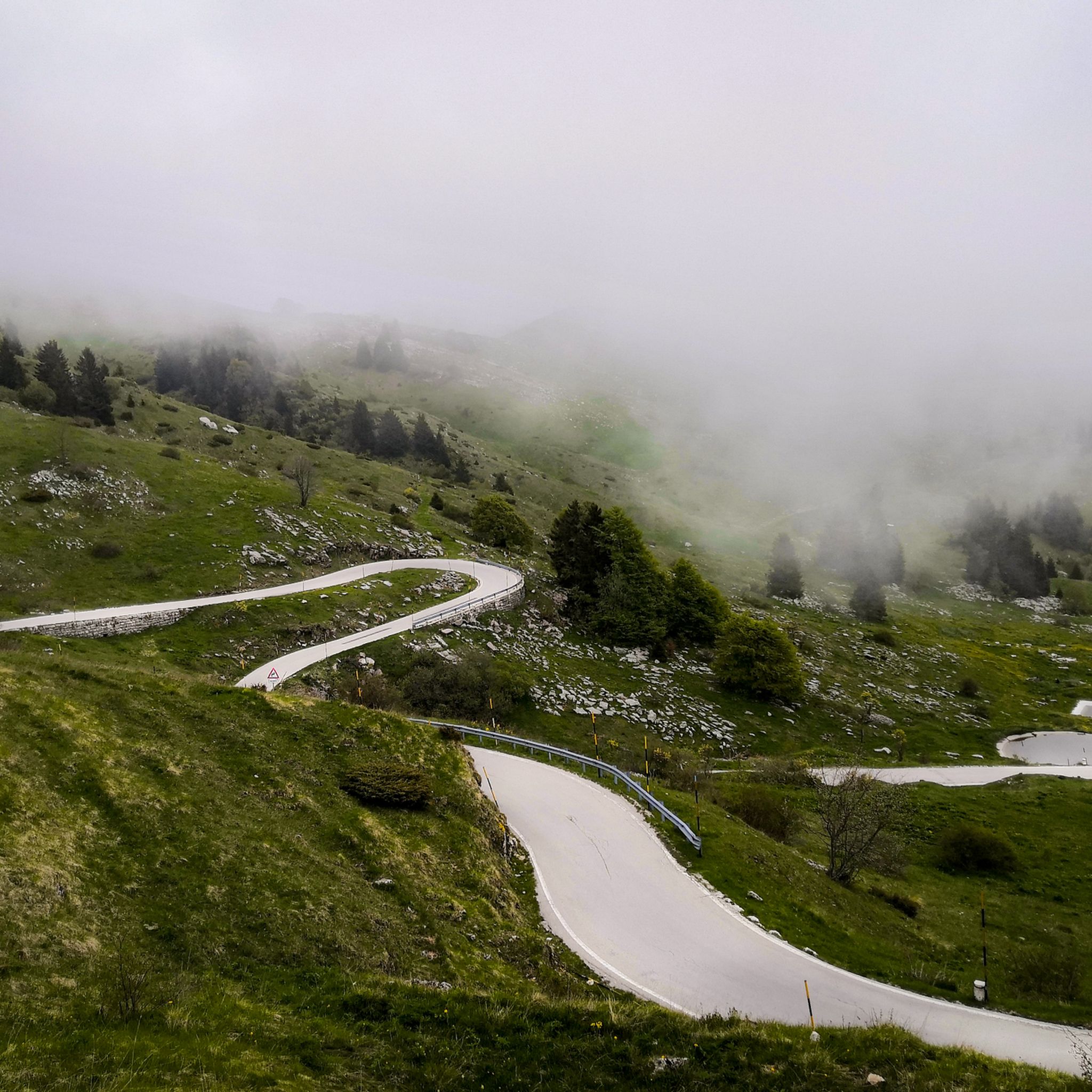
Thurs. October 12th '23 a car rally will be held on the public road that is not (!) closed. For the. For a long time I couldn't tell what was going on - until I noticed the folding chairs with the marshals... If available, the center line is the benchmark for the drivers and the hairpin bends are preferably driven on the inside: Have fun descending into the right-hand bends - there are always a few 'surprises'. I saw 2 Carabinieri vehicles on the way without any apparent surveillance activity - a third was taking care of an illegal parker. Well - I definitely won't be doing this (very nice) lap on this date again.
0
1

Col d'Astiago is located in the south-eastern sector of the Asiago plateau. Wide panorama of the Brenta and towards Monte Grappa. Here is the pumping station of the aqueduct that brings water from the Oliero caves to the plateau.
3
0
Frequently Asked Questions
What are some popular mountain passes and climbs to explore near Pove del Grappa?
The region around Pove del Grappa, dominated by the Monte Grappa massif, offers numerous routes. Popular options include the challenging Valstagna–Foza Climb with its 20 hairpin bends, and the scenic Foza–Valstagna Hairpin Road, known for beautiful views towards the Asiago plateau. Another significant spot is Col d'Astiago, offering wide panoramas of the Brenta Canal and surrounding mountains.
What kind of historical significance do the mountain passes around Pove del Grappa hold?
The Monte Grappa massif was a crucial battleground during World War I. The summit hosts the Monte Grappa War Memorial (Ossuary), a monumental tribute to fallen soldiers. Routes like the Strada Cadorna, often featured in cycling races, also carry historical weight. Col d'Astiago, for instance, was a strongly armed Italian defensive bastion during the conflict, and its aqueduct system has roots in wartime necessity.
Are there any easy or beginner-friendly mountain passes for cycling or hiking?
While many routes in the Monte Grappa area are challenging, the Strada Cadorna, starting from Romano d'Ezzelino, is considered one of the easier ascents to Monte Grappa's summit, making it a good choice for a first climb. For a less strenuous experience, exploring the lower sections or specific trails might be more suitable, though many routes are geared towards intermediate to challenging levels.
What natural features and scenic viewpoints can I expect to see?
From the summit of Monte Grappa, visitors can enjoy breathtaking panoramic views stretching from the Venetian plain to the Dolomites. The Col d'Astiago offers a wide panorama of the Brenta Canal, the Asiago Plateau, and the surrounding mountain ranges. The area also features majestic woods, green meadows, and unique geological formations like the 'Pria Bea' on Sentiero 952.
What outdoor activities are popular near the mountain passes of Pove del Grappa?
The region is a paradise for outdoor enthusiasts. Cycling is extremely popular, with numerous challenging climbs to Monte Grappa. Hiking and trekking are also prominent, with trails like the Grappa Nature Trail and the demanding Sentiero 952. You can find various road cycling routes, general cycling tours, and MTB trails around Pove del Grappa.
What is the best time of year to visit the mountain passes around Pove del Grappa?
The best time to visit is generally from spring through autumn (May to October) when the weather is most favorable for cycling, hiking, and enjoying the panoramic views. During winter, some higher routes may be covered in snow, making them suitable only for experienced winter sports enthusiasts, and requiring preparation for colder temperatures.
Are there any family-friendly activities or trails near these mountain passes?
While many of the main ascents to Monte Grappa are challenging, families can find enjoyment in exploring the lower, less strenuous sections of trails or visiting the historical sites at the summit, such as the Monte Grappa War Memorial, which offers a poignant educational experience. Shorter, well-maintained paths around villages at the base of the massif might also be suitable for families.
Where can I find food and refreshments near the mountain passes?
At the summit of Monte Grappa, the Rifugio Bassano provides a place to rest and enjoy traditional Venetian cuisine with stunning views. Additionally, local farms in the surrounding area offer tasty cheeses and other regional products. In towns like Foza, you can find places like the Monte Fior hotel restaurant, known for excellent sandwiches and bruschetta.
What do visitors enjoy most about the mountain passes around Pove del Grappa?
Visitors highly appreciate the combination of challenging physical activity, profound historical reflection, and spectacular natural beauty. The panoramic views from the summits, the historical significance of the World War I sites, and the diverse range of cycling and hiking routes are frequently praised. The unique character of routes like the Foza–Valstagna Hairpin Road and the historical insights at Col d'Astiago are also highlights.
Are there any particularly challenging routes for experienced cyclists or hikers?
Absolutely. For cyclists, the Semonzo Ascent to Monte Grappa features steep gradients often exceeding 10%, and the Alpini Way from Possagno has sections up to 20%. The Goat Step (Passo della Capra) from Valle San Liberale is also extremely demanding, with gradients up to 18%. For hikers, Sentiero 952, also known as 'Il Cavallo,' is a demanding trail not for the faint of heart, featuring loose stones and exposed sections.
Can I bring my dog on the mountain trails around Pove del Grappa?
Many trails in the Monte Grappa massif are generally dog-friendly, especially those designated for hiking. However, it's always recommended to keep dogs on a leash, especially in areas with wildlife or near roads, and to check specific trail regulations or local signage before heading out. Ensure your dog is fit for the terrain and carry enough water for both of you.
What is the 'Brevetto del Monte Grappa'?
The 'Brevetto del Monte Grappa' is a celebrated challenge among cyclists where participants attempt to complete all ten recognized ascents to Monte Grappa's summit within a single year. It's a testament to the region's reputation as a cycling paradise and offers a unique goal for dedicated riders.
Most popular routes around Pove Del Grappa
Most popular attractions around Pove Del Grappa

Get inspired with the komoot mobile app


Explore more
See even more epic mountain passes by checking out these guides around Pove Del Grappa:
