Top 20 Natural Monuments around Ranst
Best natural monuments around Ranst encompass a variety of significant protected natural reserves and domains within the Antwerp province of Belgium. The region features ancient forests, expansive heathlands, and unique waterways, offering diverse landscapes and rich biodiversity. These areas provide opportunities for nature walks and exploration, showcasing the natural heritage of the Kempen region.
Best natural monuments around Ranst
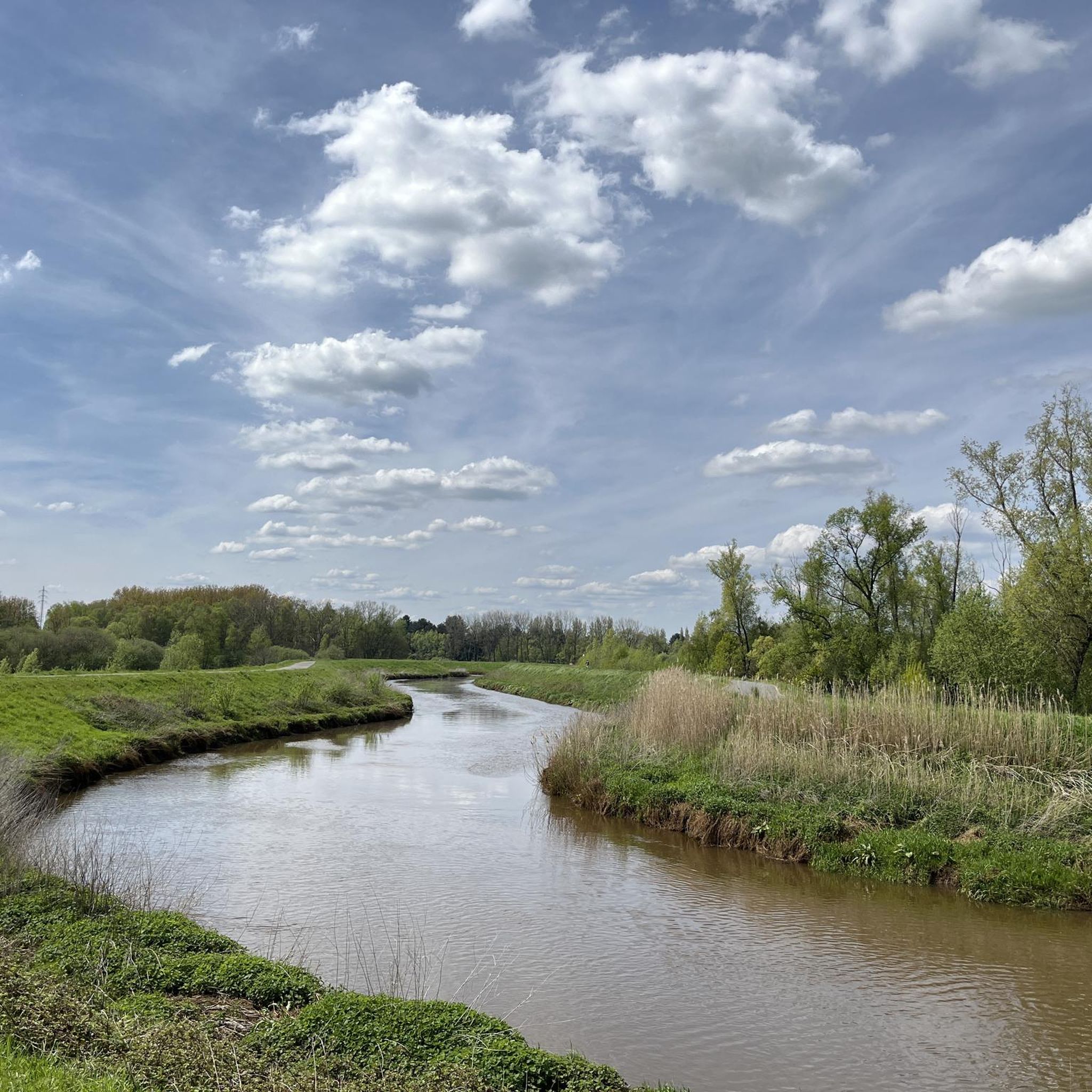
- The most popular natural monuments is Antitankgracht – Green ribbon around the city of Antwerp, an artificial watercourse that forms…
Last updated: June 28, 2026
Antitankgracht – Green ribbon around the city of Antwerp
Highlight • River
The moat has a length of about 33 km and is at …
Translated by Google •
Tip by

Kesselse Heath
Highlight • Forest
Translated by Google •
Tip by

Sign up now to discover places like this
Get recommendations on the best single tracks, peaks, & plenty of other exciting outdoor places.
Sign up for free
Vrieselhof Castle
Highlight • Castle
Translated by Google •
Tip by
Peerdsbos Forest
Highlight • Forest
The name 'Peertsbusch' first appeared in an account from 1431 - 1432. The Peerdsbos was part of the Bremdonck domain, which consisted of fields, meadows and …
Translated by Google •
Tip by

Cycling along the Anti-Tank Canal
Highlight • River
Translated by Google •
Tip by
Sign up for free to discover even more natural monuments around Ranst.
Sign up for free
Already have an account?
Start today with a free account
Your next adventure awaits.
Login or Signup

Tips from the Community

The Kesselse Heide is a provincial green space covering 79 hectares, 61 of which are open to the public. The initial acquisition took place in 1978, and it has been expanded since then. The entrance is located in Nijlen, at Vaerestraat 4. The space is freely accessible daily from sunrise to sunset. There are two ponds in the area. These old wells not only provide a pleasant change of scenery but are also a boon for the many plants and animals. Since 1996, the Kesselse Heide has been a protected landscape. It is one of the few remaining remnants of the once vast Kempen heathlands. The heath is a living community created in our region by humans. Historical agricultural practices created a landscape that has been preserved through human intervention: grazing by sheep, burning the heath, and sod cutting. Sod cutting is the removal of the topsoil and vegetation. A dug-out sod of plants and their roots is a sod. If heathland is left untreated, it will evolve into oak and birch forests, and the typical species associated with a heathland habitat will disappear. In the mid-19th century, the Kesselse Heide—like many other parts of the Kempen region—was afforested with Scots pine, a valuable timber for mining. However, during both World Wars, these sod-covered forests were felled, and from then on, the heathland was able to expand again. Current management consists of removing trees and mechanically cutting sods to give the open heathland every chance to thrive. https://youtu.be/NoPf0HSeFz8
6
0

The Kesselse Heide-Het Goor area consists of a variety of nutrient-poor meadows, pastures, marshes, and ponds, bordered and crisscrossed by enclosed landscape types, and contains numerous landscape elements. The area is characterized by a richly varied and sometimes rare flora. Several historic farm buildings can be found within the area. The Kesselse Heide-Het Goor area, with an area of approximately 2,620 hectares, is located between the villages of Nijlen and Kessel, north of the Lier-Herentals road. The northern border of this area is along Vogelzangstraat, the eastern border along Achterbist, Kannaertsstraat, and Goorstraat. The Grote Steenweg forms the southern border, and the western border is formed by Heidestraat and Vaerestraat. The landscape includes the following topographical areas: "Kannaerdsche Heyde," "Kesselse Heide," "Mol Heide," "Achterbiest," "Het Hoog Bosch," "De Hooge Heide," "Het Armveld," "De Schommers" or "Vissen Eynde," "Het Goor," "Het Goorkasteel," and "Hoge Heyde." Several streams traverse the area, specifically the Goorkantloop, the Elstbeek, the Paddenloop, Blauwe Hoekloop, and the Visbeek. The elevation within the area varies from approximately 5 meters +TAW to approximately 10 meters +TAW. Inventory of Immovable Heritage: Kesselse Heide-Het Goor, https://id.erfgoed.net/erfgoedobjecten/302886
7
0

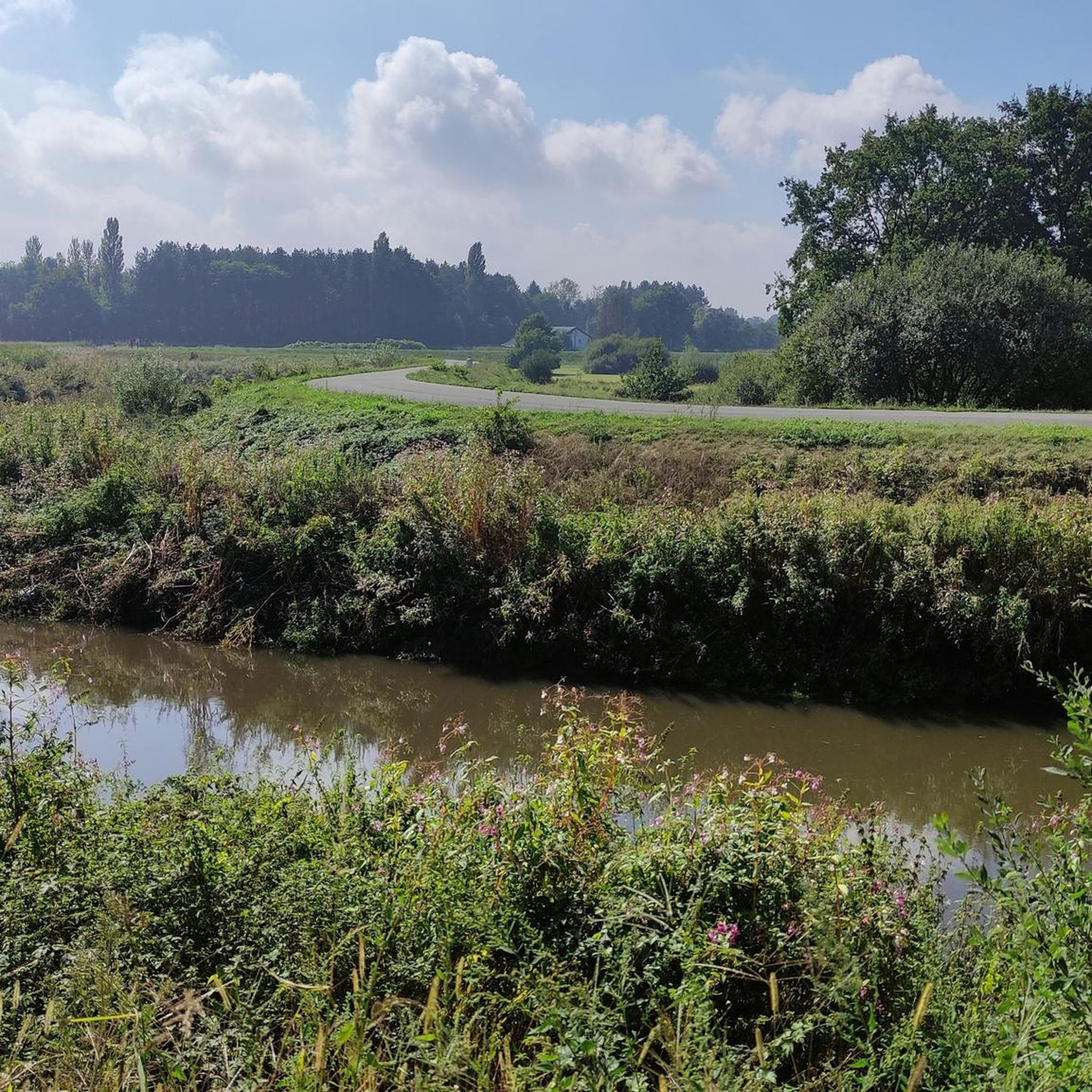
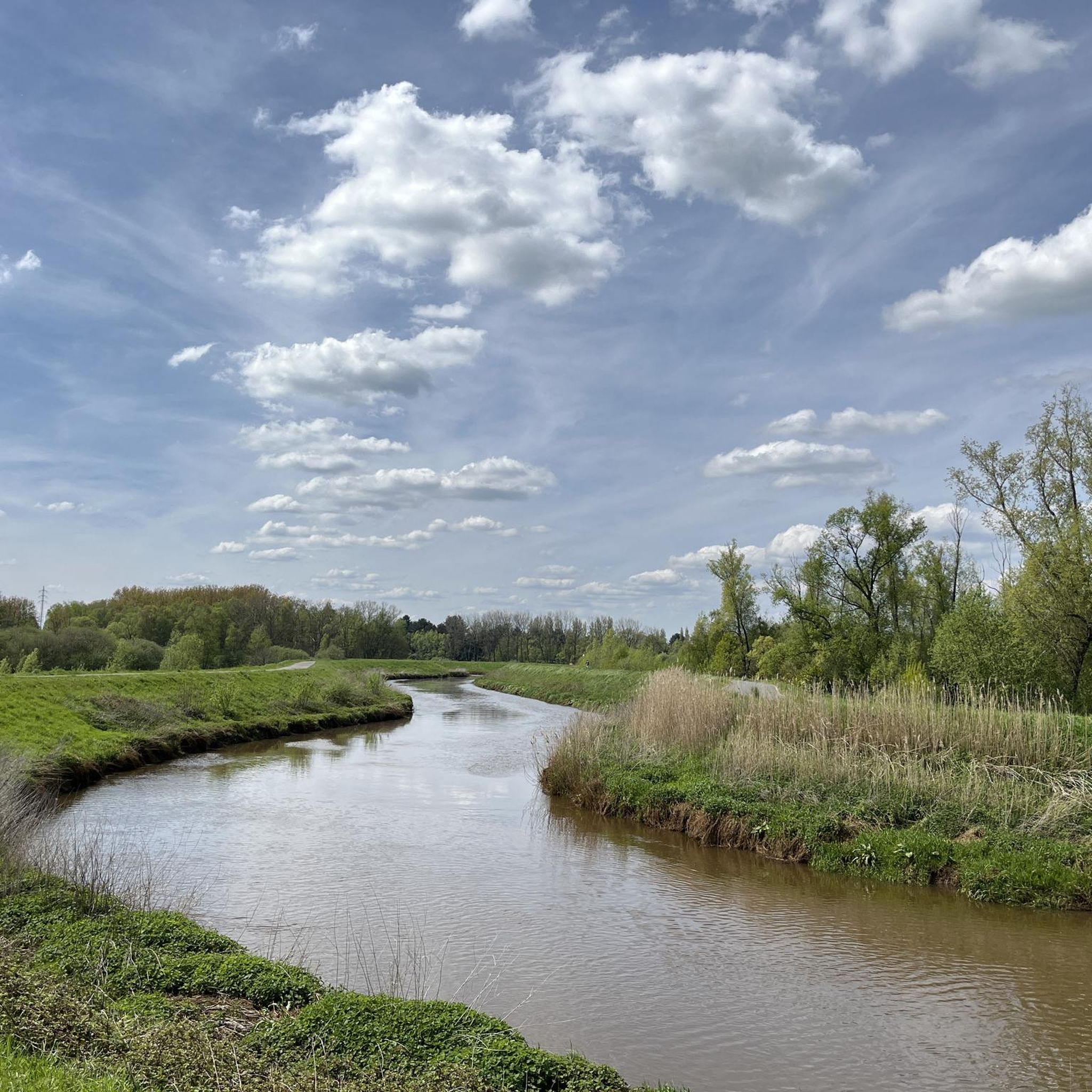
Protected cycle path (gravel). Essentially a straight line from Oelegem to Sint Job in 't Goor (connecting with the Schoten Canal). Despite its straightness, it's not endless and offers plenty of variety.
3
0

Very nice walk with a lot of variety in landscapes and terrain.
3
0

The name "Vrieselhof" goes back to Jan van Vriesele, a nobleman from Kontich who bought approximately 24 hectares of land in Oelegem around 1300 (approximately 32 hectares). In 1975, a year after the sale to the province of Antwerp, the domain was opened to hikers. From 1977 to 1999 the "Provincial Textile and Costume Museum" was located in the Vrieselhof. Due to a lack of resources, only a limited part of the collection could be exhibited. In 2002, the museum moved to Antwerp and was named Fashion Museum Antwerp. In 2003, the Provincial Library Center settled in the castle, together with administrative services. In 2011, a "library of Flemish classics" was opened within the Provincial Library Center. Works by classical Flemish writers are collected and loaned out here. In 2014, the Antwerp provincial council decided to restructure the culture department. The library center would be merged with the Cultural Dissemination and Arts Service into a new Libraries and Arts Service. In 2015, the Provincial Library Center moved to Antwerp, but the collection of Flemish classics remained in the Vrieselhof.
7
0

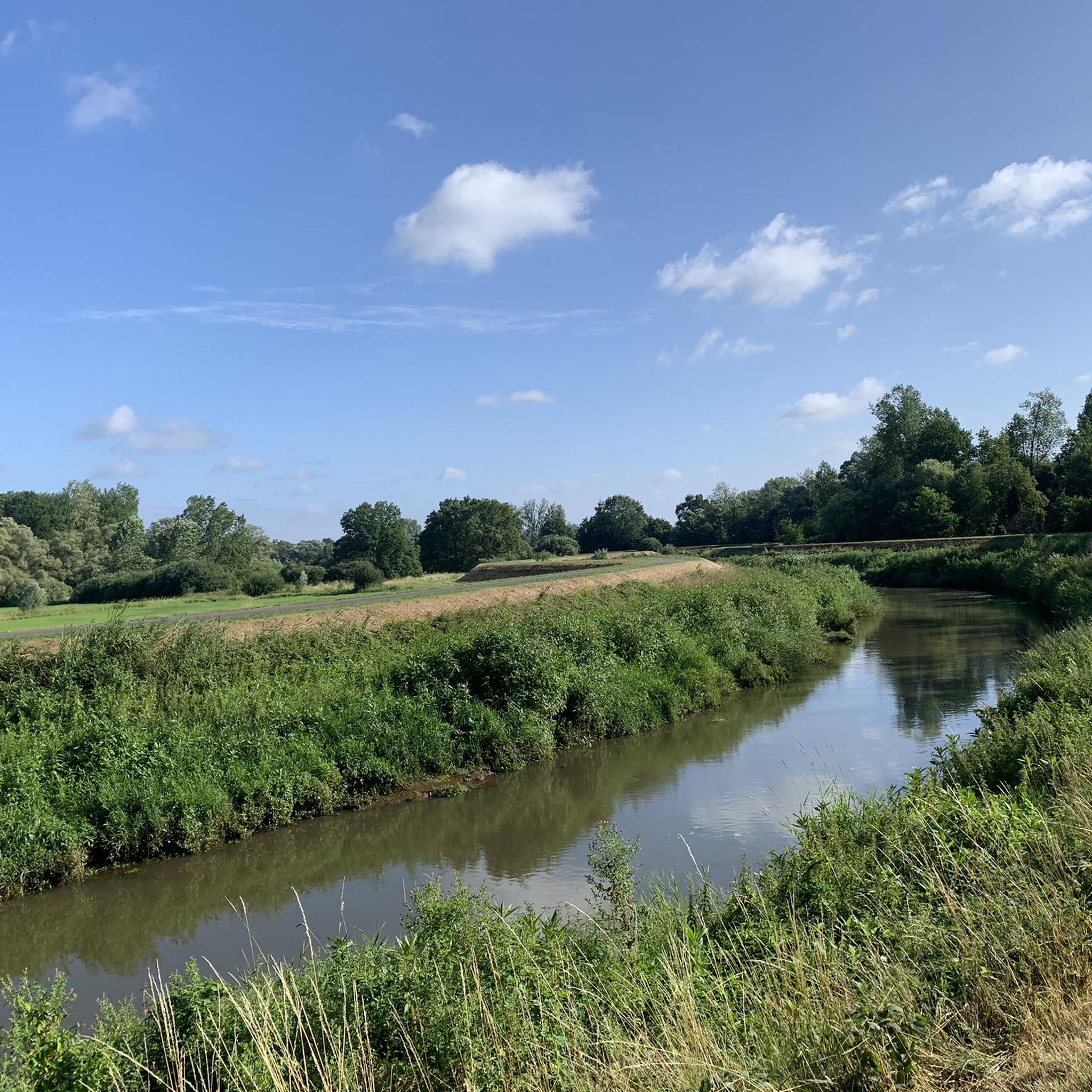
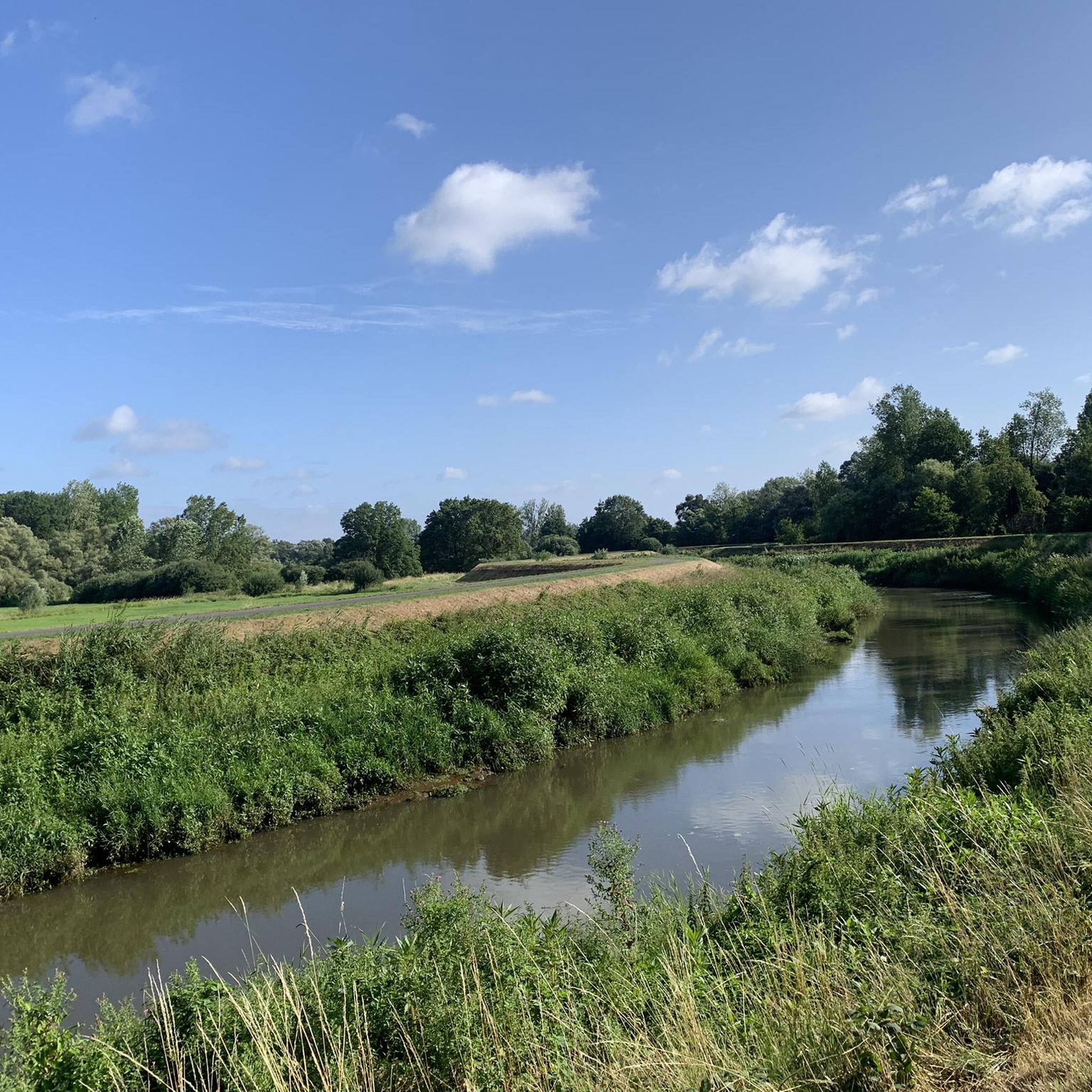
Historical interpretation: The anti-tank ditch is a 33 km long defensive ditch northeast of Antwerp, between the Scheldt and the Albert Canal. The canal was constructed between 1938 and 1940 as part of the Antwerp fortress. In the 1930s, the Belgian army reoriented the fortress into a defense for infantry (support points) and machine gun companies. The military added the anti-tank ditch and bunker lines (KW line) to the existing defense by forts and redoubts. The aim was to stop tanks. That is why the anti-tank ditch had to have a slope, depth and width that a tank of that time could not exceed: a bottom of at least six meters width a width of 18m at the water surface a depth of at least three meters a minimum water level of two meters slopes of 45° Originally, the Antitankgracht was going to be a dry canal, but because it filled up with water, it was forced to be converted into a wet canal. The route had to bridge a height difference of approximately 3 to 18.5 m (DTM). That is why it was divided into about 45 sections with locks. A slide in the lock regulated the water flow and thus maintained the level. The water came partly from seepage water or local streams and partly from the Maas, supplied via the Dessel-Schoten canal. Because control over water levels was so important, each lock was defended by a bunker. The bunkers at the Antitankgracht consist of lock bunkers with flanking daughter bunkers and flanking bunkers. The lock bunkers are elongated free-standing bunkers with a large blank wall, camouflaged by 'eggs' and were usually equipped for two machine guns.
10
0

The Peerdsbos is a nature reserve in Schoten north of Antwerp. The name Peerdsbos first appeared in 1434 as “Peertsbusch”. The name is derived from the Middle Dutch 'Pertse' which means border post. For centuries, the Laarse Beek flowing past formed the border between the Roman provinces of Belgica Secunda and Germania Inferior and the dioceses of Cambrai and Liège that later emerged from this.
5
0
In the Kempen region, heathland is a cultural landscape that developed long ago through the frequent grazing of sheep on poor sandy soils. Since then, heathland has become valuable and rare. The Kesselse Heide provincial green space is all that remains of a much larger heathland area. Since 2023, the Kesselse Heide can also be explored as a heritage site. Various information boards provide information on folklore, landscape features, the wartime history, and more. You can find some photos of these new boards in the photo section of this highlight.
8
2
Frequently Asked Questions
What are the most popular natural monuments around Ranst?
Visitors frequently enjoy the Antitankgracht – Green ribbon around the city of Antwerp, a 33 km long artificial watercourse recognized as a protected landscape with a diverse ecosystem. Another favorite is Kesselse Heath, known for its traditional Kempen landscape of heathland, forests, and sandy plains. The Peerdsbos Forest is also highly regarded for its extensive walking trails and family-friendly amenities.
Are there family-friendly natural monuments near Ranst?
Yes, several natural monuments around Ranst are great for families. The Kesselse Heath offers expansive sandy plains, often called an 'ultimate sandbox' for children, along with signposted walking paths. The Peerdsbos Forest features a playground and mini-golf near Brasserie De Melkerij, and its long, straight avenues are suitable for buggies and wheelchairs. The Zevenbergenbos also includes a municipal play forest, perfect for kids.
What kind of natural features can I expect to see in these areas?
The natural monuments around Ranst offer a rich variety of landscapes. You'll find ancient forests with diverse flora, such as the Zevenbergenbos with its spring carpets of wood anemones and primroses. Heathlands, like those at Kesselse Heath and Lovenhoek Nature Reserve, showcase purple heather and sand sedge. There are also sandy plains, fens, and unique waterways like the Antitankgracht, an artificial canal that has become a vibrant natural ribbon.
What historical sites are integrated with the natural monuments?
The Antitankgracht – Green ribbon around the city of Antwerp is a significant historical site, originally a military defense structure from just before World War II. It features numerous bunkers and locks along its 33 km length. Vrieselhof Castle is another notable historical highlight, a castle domain with a rich past dating back to the 14th century, offering a blend of history and nature.
What is the best time to visit the natural monuments around Ranst?
Spring is ideal for visiting areas like the Zevenbergenbos and Lovenhoek Nature Reserve, when the forest floors are covered in blooming wood anemones and slender primroses. For heathland landscapes, September is particularly beautiful at Kesselse Heath, as the heather is in full bloom. The diverse biotopes of places like Vrieselhof Castle ensure a different appearance and experience in every season.
Are there opportunities for wildlife spotting in these natural areas?
Yes, the natural monuments are rich in wildlife. The Zevenbergenbos is home to various butterflies, including rare species like the white-letter hairstreak, and its flax pond teems with toads, frogs, newts, and dragonflies. Lovenhoek Nature Reserve is a haven for birdwatchers, with five species of woodpeckers, birds of prey like goshawks and eagle owls, and the melodic woodlark. Kesselse Heath supports species such as the grey mining bee, tree pipit, and Eurasian hobby.
What outdoor activities can I do near these natural monuments?
The region around Ranst offers a variety of outdoor activities. You can find numerous running trails, including routes like 'Sion Bridge - Grote and Kleine Nete – Emblem Marina loop' and 'A wonderful place to relax by the shore loop'. For cyclists, there are gravel biking routes such as 'Zoerselbos – Gravel Track Near the Airport loop' and road cycling routes like 'Nete in Lier – Path along the Grote Nete loop'. You can explore more options on the Running Trails around Ranst, Gravel biking around Ranst, and Road Cycling Routes around Ranst guide pages.
Are there specific walking or hiking trails within the natural monuments?
Many natural monuments feature dedicated walking paths. The Zevenbergenbos has the Drogenhofpad, excellent for enjoying spring blooms, and a municipal play forest. At Kesselse Heath, the Heidepad takes you along its most beautiful spots, and the domain is equipped with signposted walking paths. Lovenhoek Nature Reserve offers winding paths and a boardwalk through its marshy valley, providing a unique walking experience. The Peerdsbos Forest has 15 km of hiking trails, including the Peerdsbos walk.
Are any of the natural monuments wheelchair accessible?
Yes, the Peerdsbos Forest is noted for its accessibility. Its long, straight avenues make walking with a buggy or wheelchair easy, allowing everyone to enjoy the forest environment.
What makes the Lovenhoek Nature Reserve a unique place to visit?
Lovenhoek Nature Reserve stands out for its surprisingly varied habitats across more than 260 hectares. It encompasses dry coniferous forests, moist old deciduous forests, open heathlands, and flowery areas, along with historic church paths. The northern part features a marshy valley with a boardwalk along the Molenbeek stream, offering a unique walking experience through diverse landscapes and supporting many rare plant and animal species.
Can I cycle along the Antitankgracht?
Absolutely. The Antitankgracht, originally a military structure, has transformed into an attractive natural ribbon perfect for cycling. It offers a unique route that combines natural beauty with historical significance, allowing you to explore the diverse ecosystem and military heritage along its 33 km length. There is even a specific highlight dedicated to Cycling along the Anti-Tank Canal.
Are there places to eat or relax near the natural monuments?
Yes, for instance, in the middle of the Peerdsbos Forest, you'll find Brasserie De Melkerij, a popular spot to rest. Many of these natural areas are also close to local towns and villages where you can find cafes and pubs.
Most popular attractions around Ranst

Get inspired with the komoot mobile app


Explore more
Extend your search for the best caves by checking out these guides of the top ones around Ranst:
