Top 3 Natural Monuments around Byfield
Best natural monuments around Byfield encompass sites of historical significance and ancient natural features. The area features locations with evidence of past human activity, including Iron Age earthworks and battle sites. These monuments offer insights into the region's heritage and natural landscape. Visitors can explore a variety of historical and natural points of interest.
Best natural monuments around Byfield
- The most popular natural monuments is Holy Well, Burton Dassett, a historical site with claims to be a ‘Holy Well’.…
Last updated: August 9, 2026
Holy Well, Burton Dassett
Highlight • Historical Site
Tip by

Battle of Edgcote
Highlight • Viewpoint
Tip by
Sign up now to discover places like this
Get recommendations on the best single tracks, peaks, & plenty of other exciting outdoor places.
Sign up for free
Harts Hill
Highlight • Natural Monument
Tip by
Borough Hill Iron Age Hill Fort
Highlight • Viewpoint
Tip by

Start today with a free account
Your next adventure awaits.
Login or Signup
Tips from the Community

This well is a bit of an enigma, in the deserted Burton Dassett village in Northend, is found a substantial well head which has claims to be a ‘Holy Well’ although the provenance is unclear. Burgess (1876) in his Warwickshire History simply notes that it was used for baptism and immersion. Whilst Bord and Bord (1985) Sacred Waters appear to be earliest to refer to it as such stating: “the holy well with its stone cover will be seen on the left-hand side of the lane as you approach the church”. The present stone well house is of a considerable size being constructed of local red sandstone around 1840 in a Grecian style. The central doorway is party below ground level and has steps down into a square chamber. Over the stone lintel but the worn instruction is an inscription with carved flowers. It possibly states 1534 but it was not clear. It is evident that the well was part of an estate improvement but when and by whom? And did it exist before? If it does say 1534 that is an early date for a landed estate improvement. It certainly is still visited by well wishers as coins are found in its waters. Sadly, despite a substantial water supply it did not stop the demise of the village and now only the substantial church remains, which incidentally is worthy of a visit.
0
0
A circular earthwork is clearly visible on the ground on Harts Hill. It measures approximately 15m internal diameter, the ditch is 2m wide and the entrance (facing SE) is 2.5m across.
0
0
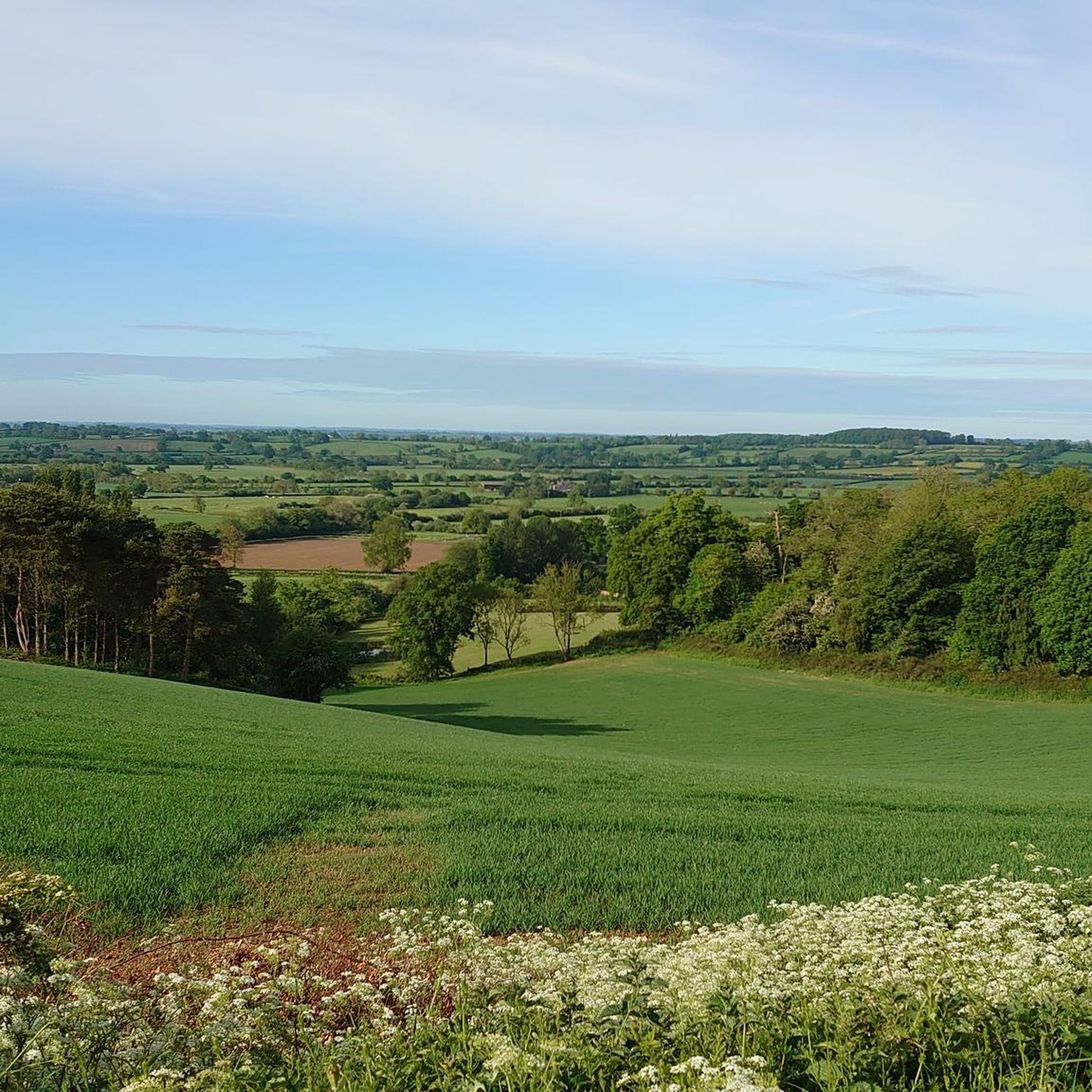
An imposing feature on the eastern side of Daventry, Borough Hill has been used by humans for thousands of years and is the site of one of the largest ancient hill forts in the country. Today it is maintained as a country park by Daventry District Council, offering spectacular views of the surrounding area as well as providing a haven for local wildlife and a popular spot for dog walkers. History Remains have been found on the hill of two Iron Age hill forts, two Bronze Age barrows and of a later Roman villa and farming settlement. Items from the Neolithic period, the Bronze Age, Iron Age, Roman, Saxon and Viking periods have also been unearthed. The site was first excavated in 1823 by historian and archaeologist George Baker, who discovered the remains of the Roman villa. The remains were then fully excavated and recorded in 1852 by local historian Beriah Botfield. His notes, manuscripts and some of the antiquities found are now kept at the British Museum. The site is designated as a Scheduled Monument under the Ancient Monuments and Archaeological Areas Act 1979. The hill also played a role in the build-up to the Battle of Naseby on 14 June 1645, which saw the Royalist Army of King Charles I crushed by Oliver Cromwell's New Model Army. The Royalist army used Borough Hill as a base in the week leading up to the decisive battle, before moving off towards Market Harborough and into the path of the Parliamentarian Forces led by Sir Thomas Fairfax. The BBC began broadcasting from the site in 1925. From 1932 the BBC Empire Service (later the BBC World Service) was broadcast from Borough Hill and the radio announcement of "Daventry calling" made Daventry well-known across the world. The hill also played an important role in the development of radar, after Robert Watson-Watt successfully demonstrated his invention for the first time on February 26, 1935, using receiving equipment set up near Weedon and the signals transmitted from the BBC station on Borough Hill. His instruments were able to detect an RAF Heyford bomber flying at 6,000 feet – proving to the Air Ministry the effectiveness of his invention. The BBC station on Borough Hill remained in place until 1992, when, after 65 years of broadcasting, the last transmitter was switched off and the forest of masts that once sat overlooking the town was felled. Only one mast stands on the site today, owned and operated by Arqiva communications.
0
0

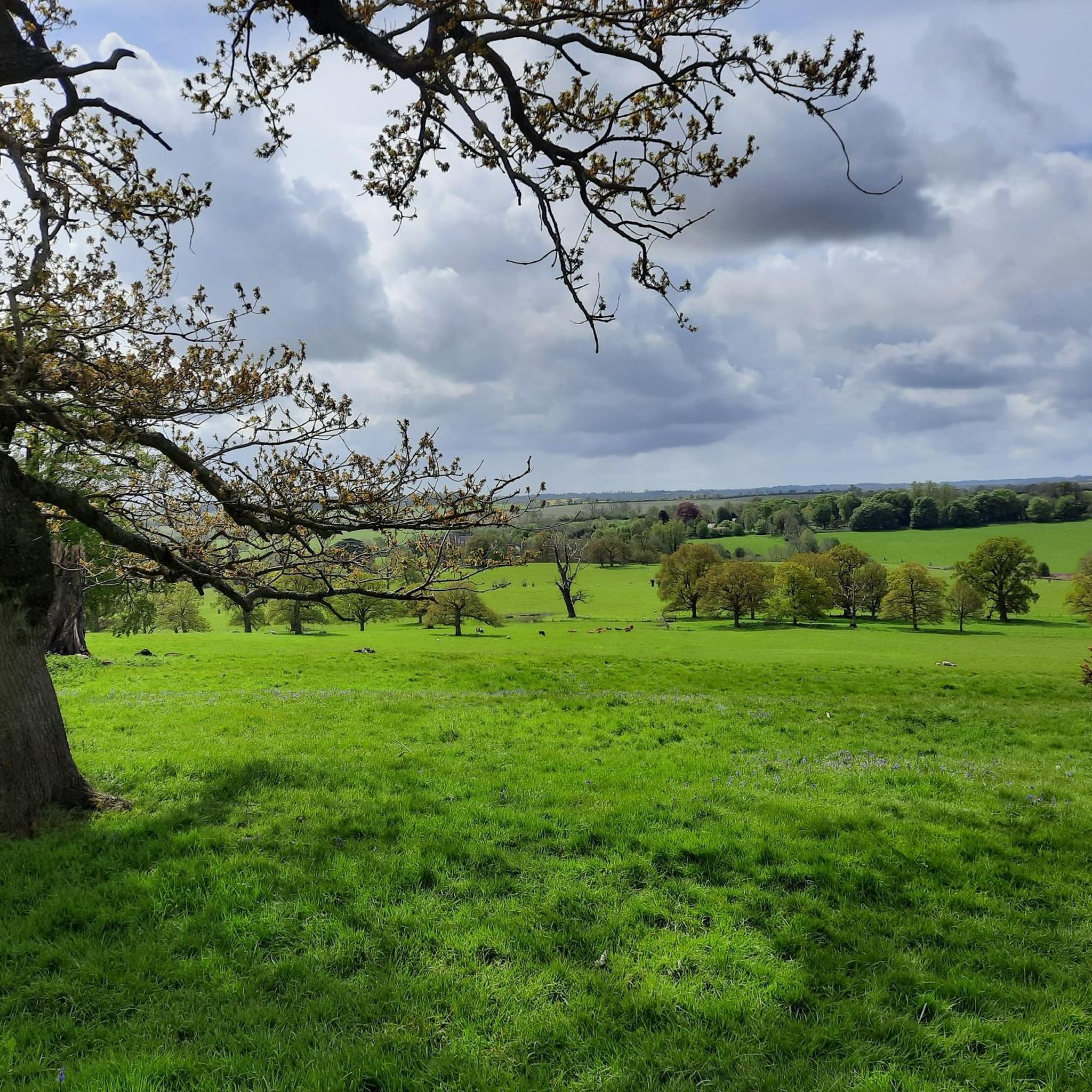
Historic hill overlooking Daventry and surrounds - previously the site of BBC World Service transmitter, used in the Daventry experiment into radar, site of Danish camp during the Danelaw, and an ancient iron age hill fort. Good paths and tracks throughout.
2
0
The Battle of Edgecote Moor took place 6 miles (9.7 km) north east of Banbury, Oxfordshire, in what is now the civil parish of Chipping Warden and Edgcote, England on 26 July 1469 during the Wars of the Roses. The site of the battle was actually Danes Moor in Northamptonshire, at a crossing of a tributary of the River Cherwell. The battle saw supporters of Richard Neville, Earl of Warwick, defeat the forces of King Edward IV, leading to the king's capitulation soon afterwards.
1
0
Frequently Asked Questions
What kind of natural monuments can I explore around Byfield?
The natural monuments around Byfield offer a fascinating blend of historical significance and natural beauty. You can discover ancient earthworks like the circular feature on Harts Hill, historical battle sites such as the Battle of Edgcote, and sites with deep historical roots like the Borough Hill Iron Age Hill Fort. There's also the intriguing Holy Well, Burton Dassett, known for its unique architecture and local folklore.
Are there historical natural monuments in the Byfield area?
Yes, the natural monuments around Byfield are rich in history. For example, the Borough Hill Iron Age Hill Fort has been continuously occupied and used for thousands of years, from the Iron Age through Roman, Saxon, and Viking periods, and even played a role in the Battle of Naseby and early radar development. The Battle of Edgcote marks a significant site from the Wars of the Roses. Even the Holy Well, Burton Dassett, while its 'holy' provenance is unclear, has a documented history of use and architectural development.
Are there family-friendly natural monuments around Byfield?
Absolutely! Both the Battle of Edgcote and the Borough Hill Iron Age Hill Fort are considered family-friendly. Borough Hill, in particular, is maintained as a country park with good paths, offering spectacular views and a chance to explore ancient history in an accessible setting.
What outdoor activities can I do near these natural monuments?
The area around Byfield offers a variety of outdoor activities. You can enjoy cycling, with routes like the 'St Mary's Church, Canons Ashby – St Mary's Church, Culworth loop' or the 'Draycote Water – Start of the Greenway loop'. For hikers, there are options ranging from easy to moderate, including the 'Hollybush Inn – Marston Doles Canal Wharf loop' or the 'View of Golf Club – Hollybush Inn loop'. You can find more details on these activities in the Cycling around Byfield and Hiking around Byfield guides.
Are there hiking trails near these natural monuments?
Yes, there are several hiking trails available near the natural monuments. For instance, you can explore trails around Borough Hill Iron Age Hill Fort, which has good paths throughout its country park. For more structured routes, the Hiking around Byfield guide features trails like the 'Hollybush Inn – Hellidon Village loop', and for easier options, the Easy hikes around Byfield guide offers routes such as the 'View of Golf Club – Hollybush Inn loop'.
What unique natural features can I observe?
Beyond their historical significance, these sites offer interesting natural elements. At Harts Hill, you can clearly see a circular earthwork. The Holy Well, Burton Dassett, features a substantial stone well house with a continuous water supply. Borough Hill, while known for its history, also functions as a country park, providing a haven for local wildlife and offering expansive views of the surrounding area.
What do visitors enjoy most about the natural monuments around Byfield?
Visitors often appreciate the rich historical context combined with the scenic views. The extensive history of sites like Borough Hill Iron Age Hill Fort, spanning millennia, provides a deep sense of connection to the past. The tranquil setting of the Holy Well, Burton Dassett, and the panoramic vistas from viewpoints like Harts Hill are also highly valued.
Is there parking available at these natural monuments?
While specific parking details for each monument may vary, Borough Hill Iron Age Hill Fort, maintained as a country park, typically offers visitor parking. For other sites, it's advisable to check local information or consider parking in nearby villages and walking to the monuments.
What is the best time to visit the natural monuments around Byfield?
The natural monuments around Byfield can be enjoyed year-round. Spring and summer offer pleasant weather for exploring the outdoor sites and enjoying the views. Autumn brings beautiful foliage, especially around areas like Borough Hill. Winter visits can be crisp and clear, offering different perspectives of the landscapes, though some paths might be muddy.
Can I combine a visit to a natural monument with a longer cycling tour?
Absolutely. Many of the natural monuments are situated within areas popular for cycling. For example, you could plan a route that incorporates the historical Battle of Edgcote site. The Cycling around Byfield guide provides various touring bicycle routes, including moderate to difficult options, that could be adapted to include stops at these points of interest.
Most popular attractions around Byfield

Get inspired with the komoot mobile app


Explore more
Extend your search for the best caves by checking out these guides of the top ones around Byfield:
