Top 14 Natural Monuments around Pixley
Best natural monuments around Pixley encompass diverse landscapes across different regions, primarily in California, USA, and the United Kingdom. These areas offer a range of natural features, from vital wildlife refuges and rare vernal pools to ancient hillforts and dramatic river valleys. The natural monuments provide opportunities to observe unique ecosystems, explore historical sites, and enjoy panoramic views. Visitors can experience significant biodiversity and geological formations in these distinct natural settings.
Best natural monuments around Pixley
- The most popular natural…
Last updated: July 1, 2026
Herefordshire Beacon (British Camp)
Highlight • Summit
Tip by

Midsummer Hill Iron Age Hillfort
Highlight • Historical Site
Tip by

Sign up now to discover places like this
Get recommendations on the best single tracks, peaks, & plenty of other exciting outdoor places.
Sign up for free
Clutter's Cave
Highlight • Viewpoint
Tip by

Gullet Quarry
Highlight • Natural
Tip by

Chase End Hill Summit
Highlight • Natural Monument
Tip by

Sign up for free to discover even more natural monuments around Pixley.
Sign up for free
Already have an account?
Start today with a free account
Your next adventure awaits.
Login or Signup


Tips from the Community

Lovely quarry and very to follow the route up to the top.
0
0
Small little cave but great to get out of the rain/sun for a quick drink and snack.
0
0

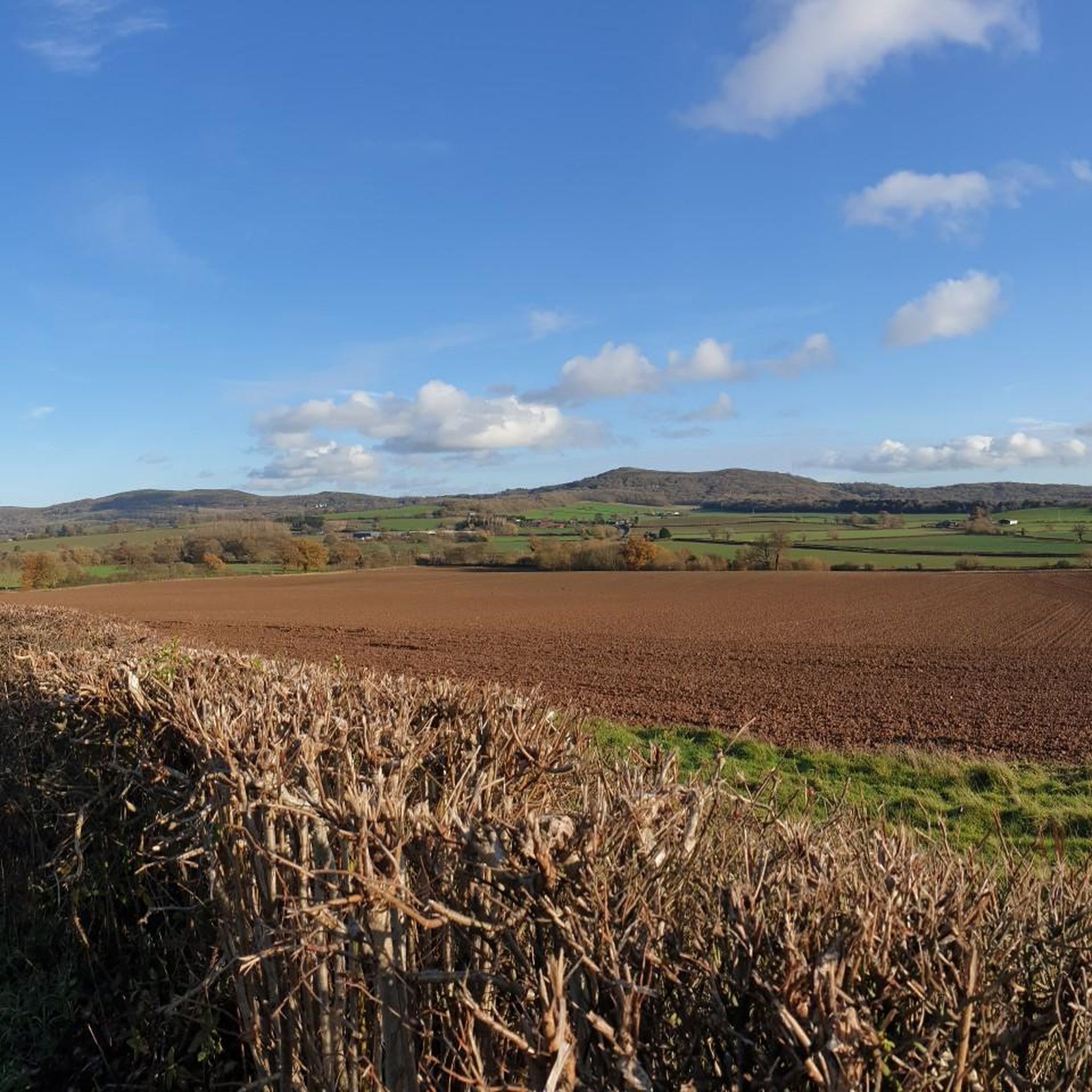
One of the finest hills in the Malverns with it's Iron Age Hillfort (yes another one on the Malverns!), and superb views west across Eastnor Park. It used to be heavily wooded on the Eastern Side, but Ash Die-back disease has caused a huge number of large mature Ash trees to be felled in recent times. This is still a hill to be savoured and you will not see too many people here either.
0
0
This is quite a spectacular place but quite rightly the Conservators and local authorities have securely fenced it off as there have been a large number of drownings here over the years. People have jumped off the low cliffs inot the freezing cold water and have also collided with old machinery and vehicles that are hidden under the water.
0
0
The most southerly Malvern, with fine views south to May Hill.
0
0

From Myseries of Mercia - a book and facebook page.... A mysterious cave on the Malvern hills and an enormous lump of stone in a nearby village...what connects them? This is Clutters Cave, an apparently man-made grotto within a volcanic basalt outcrop. Very little is known about it, not least who on earth "Clutter" was, but it's been mentioned in connection with various points in history going back to the medieval age. Folklore claims that Owain Glyndwr, the legendary Welsh hero, hid in Clutters Cave after his abortive attempt to invade England and retreat from North Worcestershire. He was never seen again so it's as good a story as any. I've also been told that a hermit once lived in the cave, dispensing blessings and wisdom to those who climbed up the hills to see him. Alfred Watkins, author of The Old Straight Track and father of the ley line concept, reckoned he had found a "door" to the cave a few yards away in a nearby gulley which was used as a "sacrificial stone" by "druids". He even got his assistant McKaig to lie on it as a "victim" to prove his point. Unfortunately for Watkins, we know that at least part of his theory was wide of the mark as his cave door is of a completely different type of rock. So what about the big rock? This lies at the centre of the village of Colwall and folklore gives us a reason for its presence. Another name for Clutters Cave is "Giant's Cave" and the story goes that this giant lived on the Malvern Hills with his human wife. One day he saw a man flirting with his good lady down in the valley where Colwall now lies. Erupting with rage as he watched the two of them giggling, he dug his hands into the rock and scooped out an enormous lump which he hurled at the pair down below, crushing them both. It was said that they lay under the rock for centuries until someone dragged it away to clear the obstruction, whereupon the giant put it back into place the next night! Strangely, there is a record of a payment made to a local man to drag the current stone into position to replace "the stone that once stood there". Some say that Clutters Cave is actually a Victorian folly, but nobody has any idea when it appeared. I find this unlikely as although Alfred Watkins did misidentify a few sites he surely would have been aware of something being just a few decades old. I've also seen a reference to it in a novel from 1883 and in the journal of the Royal Anthropological Institute from 1881, neither of which dismiss it as a folly.
0
0

Midsummer Hill rises in the southern part of the Malvern Hills and is a very worthy objective. Site of a former hillfort, along with neighbouring Hollybush Hill, it provides extensive views, with the impressive Eastnor Castle visible in the Herefordshire countryside. A hike to the top could be combined with Herefordshire Beacon to the north, or a longer outing traversing the entire Malvern ridge.
0
0

The Herefordshire Beacon is one of the highest peaks of the Malvern Hills. It is surrounded by a British Iron Age hill fort earthwork known as British Camp. The fort subsequently had a ringwork and bailey castle built inside its boundary and there is evidence of 120 huts in the area. British Camp has been a scheduled monument since 1923. On the eastern slope of Herefordshire Beacon, there is a disused reservoir, British Camp Reservoir, which holds approximately 213,000 cubic metres (7,500,000 cu ft) of water. Herefordshire Beacon represents one of the Malvern Hills, 1,109 feet (338 m) high, and is the second highest summit in the hills. It is within the county of Herefordshire, but is directly adjacent to the border with Worcestershire to the east. Atop Herefordshire Beacon, there is an Iron Age hill fort, known as British Camp, and would have held a settlement between 4th century BCE and 1st century CE. A ringwork and bailey castle was built within the site of the hill fort, and there is evidence of 120 huts having been built within the boundaries of the fort. The hill fort received scheduled monument status on 10 August 1923. Nearby to British Camp, on the eastern slope of Herefordshire Beacon, there is a reservoir called British Camp Reservoir. It has a capacity of 213,000 cubic metres (7,500,000 cu ft), although it has not been used for many years. In 2017, Severn Trent proposed to dismantle the treatment plant associated with the reservoir and drain it, leaving an 8,000 cubic metres (280,000 cu ft) pond. source: Wikipedia
0
0
Frequently Asked Questions
What are some of the most notable natural monuments around Pixley?
Around Pixley, you can explore diverse natural monuments. In California, the Pixley National Wildlife Refuge offers extensive wildlife viewing, especially for migratory birds. Near Pixley in the UK, highlights include the historic Midsummer Hill Iron Age Hillfort with its panoramic views, and the geologically significant Gullet Quarry.
Can I observe wildlife at the natural monuments near Pixley?
Yes, wildlife observation is a major draw, particularly in Pixley, California. The Pixley National Wildlife Refuge is a vital habitat for over 100 bird species and several endangered species like the San Joaquin kit fox. The Pixley Vernal Pools also support unique flora and fauna, including the threatened vernal pool fairy shrimp. In the UK, the Wye Valley National Landscape is known for peregrine falcon sightings at Symonds Yat Rock.
Are there historical sites among the natural monuments near Pixley?
Absolutely. Near Pixley in the UK, several natural monuments are intertwined with history. Herefordshire Beacon (British Camp) and Midsummer Hill Iron Age Hillfort are both sites of ancient hillforts offering glimpses into Britain's past. Additionally, Clutter's Cave in the Malvern Hills provides an interesting look into historical hermit dwellings and geological formations.
What unique natural features can I expect to see around Pixley?
The region offers a variety of unique natural features. In California, the Pixley Vernal Pools are a rare botanical treasure, designated a National Natural Landmark for their unique endemic plant species and ephemeral wetlands. In the UK, Gullet Quarry showcases a cross-section of Precambrian rock, revealing a complex geological history of the Malvern Hills.
Are there accessible natural monuments for visitors with mobility needs?
In Pixley, California, the Pixley National Wildlife Refuge features a 1.5-mile wheelchair-accessible nature trail with interpretive panels and an observation deck, making it suitable for visitors with mobility needs.
What kind of views can I expect from the natural monuments in the UK near Pixley?
The natural monuments in the UK, particularly within the Malvern Hills, offer spectacular panoramic views. From Herefordshire Beacon (British Camp), Midsummer Hill Iron Age Hillfort, and Chase End Hill Summit, you can enjoy extensive vistas across Herefordshire, Worcestershire, and the surrounding countryside, including Eastnor Castle. Swinyard Hill also provides 360-degree views.
What outdoor activities can I do near these natural monuments?
The areas around Pixley offer numerous outdoor activities. Near the UK monuments, you can find excellent hiking opportunities, such as the 'Ledbury & Eastnor loop' or the 'Midsummer Hill & Swinyard Hill loop from Ledbury'. Cycling is also popular, with routes like 'Just Rachel Ice Cream – Coffee Stop 1 loop from Putley'. For mountain biking, explore trails like 'Haugh Woods Loop — Wye Valley'. You can find more details on these activities in the hiking, cycling, and MTB guides for Pixley.
Are there specific trails for hiking at the natural monuments?
Yes, many natural monuments offer dedicated trails. In California, the Pixley National Wildlife Refuge has a 1.5-mile nature trail. In the UK, the Malvern Hills are crisscrossed with paths. For instance, the Geopark Way crosses Chase End Hill Summit, and the Three Choirs Way passes around its eastern edge. You can find detailed hiking routes in the hiking guide for Pixley.
What do visitors enjoy most about the natural monuments around Pixley?
Visitors frequently praise the stunning views, especially from the Malvern Hills summits like Herefordshire Beacon and Chase End Hill, often describing them as 'brilliant' or 'amazing'. The historical significance of the Iron Age hillforts and the unique geological formations at places like Gullet Quarry are also highly appreciated. The komoot community has shared over 80 photos and given more than 280 upvotes to these natural monuments.
Is the Wye Valley National Landscape considered a natural monument near Pixley?
While not a single monument, the Wye Valley National Landscape (Area of Outstanding Natural Beauty) is a significant natural area near Pixley in the UK. It encompasses dramatic scenery, cliffs, and ancient woodlands along the River Wye, featuring notable viewpoints like Symonds Yat Rock. It's a popular destination for hiking, picnicking, and birdwatching, offering a collection of remarkable natural features.
What is the best time to visit the Pixley National Wildlife Refuge for birdwatching?
The best time for birdwatching at the Pixley National Wildlife Refuge in California is typically from late September to early March. During these months, thousands of sandhill cranes are usually present, offering a spectacular display for visitors.
Are there any natural monuments suitable for a family outing?
Yes, the Pixley National Wildlife Refuge in California is a great option for families, offering a wheelchair-accessible nature trail and opportunities for wildlife viewing. In the UK, the Wye Valley National Landscape provides diverse outdoor activities like hiking and picnicking that can be enjoyed by families.
Most popular attractions around Pixley

Get inspired with the komoot mobile app


Explore more
Extend your search for the best caves by checking out these guides of the top ones around Pixley:
