Top 20 Natural Monuments around Beratón
Best natural monuments around Beratón are found in this high-altitude village in Soria, Spain, situated at the foot of the Moncayo Massif. The region offers diverse ecological zones, from Mediterranean forests to alpine scrub, supporting varied wildlife. Visitors can explore the Moncayo Natural Park, which is the highest point in the Sistema Ibérico mountain range. The area provides numerous hiking routes through dramatic natural landscapes and significant natural features.
Best natural monuments around Beratón
- The most popular natural monuments is…
Last updated: July 1, 2026
Moncayo Summit
Highlight • Summit
Translated by Google •
Tip by

Cueva de los Pilares
Highlight • Cave
Translated by Google •
Tip by
Sign up now to discover places like this
Get recommendations on the best single tracks, peaks, & plenty of other exciting outdoor places.
Sign up for free
Cabezo de la Mata
Highlight • Viewpoint
Translated by Google •
Tip by

Peña Negrilla Summit
Highlight • Summit
Translated by Google •
Tip by
San Gaudioso Spring and Hermitage
Highlight • Religious Site
Translated by Google •
Tip by
Sign up for free to discover even more natural monuments around Beratón.
Sign up for free
Already have an account?
Start today with a free account
Your next adventure awaits.
Login or Signup

Tips from the Community

The Fountain and Hermitage of San Gaudioso are located in the Moncayo Natural Park, near Tarazona, in the Campo de Borja region, Aragon. This place is a popular point of interest for hikers and nature lovers. The hermitage is located in a stunning natural setting, surrounded by forests and mountains. The fountain, which bears the same name, is known for its fresh, crystal-clear water. It is an ideal place to rest and enjoy the tranquility of the landscape. Access to the Fountain and Hermitage of San Gaudioso can be made through several hiking routes that run through the natural park, offering spectacular views and the opportunity to observe the local flora and fauna.😊
5
0
Cabezo de la Mata is a peak located in the Sierra del Moncayo, in Aragon, Spain. With an altitude of 1,437 metres, it is one of the most accessible peaks in the area. One of the most popular routes to ascend Cabezo de la Mata begins at Fuente de los Frailes. This circular route offers spectacular views of the northeastern slope of the Sierra del Moncayo and the plain of the Ebro Valley. The route includes sections through beech and pine forests, and is suitable for all year round.
5
0
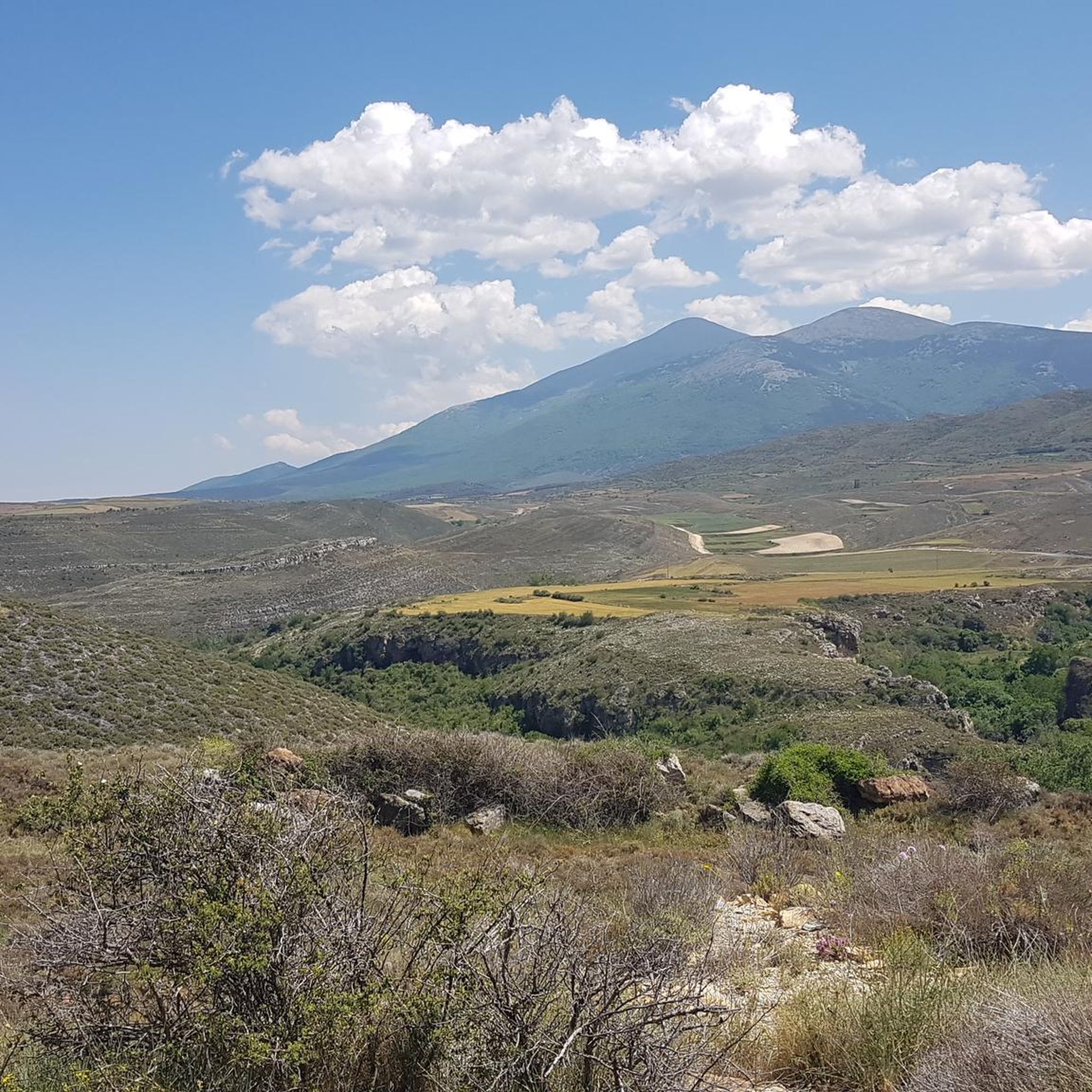
The summit of Moncayo, also known as Pico San Miguel, is the highest mountain in the Iberian system, with an altitude of 2315 metres. It is located between the provinces of Zaragoza (Aragon) and Soria (Castile and Leon) in Spain. To reach the summit, many hikers start from the Sanctuary of the Virgin of Moncayo, located at 1621 metres. From there, the route passes through the Cucharón cirque and the San Miguel basin before reaching the summit. The route offers spectacular views and is especially popular in spring and summer.
5
0

You need to be in shape, it is a climb that requires some climbing skill.
0
0

Moncayo never disappoints. From Cueva de Agreda the climb is longer and harder, but it is worth the sacrifice. The views from the summit, towards Aragon and towards Castilla, are impressive.
1
0

At the Collado de la Atalaya you have to head northeast along the slope of the mountain range following a level path marked with stone markers. The path crosses the Las Hoyas de los Portillos valley and climbs halfway through the pine forest towards the wall of the Muela del Cerro Morrón. In the pine forest you have to keep climbing towards the east and at the base of the walls connect with the path coming from the north face of the mountain. The landmarks are clear between the pine trees and the mole wall, they jump a couple of small slopes near other cavities and lead to the spectacular Cueva de los Pilares, a fantastic natural rock sanctuary with arches, vaults and giant columns. The climb to the summit of the mole leaves from the cave through the canal located to the west, it is a clear and obvious climb, it has stone markers and although it seems that there is no exit with good visibility, it is a simple section along some aerial ledges without too many complications, unless the rock is wet, it cannot even be classified as a climbing step, rather technical mountain hiking. The milestones enter the large inclined molar plain and take the direction of the summit through the center of the mountain.
0
1

Impressive views that can be seen: the Pyrenees, the Ebro depression...
1
0
Hermitage of San Gaudioso. Circus of San Gaudioso. Moncayo Natural Park.
7
0
Frequently Asked Questions
What are some popular trails to explore the natural monuments around Beratón?
The Moncayo Natural Park, which surrounds Beratón, offers numerous well-maintained hiking and mountain biking routes. A popular choice is the route to Moncayo Summit, which passes through beautiful oak forests. Another rewarding experience is the hike to Cueva de los Pilares, which takes you through forests of oak and pine. For more hiking options, you can explore the Hiking around Beratón guide.
What are some notable natural features and viewpoints in the Beratón area?
The region boasts several impressive natural features. The Moncayo Summit offers splendid panoramic views as the highest point of the Iberian System. The Cueva de los Pilares is a spectacular natural rock sanctuary with arches, vaults, and giant columns. Additionally, Cabezo de la Mata provides beautiful views of the northeastern slope of the Sierra del Moncayo and the Ebro Valley. Don't miss the Nacedero del Río Queiles, a powerful natural spring near Vozmediano, known for being the second most voluminous in Europe.
What is the typical terrain and difficulty for hiking around Beratón's natural monuments?
The terrain around Beratón varies significantly. Lower elevations feature Mediterranean oak and kermes oak forests, transitioning to Pyrenean oak, pine, beech, juniper groves, and alpine scrub at higher altitudes, especially in the Moncayo Natural Park. Hikes range from moderate, like the Moncayo Circular Trail, to challenging ascents such as the route to Moncayo Summit. Some trails, like the one to Cueva de los Pilares, involve climbing through pine forests and along mountain walls.
What is the best time of year to visit the natural monuments around Beratón?
Spring and summer are generally popular for hiking to the Moncayo Summit due to more favorable weather. Spring, after snowmelt and recent rains, is also considered the best time to experience the spectacular flow of the Nacedero del Río Queiles. While some routes, like to Cabezo de la Mata, are suitable year-round, winter ascents to higher peaks can be challenging due to ice and strong winds.
Are there family-friendly natural monuments or trails suitable for children around Beratón?
The Nacedero del Río Queiles offers an easily accessible natural wonder with a picturesque path and picnic area, making it suitable for families. While specific 'family-friendly' categories aren't listed for all highlights, many moderate trails in the Moncayo Natural Park, especially at lower elevations, can be enjoyed by families. Always check the difficulty and length of a trail before heading out with children.
Can I bring my dog to the natural monuments around Beratón?
Many natural areas in Spain, including natural parks, generally allow dogs on trails, often requiring them to be on a leash. However, specific rules can vary. For example, the Cuevas de Añón are crucial habitats for bats, and human presence is restricted to avoid disturbing colonies, which might imply restrictions for pets as well. It's always best to check local regulations for each specific natural monument or protected area before visiting with your dog.
Is parking available at the natural monuments near Beratón?
Yes, parking is generally available at common starting points for exploring the natural monuments. For instance, the route to Cabezo de la Mata is easily accessible from the Central de la Morca car park, Fuente de los Frailes, or the hostel. When planning your visit, look for designated parking areas near trailheads or popular attractions.
How can I reach the natural monuments around Beratón using public transport?
Beratón is a high-altitude village, and direct public transport options to specific natural monuments can be limited. While Beratón itself may have some bus connections, reaching trailheads or more remote natural features often requires personal transportation. It's advisable to check local bus schedules to Beratón and plan for car travel or taxis for onward journeys to the natural monuments.
Are permits required for hiking in the natural monuments around Beratón?
Generally, permits are not required for hiking on established trails within the Moncayo Natural Park or to visit most natural monuments around Beratón. However, for specific activities, large groups, or access to very sensitive areas, it's always good practice to check with the park authorities or local tourism office for any specific regulations or permit requirements that might apply.
What kind of wildlife can I expect to see in the natural monuments around Beratón?
The diverse ecological zones of the Moncayo Natural Park support abundant wildlife. You might spot deer, wild boar, and foxes. The area is also home to numerous bird species, including vultures and the rare bearded vulture. The Cuevas de Añón are particularly important as a sanctuary for various species of cave-dwelling bats, which use the caves for breeding and hibernation.
Are there any unique geological features among the natural monuments near Beratón?
Yes, the region features several unique geological formations. The Cueva de los Pilares is renowned for its spectacular natural rock sanctuary, featuring arches, vaults, and giant columns. The Moncayo Massif itself shows evidence of glacial remains at its summit. The Nacedero del Río Queiles is a remarkable hydrological phenomenon, where water emerges from a cave with significant force and volume.
What outdoor activities can I do near these natural monuments?
Beyond exploring the natural monuments themselves, the area around Beratón offers a variety of outdoor activities. You can find numerous hiking trails, including the Moncayo Circular Trail and the Barranco de Castilla Trail. There are also options for road cycling and touring bicycle routes, such as the 'Aranda Comarca Loop' or 'Calcena and Purujosa Loop'. For more details, refer to the Hiking around Beratón, Road Cycling Routes around Beratón, and Cycling around Beratón guides.
How much time should I allocate to visit the natural monuments around Beratón?
The time needed depends on the monument and your activity. A visit to the Nacedero del Río Queiles might take a couple of hours for a leisurely walk and picnic. A hike to Moncayo Summit can be a full-day excursion, especially if starting from lower elevations. For a more comprehensive exploration of multiple sites or longer hikes, consider dedicating a full day or even a weekend to the region.
Most popular attractions around Beratón

Get inspired with the komoot mobile app


Explore more
Extend your search for the best caves by checking out these guides of the top ones around Beratón:
