Top 7 Natural Monuments around Tudanca
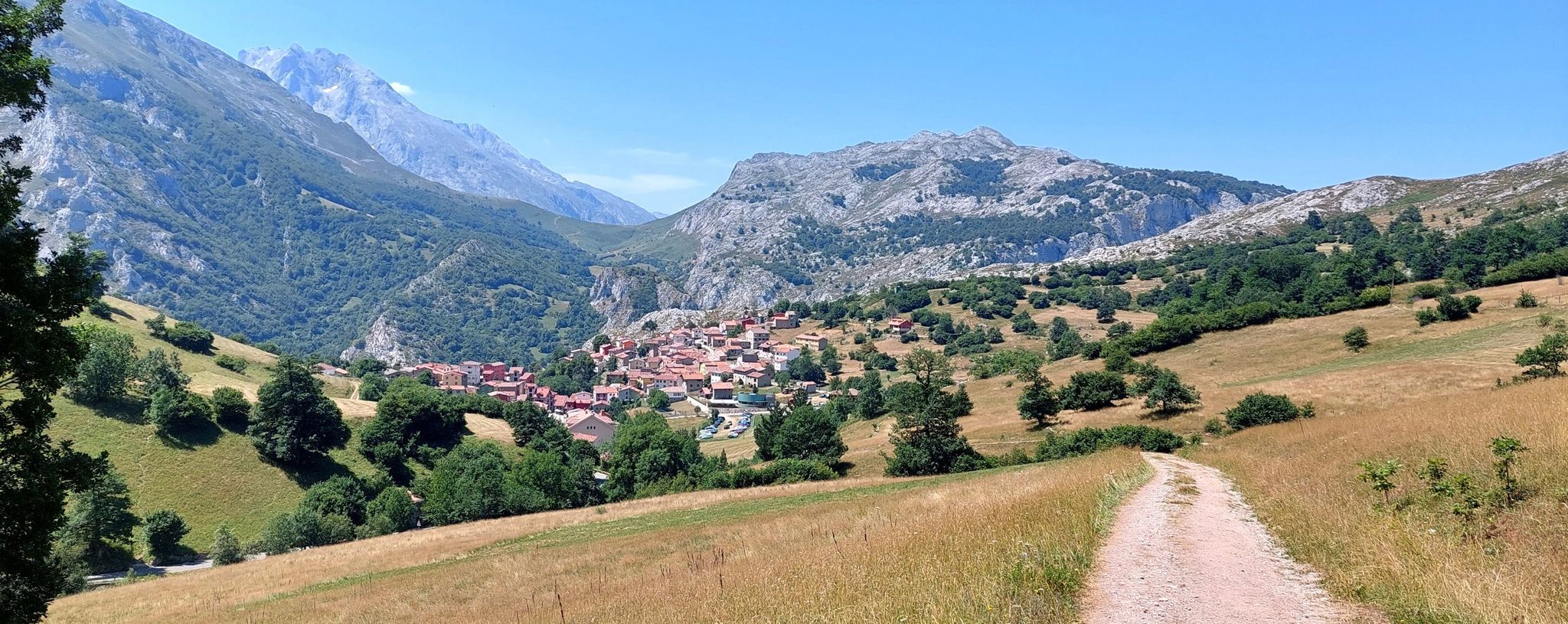
Best natural monuments around Tudanca are found within the Nansa Valley, a region known for its natural beauty in Cantabria. The area features green meadows, terraced cultivation, and forests of oaks, beeches, and birches. Tudanca is surrounded by mountains, including Peña Sagra, which provides a dramatic backdrop. The village serves as a base for exploring various natural sites in the wider Cantabrian region.
Best natural monuments around Tudanca
- The most popular natural monuments is Tres Mares Peak, a summit…
Last updated: July 15, 2026
Fallen Oak of Brujilices
Highlight • Natural Monument
Translated by Google •
Tip by

Peña Labra
Highlight • Summit
Translated by Google •
Tip by

Sign up now to discover places like this
Get recommendations on the best single tracks, peaks, & plenty of other exciting outdoor places.
Sign up for free
Tres Mares Peak
Highlight • Summit
Translated by Google •
Tip by
Canto Redondo Summit
Highlight • Summit
Translated by Google •
Tip by
La Fuentona de Ruente
Highlight • Natural Monument
Translated by Google •
Tip by

Sign up for free to discover even more natural monuments around Tudanca.
Sign up for free
Already have an account?
Start today with a free account
Your next adventure awaits.
Login or Signup
Other adventures around Tudanca

Tips from the Community

Beautiful site, and right in the town.
1
0

Added to the collection: komoot.com/de-de/collection/3600632/-naturdenkmaeler-besondere-baeume-und-weitere-schaetze-der-natur
0
0

The Bujilices "Tumbao" Oak, located in Ucieda (Ruente) within the Saja-Besaya Natural Park, is one of Cantabria's most unique and magical trees. The tree fell under the weight of snow and wind at the end of the 19th century, but it didn't die. Four vertical branches sprouted from the fallen trunk, developing as if they were independent trees, creating a unique and spectacular shape.
2
0

Bujilices fallen oak tree in Ucieda. Bucolic place to make a stop along the way, read life.
0
0

One of the singular trees of Cantabria. It is a trunk of about ten meters that rests on the ground and from which a series of branches sprout from 18 to 20 meters high. It is located on the Monte Río de los Vados route in the Ucieda forest, in section B-I.
1
0

At 2029 meters above sea level, the top of Peña Labra is located in a privileged place. It represents the border between the Community of Cantabria and Castilla y León, so to the north you will have impressive views of the Cantabrian interior and the mountains of the Picos de Europa National Park, while to the south you will be able to appreciate another wonderful landscape such as the of the Montaña Palencia Natural Park. Crowning its peak is for the most daring, very technical sectors and not suitable for those who suffer from vertigo, but it has a great reward.
1
0
The Ojo de la Fuentona is the source of the homonymous river in the town of Ruente, a very quiet and picturesque place surrounded by a very peculiar legend. Given its intermittency, the river sometimes dries up completely and in the past it was said that an anjana (good witch) lived in the Eye who used to have some whim and could make the water stop emanating there.
1
0
This specimen of cajiga cataloged as a singular tree of Cantabria, has a curious story behind it. With more than 250 years old, in one winter the wind and snow knocked it down but without giving up and showing the strength of nature, it has given root to 4 new trees from its trunk already fallen on the ground .
2
1
Frequently Asked Questions
What kind of natural monuments can I expect to see around Tudanca?
The area around Tudanca, nestled in the Nansa Valley, offers a diverse range of natural monuments. You can explore impressive mountain summits like Tres Mares Peak and Peña Labra, unique natural features such as the Fallen Oak of Brujilices, and scenic waterfalls like the Pozo del Infierno Waterfall. The region is characterized by green meadows, ancient forests, and dramatic mountain backdrops.
Are there any significant viewpoints or panoramic spots among the natural monuments?
Yes, several natural monuments offer spectacular panoramic views. Tres Mares Peak provides wonderful vistas towards the Cantabrian interior, Picos de Europa National Park, and Montaña Palentina Natural Park. Similarly, Peña Labra offers impressive views of the Cantabrian interior and the Picos de Europa to the north, and Montaña Palencia Natural Park to the south. Additionally, Canto Redondo Summit boasts fantastic 360º views, including the sea, coastal towns like San Vicente and Comillas, and even Santander in the distance.
What unique geological features can be found near Tudanca?
Beyond the immediate vicinity of Tudanca, you can discover remarkable geological features. The renowned El Soplao Cave, approximately 16.3 km away, is famous for its eccentric formations. The Fallen Oak of Brujilices is a unique natural monument where a fallen trunk has sprouted four new trees, showcasing nature's resilience. The Pozo del Infierno Waterfall also presents an interesting natural formation, especially during the rainy season.
Are there any natural monuments suitable for families with children?
Yes, the Fallen Oak of Brujilices is categorized as family-friendly and offers a unique story about nature's resilience that can be engaging for children. Further afield, the Monumento Natural de las Secuoyas del Monte Cabezón, about 21 km from Tudanca, provides an impressive experience walking among colossal giant sequoias, which can be fascinating for all ages. The tranquil Parque y Nacimiento de La Fuentona en Ruente is also a peaceful spot for families to enjoy.
What outdoor activities can I do near the natural monuments around Tudanca?
The region around Tudanca is excellent for various outdoor activities. You can find numerous routes for mountain biking, running, and cycling. For specific trails, explore the MTB Trails around Tudanca, Running Trails around Tudanca, and Cycling around Tudanca guides. These guides offer routes of varying difficulties, allowing you to combine your visit to natural monuments with an active outdoor experience.
Are there hiking trails to reach these natural monuments?
Many natural monuments around Tudanca are accessible via hiking trails. For instance, reaching Tres Mares Peak and Peña Labra involves challenging hikes, often starting from areas like Fuente del Chivo. The Fallen Oak of Brujilices is located on the Monte Río de los Vados route in the Ucieda forest. You can find detailed trail information, including difficulty and distance, in the Running Trails around Tudanca guide, which includes routes like 'Peña Labra y Pico Tres Mares – trail run desde el collado de Fuente del Chivo'.
What is the best time to visit the natural monuments around Tudanca?
The best time to visit depends on your preferred activities. For hiking and exploring the mountain summits like Tres Mares Peak and Peña Labra, late spring, summer, and early autumn offer the most favorable weather conditions. During these months, trails are generally clear of snow, and temperatures are pleasant. If you wish to see waterfalls like Pozo del Infierno Waterfall at their fullest, visiting during the rainy season or after significant rainfall is recommended.
Can I bring my dog to the natural monuments and trails around Tudanca?
Generally, many natural areas and trails in Cantabria are dog-friendly, especially if dogs are kept on a leash. However, specific rules may apply in protected areas like the Saja-Besaya Natural Park, which surrounds Tudanca. It's always advisable to check local regulations for each specific natural monument or park you plan to visit. When exploring, ensure your dog is under control and that you clean up after them to preserve the natural environment.
Are there any hidden gems or less-known natural sites near Tudanca?
While the main highlights are well-known, the Nansa Valley itself, with its traditional meadows and well-preserved forests of oaks, beeches, and birches, offers many serene and less-traveled spots. Exploring the smaller paths along the River Nansa or seeking out local viewpoints beyond the major summits can reveal tranquil natural beauty. The Pozo del Infierno Waterfall, while listed, can feel like a hidden gem, especially if visited during less crowded times.
What kind of flora and fauna can I observe in the natural areas around Tudanca?
The Nansa Valley and surrounding natural areas are rich in biodiversity. You can observe diverse flora, including ancient forests of oaks, beeches, and birches, as well as traditional communal meadows. The Fallen Oak of Brujilices is a notable example of the region's unique trees. As for fauna, the area is home to various bird species, deer, wild boar, and other typical Cantabrian wildlife, particularly in the more secluded forest areas and higher mountain regions.
How long should I plan for visiting the natural monuments around Tudanca?
The duration of your visit depends on which natural monuments you wish to see and what activities you plan. For a quick visit to one or two easily accessible sites like the Fallen Oak of Brujilices or a viewpoint, a few hours might suffice. However, if you intend to hike to mountain summits like Tres Mares Peak or Peña Labra, or explore multiple sites including nearby attractions like El Soplao Cave or the Monte Cabezón Redwoods, you should allocate a full day or even several days to fully experience the region's natural beauty.
Is public transport available to reach the natural attractions near Tudanca?
Public transport options directly to many of the more remote natural monuments around Tudanca can be limited. Tudanca itself is a somewhat isolated village. While there might be local bus routes connecting Tudanca to larger towns, reaching specific trailheads or natural sites often requires a private vehicle. It's advisable to check local bus schedules in advance if you plan to rely on public transport, or consider combining it with walking or cycling for access to certain areas.
Most popular attractions around Tudanca

Get inspired with the komoot mobile app


Explore more
Extend your search for the best caves by checking out these guides of the top ones around Tudanca:
