Top 17 Natural Monuments around Artés
Natural monuments around Artés feature a diverse landscape, including geological formations, historical sites integrated with nature, and serene natural spaces. The region offers unique rock formations, ancient water sources, and expansive parks, providing varied outdoor experiences. These sites allow exploration of the area's natural heritage and geological features.
Best natural monuments around Artés
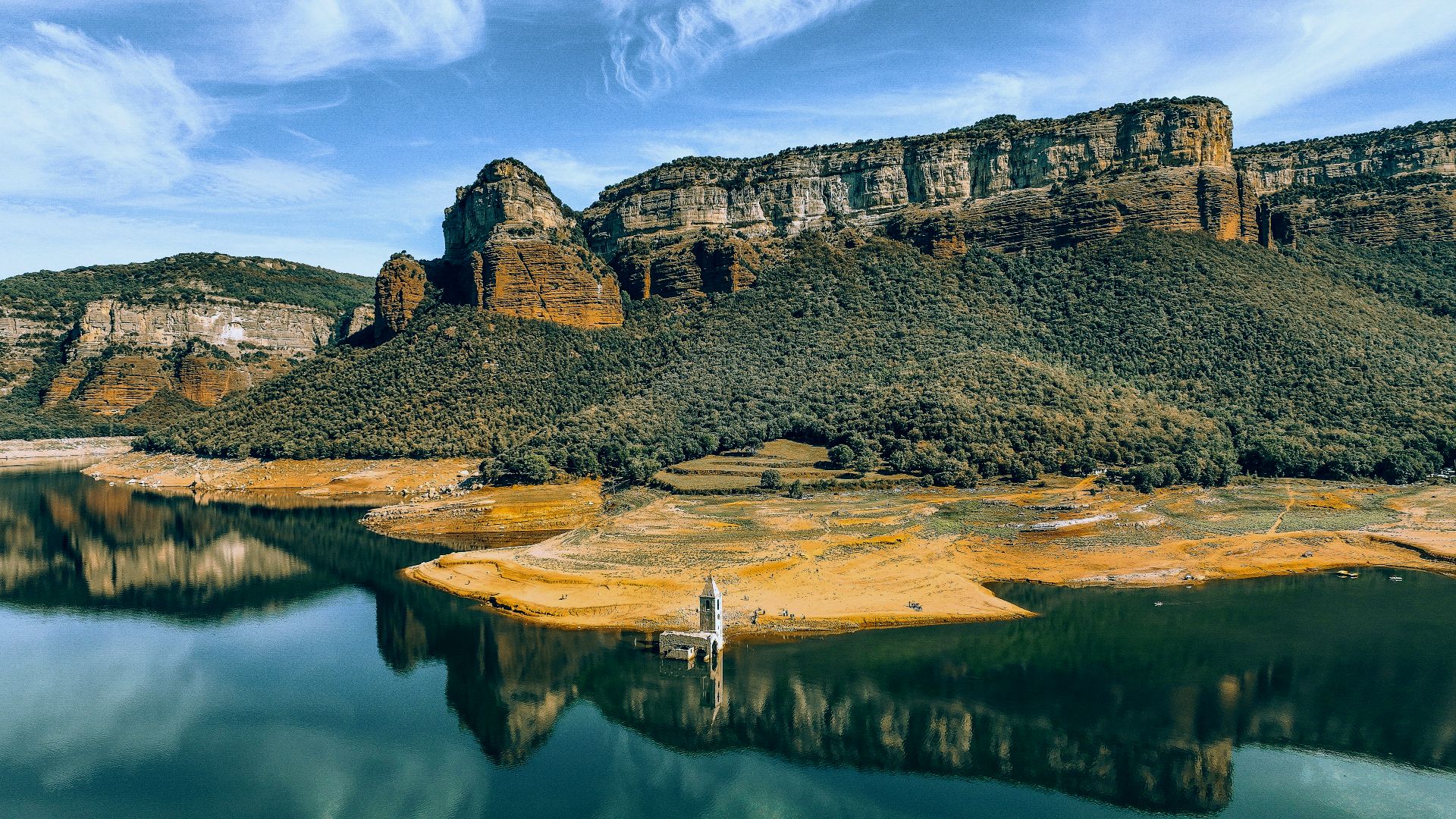
- The most popular natural monuments is Parque de l'Agulla, a lake that is a large reservoir with a trail around it for walking and biking. It…
Last updated: July 1, 2026
Puig de la Balma
Highlight • Historical Site
Translated by Google •
Tip by

Talamanca Fountain and Boxelder (Acer negundo)
Highlight • Natural Monument
Translated by Google •
Tip by

Sign up now to discover places like this
Get recommendations on the best single tracks, peaks, & plenty of other exciting outdoor places.
Sign up for free
Parque de l'Agulla
Highlight • Lake
Translated by Google •
Tip by

La Botjosa salt dump
Highlight • Structure
The La Botjosa salt dump measures 775 meters long by an average width of 150 meters, occupies 13.5 Ha …
Translated by Google •
Tip by

Bigaire Gorge
Highlight • Gorge
Translated by Google •
Tip by

Sign up for free to discover even more natural monuments around Artés.
Sign up for free
Already have an account?
Start today with a free account
Your next adventure awaits.
Login or Signup



Tips from the Community

Fountain built in 1683, which was one of the main meeting points of the village, where its inhabitants went to wash their clothes and fetch water until the 70s. The boys of the village came to this fountain, morning and afternoon , to look for water to see from the houses, and it was at this moment that battles were often fought between the boys from the upper part of town and those from the Raval. Where the fountain is now, there was the cattle trough, and next to it were the washrooms. We highlight the presence of a specimen of maple, a tree planted during a tree festival at the beginning of the 20th century. Next to the source, coming out of a crack we will observe the red falzia, a small fern and also some liverwort plants.
0
0

Space to relax and look towards Montserrat
0
0

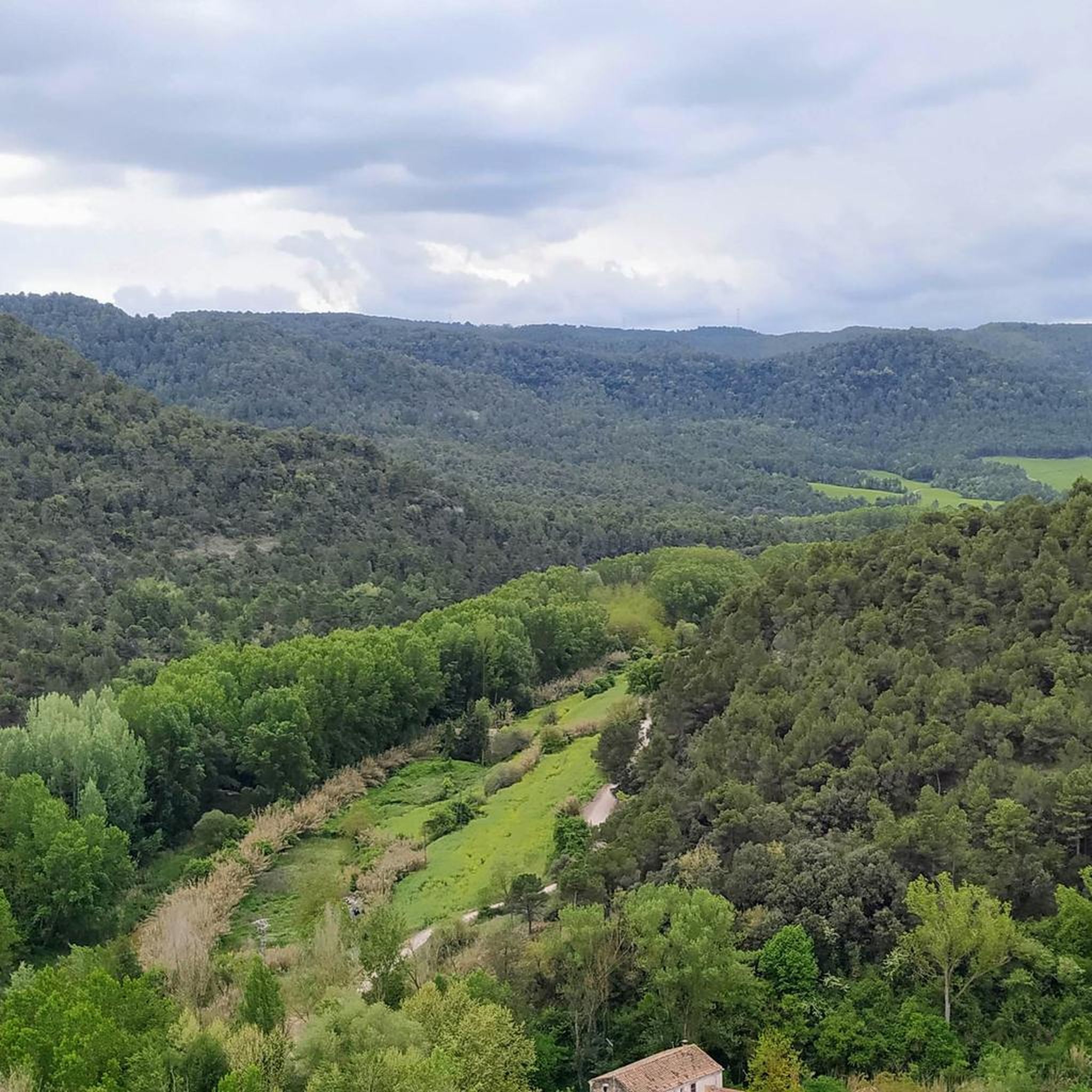
At this point in its course, the river Llobregat crosses the large cracks that it has opened in the strata of nodular limestone, so that when the course of the river is low, it can be crossed by jumping from rock to rock. The name comes from the fact that a "bigaire" (a rafter, who transported logs of wood joined together to form a boat) died at this point.
1
0

Balma where a hostel and restaurant have been built with brutal charm
2
0

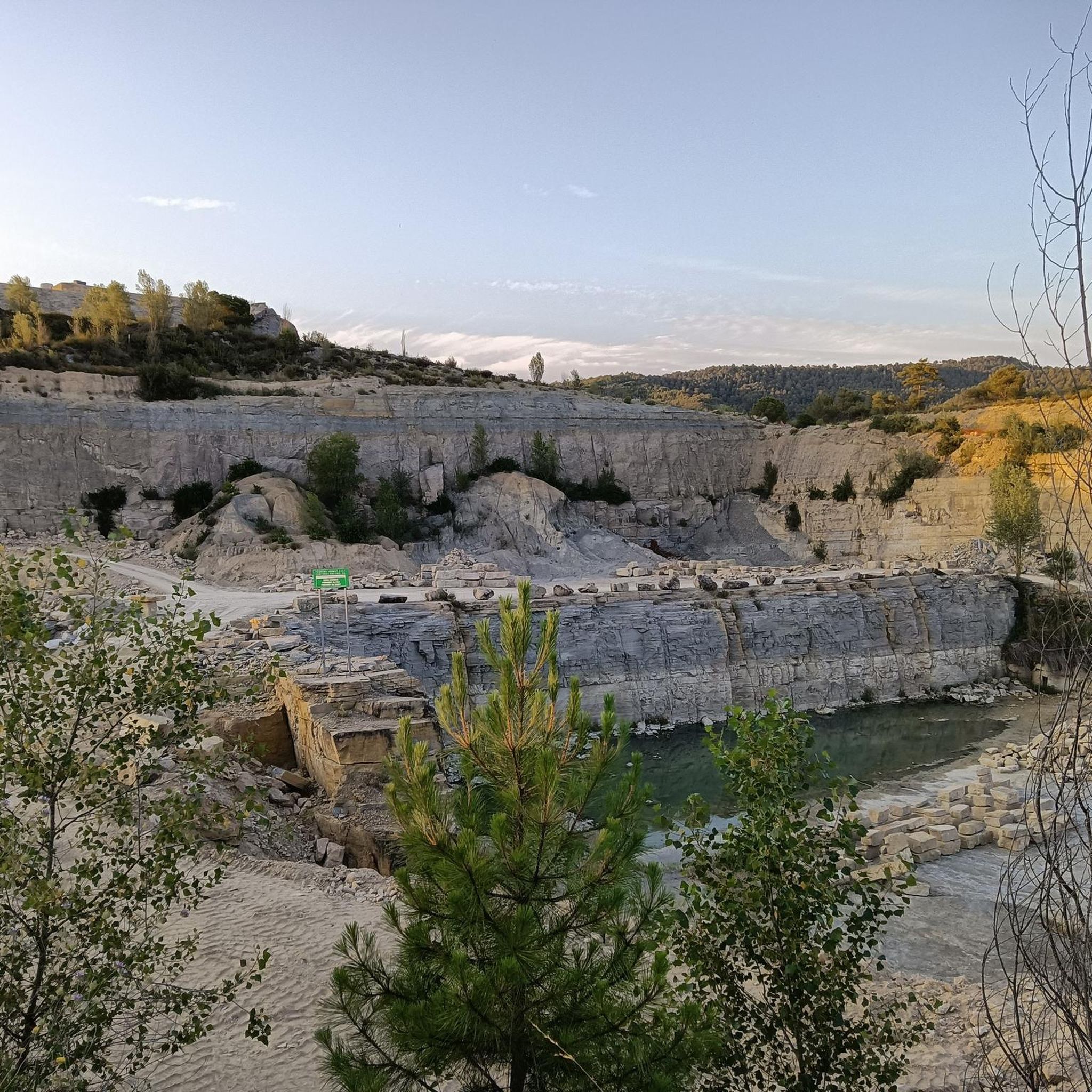
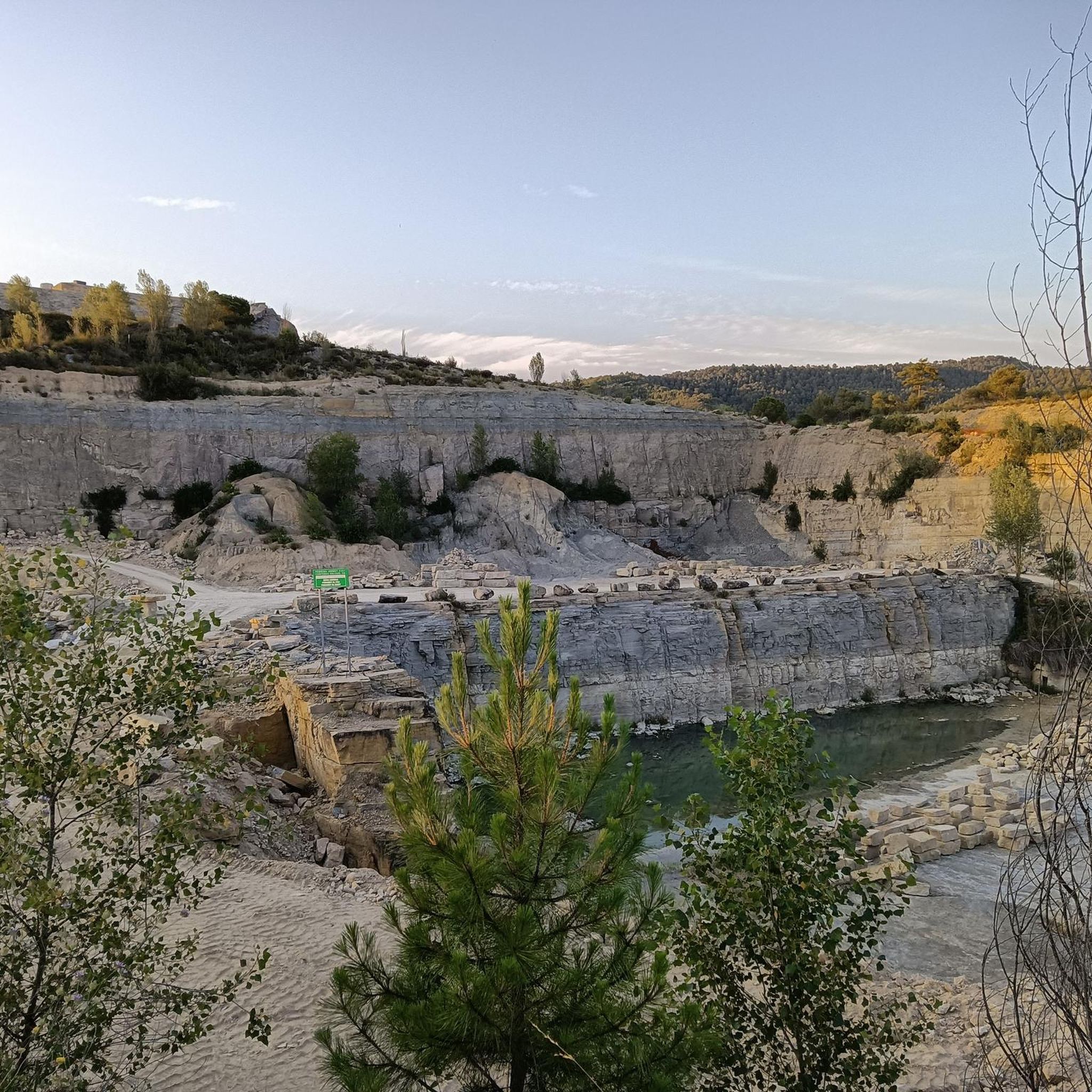
Mountain of saline and other waste created between 1945 and 1977. The La Botjosa salt dump measures 775 meters long by an average width of 150 meters, occupies 13.5 Ha and its content is estimated at around 4 million tons of salty waste. Since the start of the new Cogulló dump in 1977, the potash mining of Sallent and Balsareny stopped dumping saline waste in La Botjosa. Since then, a considerable portion of the saline residues dumped in the La Botjosa dump has disappeared by dissolution in rainwater and air humidity, as evidenced by the geomorphologies in lapiaz on the slopes and dame coiffée where an object acting as an umbrella has protected the salt below
1
0
Building located in the municipality of Mura (Bages) included in the Inventory of the Architectural Heritage of Catalonia. The walls of this farmhouse are headed and hung on the steep landings of a cliff, taking advantage of the natural cornices. The oldest part could be considered from the pre-Romanesque period, but additions have been made over the centuries. The house is quite irregular in every way: in height, width and depth
0
0

The Font de Talamanca was built in 1683 and remodeled in 1707. Until 1968 it was the place where the residents of the municipality went to get water for daily consumption and it had a communal laundry room that was used to wash clothes, which turned the fountain into one of the main meeting points in the municipality. It is a space surrounded by nature, next to the town and, right next to a centenary tree that has been declared a Cultural Asset of Local Interest. It is a negundo steel, an American species, which in the years it was planted, at the beginning of the 20th century, was very rare to find outside its original habitat.
2
0
The Puig de la Balma is a “Historical-Cultural Complex of Agrotourism”. This conglomerate of buildings (which has been growing since the original 12th century building completely built on the rock), has become an important testimony to Catalan rural life and to the different episodes in the country's history. Various chroniclers and documentary filmmakers have been interested in its heritage interest, as well as several filmmakers who have shot scenes from historical films such as "Bruc" or "Pa negre". There is a small museum with endless agricultural tools and household items and it seems that time has not passed. Visitors also have various lodging possibilities.
1
0
Frequently Asked Questions
What are some family-friendly natural monuments to visit near Artés?
For a relaxing day out with the family, consider Parque de l'Agulla, a large reservoir with a pleasant trail for walking and biking, complete with parking and a picnic area. Another great option is the Talamanca Fountain and Boxelder, a historic fountain surrounded by nature and a centenary tree, offering a peaceful setting for all ages.
Are there natural monuments with historical significance around Artés?
Yes, Puig de la Balma is a remarkable historical site and natural monument. This conglomerate of buildings, dating back to the 12th century, is built directly into a rock face and offers a unique glimpse into Catalan rural life and history. The Talamanca Fountain, built in 1683, also holds historical importance as a former community gathering point.
What kind of geological features can I explore in the natural monuments near Artés?
The region offers diverse geological formations. You can visit the Bigaire Gorge, where the Llobregat river has carved impressive cracks in nodular limestone strata. Another unique site is the La Botjosa salt dump, a mountain of saline waste with interesting geomorphologies formed by dissolution over time.
Where can I find panoramic views of the landscape near Artés?
For breathtaking vistas, head to Mirador da Curota, located on the Barbanza mountain range. It offers one of Galicia's most celebrated panoramic views, encompassing the entire Ría de Arousa and the Atlantic Islands on clear days. Another excellent spot is Mirador Pedra da Ra, which provides stunning views of the Atlantic Ocean, the Ría de Arousa, and the Corrubedo Natural Park.
Are there opportunities for wild swimming or natural pools near Artés?
Absolutely! As Pozas do Río Pedras offers a fantastic natural 'aquatic park' experience. Here, the Pedras River has carved out natural pools, waterfalls, and slides in the granite, perfect for swimming and enjoying nature in a lush forest setting.
What outdoor activities can I do near these natural monuments?
The area around Artés is excellent for various outdoor activities. You can find numerous routes for hiking, running, and gravel biking. For example, Parque de l'Agulla has a trail ideal for walking and cycling, while Mirador Pedra da Ra serves as a starting point for pedestrian routes to Corrubedo Natural Park.
Are there any natural parks with diverse ecosystems to explore?
Yes, the Parque Natural das Dunas de Corrubedo e Lagoas de Carregal e Vixán is an expansive natural park known for its unique mobile dune system, which is the largest in Galicia. It features diverse ecosystems including sandy beaches, a freshwater lagoon, and a saltwater lagoon, making it an internationally important wetland for birdwatching.
Can I find beaches within the natural monument areas?
Playa del Vilar is a beautiful, long stretch of white sand beach located within the Corrubedo Natural Park. It's known for its wild and untouched nature, making it ideal for nature lovers and surfers due to its consistent waves. It's also a tranquil spot for nudism.
What do visitors enjoy most about the natural monuments around Artés?
Visitors particularly appreciate the diverse landscapes, from serene lakes like Parque de l'Agulla with its Montserrat views, to unique historical sites integrated with nature such as Puig de la Balma. The community has shared 40 photos and given 37 upvotes, highlighting the beauty and variety of these natural spaces.
Are there accessible trails or viewpoints for all visitors?
The Corrubedo Natural Park offers various low-difficulty, accessible hiking trails, such as Camiño da Praia, Camiño da Gandarela, and Camiño da Auga, allowing visitors to experience the dunes and lagoons. Mirador Pedra da Ra has also undergone renovations to enhance accessibility, featuring paths paved with local granite and recycled materials.
What is the best time to visit the natural monuments in the Artés region?
The natural monuments in the Artés region can be enjoyed year-round, but spring and autumn generally offer pleasant temperatures for hiking and exploring. Summer is ideal for activities like swimming in As Pozas do Río Pedras or enjoying the beaches, though it can be busier. Sunrises and sunsets from viewpoints like Mirador Pedra da Ra and Mirador da Curota are particularly magical, regardless of the season.
Are there opportunities for birdwatching in the natural monuments?
Yes, the Parque Natural das Dunas de Corrubedo e Lagoas de Carregal e Vixán is an excellent spot for birdwatching. It is an internationally important wetland (Ramsar site) with a rich variety of bird communities. There's an ornithological observatory at the Vixán lagoon where you can spot species like herons, ducks, and cormorants.
Most popular attractions around Artés

Get inspired with the komoot mobile app


Explore more
Extend your search for the best caves by checking out these guides of the top ones around Artés:
