Top 14 Natural Monuments around Saint-Cyr-L'École
Best natural monuments around Saint-Cyr-L'École include diverse natural spaces with ecological, historical, and recreational significance. Located in the western suburbs of Paris, this area features notable forests, ponds, and historic avenues. These sites offer opportunities to explore natural features and historical landscapes, often connected to the nearby Palace of Versailles. Visitors can find tranquil escapes and areas for nature observation.
Best natural monuments around Saint-Cyr-L'École
- The most popular natural monuments is Ponds of Parc des Côtes Montbron, a lake…
Last updated: July 15, 2026
Ponds of Parc des Côtes Montbron
Highlight • Lake
Located in the town of Jouy-en-Josas, the Parc des Côtes Montbron, acquired by the Department for sensitive natural areas, has been …
Translated by Google •
Tip by

Latona Fountain
Highlight • Monument
Translated by Google •
Tip by

Sign up now to discover places like this
Get recommendations on the best single tracks, peaks, & plenty of other exciting outdoor places.
Sign up for free
Old Chestnut Tree at Place Audran
Highlight • Natural Monument
Translated by Google •
Tip by

Menhirs of the Chêne des Missions
Highlight • Monument
Translated by Google •
Tip by

Bosquet of the Baths of Apollo
Highlight • Monument
Translated by Google •
Tip by
Sign up for free to discover even more natural monuments around Saint-Cyr-L'École.
Sign up for free
Already have an account?
Start today with a free account
Your next adventure awaits.
Login or Signup
Popular around Saint-Cyr-L'École

Other adventures around Saint-Cyr-L'École

Tips from the Community

Added to the collection: komoot.com/de-de/collection/3600632/-naturdenkmaeler-besondere-baeume-und-weitere-schaetze-der-natur
0
0

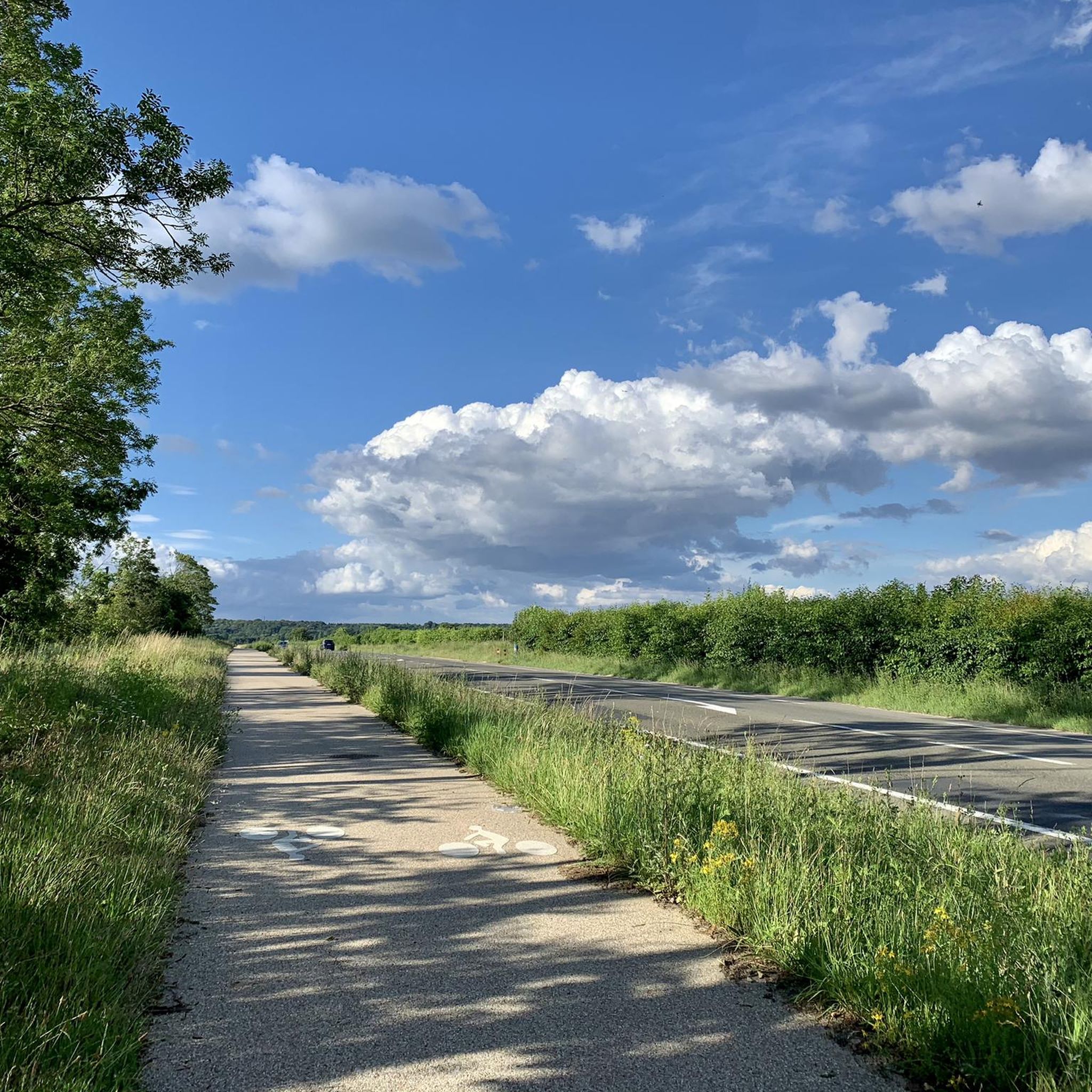
Viltain Farm then the singletrack further west is a little paradise. Landslide (04/2025) on the way back
0
0

This oak was discovered by Breton missionaries in 1895. It is surrounded by 4 dolmens and a large menhir. The oak is 32m high. It is one of the most beautiful passages in the Meudon Forest.
1
0

The current grove dates from the reign of Louis XVI, laid out between 1778 and 1781. Its center is occupied by a lake dominated by a huge fake rock embellished with waterfalls and hollowed out with a cave. This hosts the sculptures of the Horses of the Sun placed on either side of the group of Apollo served by the nymphs, created by François Girardon and Thomas Regnaudin. https://bienvenue.chateauversailles.fr/fr/jardins/bienvenue/304_bosquet-des-bains-d-apollon#!panel-46
6
0
The Latona basin results from the desire of Louis XIV to create, in the center of his Garden, a fountain which recounts the childhood of Apollo, the sun god he chose as his emblem. To create this fountain, Louis XIV transformed a pool dug by Louis XIII by gradually installing water features and decorations sculpted by the Marsy brothers. The Latona basin went through several states before adopting its current form. In 1667, it was the Toad Fountain. From 1668 to 1670, a first Latona basin appeared; Latona is then at the same level as the other figures and turned towards the Castle. From 1687 to 1689, Jules Hardouin-Mansart created the current pool, by making Latona turn around and hoisting her to the top of a marble pyramid. http://latone.chateauversailles.fr/page/le-bassin-de-latone/histoire-du-bassin
11
0


An article if you are interested in the subject: https://france3-regions.francetvinfo.fr/paris-ile-de-france/paris/grand-paris/un-chataignier-des-yvelines-elu-plus-bel-arbre- of-the-year-2424739.html
1
0
For 10 years, the "Tree of the Year" competition has rewarded trees from different regions of France. The trees are selected for their aesthetic, biological, historical quality... This chestnut tree from La Celle St Cloud won the Public Prize at the end of 2021. If you take the time to admire this solitary colossus, or even to sit in the shade of its foliage, you will notice the irregularities of its trunk which take the form of helical grooves. Specialists say that the tree is "screwed". An estimated 330 years old, it was planted during the reign of Louis XIV and now measures 18 meters wide and 12 meters high. In the 17th and 18th centuries this species of tree was planted in large numbers because it made it possible to offer the people chestnuts and to make flour. Before the introduction of the potato in Europe, it was one of the methods to fight against the famines that raged in the country. Formerly the district was composed of wooded plots and vast pastures. The chestnut tree was thus able to develop without local competition in the middle of a meadow. Like the court of Versailles, he must have heard in the distance the muffled noises of the French Revolution which announced the end of the world which had seen him born and grow up. Later he saw the plumes of smoke from the Industrial Revolution appearing on the horizon. The installation of a station not far away and the arrival of the train from Paris brought it perhaps the company of the first walkers who came to rest under its foliage. But it was from 1920 that the first constructions appeared. In 1930 there were seven houses in the subdivision. Then the houses and pavilions multiplied and were accompanied by cars. The road had to be paved and the question of the very existence of the tree no doubt arose. A small place was then arranged for him. At present the majestic chestnut tree is in the heart of a residential district itself included in the frenetic Parisian agglomeration. Cars, vans, scooters and motorcycles come and go around him, mostly without noticing him. It is undoubtedly the symbolic power of his position that struck the spirits and allowed him to acquire his title. Stubbornly resistant to urban development, he is a precious witness to the mad march of the world. A being apart who watches men move about, and perhaps observes them with commiseration.
1
0
Frequently Asked Questions
What natural features can I explore around Saint-Cyr-L'École?
The region offers diverse natural features, including the ancient trees of the Old Chestnut Tree at Place Audran, the serene ponds and forests of Ponds of Parc des Côtes Montbron, and the expansive Etang de Saint-Cucufa. You can also discover the ecological richness of the Étangs et Forêt de la Minière and the historic Parc Forestier du Bois Cassé.
Are there natural monuments with historical significance in the area?
Yes, several natural monuments are steeped in history. The Latona Fountain, located within the gardens of Versailles, recounts the childhood of Apollo. The Étangs et Forêt de la Minière have a rich history, developed in the 17th century to supply water to the Palace of Versailles. The Menhirs of the Chêne des Missions is a pseudo-megalithic site built in 1895, and the Allée Royale de Villepreux was originally conceived by André Le Nôtre as an extension of the Grand Canal of Versailles.
Where can I go for birdwatching or to see diverse plant life?
The Étangs et Forêt de la Minière is an excellent spot for nature observation, particularly birdwatching, as its westernmost pond is an ornithological nature reserve hosting around 250 bird species and 300 plant species. The Ponds of Parc des Côtes Montbron also offer a mosaic of natural environments with great ecological wealth, and the Etang de Saint-Cucufa is home to numerous birds like woodpeckers, moorhens, and herons.
Are there family-friendly natural attractions around Saint-Cyr-L'École?
Absolutely. The Ponds of Parc des Côtes Montbron, the Latona Fountain, the Old Chestnut Tree at Place Audran, and the Menhirs of the Chêne des Missions are all considered family-friendly. The Parc Forestier du Bois Cassé also offers a 1.6 km marked trail suitable for walks with children, and the Étangs et Forêt de la Minière provides pleasant walks.
What outdoor activities can I do near these natural monuments?
You can enjoy various outdoor activities. For hiking, explore routes like the 'Minière Ponds – Minière Ponds loop' or 'Val-d'Or Pond – Val-d'Or Pond loop'. Find more options on the Hiking around Saint-Cyr-L'École guide. Cycling enthusiasts can find routes such as 'Castle Park – Grand Canal at Versailles loop' or 'Saint-Quentin Pond – National Velodrome loop' in the Cycling around Saint-Cyr-L'École guide. For gravel biking, consider routes like 'Minière Ponds – Geneste Pond loop' from the Gravel biking around Saint-Cyr-L'École guide.
Are there any dog-friendly trails or areas among the natural monuments?
Yes, the Étangs et Forêt de la Minière is recognized as a dog-friendly park, featuring shaded seating areas, a dedicated dog-friendly trail, and even a swimming area for pets. This makes it an ideal location for walks with your canine companion.
What is the Allée Royale de Villepreux and why is it significant?
The Allée Royale de Villepreux is a majestic tree-lined avenue originally conceived by André Le Nôtre, the landscape architect of Louis XIV. It was designed as an extension of the Grand Canal of Versailles, forming part of the palace's "Grande Perspective." This historical and natural feature is currently undergoing restoration to revive its grandeur, creating dedicated paths for pedestrians and cyclists while integrating sustainable agricultural practices. It offers a unique blend of history and nature, providing picturesque views and is part of a UNESCO World Heritage site.
Can I access these natural monuments using public transport?
Yes, some natural monuments are accessible by public transport. For instance, the Ponds of Parc des Côtes Montbron are accessible via the Petit Jouy station, served by line C of the RER. For other sites, it's advisable to check specific access information for each location.
What makes the Parc Forestier du Bois Cassé worth visiting?
The Parc Forestier du Bois Cassé offers a tranquil escape with a focus on ecological preservation. It features predominantly oaks and chestnut trees, some up to 400 years old, and harbors rare plant species. Visitors can enjoy a 1.6 km marked trail, a fitness platform for outdoor exercise, and educational panels detailing local flora and fauna, making it ideal for walking, relaxing, and connecting with nature.
What do visitors enjoy most about the natural monuments around Saint-Cyr-L'École?
Visitors appreciate the blend of natural beauty and historical significance. Many enjoy the peaceful atmosphere and ecological richness of places like the Ponds of Parc des Côtes Montbron, which offer an idyllic break. The historical context of sites like the Latona Fountain and the Allée Royale de Villepreux also adds a unique layer to the experience. The opportunity to escape urban life and connect with nature is a common highlight.
Are there any particularly old or unique trees to see?
Yes, the region is home to some remarkable trees. The Old Chestnut Tree at Place Audran is estimated to be 330 years old, planted during the reign of Louis XIV, and won the Public Prize at the 'Tree of the Year' competition in 2021. The Parc Forestier du Bois Cassé also boasts oaks and chestnut trees up to 400 years old, and the Menhirs of the Chêne des Missions are located under a large, 32-meter-high oak.
What is the best time to visit the natural monuments in Saint-Cyr-L'École?
Spring and autumn are generally ideal for visiting, as the weather is mild and the natural landscapes are particularly vibrant. Spring brings blooming flora, while autumn offers beautiful foliage. Summer can also be pleasant, especially in shaded forest areas like the Parc Forestier du Bois Cassé or the Étangs et Forêt de la Minière, which provide respite from the heat.
Most popular routes around Saint-Cyr-L'École
Most popular attractions around Saint-Cyr-L'École

Get inspired with the komoot mobile app


Explore more
Extend your search for the best caves by checking out these guides of the top ones around Saint-Cyr-L'École:
